Understanding prefixes Normal Writing Worksheets
6 filtered results
-
From - To
Enhance your child’s writing skills with our "Understanding Prefixes" Normal Writing Worksheets! These engaging worksheets are designed to help young learners grasp the concept of prefixes and their impact on word meaning. With fun activities and clear instructions, students will explore various prefixes and practice identifying them in words. This essential language skill not only enriches vocabulary but also builds confidence in writing. Ideal for classroom use or at-home learning, our worksheets cater to early grade learners, making complex concepts accessible. Get started today to empower your child’s literacy journey and unlock the world of language together!
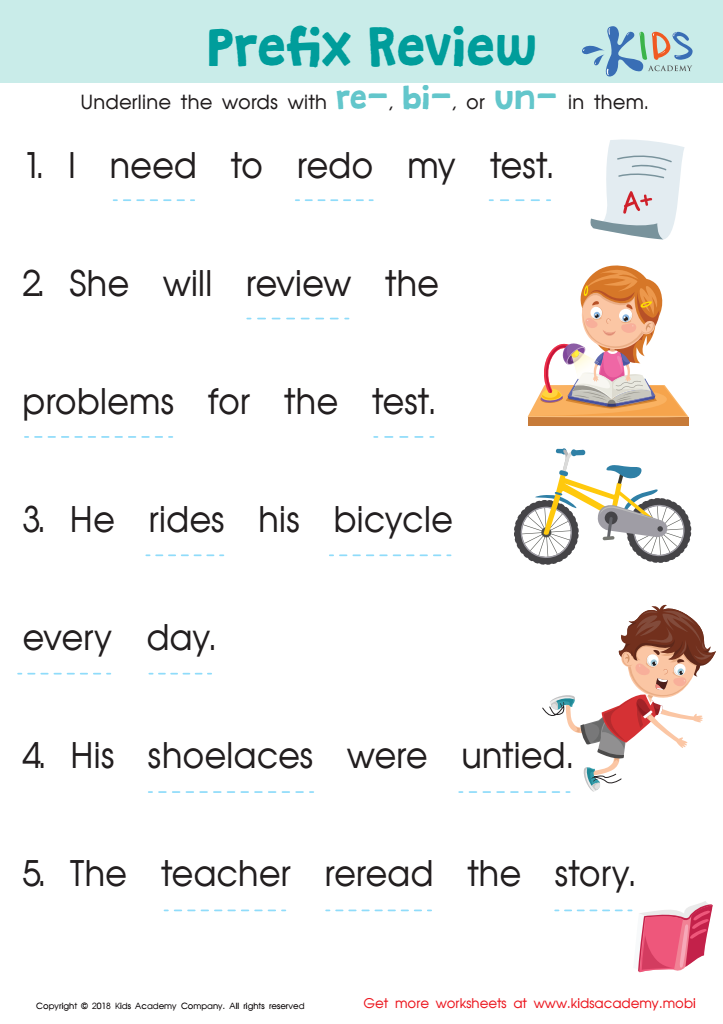
Prefix Review Worksheet
 Assign to My Students
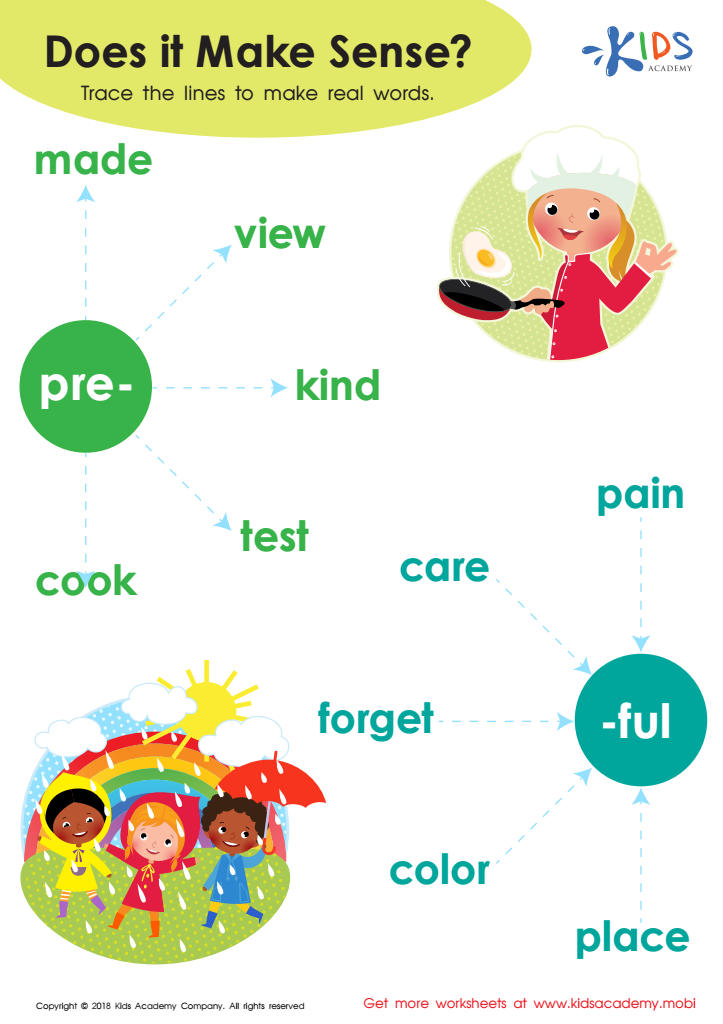
Prefix pre– and Suffix ful– Worksheet
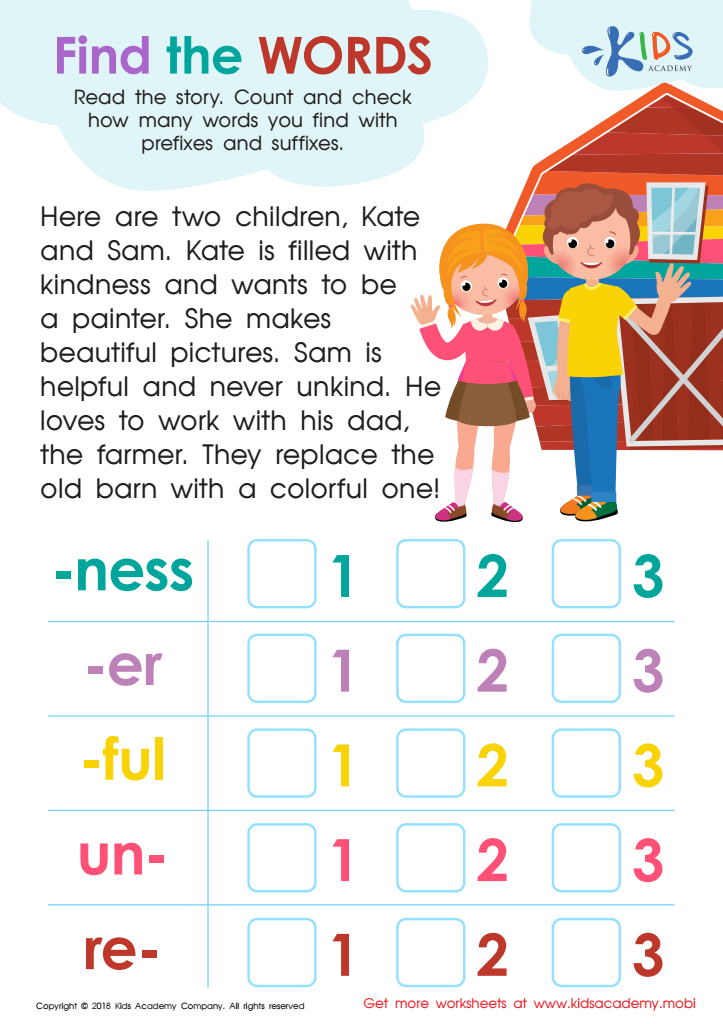
Prefix and Suffix Worksheet For Grade 3
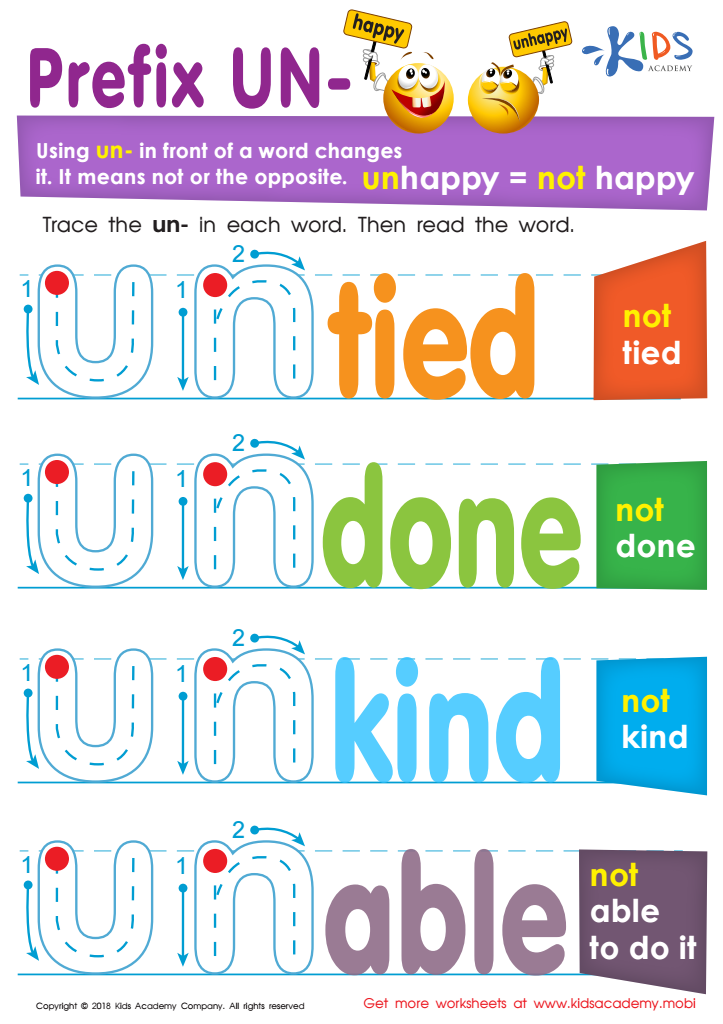
Prefix Un- Worksheet
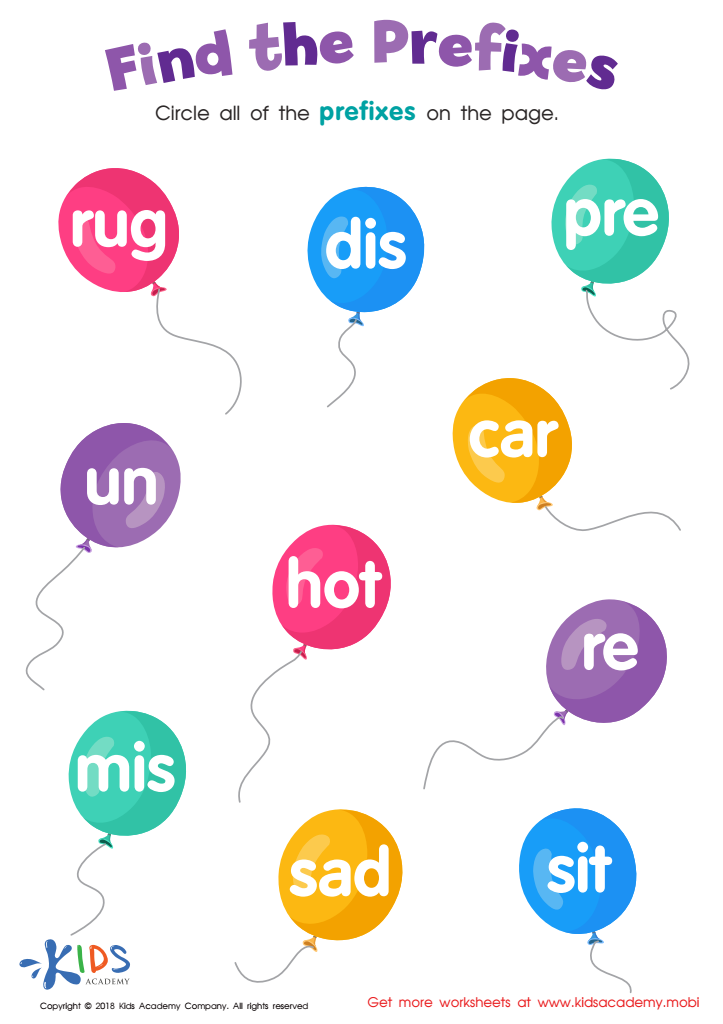
Reading: Find the Prefixes Worksheet
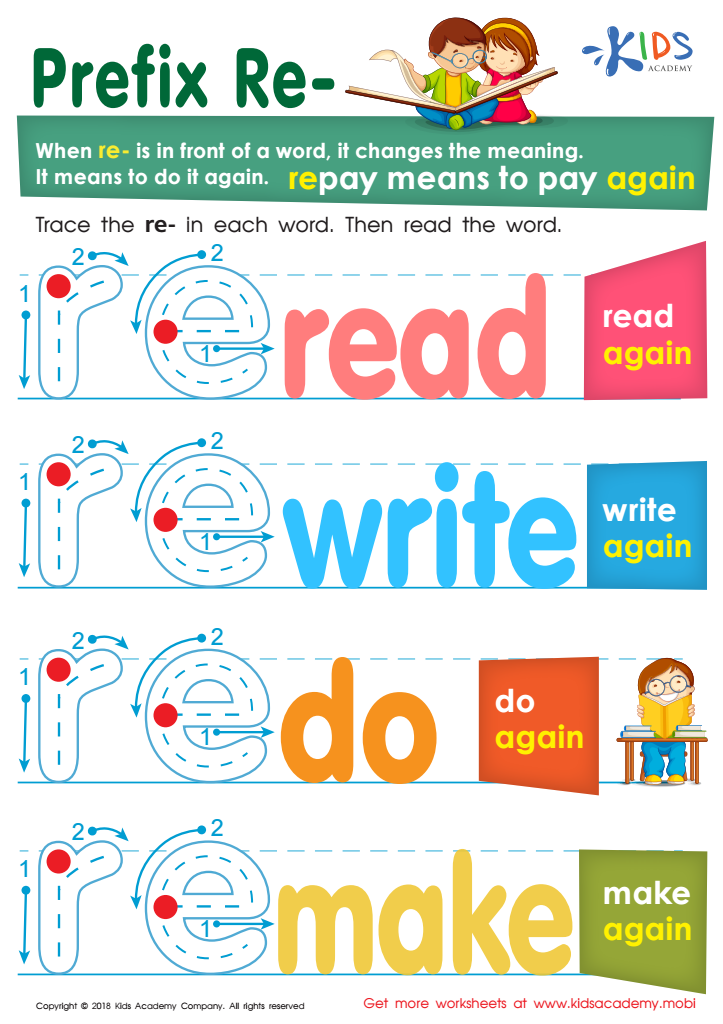
Prefix Re- Worksheet







Understanding prefixes is essential for both parents and teachers because it forms a foundational aspect of literacy development in young learners. Prefixes are letters or groups of letters added to the beginning of a word to modify its meaning. By grasping how prefixes work, children can significantly broaden their vocabulary and comprehension skills.
When teachers explicitly teach prefixes, students can decode unfamiliar words more easily, making reading more accessible and enjoyable. This not only aids in their academic progress but also boosts their confidence as they explore new texts. Parents, too, can support their children’s vocabulary growth at home by encouraging the use of prefixes during everyday conversations or while reading together.
Understanding prefixes also helps children make connections between related words, enhancing their ability to grasp nuances in meaning. For instance, recognizing that "un-" typically indicates negation can help a child understand words like "happy" and "unhappy." This skill is not just academic; it fosters critical thinking and problem-solving as students learn to break down complex concepts.
Ultimately, a strong grasp of prefixes benefits students across subjects, making it a vital focus for educators and parents alike in nurturing effective communication and cognitive skills.