Verb identification Normal Writing Worksheets
6 filtered results
-
From - To
Discover the Verb Identification Normal Writing Worksheets, designed to enhance your child's grammar skills while making learning fun and engaging. These worksheets focus on helping children identify verbs within sentences, a crucial step in developing writing and language proficiency. With a variety of exercises and examples, young learners will sharpen their understanding of verb usage in different contexts. Perfect for early grade students, these worksheets offer a structured approach to mastering grammar concepts, building a strong foundation for their future educational journey. Boost your child's verb identification skills today with these interactive and effective printable worksheets!
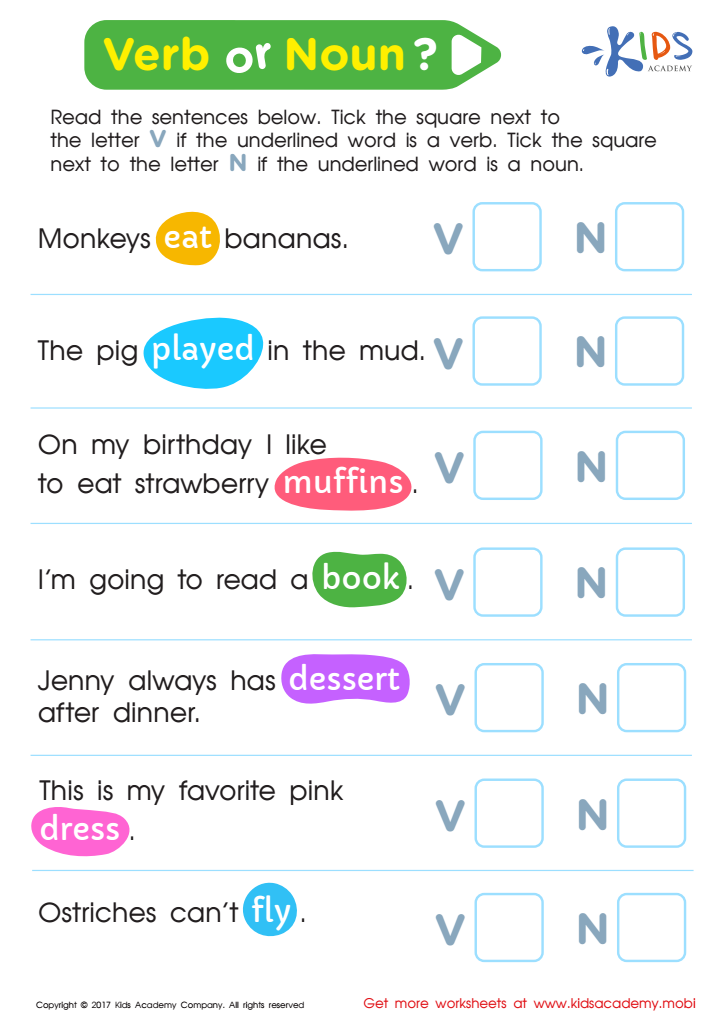
Verb or Noun Worksheet
 Assign to My Students
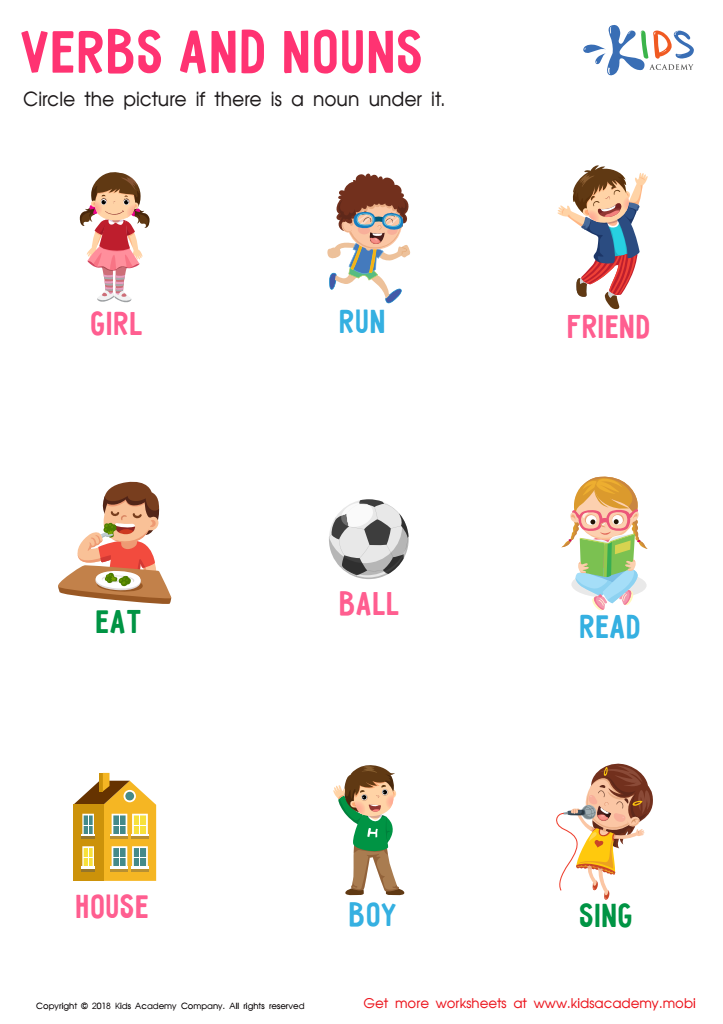
Verbs and Nouns Worksheet
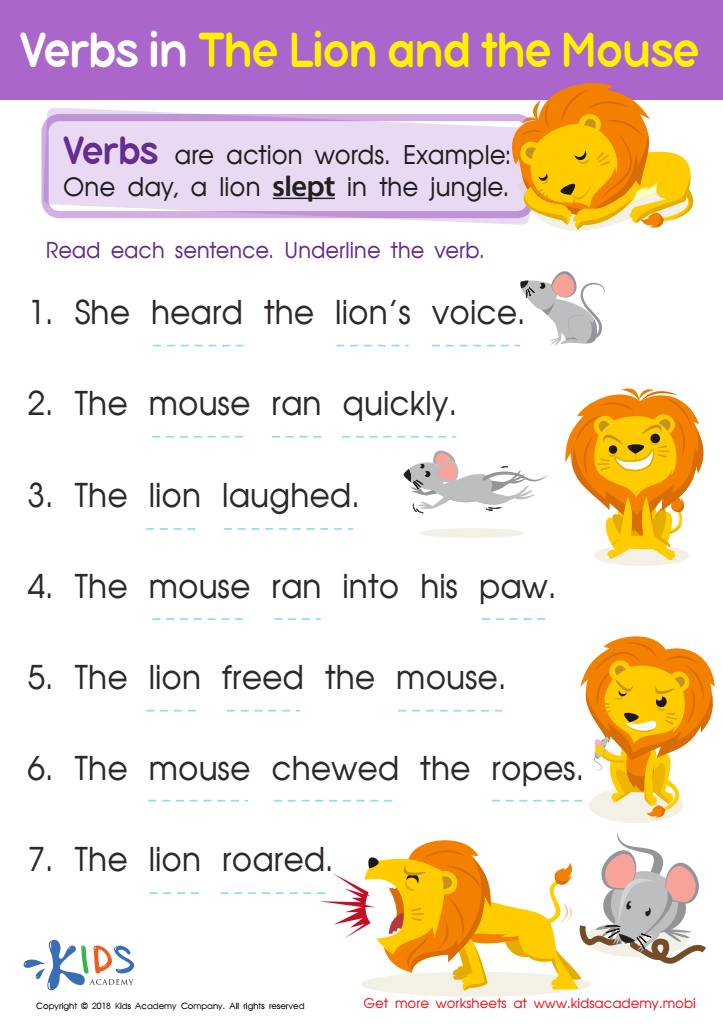
Verbs in The Lion and the Mouse Worksheet
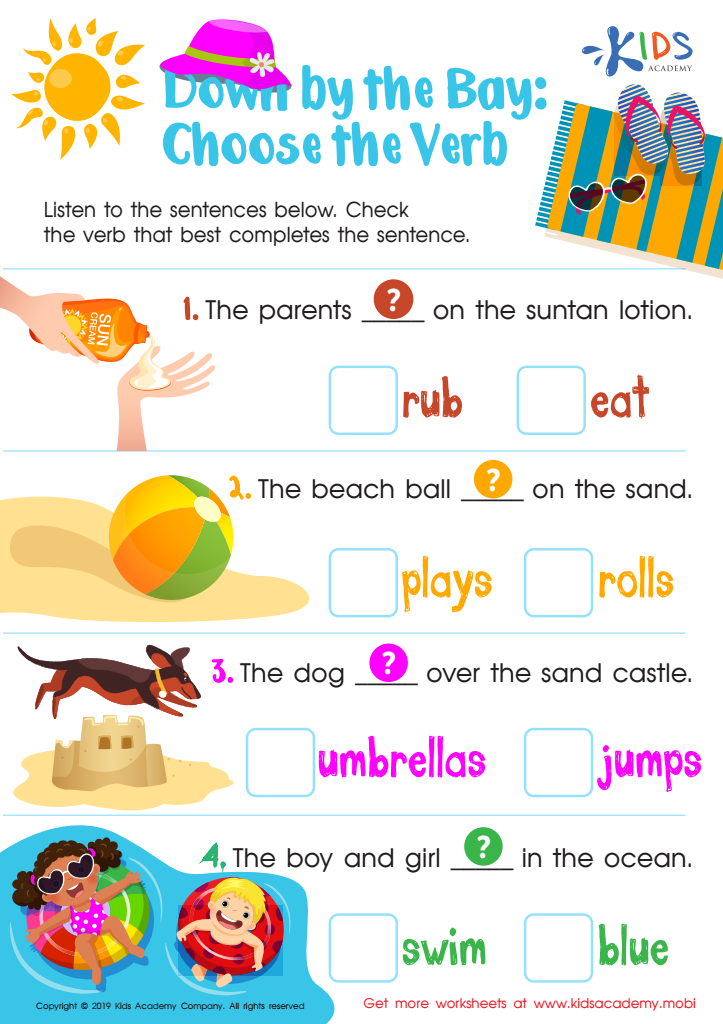
Down by the Bay: Choose the Verb Worksheet
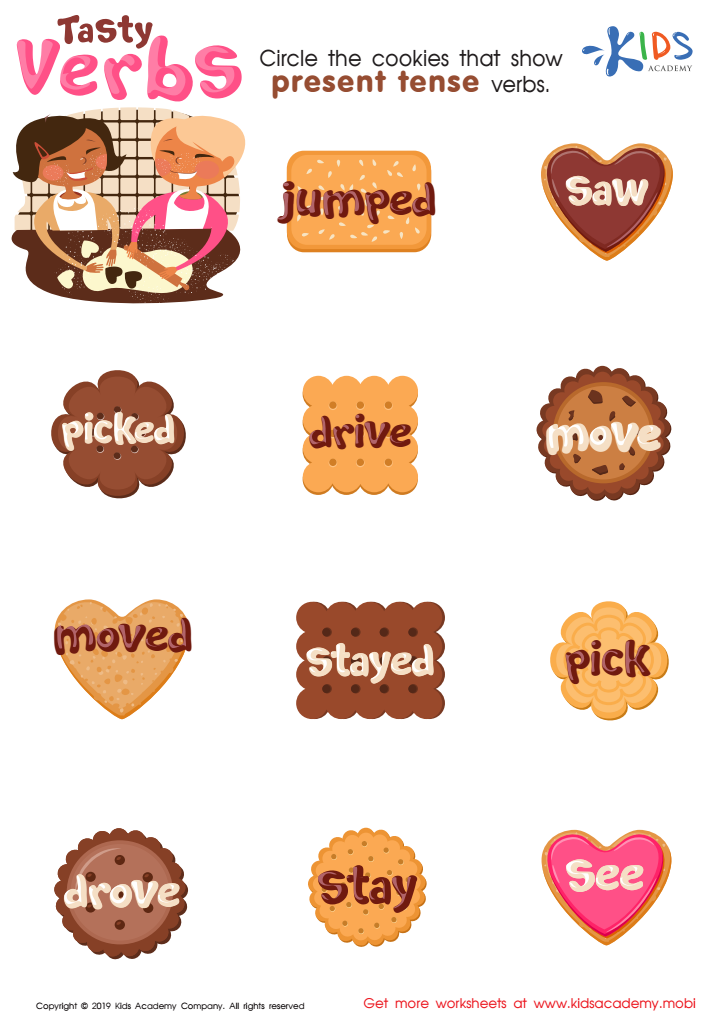
Tasty Verbs Worksheet
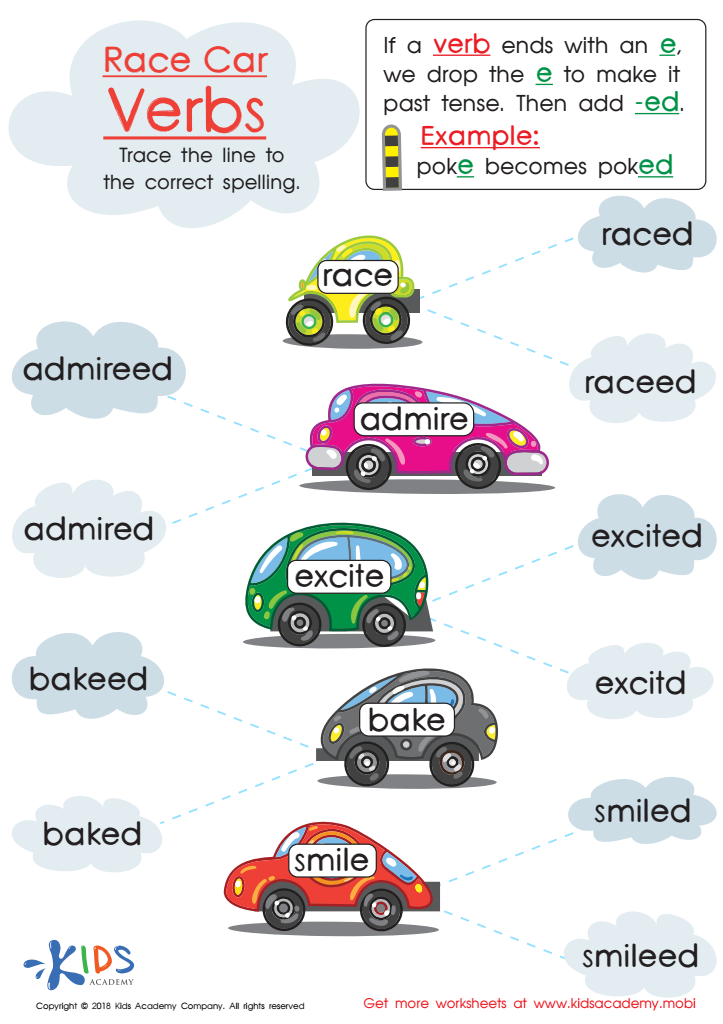
Race Car Verbs Worksheet







Parents and teachers play a pivotal role in foundational language development, making verb identification crucial for young learners. Verbs are the action words in a sentence, providing critical information about what the subject is doing. Developing the ability to identify verbs helps children comprehend sentence structure better, promoting improved reading comprehension. With clear verb identification, children can more accurately interpret the meaning of sentences and texts, leading to better overall literacy.
For parents, engaging in verb-related activities at home reinforces school learning in a practical, everyday context. Simple exercises like spotting action words in storybooks or describing actions during playtime turn learning into a consistent, applied practice. This aids retention and embeds language skills naturally.
Teachers, on the other hand, can use verb identification to enhance various aspects of language arts education, from writing and reading to grammar drills. By highlighting verbs, teachers can help students create more dynamic and expressive writing. Incorporating verb games and interactive lessons can make learning grammar enjoyable, thus maintaining student interest and participation.
Overall, focusing on verb identification equips children with a critical linguistic tool, aiding their current educational success and paving the way for more advanced language proficiency in the future. This foundational skill empowers children, enriching their communication abilities both in school and in daily life.