Money worksheets activities for Ages 3-4
1 filtered results
-
From - To
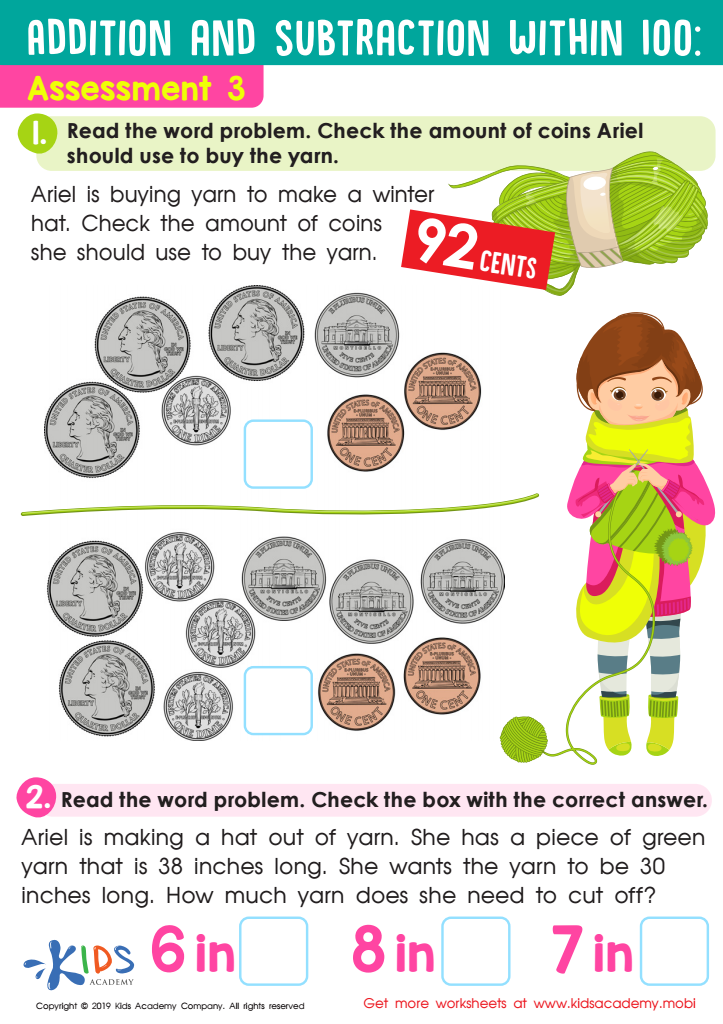
Assessment 3 Math Worksheet
 Assign to My Students







Money worksheets activities stand as a crucial educational tool in the journey towards financial literacy. Engaging in these activities offers learners a foundational understanding of money management, a skill indispensable in both personal and professional realms. Let's delve into the reasons why money worksheets activities are especially useful.
Firstly, these activities provide a hands-on approach to learning about money. By interacting with real-world scenarios through exercises, students can grasp the concepts of spending, saving, and investing in a concrete manner. This practical exposure is essential because it prepares learners for the financial decisions they will face in daily life, from budgeting for groceries to planning for retirement.
Moreover, money worksheets activities introduce the concept of value early on. Understanding the value of different denominations, how money accumulates over time, and the importance of making informed financial choices are pivotal lessons. These activities often include exercises on calculating change, interest rates, and budget planning, which reinforce the value and power of money.
Another significant advantage is the development of critical thinking and mathematical skills. Money worksheets activities require calculations, problem-solving, and analytical thinking. As students navigate through these challenges, they not only improve their numeracy but also their ability to think strategically about money management.
Furthermore, engaging in money worksheets activities fosters a sense of responsibility and independence. As learners become more confident in managing fictional budgets and investments through these exercises, they are likely to apply these lessons in their own lives. This early responsibility towards money can lead to more informed, mindful, and responsible financial decisions in adulthood.
In conclusion, money worksheets activities are not just educational tools; they are building blocks for future financial stability and independence. Through practical exercises, these activities equip learners with the knowledge, skills, and mindset needed to navigate the complex world of finance with confidence and acumen.








