Our Planet and Environment worksheets activities for Ages 4-9
5 filtered results
-
From - To
Explore our engaging "Our Planet and Environment" worksheets and activities designed for children ages 4-9! These fun and educational resources introduce young learners to essential concepts about Earth, sustainability, and environmental awareness. Each activity encourages kids to think critically about nature, ecosystems, and conservation, fostering a sense of responsibility toward the planet. Our user-friendly worksheets include coloring pages, matching games, and interactive challenges that make learning enjoyable while promoting awareness of important environmental issues. Perfect for teachers and parents alike, these activities provide a solid foundation in ecological knowledge and inspire children to become proactive stewards of the earth. Download now and get started!
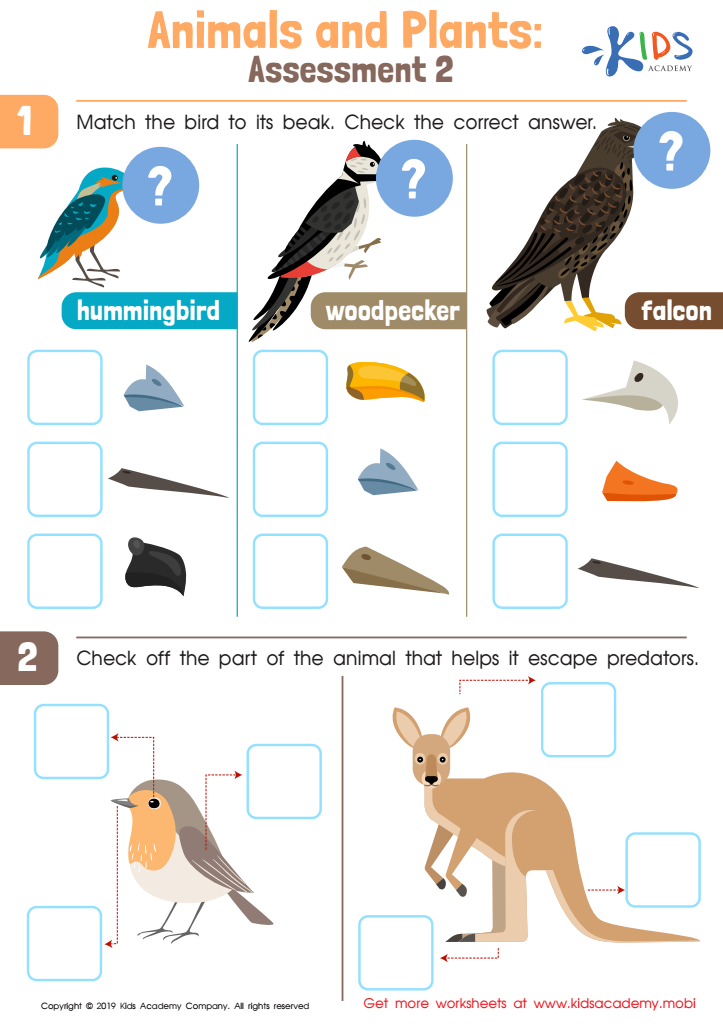
Animals and Plants: Assessment 2 Worksheet
 Assign to My Students
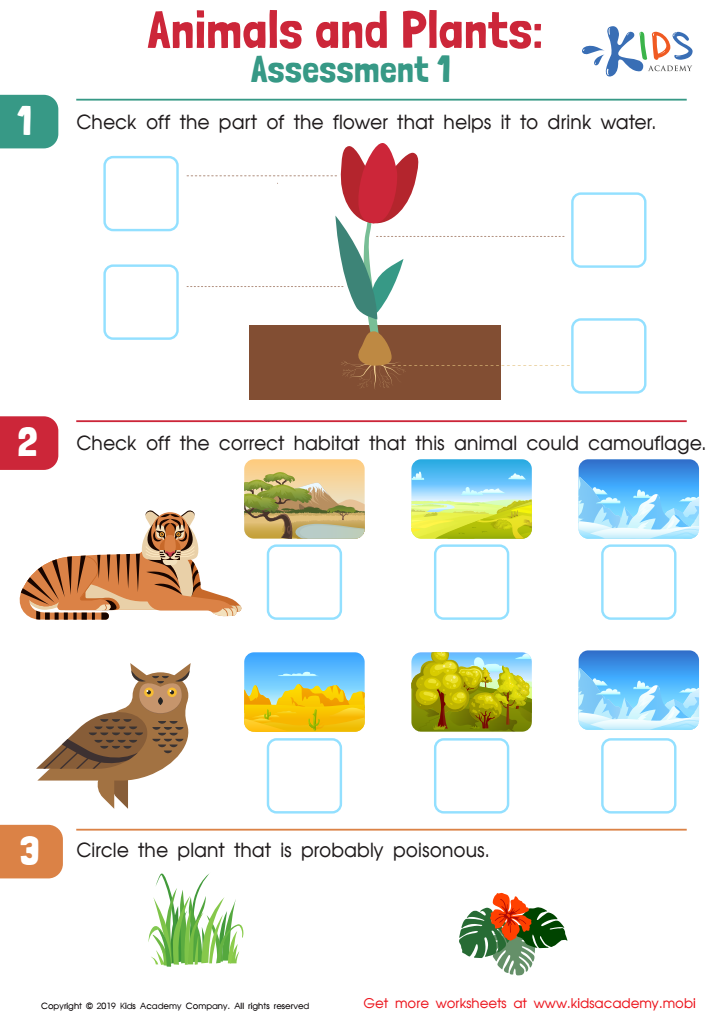
Animals and Plants: Assessment 1 Worksheet
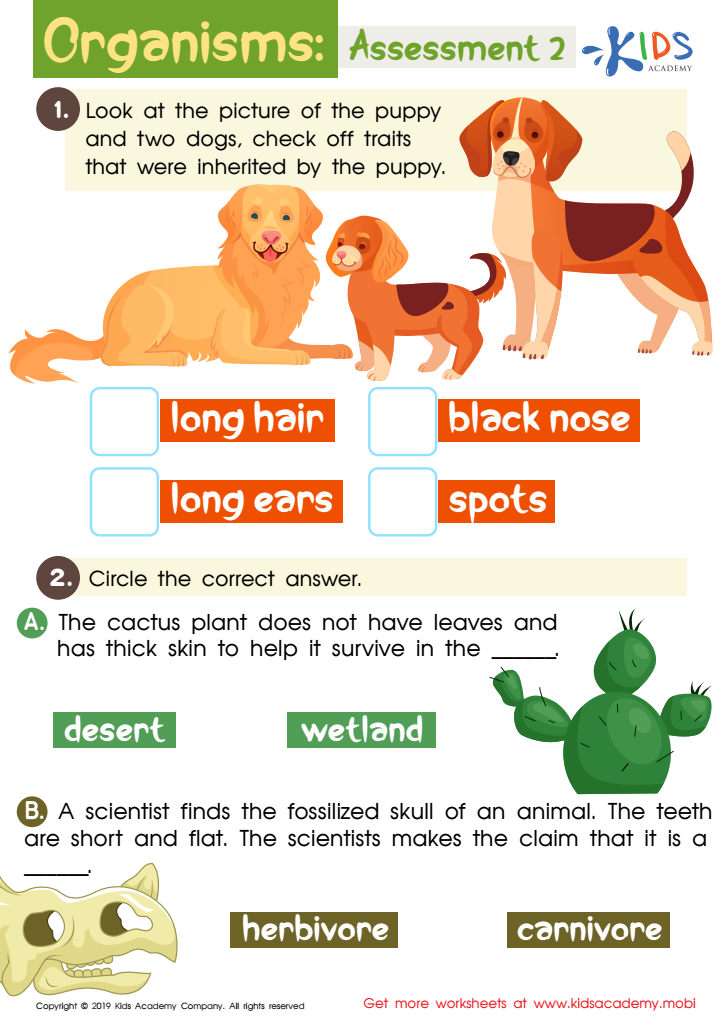
Organisms: Assessment 2 Worksheet
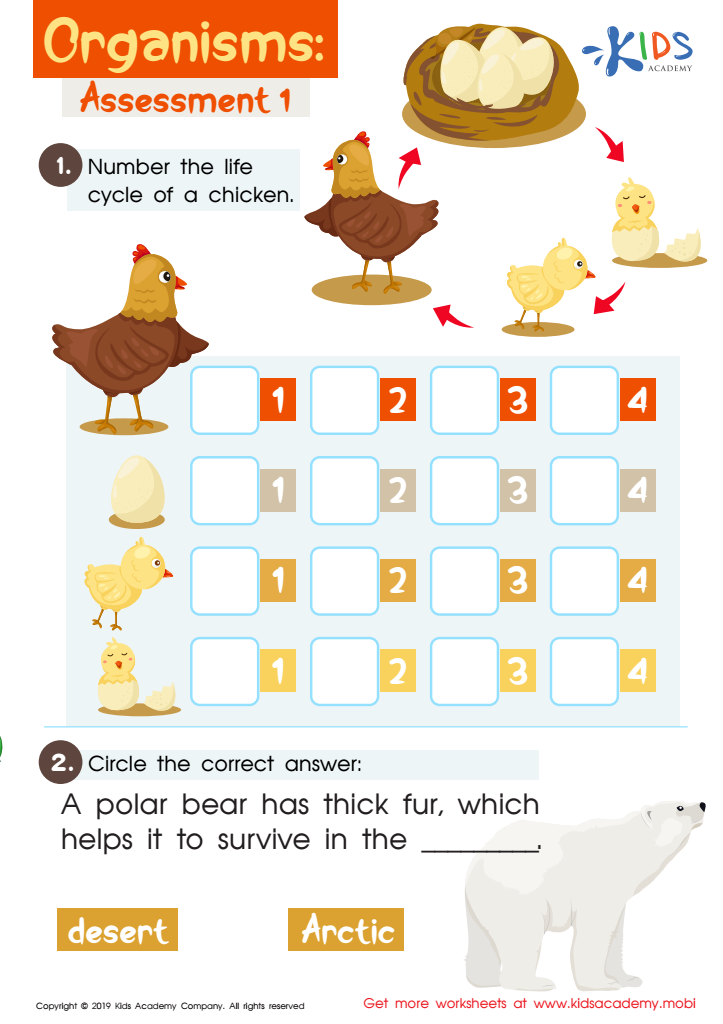
Organisms: Assessment 1 Worksheet
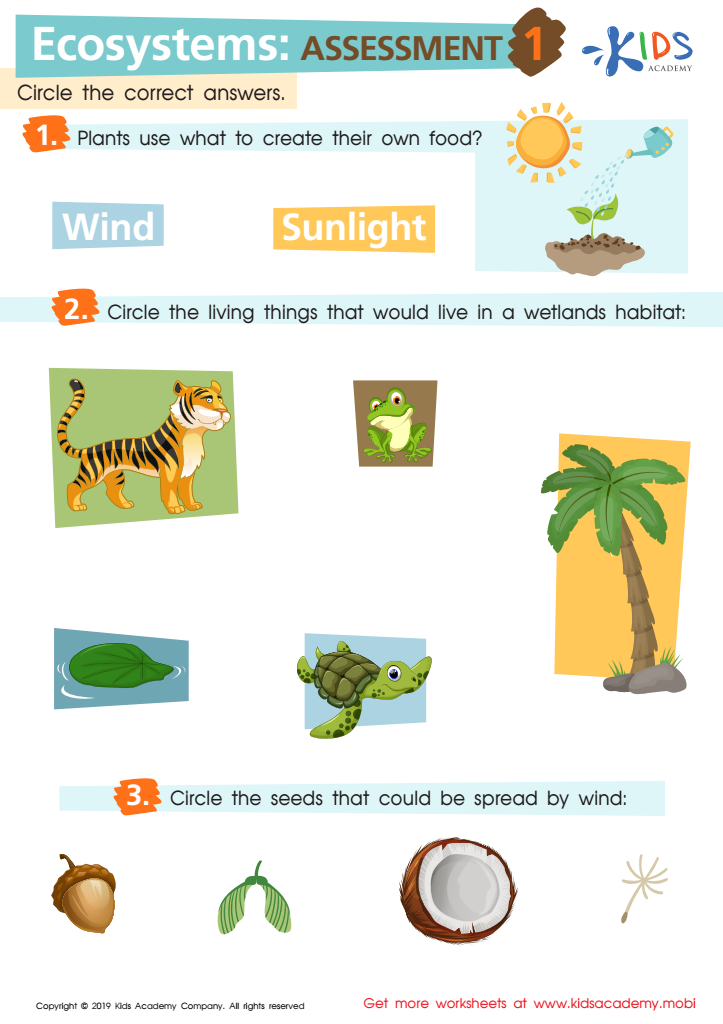
Ecosystems: Assessment 1 Worksheet







Parents and teachers should prioritize activities centered on our planet and environment for children aged 4-9 for several key reasons. First, early childhood is a crucial period for developing values and attitudes. Introducing children to environmental concepts fosters a sense of responsibility, making them more likely to appreciate and protect nature as they grow. These activities encourage curiosity and exploration, cultivating critical thinking skills as children observe and understand ecological systems.
Additionally, engaging in environmental activities promotes physical health. Outdoor learning experiences not only connect children with their surroundings but also reduce screen time, encouraging them to be active and enhance their well-being. These activities can also be fun and creative, facilitating teamwork and social skills through group projects and exploration.
Moreover, by educating young learners about sustainability, conservation, and biodiversity, we prepare them to become informed stewards of the Earth. This knowledge is essential, given today's environmental challenges, as children equipped with this understanding can contribute to building a more sustainable future. Ultimately, caring about our planet instills a sense of hope and empowers the next generation to take meaningful action for the environment, ensuring a healthier world for all living beings.








