Fun and Engaging Physical Science Worksheets for 7-Year-Olds - Boost Knowledge and Curiosity!
4 filtered results
-
From - To
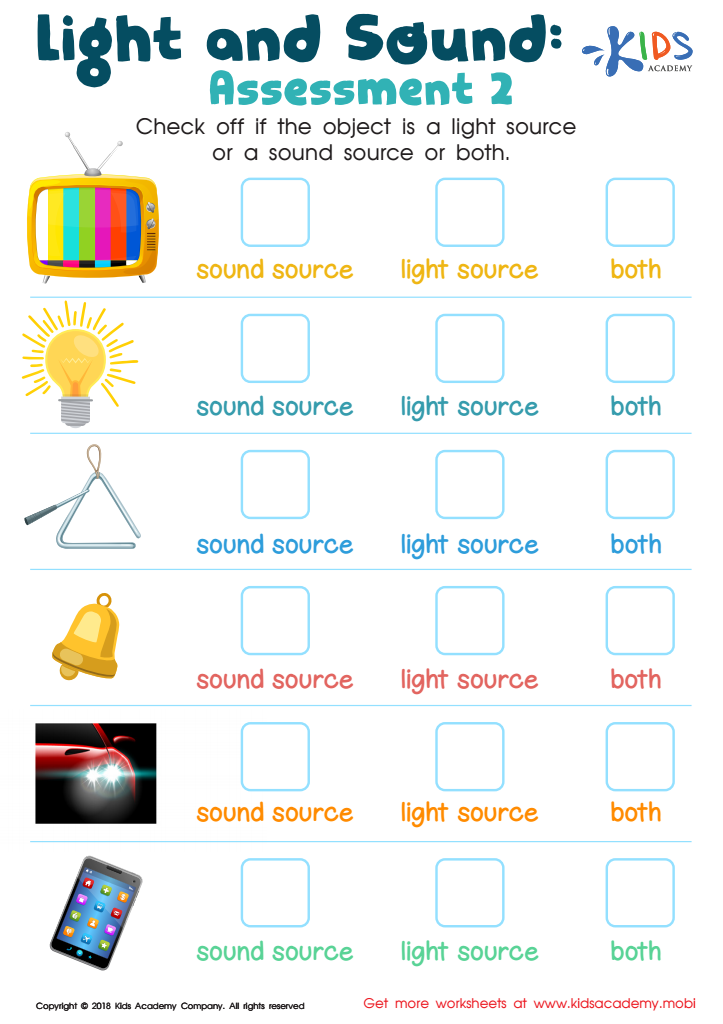
Light and Sound: Assessment 2 Worksheet
 Assign to My Students
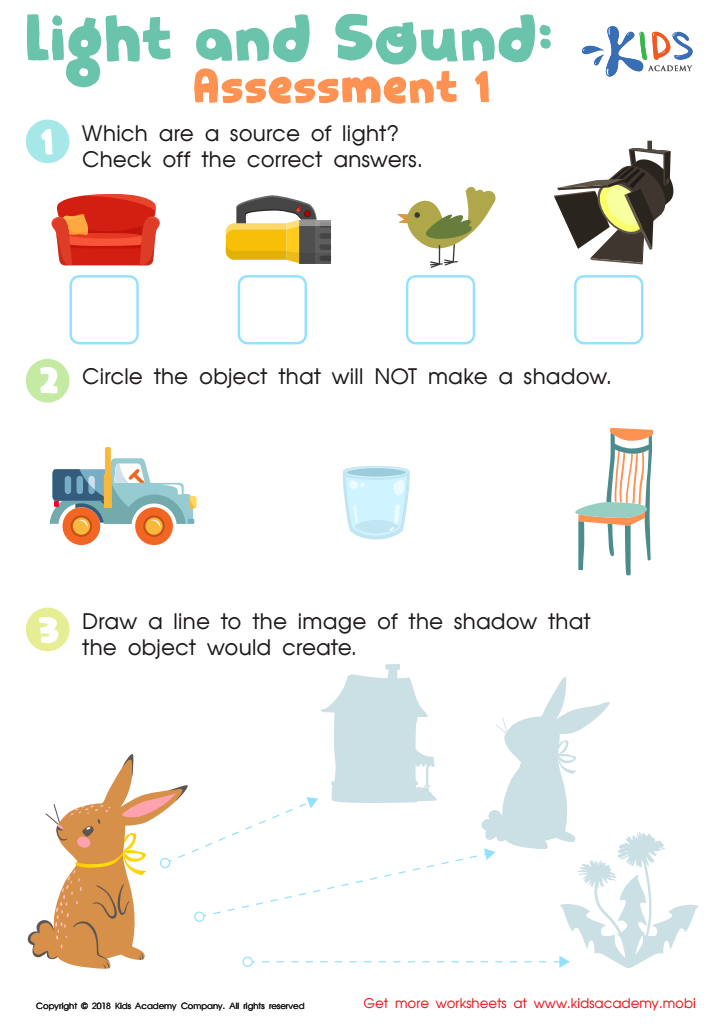
Light and Sound: Assessment 1 Worksheet
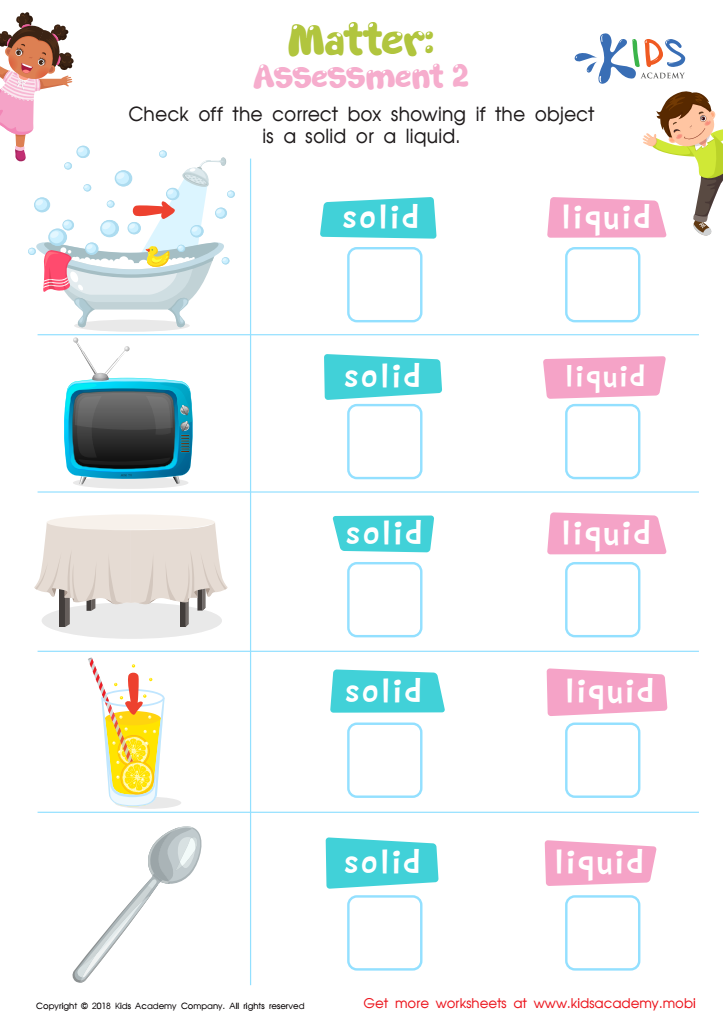
Matter: Assessment 2 Worksheet
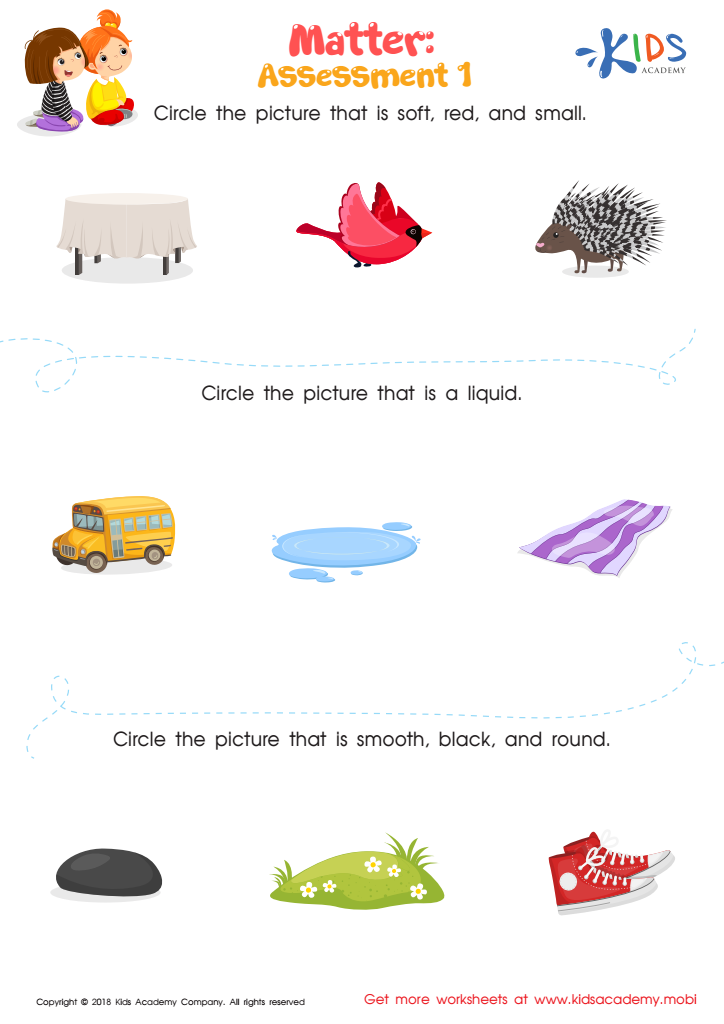
Matter: Assessment 1 Worksheet







Engaging in Physical Science worksheets activities is a pivotal part of learning that offers numerous benefits to students across various educational levels. Physical Science, encompassing the study of non-living systems, from chemistry to physics, requires a concrete understanding of concepts that can often seem abstract when merely described in textbooks or lectures. Herein lies the undeniable utility of worksheets specifically designed for Physical Science topics.
Firstly, Physical Science worksheets activities encourage active learning. By directly interacting with materials through problem-solving and critical thinking exercises, students gain a deeper comprehension of scientific principles. This hands-on approach makes learning more engaging and less passive, allowing students to connect theoretical knowledge with practical application, a critical skill for scientific thinking.
Moreover, worksheets provide a structured way for students to practice and reinforce their learning. This repetitive practice is crucial in a field like Physical Science, where mastery often depends on the ability to recall and apply complex formulas and theories. Through carefully crafted activities, learners can gradually build their confidence and competence in tackling challenging material.
Furthermore, Physical Science worksheets activities are incredibly versatile teaching tools. They can be designed to cater to different learning styles, ensuring that visual, auditory, and kinesthetic learners all find ways to engage with the content effectively. Worksheets can also be adapted to suit individual learning paces, allowing students who may need more time to grasp certain concepts the opportunity to do so without feeling pressured.
Another significant advantage is the immediate feedback that worksheets can provide. Whether it's through classroom discussions, peer reviews, or teacher assessments, this feedback is vital for correcting misunderstandings and guiding students towards a more accurate comprehension of Physical Science phenomena.
In conclusion, Physical Science worksheets activities are a cornerstone of effective science education. They not only make learning more interactive and enjoyable but also enhance understanding, encourage constant practice, and cater to diverse learning needs, all of which are essential for fostering scientific literacy and competence.








