Easy Sorting worksheets activities for 4-Year-Olds
2 filtered results
-
From - To
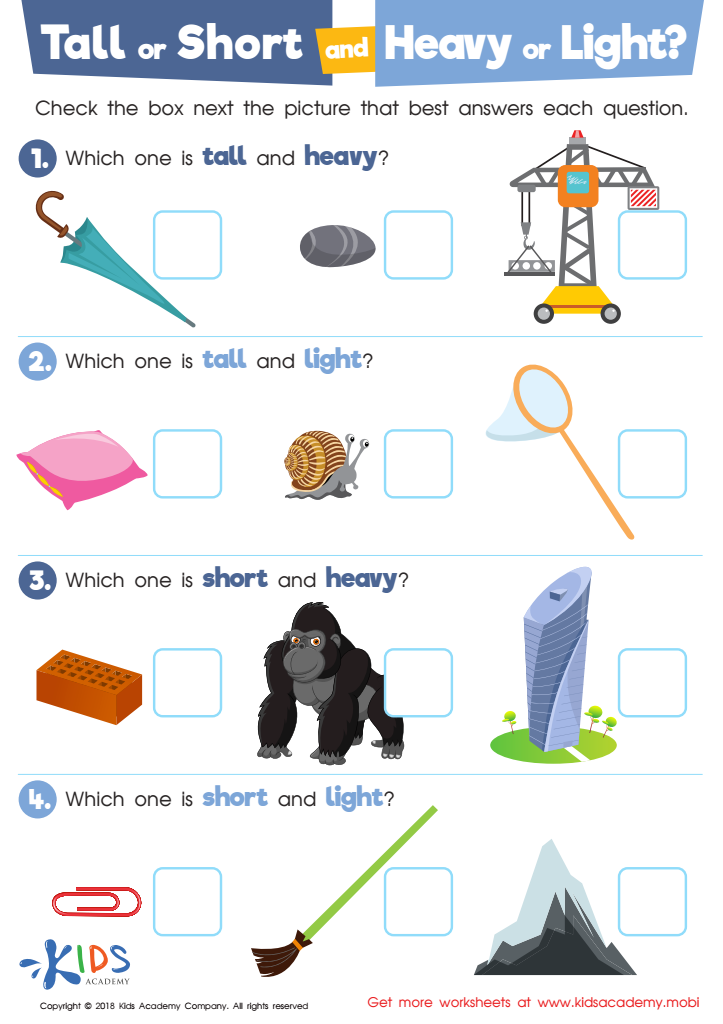
Tall or Short and Heavy or Light? Worksheet
 Assign to My Students
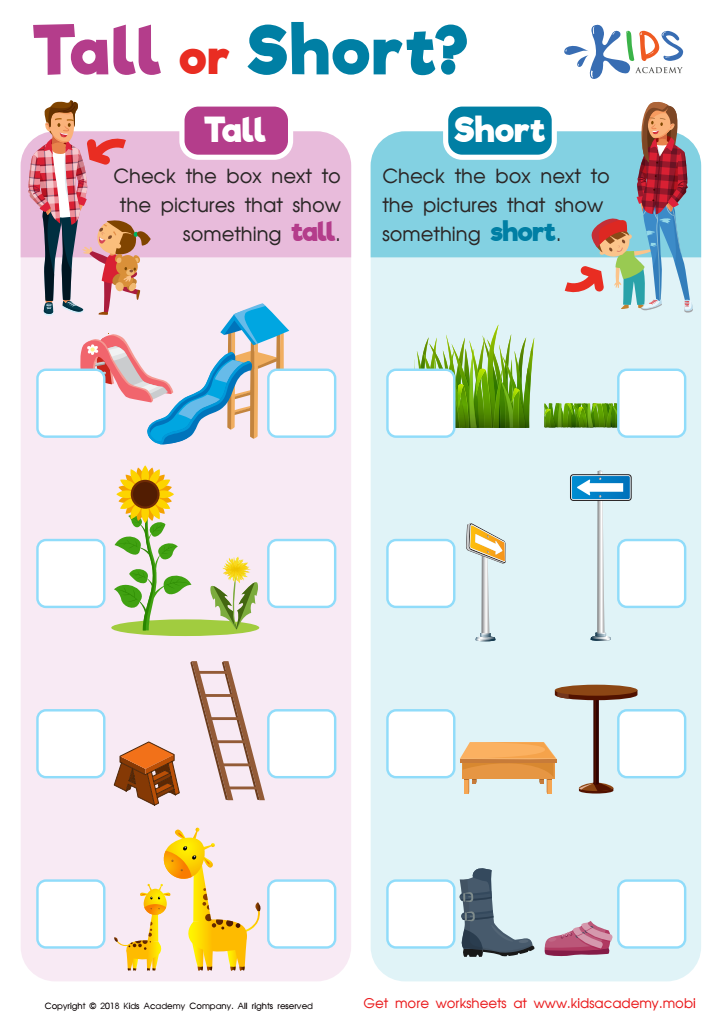
Tall or Short? Worksheet






Easy Sorting worksheets activities stand out as an essential tool in the developmental learning process for children, offering a plethora of benefits that extend far beyond the classroom. These activities are not just about arranging objects or numbers; they are a foundational step towards building critical thinking, categorization skills, and enhancing cognitive development.
Firstly, Easy Sorting worksheets activities introduce young learners to the concept of organization. By engaging in sorting exercises, children learn how to classify items based on different attributes such as size, color, shape, or type. This not only aids in their understanding of the world around them but also helps in vocabulary building as they learn to associate specific characteristics with certain groups.
Moreover, these activities pave the way for mathematical thinking. Sorting is a precursor to counting, addition, and subtraction, as it involves grouping items, which is a fundamental math skill. Through Easy Sorting worksheets activities, children can grasp the basics of pattern recognition, sequence, and order, setting a solid foundation for more complex mathematical concepts later on.
Easy Sorting worksheets activities also enhance problem-solving skills. Children are faced with the challenge of determining the basis for sorting items, which requires them to think critically and make decisions. This process boosts their analytical skills, fostering a mindset that is not only beneficial for academic pursuits but for real-life situations as well.
Furthermore, the simplicity of Easy Sorting worksheets activities makes them accessible and enjoyable. They can be tailored to the child's age and interests, making learning a fun and engaging process. This positive early learning experience instills a love for learning, encouraging children to explore and ask questions about the world around them.
In conclusion, Easy Sorting worksheets activities are more than just a simple educational tool; they are a cornerstone in the development of young minds. By facilitating the growth of organizational skills, mathematical thinking, problem-solving abilities, and fostering a positive attitude towards learning, these activities are invaluable in preparing children for academic success and the challenges of everyday life.








