
Extra Challenge Tracing Numbers worksheets activities for Ages 8-9
2 filtered results
Difficulty Level
Grade
Age
-
From - To
Subject
Activity
Standards
Dive into a world of numerical fun with our Extra Challenge Tracing Numbers worksheets activities! Designed to captivate and challenge young minds, these worksheets are the perfect blend of learning and enjoyment. Tailored for those eager to advance their number recognition and writing skills, our activities provide a stimulating environment that encourages progress and precision. From tracing intricate patterns to mastering the sequence of numbers, each page is a step towards numerical mastery. Ideal for both classroom and home settings, our Extra Challenge Tracing Numbers worksheets are your go-to resource for fostering a deep love and understanding of numbers in children. Embrace the challenge today and watch your little learners flourish!
Favorites
With answer key
Interactive
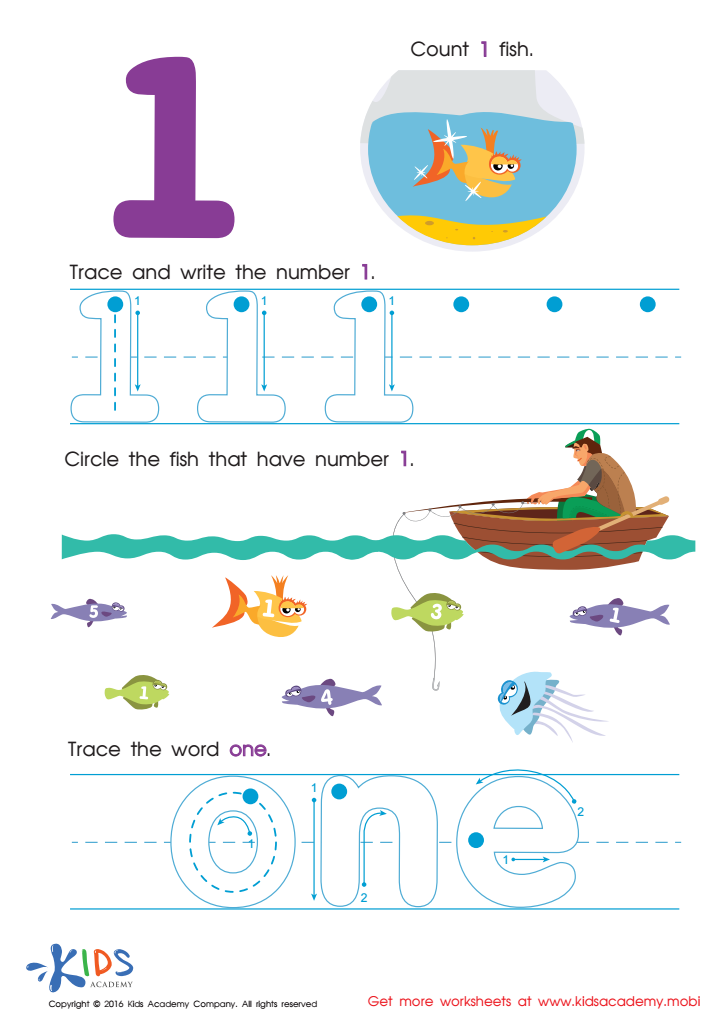
Learning to Write 1 Worksheet
Learning to write numbers can be easy and fun! Get this new number worksheet to help your child excel. Practice counting, tracing and writing the number “one”, then circle the fish with “1” on them. Revise spelling and have fun! Get more tracing numbers worksheets at Kids Academy and enjoy the learning process.
 Assign to My Students
Learning to Write 1 Worksheet
Worksheet
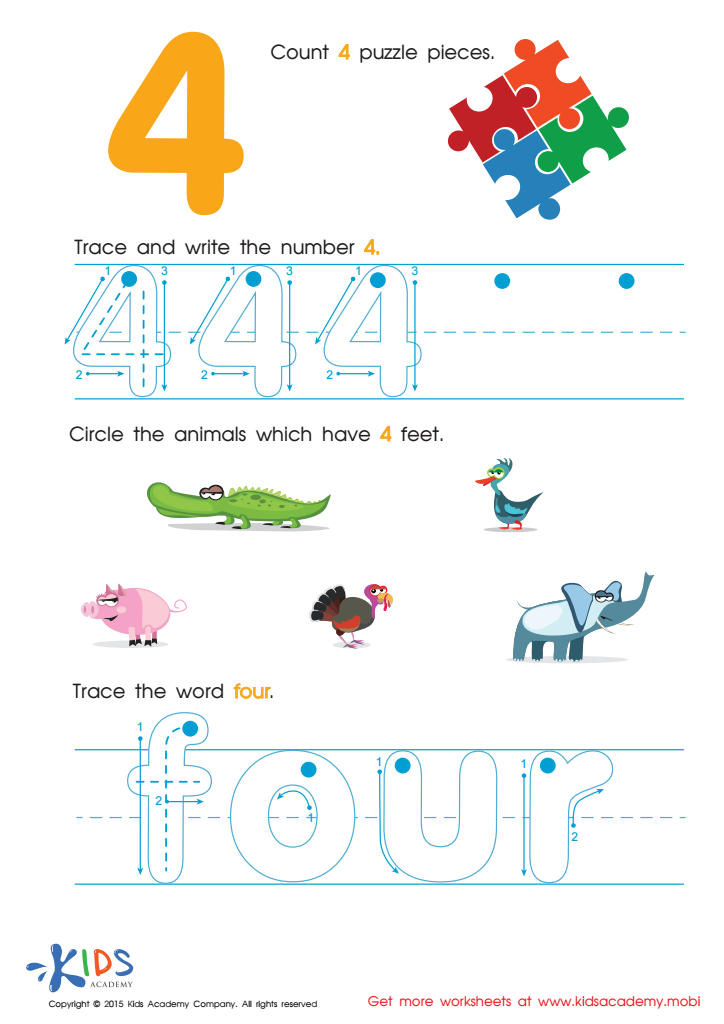
Teaching Children to Write Number 4 Worksheet
Count the pieces of the puzzle - there are four. Trace the number and write it. Circle the animals with four feet. Trace the word "four" too. Kids Academy offers tracing numbers worksheets for preschoolers, making studies easy and effective.
Teaching Children to Write Number 4 Worksheet
Worksheet
Join Kids Academy for Free
Who is primarily going to use this learning content?







Extra Challenge Tracing Numbers worksheets activities serve as a foundational tool in the development of numerical literacy and fine motor skills among young learners. These specialized worksheets are crafted to provide an additional layer of learning, designed to reinforce and expand upon the basic skills acquired in regular classroom settings. The importance of these activities cannot be overstated, as they play a critical role in preparing children for more advanced mathematical concepts and ensuring a smooth transition into higher levels of education.
First and foremost, Extra Challenge Tracing Numbers worksheets activities enhance number recognition. By repetitively tracing numbers, children become familiar with their shapes, making it easier to distinguish between them. This familiarity is crucial for the development of basic math skills such as counting, addition, and subtraction. As children advance, having a solid grasp of numbers allows for a more intuitive understanding of mathematical operations and concepts.
Moreover, these worksheets are pivotal in sharpening fine motor skills. The act of tracing requires control and precision, which are essential for writing. Through these exercises, children develop the dexterity and hand-eye coordination needed for writing letters and numbers independently. This skill set is not only beneficial for academic success but is also instrumental in everyday tasks.
Additionally, Extra Challenge Tracing Numbers worksheets activities introduce an element of challenge that encourages cognitive development. They require concentration, problem-solving, and the ability to follow instructions—skills that are applicable beyond mathematics. Engaging with these challenging activities fosters a growth mindset, teaching children the value of perseverance and hard work.
In conclusion, Extra Challenge Tracing Numbers worksheets activities are invaluable in a child's early educational journey. They not only bolster numerical literacy and fine motor skills but also cultivate a range of cognitive abilities that are essential for academic and personal growth. By incorporating these activities into learning routines, educators and parents can provide children with a solid foundation for future success.








