
Extra Challenge Tracing Numbers worksheets activities for 8-Year-Olds
2 filtered results
Difficulty Level
Grade
Age
-
From - To
Subject
Activity
Standards
Introducing our Extra Challenge Tracing Numbers worksheets activities, designed to ignite your child's passion for numbers and enhance their numerical skills beyond the basics. These carefully curated worksheets not only reinforce counting and number recognition but also introduce advanced concepts in a fun, engaging way. Ideal for young learners who are ready to take their math skills to the next level, our Extra Challenge Tracing Numbers series offers a variety of activities that challenge and stimulate the mind. Dive into our collection and discover the perfect balance of learning and entertainment, setting the foundation for a lifetime of mathematical success.
Favorites
With answer key
Interactive
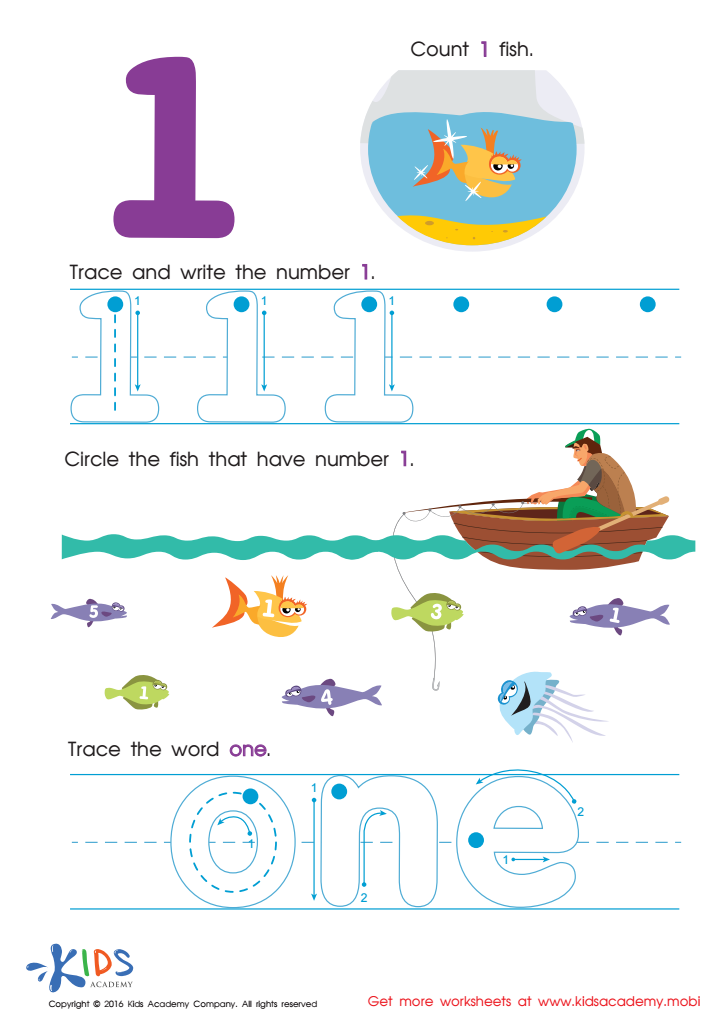
Learning to Write 1 Worksheet
Learning to write numbers can be easy and fun! Get this new number worksheet to help your child excel. Practice counting, tracing and writing the number “one”, then circle the fish with “1” on them. Revise spelling and have fun! Get more tracing numbers worksheets at Kids Academy and enjoy the learning process.
 Assign to My Students
Learning to Write 1 Worksheet
Worksheet
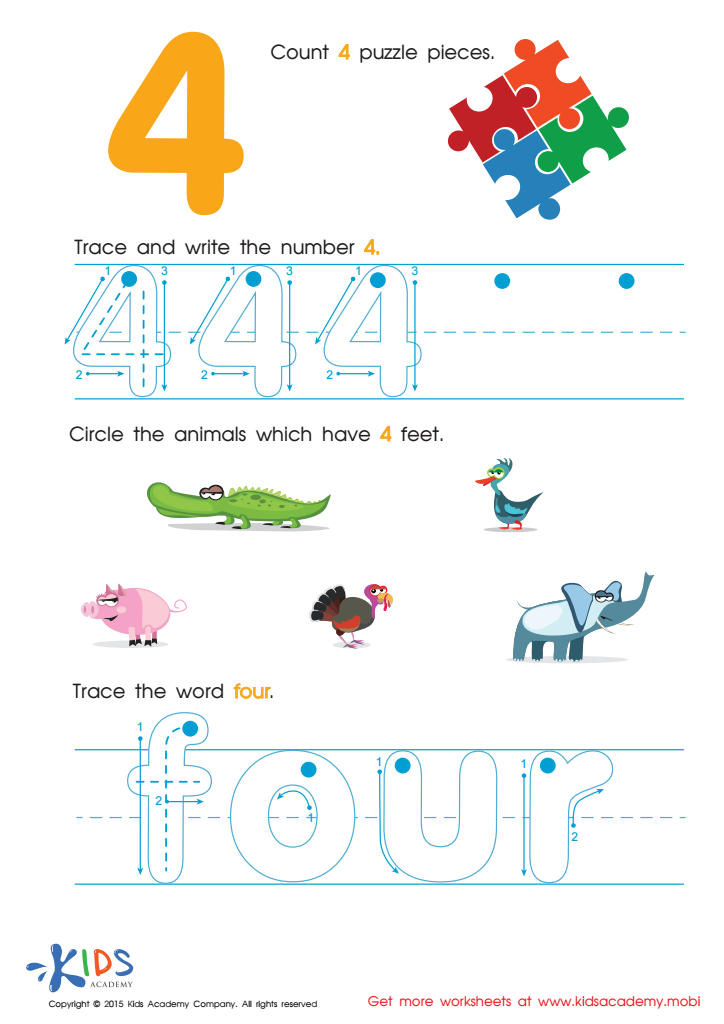
Teaching Children to Write Number 4 Worksheet
Count the pieces of the puzzle - there are four. Trace the number and write it. Circle the animals with four feet. Trace the word "four" too. Kids Academy offers tracing numbers worksheets for preschoolers, making studies easy and effective.
Teaching Children to Write Number 4 Worksheet
Worksheet
Join Kids Academy for Free
Who is primarily going to use this learning content?







.jpg)
Extra Challenge Tracing Numbers worksheets activities play a pivotal role in early childhood education, offering a unique blend of fun and learning that caters to young learners' development needs. These activities are not just another task for children to complete; they are meticulously designed to engage young minds in the foundational aspects of numeracy, providing a structured yet enjoyable approach to learning numbers.
One of the primary benefits of Extra Challenge Tracing Numbers worksheets activities is the enhancement of fine motor skills. As children trace numbers, they refine their pencil grip and control, which are crucial for writing. This practice lays a solid foundation not only for writing numbers but also for letter formation, contributing to overall literacy skills.
Moreover, these activities introduce children to the concept of numerical order and recognition in an interactive manner. By tracing numbers, children familiarize themselves with the shapes and sequences of numbers, which is essential for their mathematical development. This early exposure to numbers boosts their confidence and prepares them for more complex mathematical concepts in the future.
Extra Challenge Tracing Numbers worksheets activities also foster concentration and patience. Children learn to follow lines and shapes with precision, a skill that requires focus and perseverance. This practice not only improves their ability to concentrate but also instills a sense of achievement and motivation to tackle more challenging tasks.
Furthermore, these worksheets are designed to be engaging and versatile, making learning accessible to children with various learning styles. Whether a child learns best through visual cues, hands-on activities, or repetition, Extra Challenge Tracing Numbers worksheets provide opportunities for all learners to excel.
In conclusion, Extra Challenge Tracing Numbers worksheets activities are a vital educational tool that supports early numerical literacy, fine motor skill development, concentration, and learning motivation. By incorporating these activities into a child’s learning routine, educators and parents can provide a strong foundation for their future academic success and lifelong learning journey.








