Normal Counting worksheets activities for Ages 4-5
1 filtered results
-
From - To
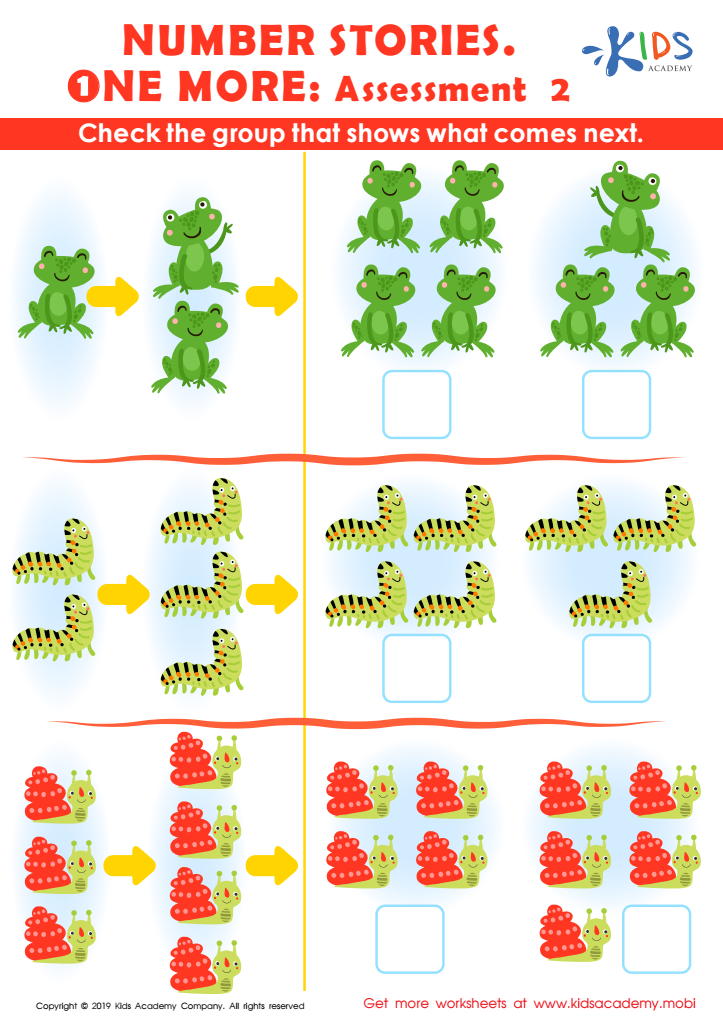
Number Stories One More – Assessment 2 Worksheet
 Assign to My Students



.jpg)



Normal Counting worksheets activities are an essential tool in the foundational development of mathematical skills in children. These worksheets offer a structured path for children to engage with numbers in a hands-on and interactive way. The importance of these activities stems from their ability to break down the concept of counting into manageable steps, making the learning process both enjoyable and effective.
One of the key reasons why Normal Counting worksheets activities are useful is that they cater to a wide range of learning styles. Whether a child is a visual, auditory, or kinesthetic learner, counting worksheets provide a tangible way for them to interact with numbers. By physically engaging with the worksheets, children can visualize the abstract concept of numbers, making it easier for them to grasp and remember.
Moreover, these worksheets are designed to progressively increase in complexity, which is crucial for developing a child's confidence and competence in counting. Starting with simple tasks and gradually moving to more challenging ones ensures that children are continuously building upon their existing knowledge. This scaffolding approach reinforces learning and encourages a deeper understanding of numbers and their relationships.
Normal Counting worksheets activities also foster independence and self-assessment. As children work through the worksheets, they learn to identify their mistakes and correct them, which is a vital skill in all areas of learning. This self-directed learning not only boosts their confidence but also instills a sense of responsibility for their educational progress.
In addition, the repetitive nature of counting worksheets helps to solidify the counting sequence in a child's mind, making it second nature. This repetition is not monotonous but rather engaging, with a variety of activities designed to hold the child's attention and interest.
In summary, Normal Counting worksheets activities are a fundamental component of early mathematics education. They not only introduce children to the basics of counting but also develop critical thinking, problem-solving skills, and a positive attitude towards learning and education.








