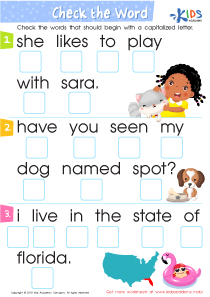
Normal Punctuation Worksheets for Ages 4-5
4 filtered results
-
From - To
Dive into the exciting world of writing with our "Normal Punctuation for Ages 4-5" worksheets! Designed specifically for young learners, these engaging sheets offer a delightful introduction to the basics of punctuation. Tailored to captivate the curious minds of 4 to 5-year-olds, our worksheets guide children through the fundamental punctuation marks with fun, age-appropriate activities. From periods and question marks to exclamation points, your child will master the art of punctuating sentences while enjoying a colorful, interactive learning experience. Start your child's journey to becoming a punctuation pro with our must-have Normal Punctuation worksheets!
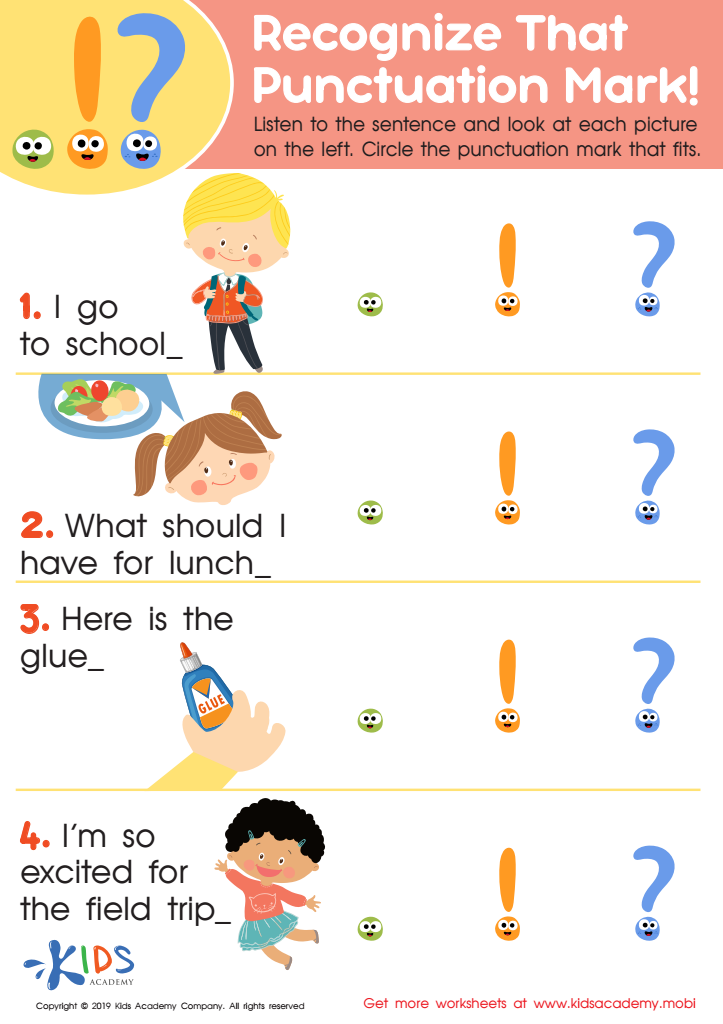
Recognize Punctuation Marks Worksheet
 Assign to My Students
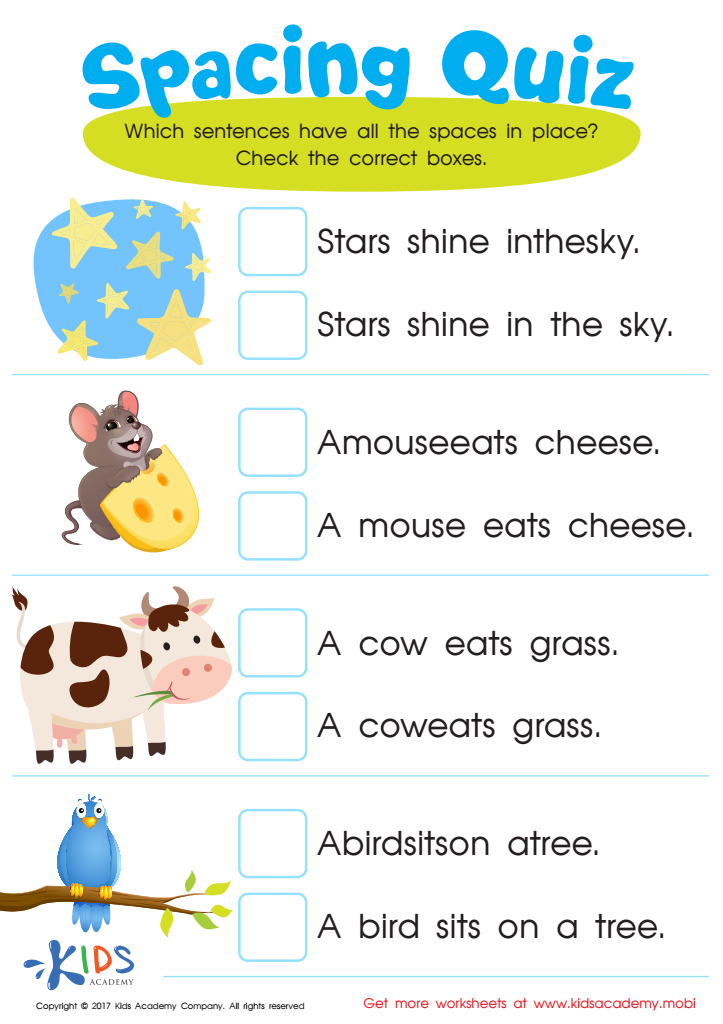
Spacing Quiz Worksheet
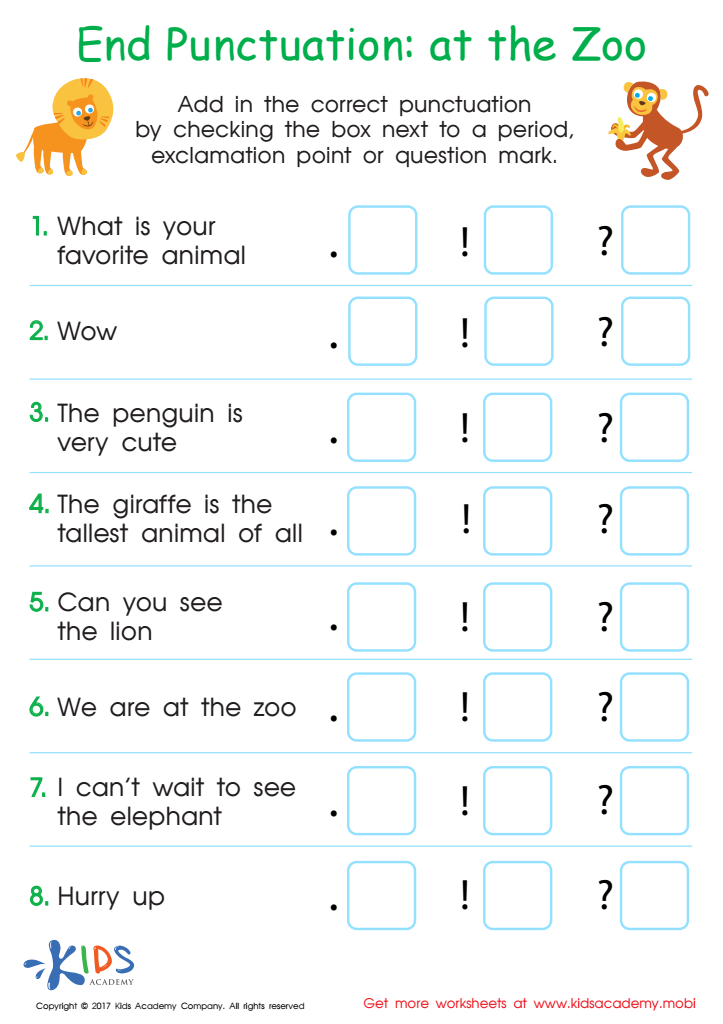
End Punctuation: At the Zoo Worksheet
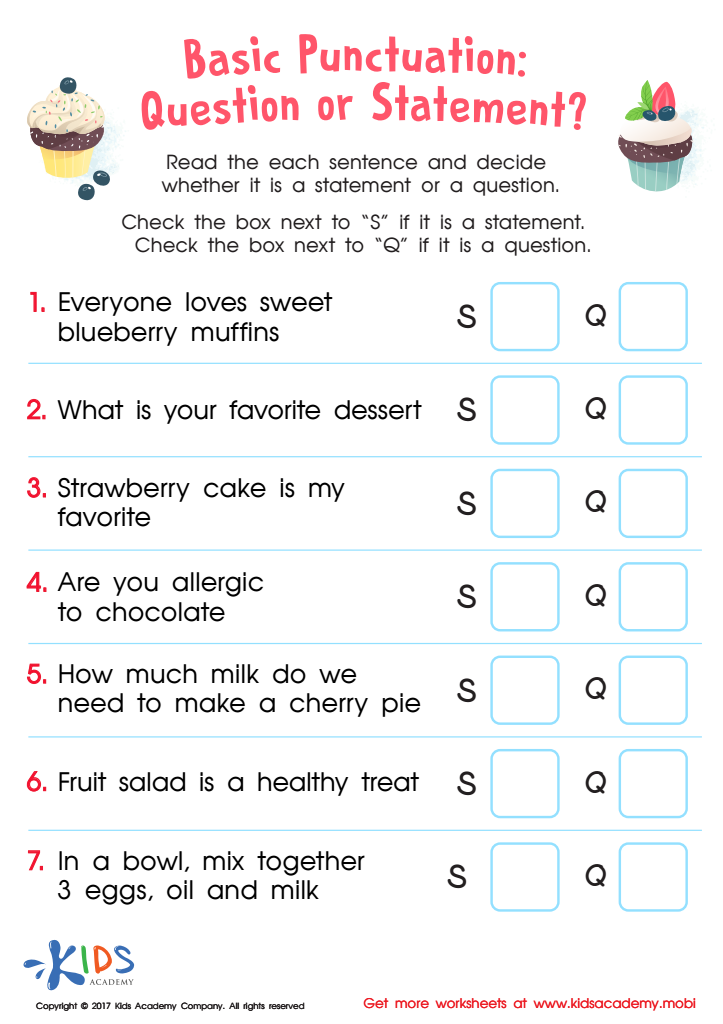
Basic Punctuation: Question or Statement Printable


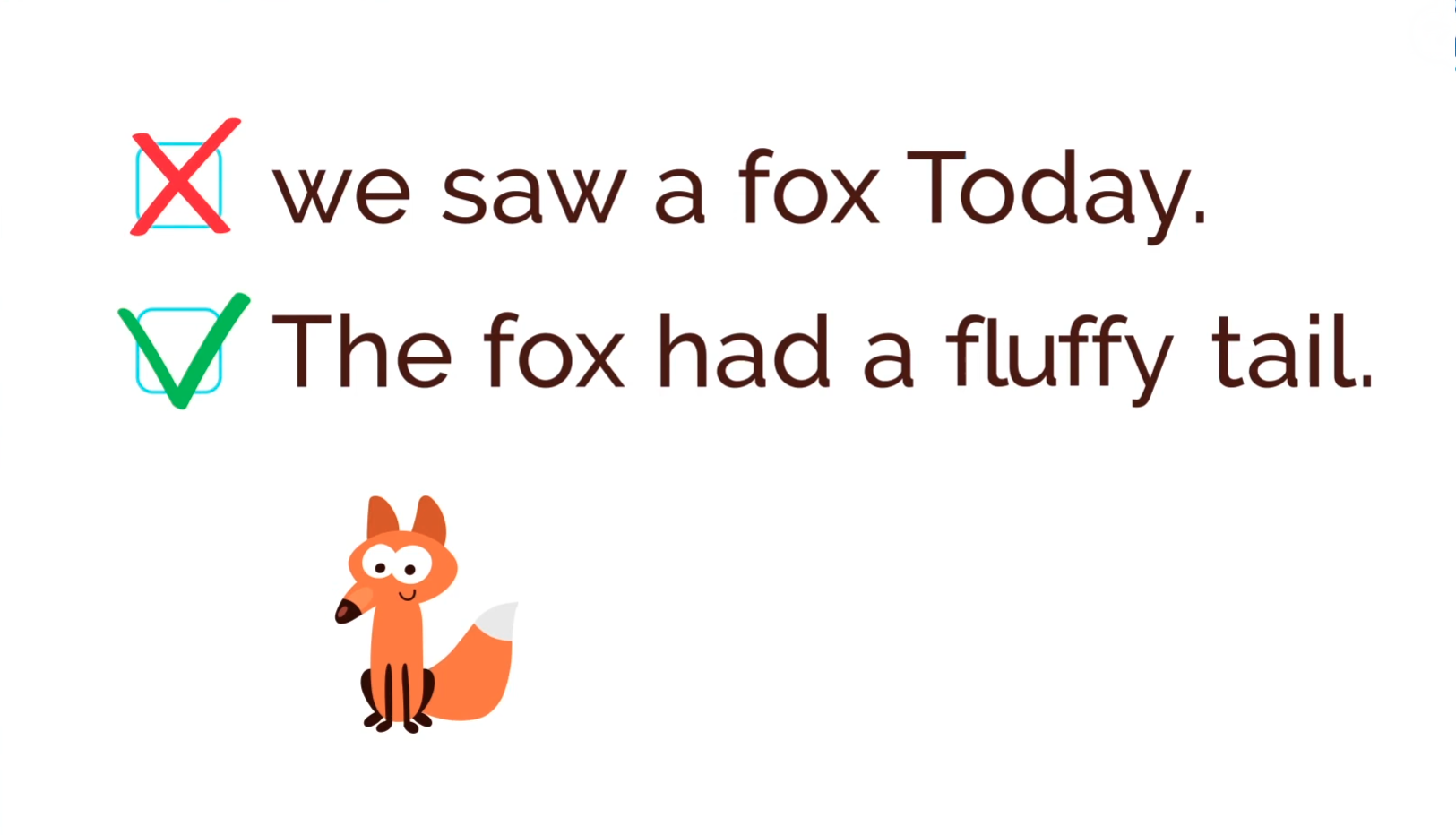




Normal punctuation worksheets designed specifically for children ages 4-5 play a crucial role in laying the foundation of early literacy skills. These worksheets are not just about teaching youngsters the basics of commas, periods, and question marks; they're about opening the doors to effective communication and comprehension at a tender age. By integrating Normal Punctuation for Ages 4-5 into the learning curriculum, we provide children with the tools needed to understand sentence structures, thereby enhancing their reading and writing capabilities.
The use of these worksheets fosters a learning environment that is both engaging and educational. At ages 4 to 5, children are at a developmental stage where they are incredibly receptive to new information. Normal punctuation worksheets are designed to captivate their interest with colorful and stimulating activities that make learning feel like a fun game rather than a tedious task. This approach ensures that children not only learn the basic rules of punctuation but also develop a love for reading and writing.
Moreover, mastering punctuation at an early age with the help of these worksheets can boost a child's confidence in their language abilities. It paves the way for smoother transitions to more complex literacy skills in future academic ventures. In essence, Normal Punctuation for Ages 4-5 worksheets are instrumental in shaping young learners' educational journeys, making them indispensable tools in early childhood education.