
Normal Phonics worksheets activities for 5-Year-Olds
4 filtered results
Difficulty Level
Grade
Age
-
From - To
Subject
Activity
Standards
Delve into the world of reading and writing with our captivating Normal Phonics worksheets activities. Designed to bolster literacy skills, these activities are meticulously crafted to engage learners of varying levels. Each worksheet is a treasure trove of phonemic awareness exercises, blending drills, and segmentation tasks. Whether you're a teacher seeking to enrich your classroom resources or a parent eager to support your child's learning journey at home, our Normal Phonics worksheets activities offer a comprehensive approach to mastering the building blocks of the English language. Embrace a fun and effective way to enhance reading fluency and spelling accuracy. Explore our collection today and unlock the joy of learning phonics!
Favorites
With answer key
Interactive
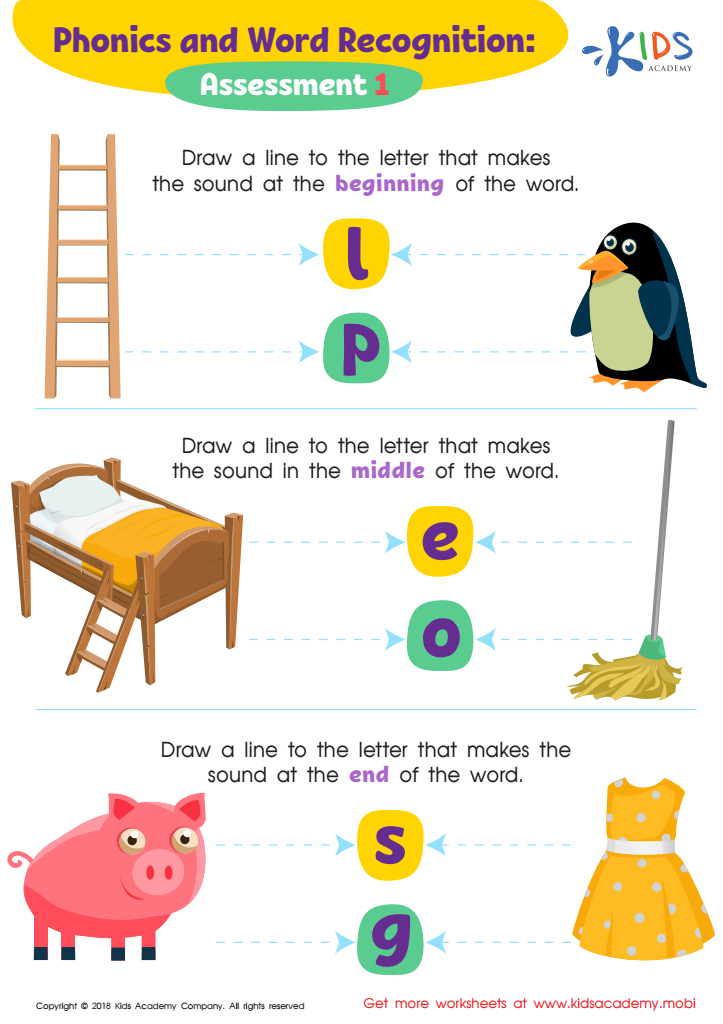
Phonics and Word Recognition: Assessment 1 ELA Worksheet
This fun worksheet tests your child's sound recognition skills for each part of a word. Ask your child to name each image and trace the line to match it with the corresponding letter. Listen for beginning sounds on 1st, middle sounds on 2nd, and ending sounds on 3rd. Encourage learning with this colorful and interactive activity!
 Assign to My Students
Phonics and Word Recognition: Assessment 1 ELA Worksheet
Worksheet
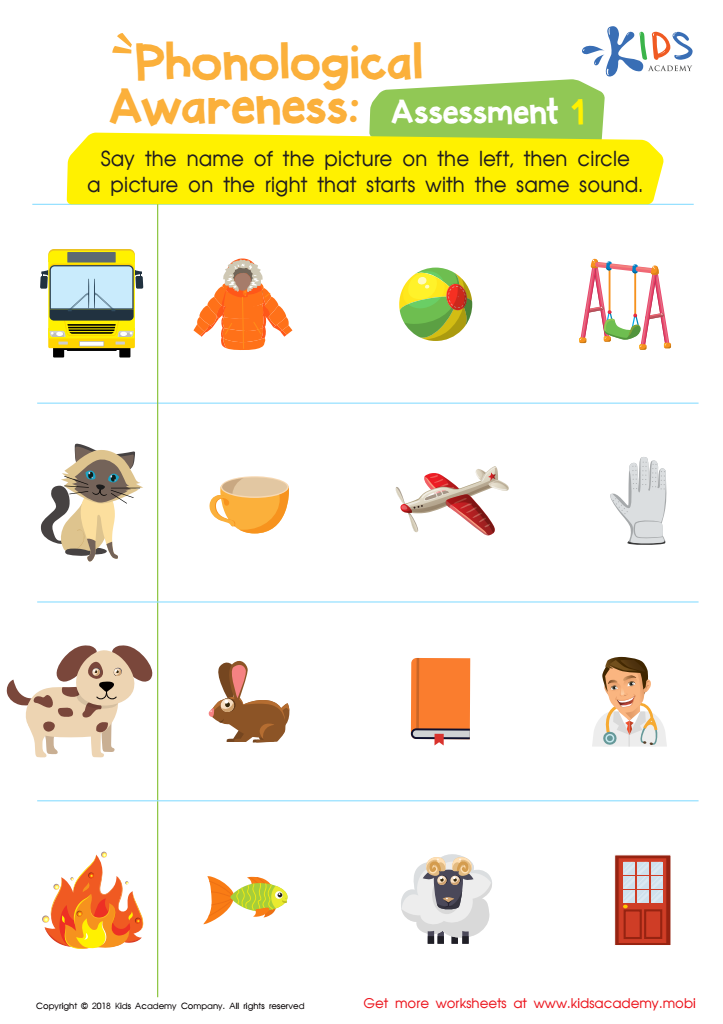
Phonological Awareness: Assessment 1 Worksheet
This worksheet helps kids build key phonics skills for pre-reading. They say each picture name aloud, focusing on the starting sound. Then, they match the sound with an image in the same row. Use as a checkpoint for kindergarten or grade 1 phonics readiness.
Phonological Awareness: Assessment 1 Worksheet
Worksheet
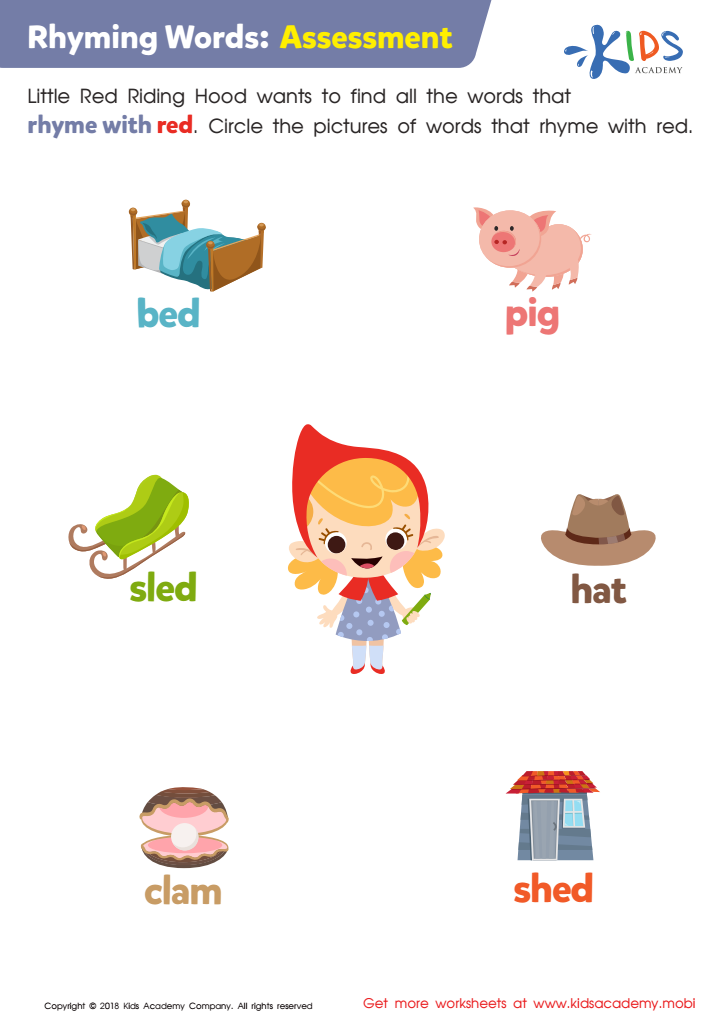
Rhyming Words: Assessment Worksheet
Help Little Red Riding Hood find rhyming words with "red". Download and print this worksheet. Have your child circle the rhyming words and pictures. Get them to say each word out loud and compare it to the word "red". When they're done, review the answers and talk about any words that don't rhyme.
Rhyming Words: Assessment Worksheet
Worksheet
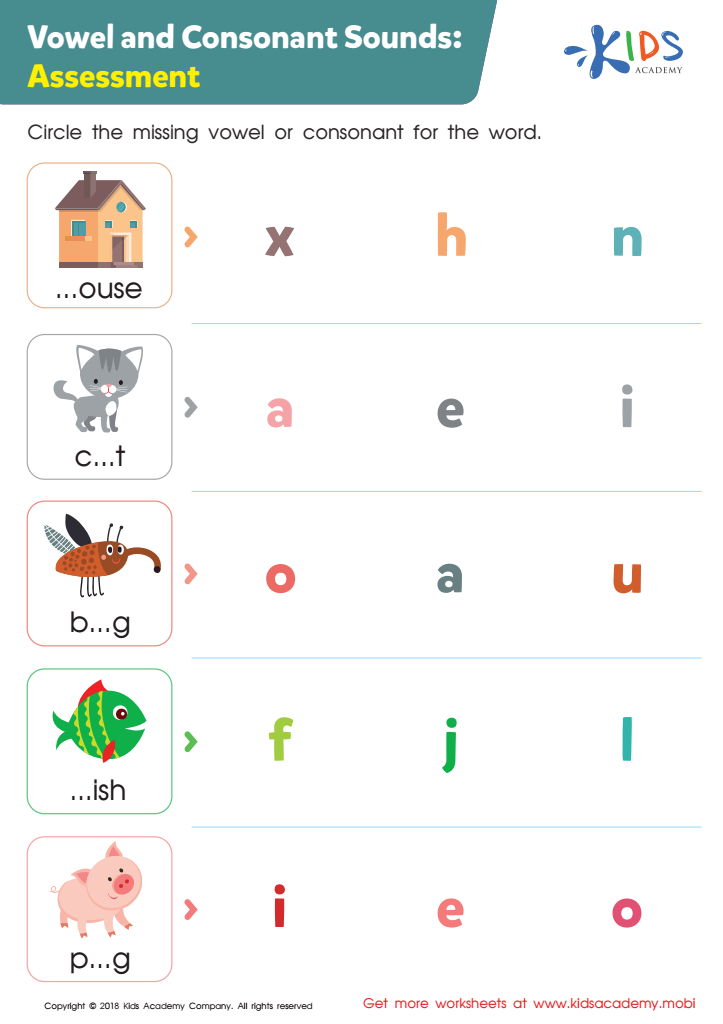
Vowel and Consonant Sounds: Assessment Worksheet
Test young elementary students on vowel and consonant sounds with this friendly phonics assessment worksheet. Get kids to name each image and look at the word underneath. Ask them to sound out the word, then circle the missing letter to complete. This will help assess their knowledge and skills!
Vowel and Consonant Sounds: Assessment Worksheet
Worksheet
Join Kids Academy for Free
Who is primarily going to use this learning content?






Normal Phonics worksheets activities stand as an essential pillar in the foundation of early literacy development. These structured exercises not only introduce young learners to the relationship between letters and sounds but also significantly contribute to their ability to decode words, a fundamental skill for reading. Here's why normal Phonics worksheets activities are especially useful in the journey of mastering the English language.
Firstly, these activities provide a systematic approach to learning. Normal Phonics worksheets are meticulously designed to introduce sounds progressively, allowing students to build on their knowledge incrementally. This systematic exposure ensures that learners grasp the basic phonetic rules, making the process of reading and spelling less daunting.
Moreover, the repetitive nature of Phonics worksheets activities reinforces learning. Repetition is a key learning tool, particularly in the early stages of education. Through consistent practice, children are able to solidify their understanding of phonics principles, leading to better retention and recall. This repetition helps cement the sound-to-symbol relationships that are crucial for reading fluency and comprehension.
Another significant advantage of normal Phonics worksheets activities is the opportunity they provide for individualized learning. Every child learns at their own pace, and these worksheets can be tailored to suit varying levels of ability and progress. They allow learners to work at their comfortable speed, ensuring that they fully grasp each concept before moving on to more complex sounds and word structures.
Furthermore, these activities foster independence in young learners. As children work through the worksheets, they develop the confidence to tackle reading challenges on their own. This autonomy not only boosts their self-esteem but also encourages a love for reading and learning that can last a lifetime.
In conclusion, normal Phonics worksheets activities are invaluable tools in the realm of early education. By systematically introducing sound-letter relationships, reinforcing learning through repetition, allowing for individualized pacing, and fostering independence, these activities lay a solid foundation for literacy that benefits learners immensely.








