
Normal Matching worksheets activities for 8-Year-Olds
6 filtered results
Difficulty Level
Grade
Age
-
From - To
Subject
Activity
Standards
Unlock the potential of enriching learning experiences with our Normal Matching worksheets activities. Designed to captivate and educate, these activities offer a wide range of topics suitable for various age groups and learning stages. Through engaging Normal Matching exercises, students can enhance their cognitive abilities, improve memory, and develop critical thinking skills. Our worksheets are meticulously crafted to ensure an enjoyable and rewarding educational journey. Perfect for classroom use or at-home learning, these activities are a fantastic resource for teachers and parents alike. Dive into our collection today and discover the joy of learning through Normal Matching worksheets activities.
Favorites
With answer key
Interactive
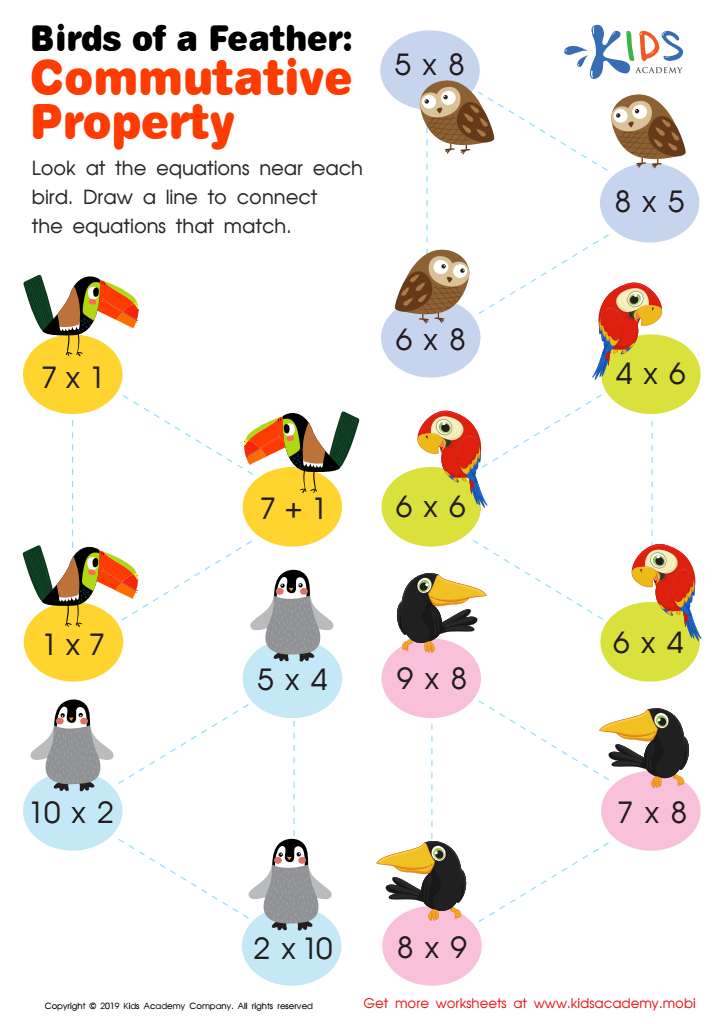
Birds of a Feather: Commutative Property Worksheet
The commutative property states that order of factors doesn't affect the product. Use it to help your kids solve simple problems. If they love birds, they'll love the colorful worksheet to identify exotic ones. Practicing is the best way to understand difficult topics. Look at the equations in this tracing sheet; help them draw a line to connect equations that match.
 Assign to My Students
Birds of a Feather: Commutative Property Worksheet
Worksheet
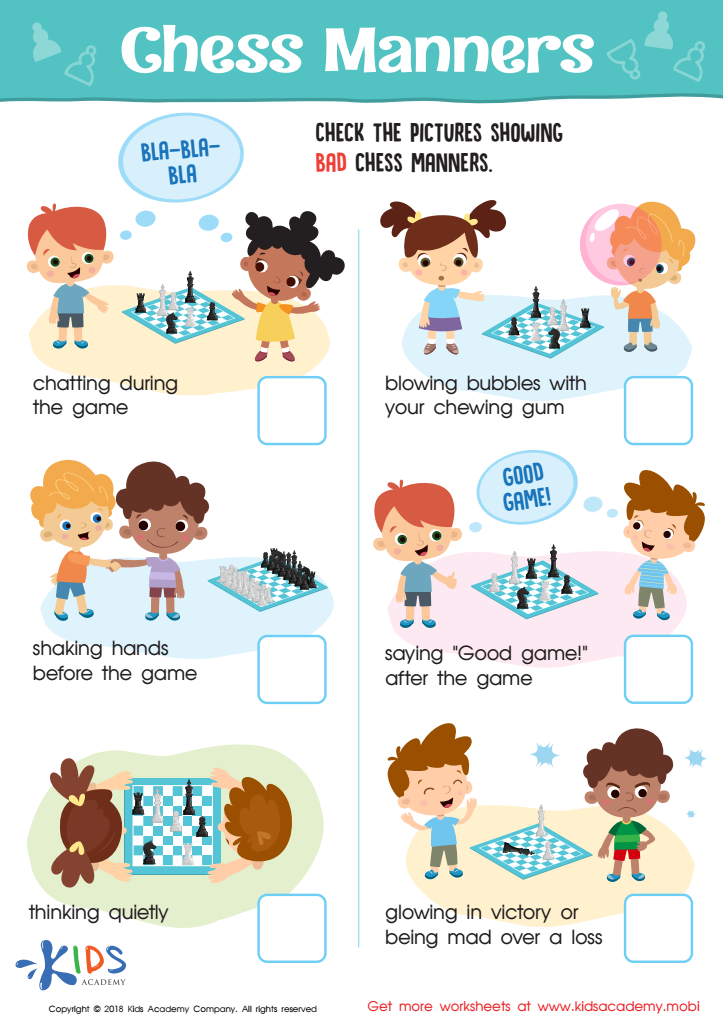
Chess Manners Worksheet
Teach your child chess manners in addition to table and social ones. Chess has clear rules and etiquette which must be followed for a proper game. Review this worksheet with your kid and discuss the pictures that show inappropriate behaviours. This will help them understand how to play the game correctly and with good manners.
Chess Manners Worksheet
Worksheet
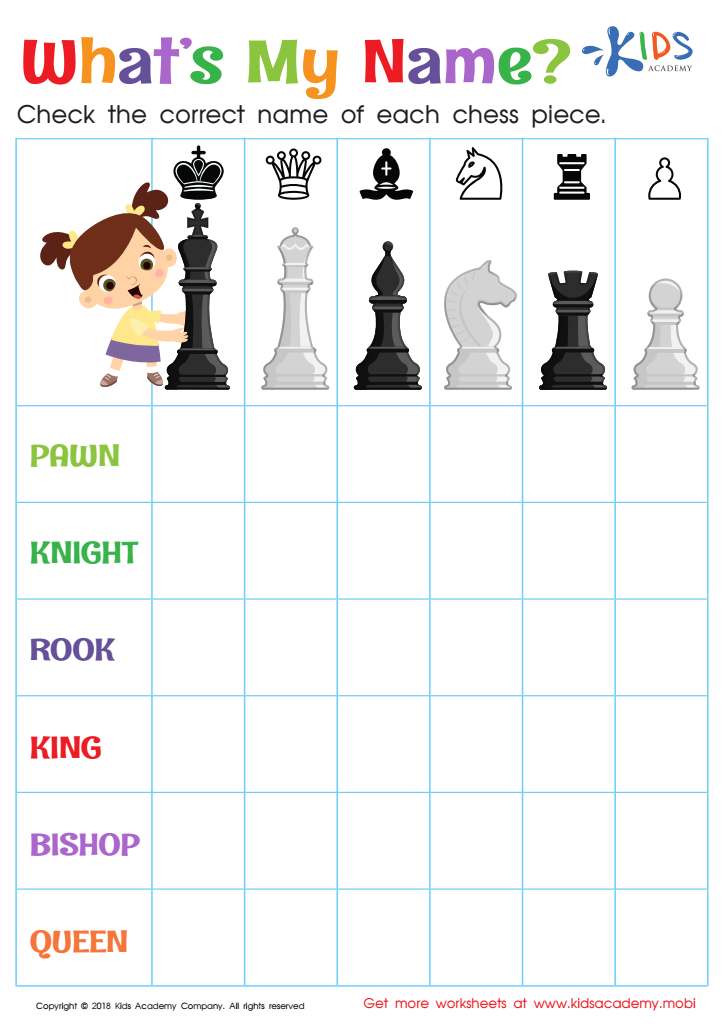
What's My Name? Worksheet
Test your child's chess knowledge with this colorful worksheet! There are six pieces lined up with names underneath. Ask your child to name each piece, then check if it's correct. Help them succeed by brushing up on the different pieces and their names.
What's My Name? Worksheet
Worksheet
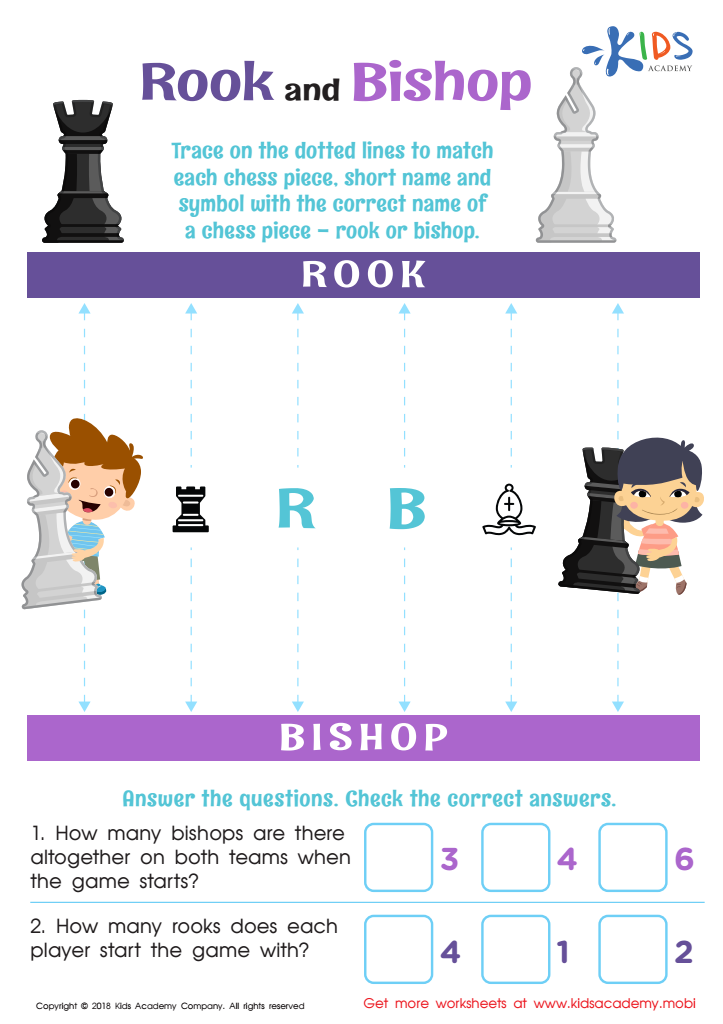
Rook and Bishop Worksheet
This tracing sheet helps your child learn chess pieces by matching each piece, short name and symbol to the correct name. After tracing, have them answer the questions and check their answers. It's a great way for them to become familiarized with chess.
Rook and Bishop Worksheet
Worksheet
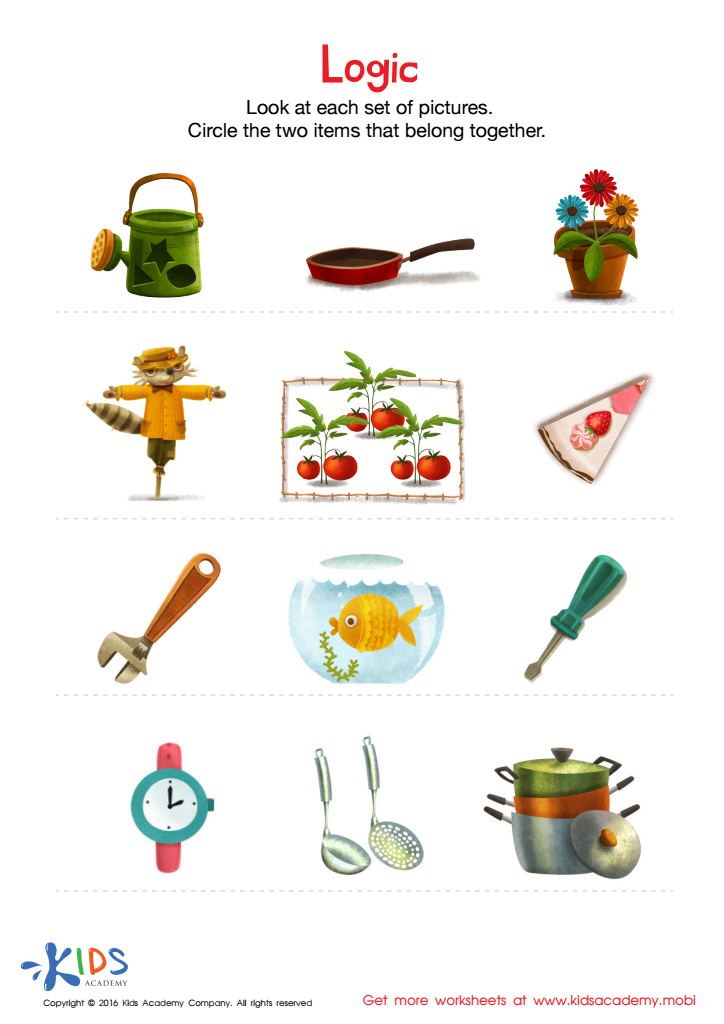
Logic Game Sorting Worksheet
Start your child's logic and reasoning development early with this fun matching worksheet! Through cute images and simple conversations, your little one can learn problem-solving, categorization, and matching skills. Plus, it's a great way for children to explore how items are used in real life. Try it and watch them boost skills with ease and fun!
Logic Game Sorting Worksheet
Worksheet
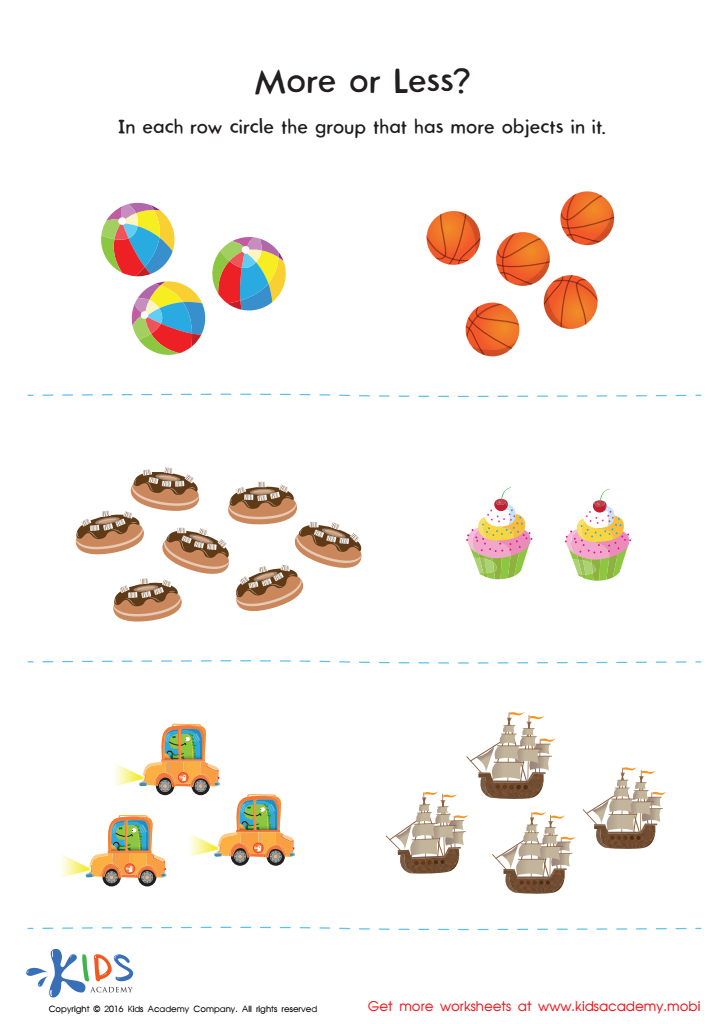
More or Less Size Worksheet
Worksheet
Join Kids Academy for Free
Who is primarily going to use this learning content?




.jpg)



Normal Matching worksheets activities hold an essential place in educational settings for numerous reasons. These activities are not only engaging but also highly beneficial in reinforcing the learning process across various age groups and subjects. Here’s why they are considered a valuable educational tool:
-
Enhances Memory and Recall: Normal Matching worksheets require learners to recall information by matching pairs or related items, which significantly strengthens memory. The repetitive nature of matching the correct pairs helps in embedding information deeply into a learner's memory, making it easier to retrieve when needed.
-
Promotes Critical Thinking: These activities compel students to think critically and make connections between concepts. Whether it’s matching words to their meanings, historical events to their dates, or causes to their effects, students must analyze and evaluate to make accurate matches, thereby honing their critical thinking skills.
-
Visual Discrimination Skills: Especially in younger learners, Normal Matching worksheets activities are instrumental in developing visual discrimination skills. Students learn to notice and differentiate between the subtle differences and similarities in shapes, letters, numbers, and objects, which is a foundational skill for reading and math.
-
Boosts Vocabulary and Language Skills: When used for language learning, matching worksheets can significantly expand a student’s vocabulary. Matching words to images or synonyms and antonyms encourages a deeper understanding of language and enriches a learner’s vocabulary reservoir.
-
Engaging and Motivating: The interactive nature of matching exercises makes learning fun and engaging. It breaks the monotony of traditional lecturing methods and motivates students through the satisfaction of finding correct matches. This positive reinforcement encourages continuous engagement and interest in the subject matter.
-
Versatility: Normal Matching worksheets activities are incredibly versatile and can be tailored to suit any subject matter, from math and science to history and language arts. This adaptability ensures that educators can incorporate them into various learning modules, enhancing the overall educational experience.
In conclusion, Normal Matching worksheets activities are a powerful tool in the educational toolkit. They not only make learning more interactive and enjoyable but also support crucial cognitive skills such as memory, critical thinking, and visual discrimination, all while enriching language proficiency and subject matter understanding.








