Time Worksheets for Ages 3-7 - Page 2
25 filtered results
-
From - To
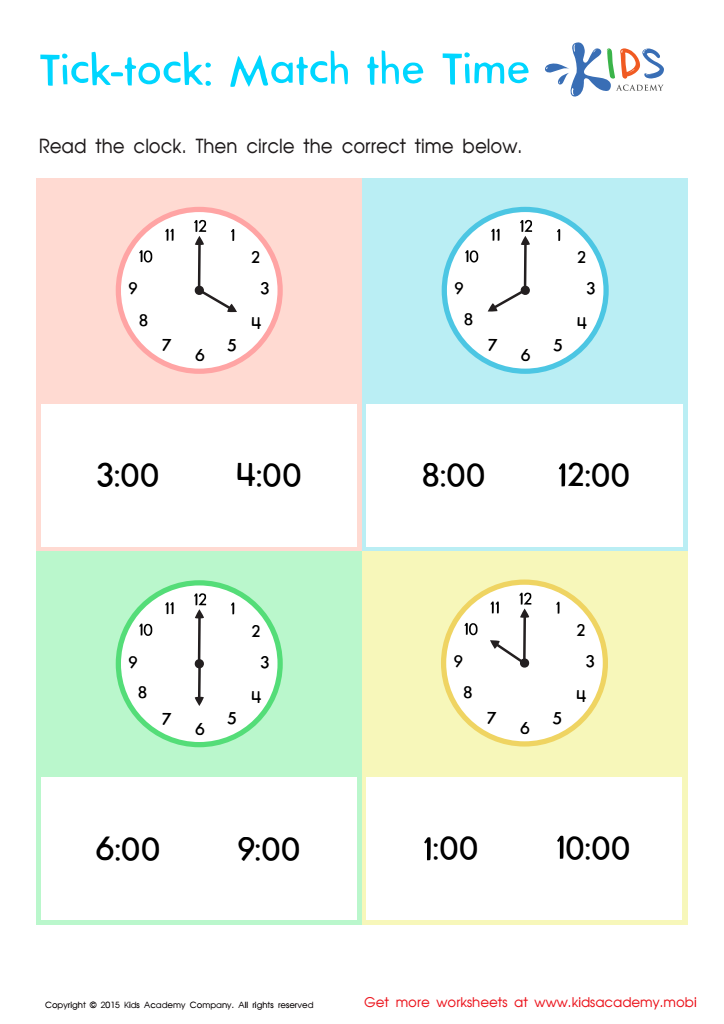
Telling The Time Worksheet: Part 4
 Assign to My Students








Time is a fundamental concept that shapes a child's understanding of their daily lives and experiences. For ages 3-7, learning about time goes beyond numbers and clocks; it encompasses routines, expectations, and the structure of the day. Parents and teachers should care about this developmental milestone for several reasons.
Firstly, grasping time helps children build essential life skills, such as time management and planning. Knowing the sequence of events can enhance their understanding of schedules, improving their ability to transition from one activity to another. Secondly, a sense of time nurtures responsibility and independence. When children know when to complete tasks or when to expect certain activities, they are more likely to take initiatives in their routines.
Moreover, understanding time contributes to cognitive development. Children learn to differentiate between past, present, and future. Such comprehension enhances their storytelling skills and fosters a broader understanding of sequencing and cause-and-effect relationships. Finally, discussions around time can be linked to emotions, fostering discussions about anticipation and patience.
In conclusion, focusing on time education in early childhood lays a crucial foundation for social, cognitive, and emotional development, equipping young learners with skills they will use throughout their lives.








