Vowels and Consonants Worksheets for Ages 4-7 - Page 2
28 filtered results
-
From - To
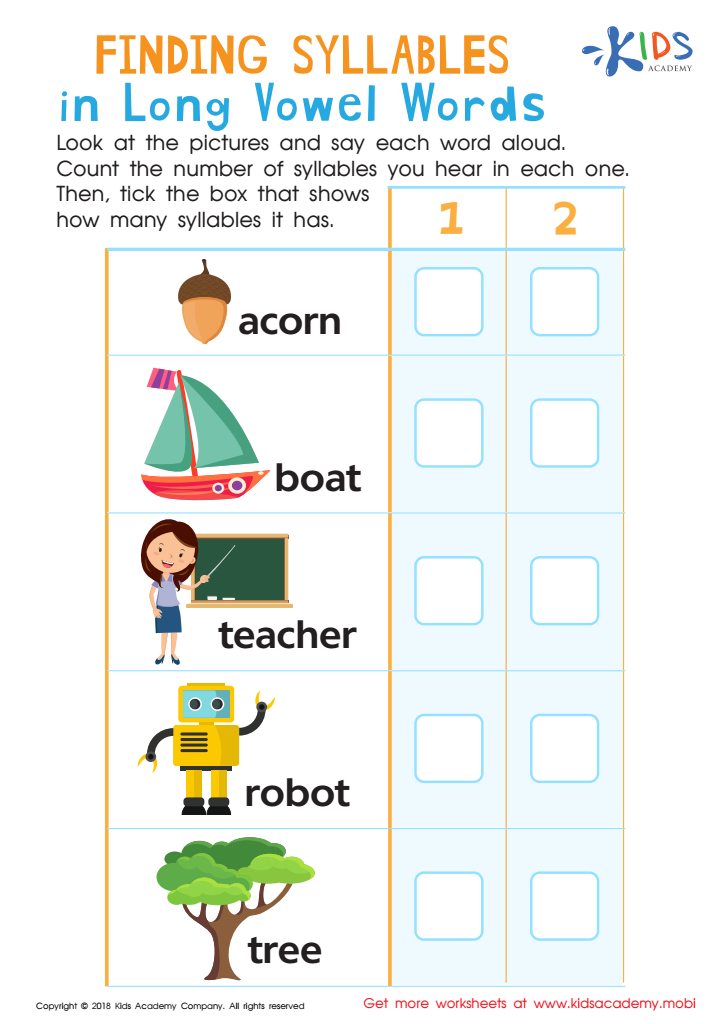
Finding Syllables in Long Vowel Words Worksheet
 Assign to My Students
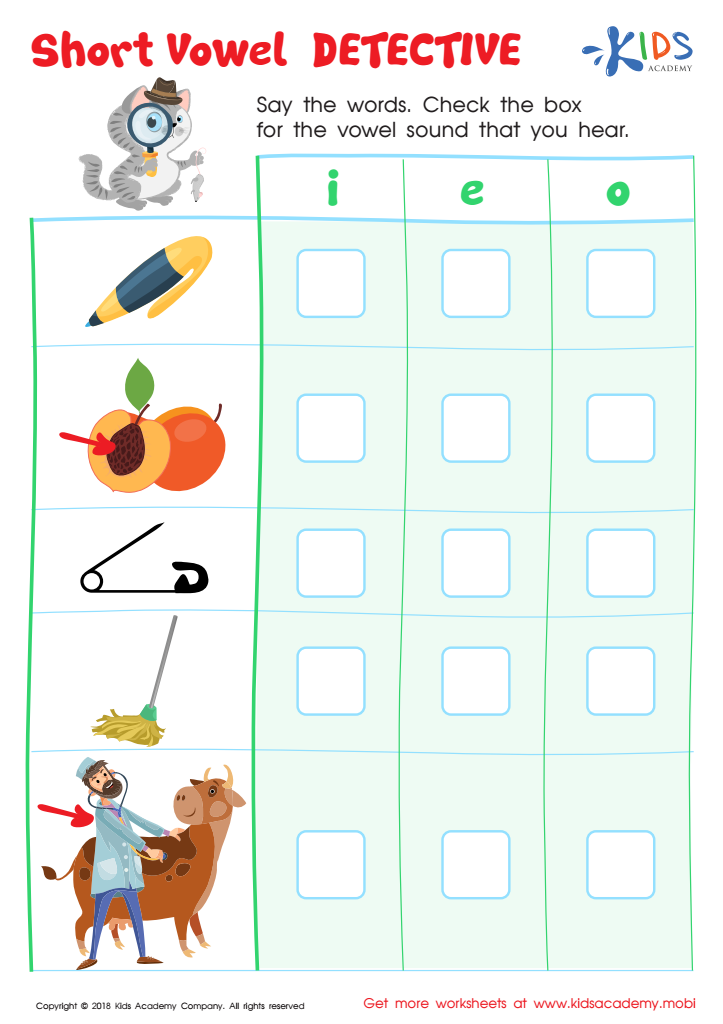
Short Vowel Detective Worksheet
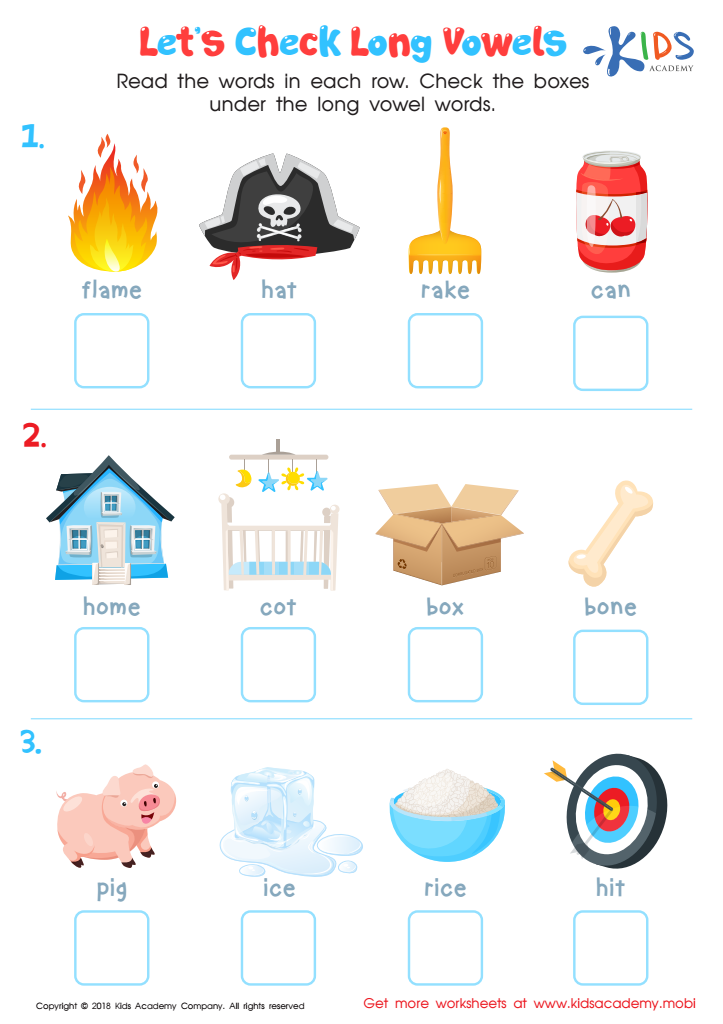
Let's Check Long Vowels: Assessment Worksheet
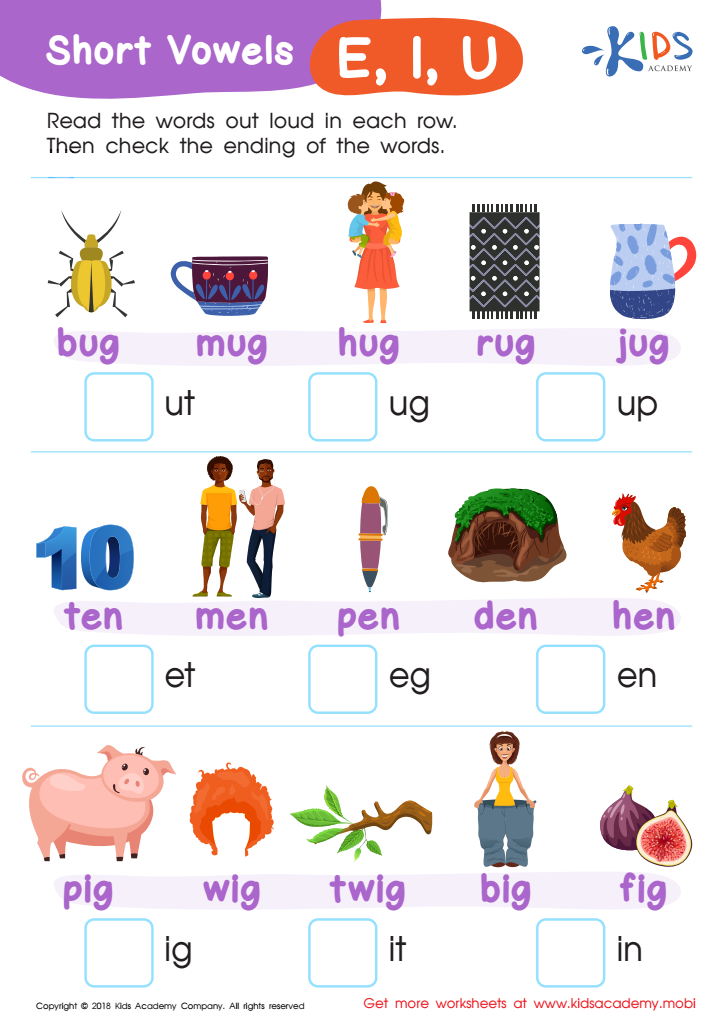
Short Vowels /e/, /i/, and /u/ Worksheet



Understanding vowels and consonants is crucial for young children as they lay the foundation for reading and writing skills. For ages 4-7, recognizing these two categories of letters helps children decode words, enabling them to read independently. Vowels (A, E, I, O, U, and sometimes Y) are essential for forming syllables, and without them, words cannot be pronounced correctly. When children understand the role of vowels, they can experiment with different sounds and spellings, which enhances their phonemic awareness.
Consonants, on the other hand, provide structure to words. By learning the sounds associated with different consonants, children can begin to blend sounds together and increase their vocabulary. Identifying and using both vowels and consonants enables students to approach new words with confidence, reducing potential frustration during reading tasks.
Moreover, early engagement with vowels and consonants encourages critical thinking and problem-solving as children learn to decode unfamiliar words. This understanding translates to clearer communication through writing, promoting their storytelling abilities and self-expression. By prioritizing these fundamental building blocks of literacy, parents and teachers can empower children to become proficient readers and writers, laying the groundwork for lifelong learning and academic success.







