Middle Sounds Worksheets for Ages 4-8
4 filtered results
-
From - To
Enhance your child's phonetic skills with our engaging Middle Sounds Worksheets designed for ages 4-8! These printable resources focus on helping young learners identify and understand the critical middle sounds in words. Through fun and interactive activities, children will improve their reading and pronunciation abilities while building a strong foundation in literacy. Our worksheets are perfect for home practice or classroom settings and cater to various learning styles. With colorful illustrations and simple instructions, kids will enjoy developing their skills in a playful manner. Start exploring today and watch your child thrive in their reading journey!
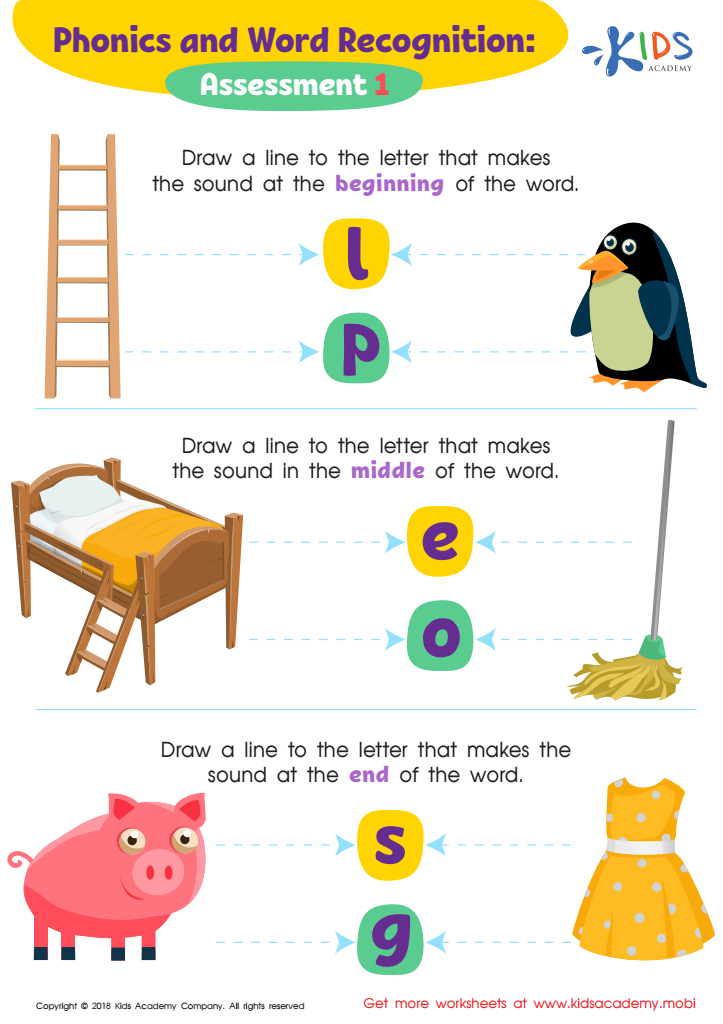
Phonics and Word Recognition: Assessment 1 ELA Worksheet
 Assign to My Students
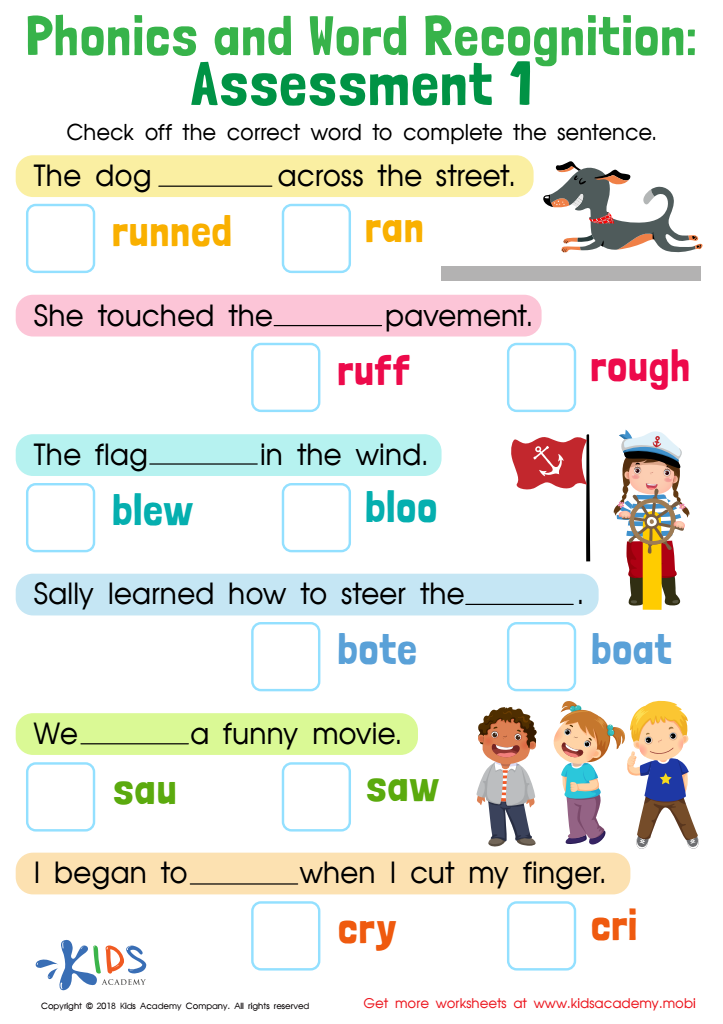
Phonics and Word Recognition: Assessment 1 Worksheet
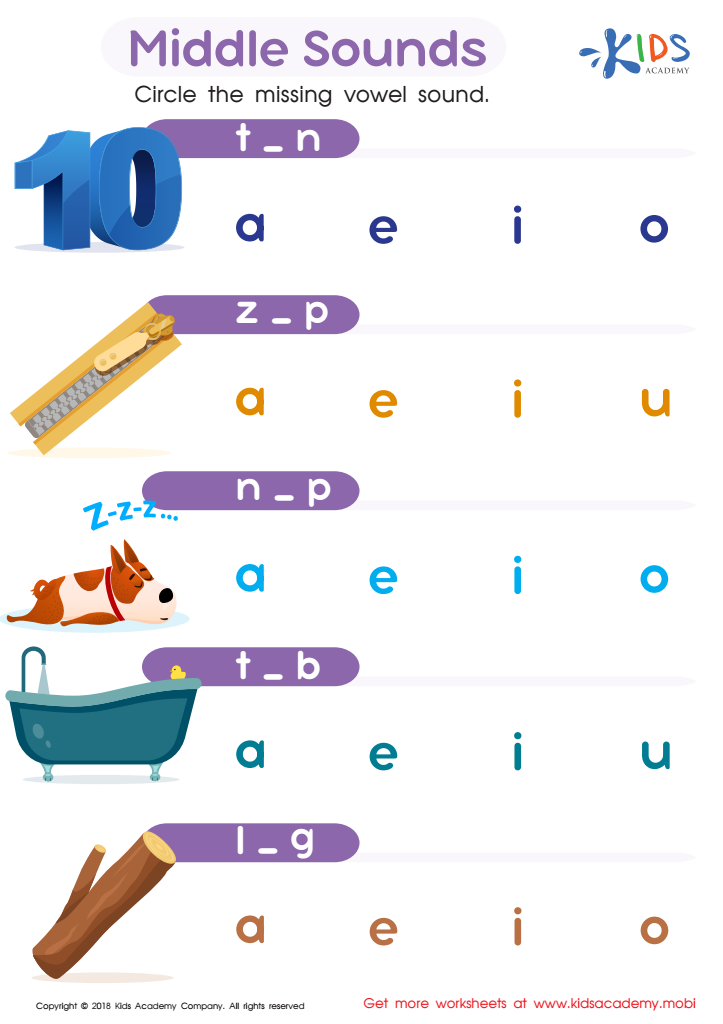
Middle Sounds Worksheet
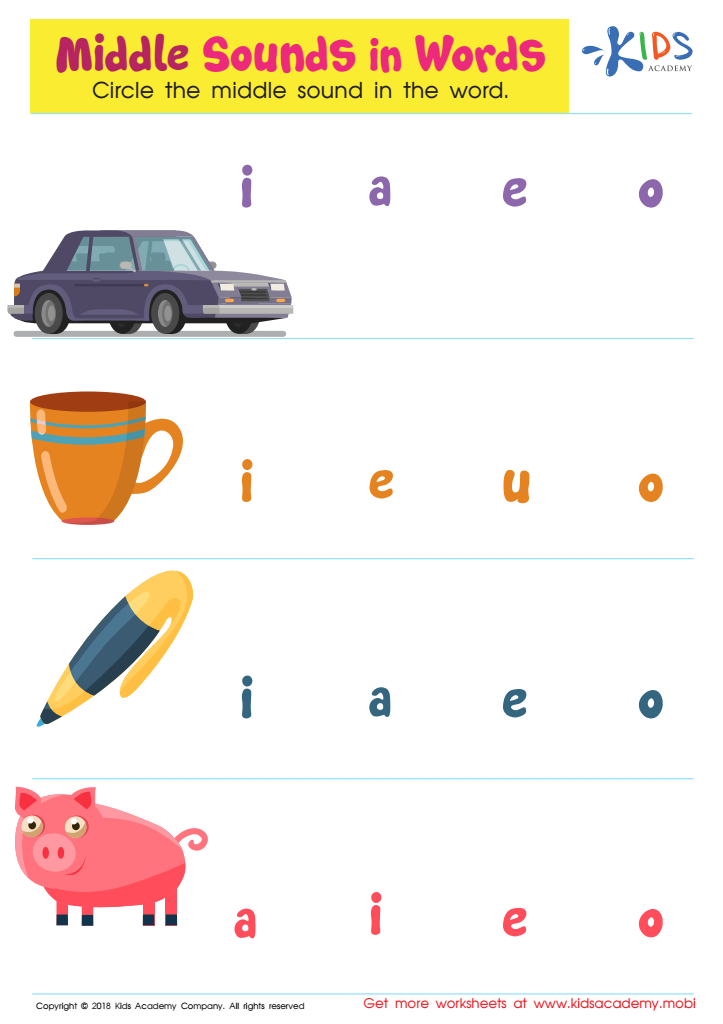
Middle Sounds in Words Worksheet





Middle sounds play a crucial role in early literacy development for children ages 4 to 8. Understanding and recognizing middle sounds helps children improve their phonemic awareness, which is fundamental for reading and writing skills. By focusing on middle sounds, parents and teachers can assist children in breaking down words into manageable parts, enhancing their ability to decode words independently.
Additionally, this skill supports vocabulary development. Children who understand how to identify middle sounds expand their ability to manipulate phonemes, allowing them to experiment with word formation. This experimentation fosters creativity and increases their comfort level with language.
Moreover, mastering middle sounds is essential for spelling development. As children learn to recognize patterns in words, they become more proficient in spelling skills, bridging the gap between spoken language and written communication.
Parents and teachers should engage in activities that emphasize this aspect of literacy, such as phonics games, rhyming exercises, and reading aloud together. This will not only make learning enjoyable but will also build a strong foundation for future academic success. Ultimately, focusing on middle sounds allows children to become more confident readers and writers, setting them on a positive trajectory for lifelong learning.








