Vowel Diphthongs Worksheets for Ages 4-9 - Page 2
27 filtered results
-
From - To
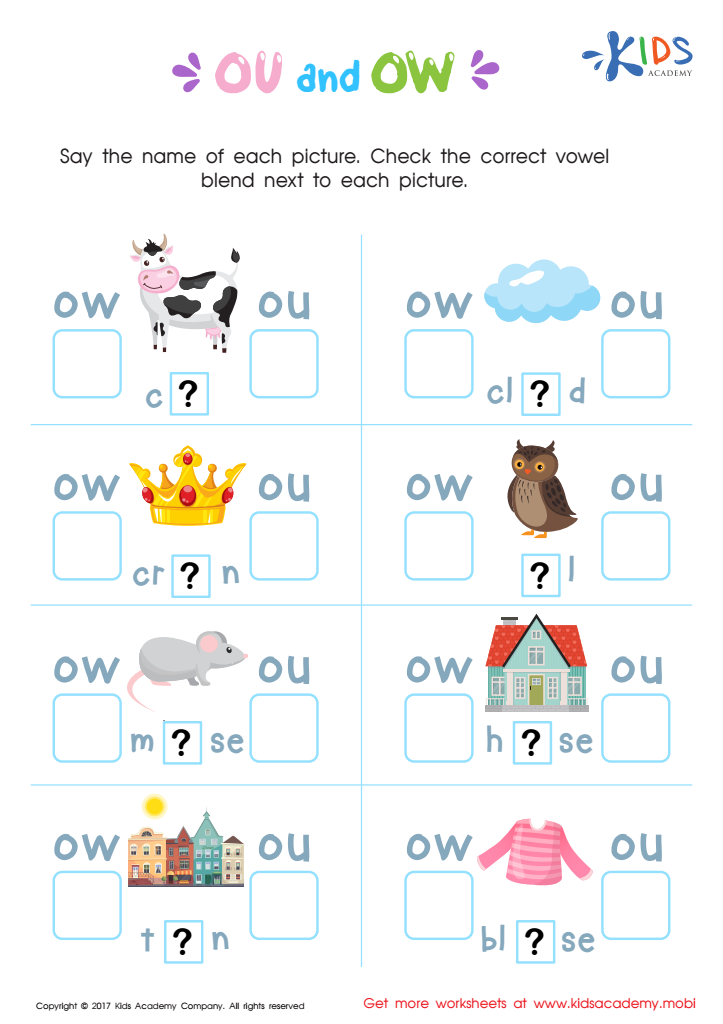
OU and OW Words Worksheet
 Assign to My Students
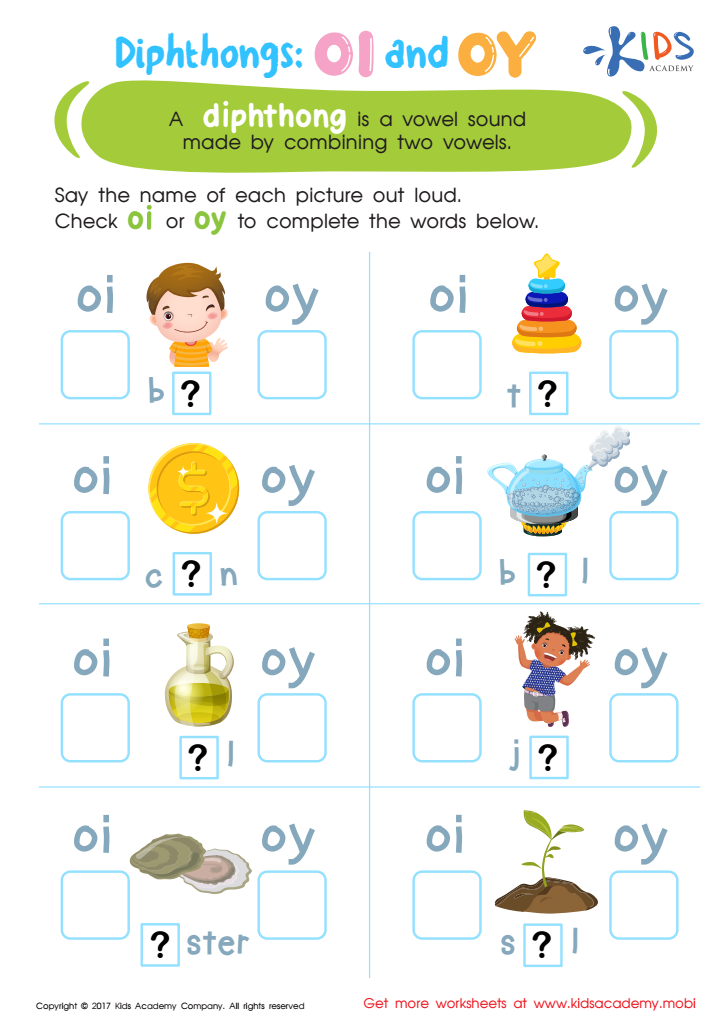
Vowel Diphthongs OI OY Worksheet
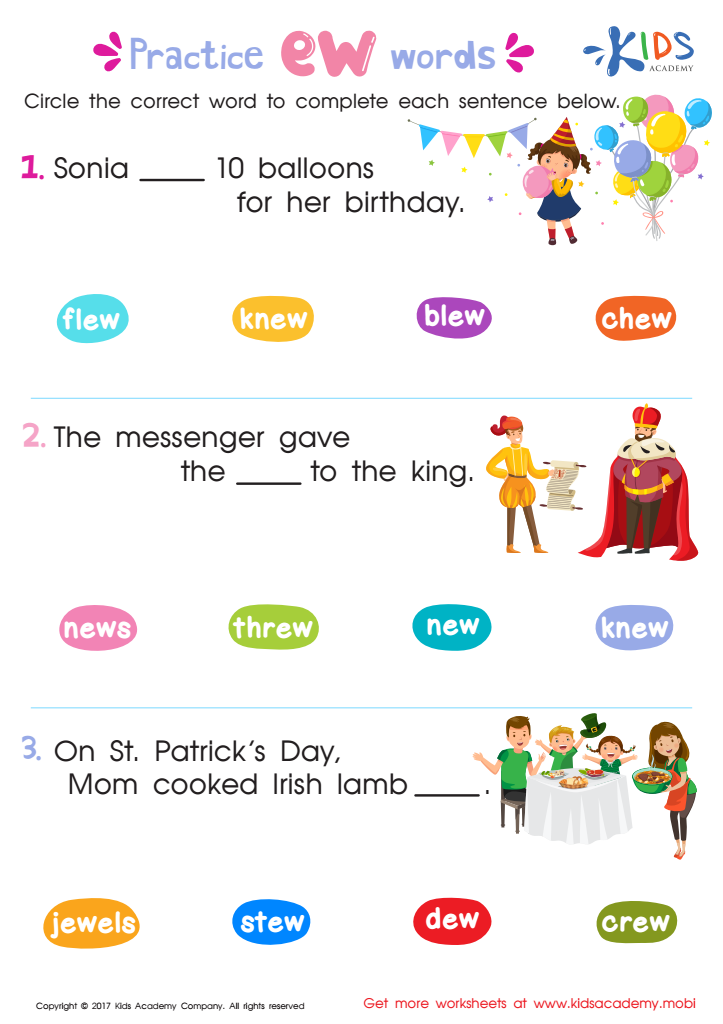
EW Words Worksheet


Vowel diphthongs, such as "oy" in "boy" or "ay" in "play," are crucial in developing reading and speaking skills for young children ages 4-9. Understanding and mastering these sounds helps children as they begin to decode words and develop phonemic awareness, essential skills for reading fluency.
Parents and teachers should care about vowel diphthongs because early literacy is foundational. Recognizing diphthongs cultivates stronger pronunciation and spelling capabilities. When children can identify these sounds, they are better equipped to tackle more complex words, ultimately enhancing their reading comprehension.
Moreover, vowel diphthongs often appear in common vocabulary and storytelling, making them prevalent in everyday language. Familiarity with these sounds not only promotes effective communication but also bolsters children’s confidence in language use.
Introducing diphthongs in engaging ways—through songs, games, and storytelling—can make learning fun and interactive. Early intervention with these phonetic concepts fosters a lifelong love of reading and enhances overall academic performance.
In essence, a strong foundational understanding of vowel diphthongs in young learners positively impacts their literacy journey, setting them up for success in future educational settings. Thus, the role of parents and teachers in nurturing this understanding is vital.








