Coins Worksheets for Ages 4-9
13 filtered results
-
From - To
Discover our engaging "Coins Worksheets for Ages 4-9," designed to help young learners develop essential math skills while exploring the world of money! These fun and interactive worksheets introduce children to various coins, teaching them to identify, count, and understand the values of pennies, nickels, dimes, and quarters. With vibrant illustrations and age-appropriate exercises, our resources promote hands-on learning, making it easy for kids to grasp basic concepts of currency and its practical applications in everyday life. Ideal for home or classroom use, these worksheets create an enjoyable learning experience that builds confidence and proficiency in money-related math skills.
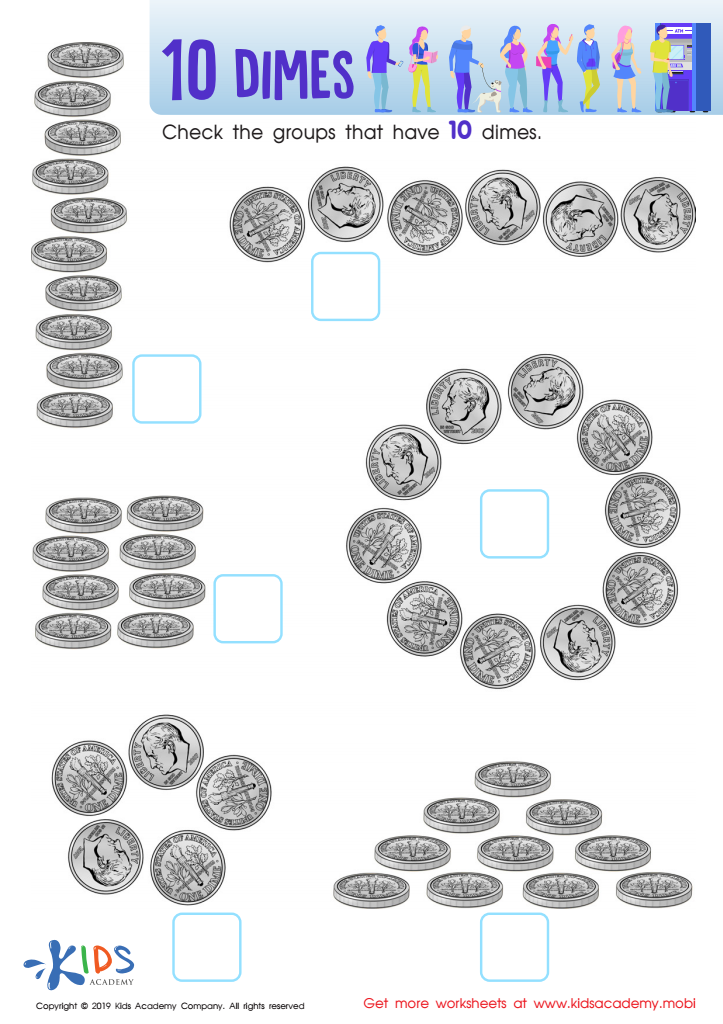
10 Dimes Worksheet
 Assign to My Students
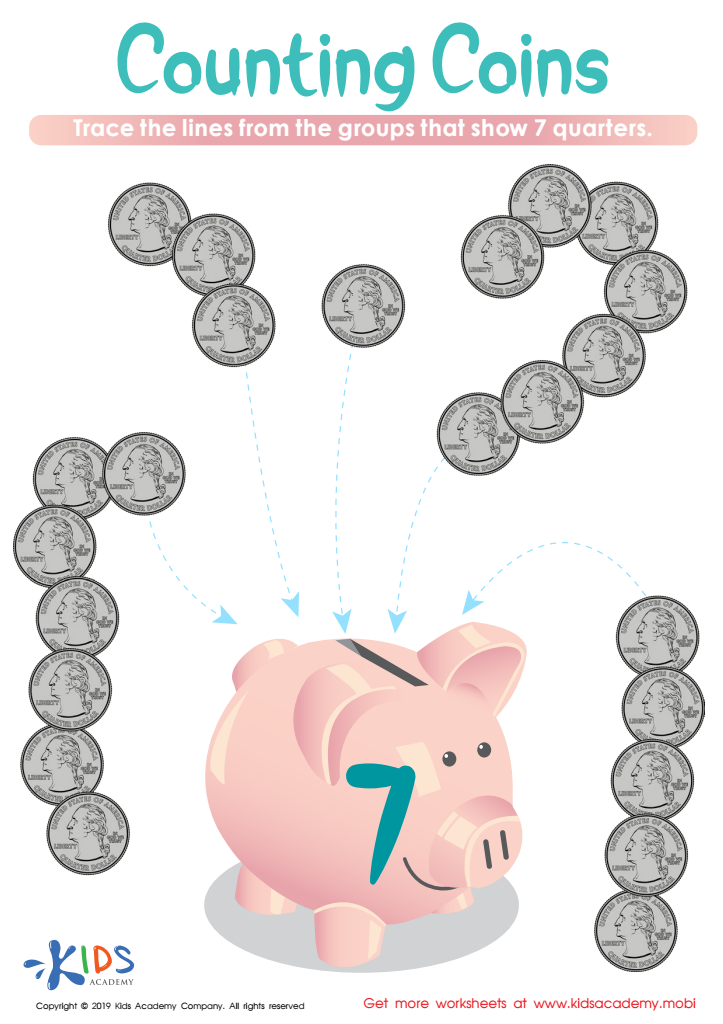
Counting Coins Worksheet
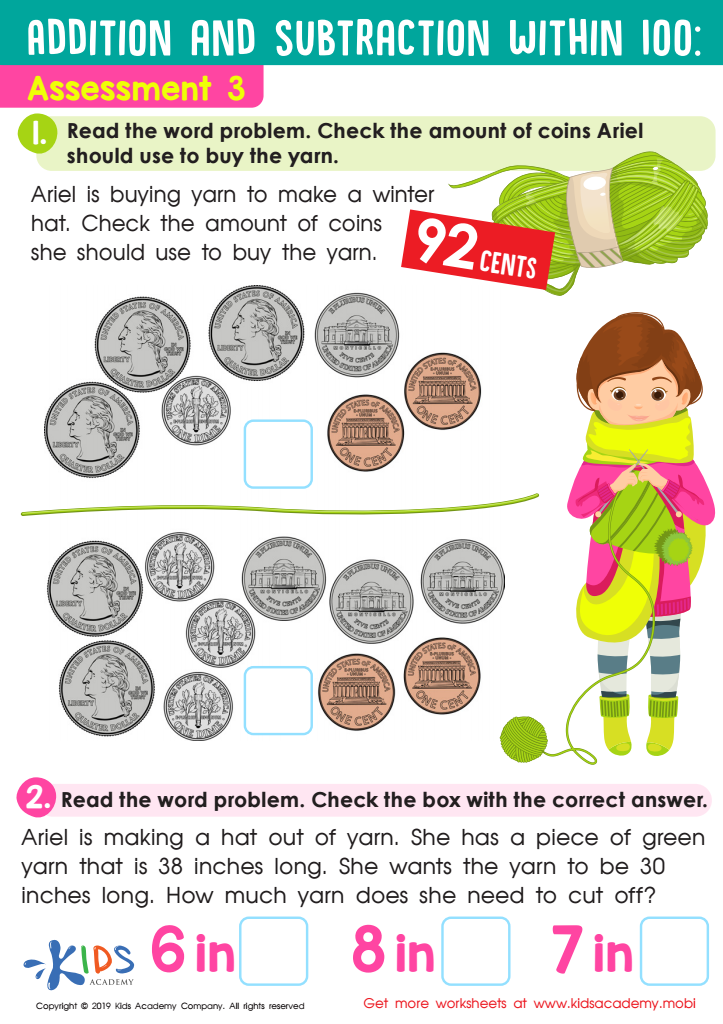
Assessment 3 Math Worksheet
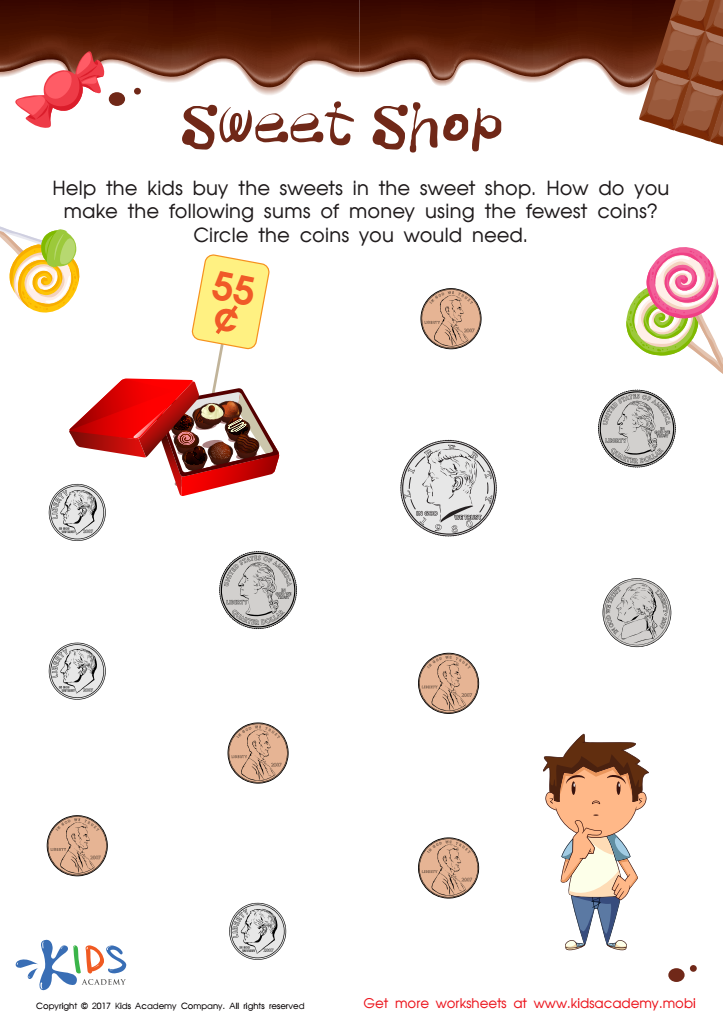
Sweet Shop – Counting Coins Worksheet
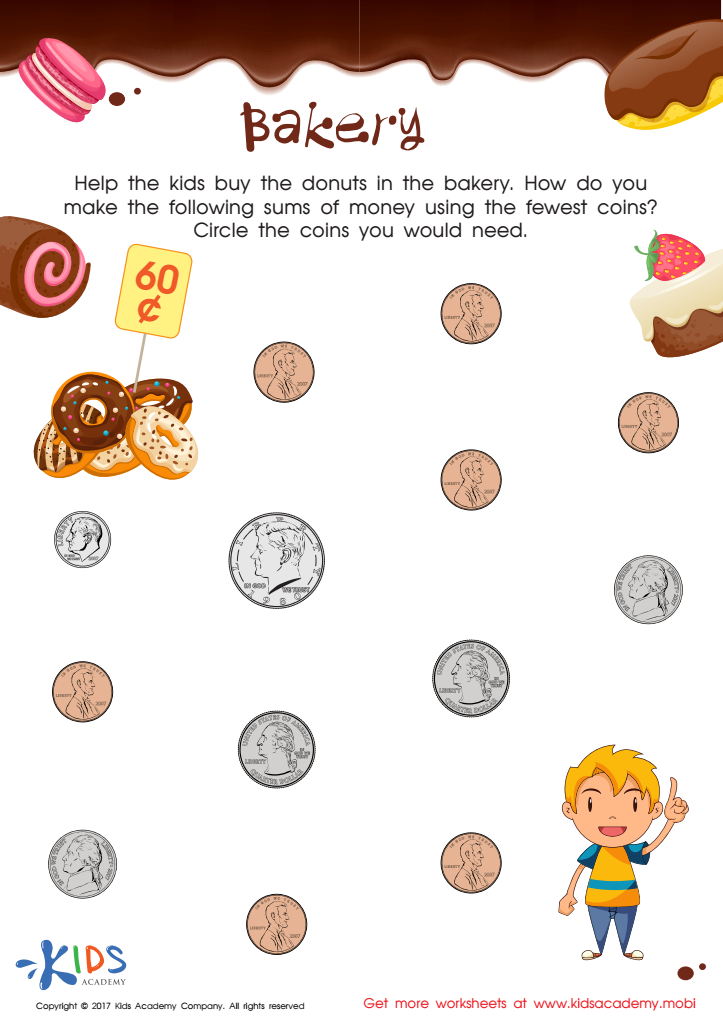
Counting Coins Worksheet
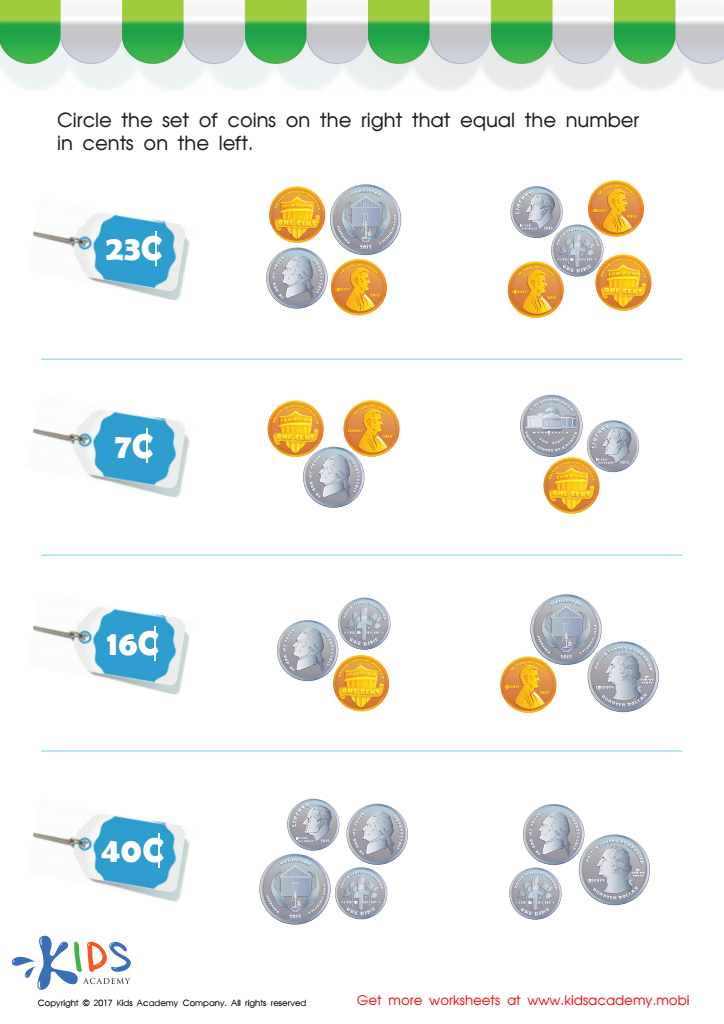
Picking the Coins You Need Money Worksheet
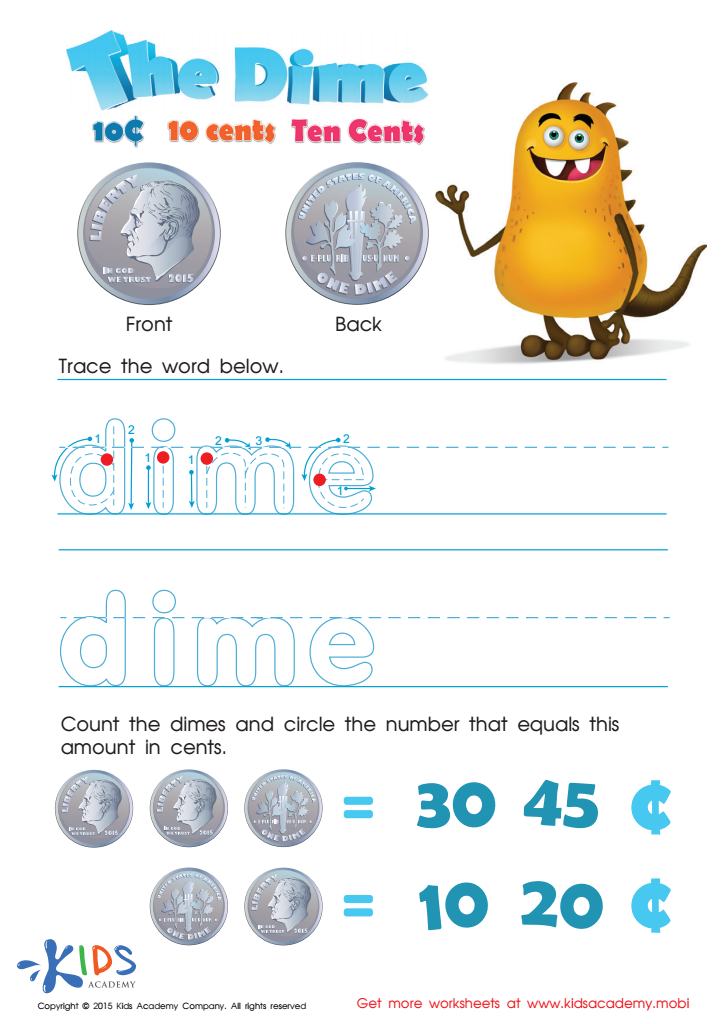
Ten Cents or the Dime Money Worksheet
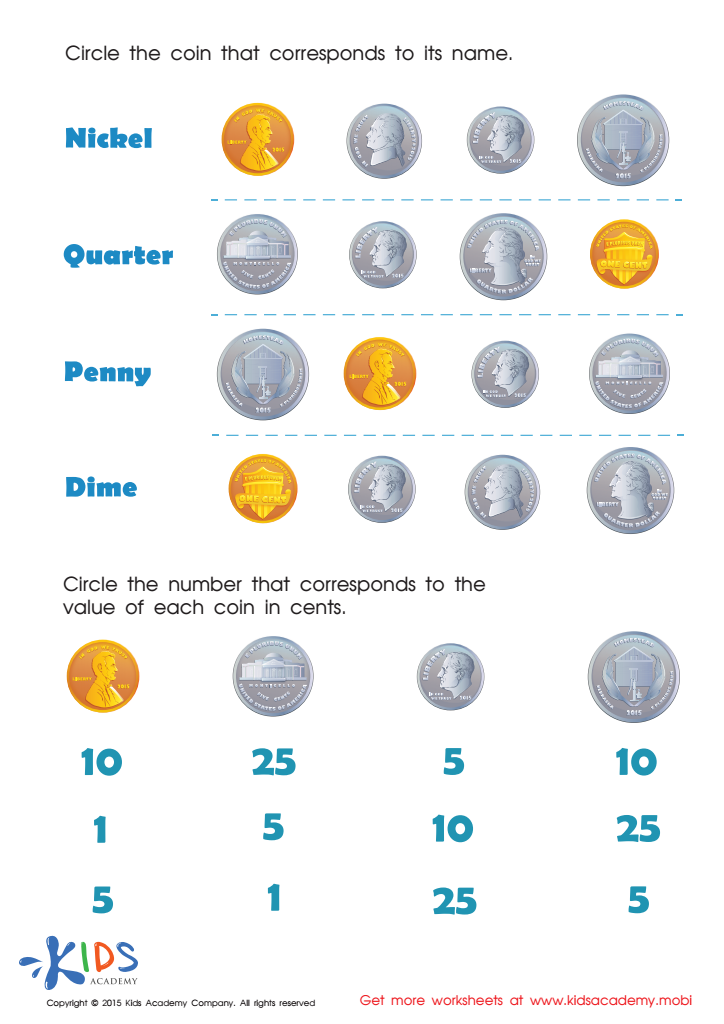
Coin Names and Values Money Worksheet
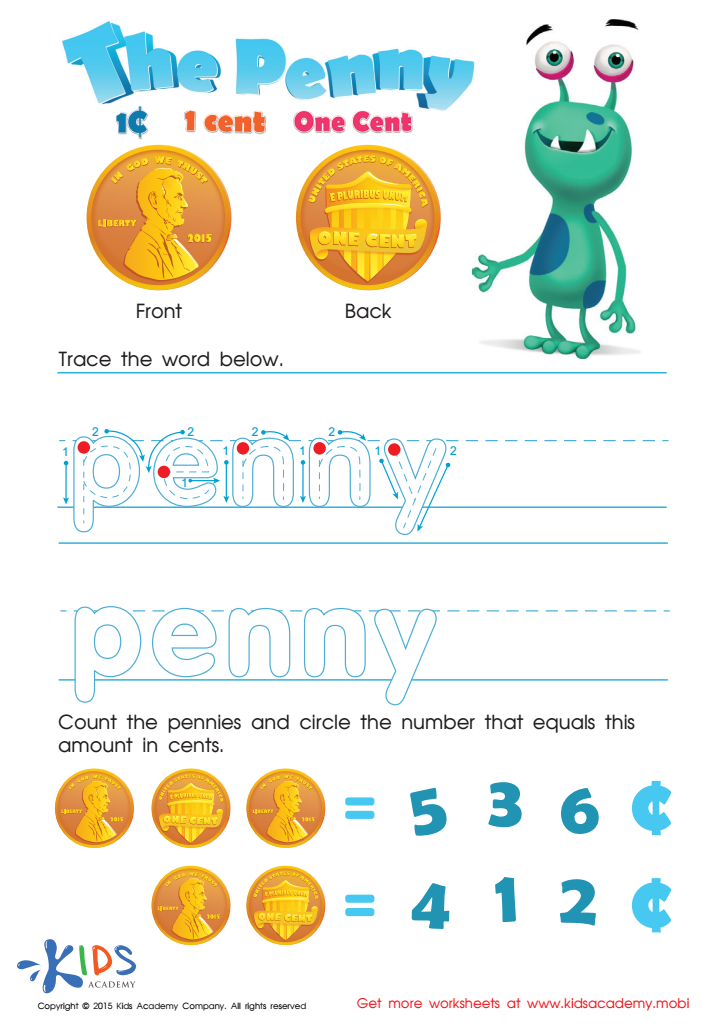
One Cent or the Penny Money Worksheet
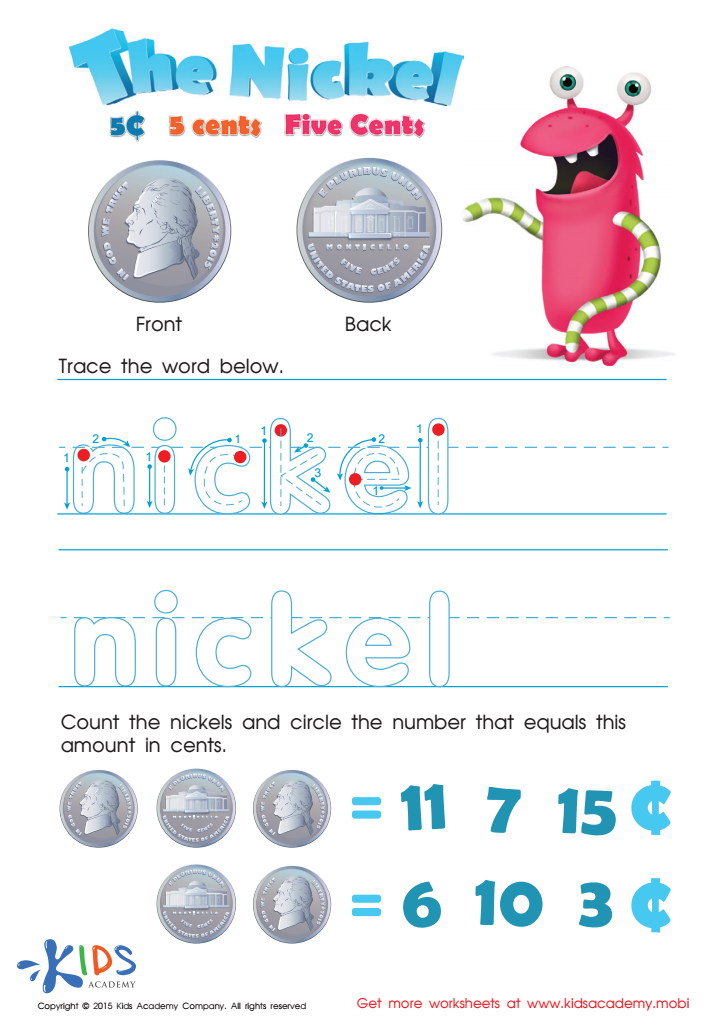
Five Cents or the Nickel Money Worksheet
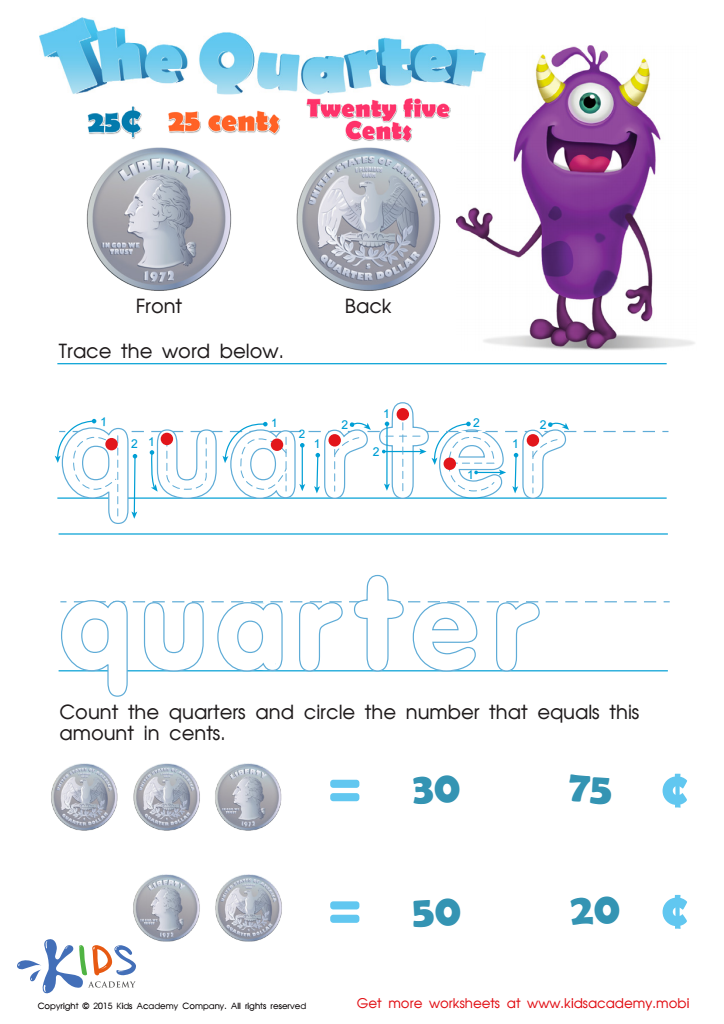
Twenty Five Cents or the Quarter Money Worksheet
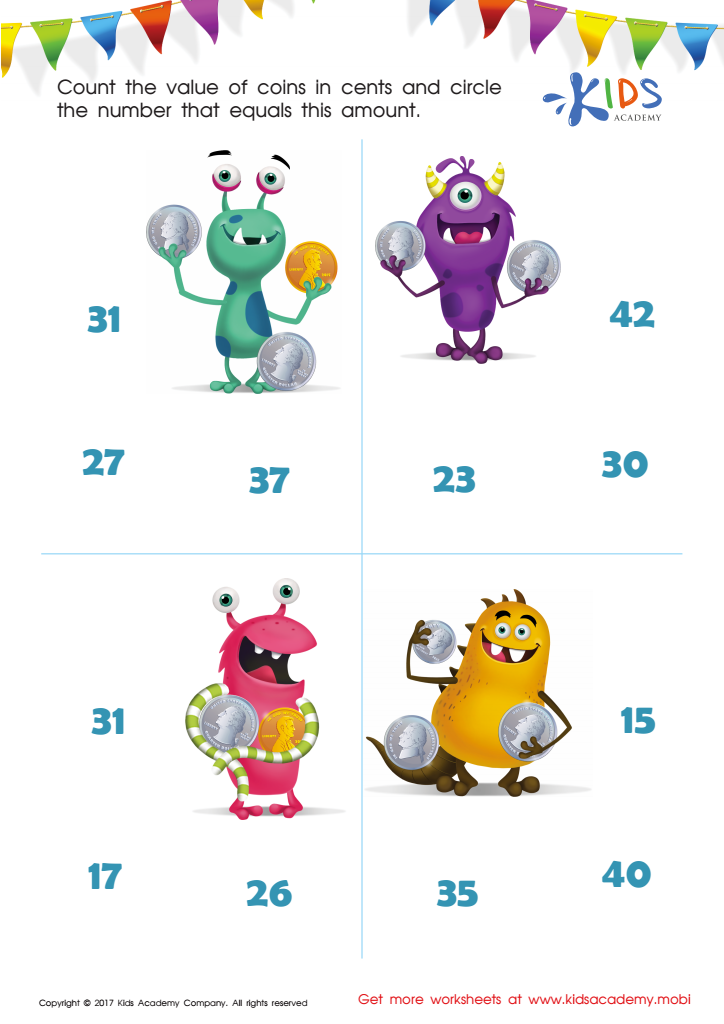
How Many Coins Money Worksheet
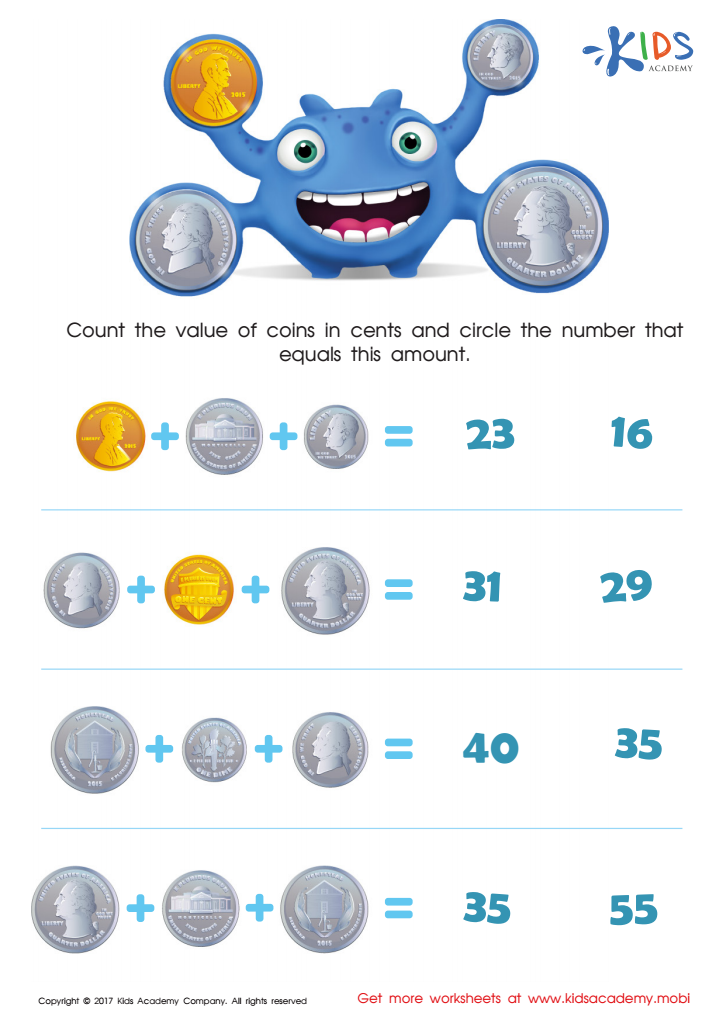
Counting the Coins Money Worksheet








Parents and teachers should care about introducing coins to children aged 4-9 for several compelling reasons. First, handling coins provides young learners with a foundational understanding of math concepts, such as counting, addition, and currency recognition. Engaging with real objects like coins transforms abstract concepts into tangible learning experiences.
Second, learning about money helps foster financial literacy from an early age. Understanding coins instills a sense of value and responsibility, equipping children with essential life skills as they grow. Being able to identify and value coins is vital for their future understanding of budgeting, saving, and making informed spending decisions.
Additionally, playing games and activities centered around coins can promote social interaction and cooperative learning. These activities encourage teamwork and communication while making learning fun and engaging.
Moreover, the tactile experience of sorting, stacking, and exchanging coins develops fine motor skills. In a world dominated by digital transactions, early familiarity with physical currency fosters an appreciation for money's role in daily life.
In summary, nurturing an understanding of coins in young students lays the groundwork for mathematical skills, financial literacy, social interaction, and fine motor development, making it a vital area of focus for parents and teachers alike.








