Handwriting improvement Tracing Words Worksheets for Ages 4-9
4 filtered results
-
From - To
Enhance your child's handwriting skills with our Handwriting Improvement Tracing Words Worksheets for Ages 4-9. Carefully designed to develop fine motor skills and build a strong writing foundation, these engaging worksheets are perfect for young learners. With fun, age-appropriate exercises, children trace and write a variety of words, boosting their confidence and mastery of handwriting. Ideal for parents, teachers, and homeschoolers, our printable worksheets make learning interactive and effective. Transform your child’s handwriting with educational activities that combine learning and play, ensuring they excel both in and out of the classroom. Explore now at Kids Academy!
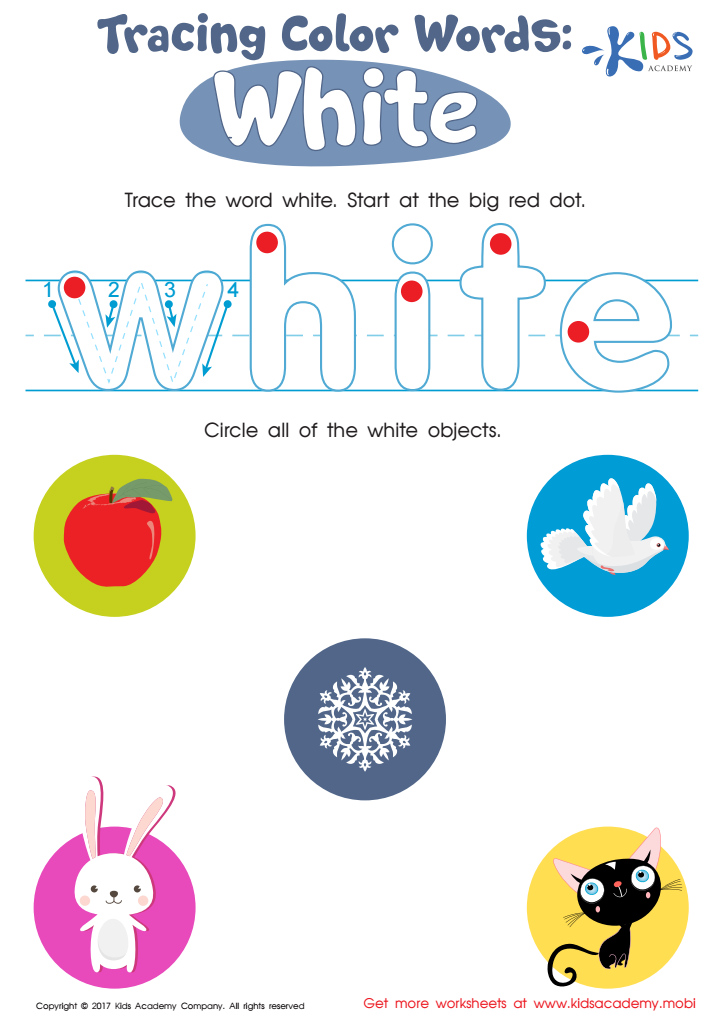
White Tracing Color Words Worksheet
 Assign to My Students
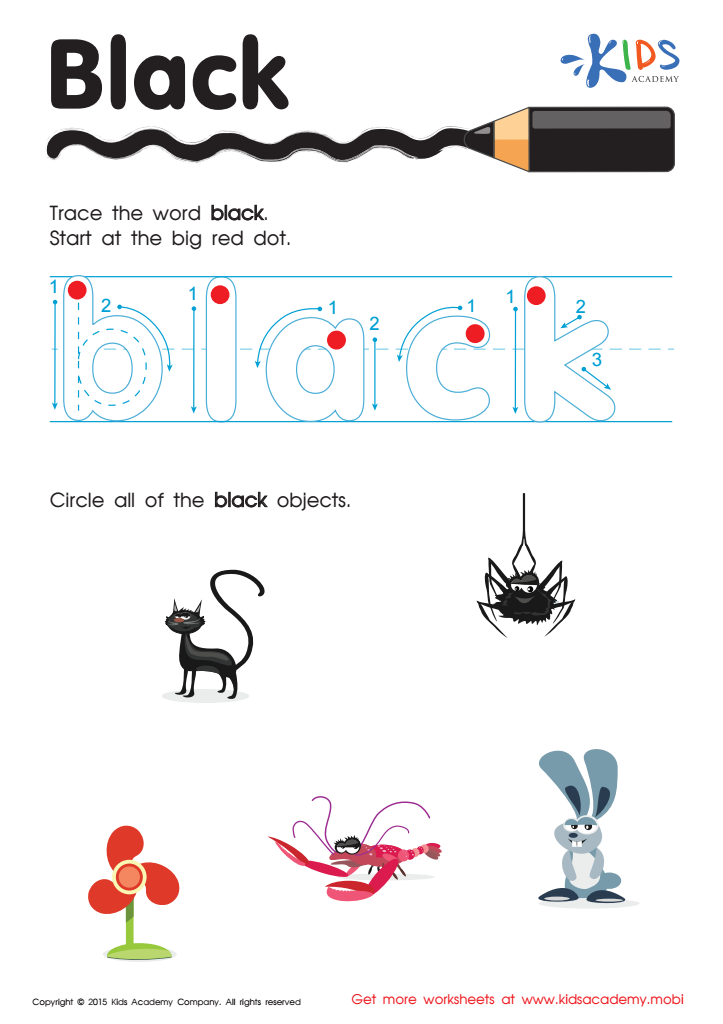
Black Tracing Color Words Printable

Red Tracing Color Words Printable
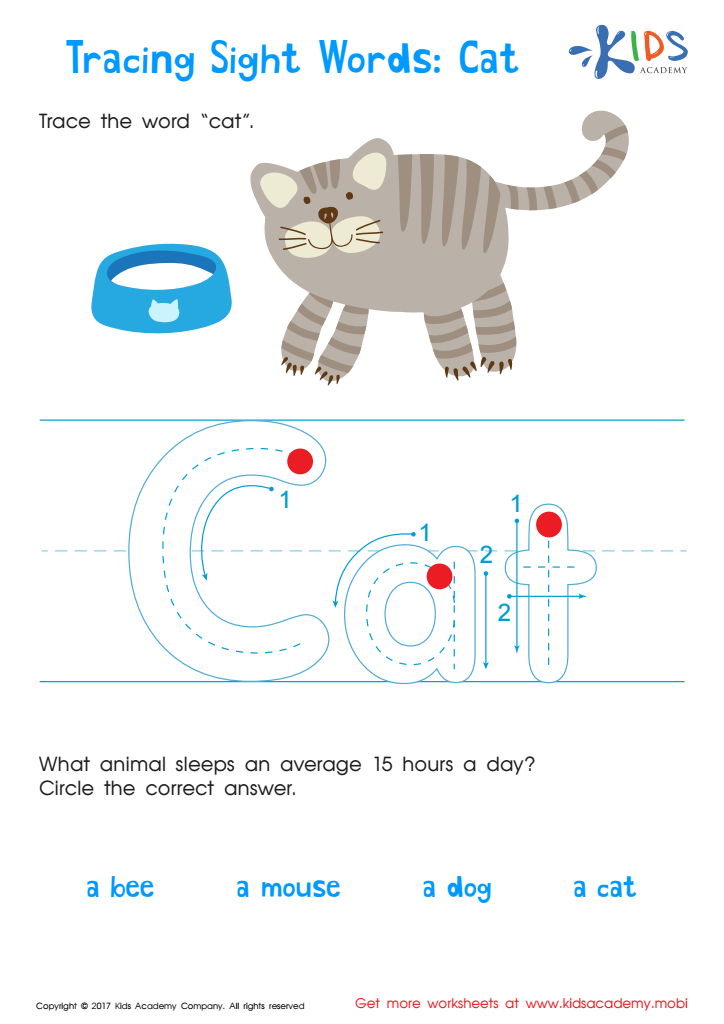
Cat Printable Sight Words Worksheet








Handwriting improvement tracing for children aged 4-9 is a crucial activity that both parents and teachers should prioritize as it holds several benefits that impact a child's academic and personal development. First and foremost, fine motor skills are honed through tracing activities. Developing these skills in early childhood is essential as they play a role in daily tasks such as buttoning clothes or tying shoes, and more complex abilities like drawing and crafting.
Furthermore, handwriting practice positively influences cognitive skills, including concentration, memory, and attention to detail. A solid grasp of handwriting lays the foundation for effective written communication, essential for academic success. When children can write legibly, they are better able to engage in activities that require written responses, such as tests, reports, and creative writing assignments, thus boosting their confidence and performance in school.
Additionally, carefully tracing and forming letters can also aid in letter recognition and literacy. This practice helps children understand letter shapes and sequences, improving their reading and writing fluency. Acquiring these literacy skills from an early age positions them for longstanding academic success.
By nurturing these critical skills through handwriting improvement tracing, parents and teachers can ensure that children enjoy a more rounded developmental experience, ultimately setting them up for success both in and out of the classroom.








