Reading analog clocks Worksheets for Ages 5-7
5 filtered results
-
From - To
Discover engaging "Reading Analog Clocks Worksheets for Ages 5-7" designed to enhance your child's time-telling skills. Our expert-crafted worksheets provide a fun and interactive way for young learners to grasp the concepts of hours and minutes. Through vibrant illustrations and simple exercises, kids will learn to read analog clocks with confidence. These resources are perfect for use at home or in the classroom, offering parents and educators effective tools to build essential life skills. Boost your child's mathematical abilities while making learning an enjoyable adventure. Visit Kids Academy today to explore our comprehensive collection and watch your child thrive!
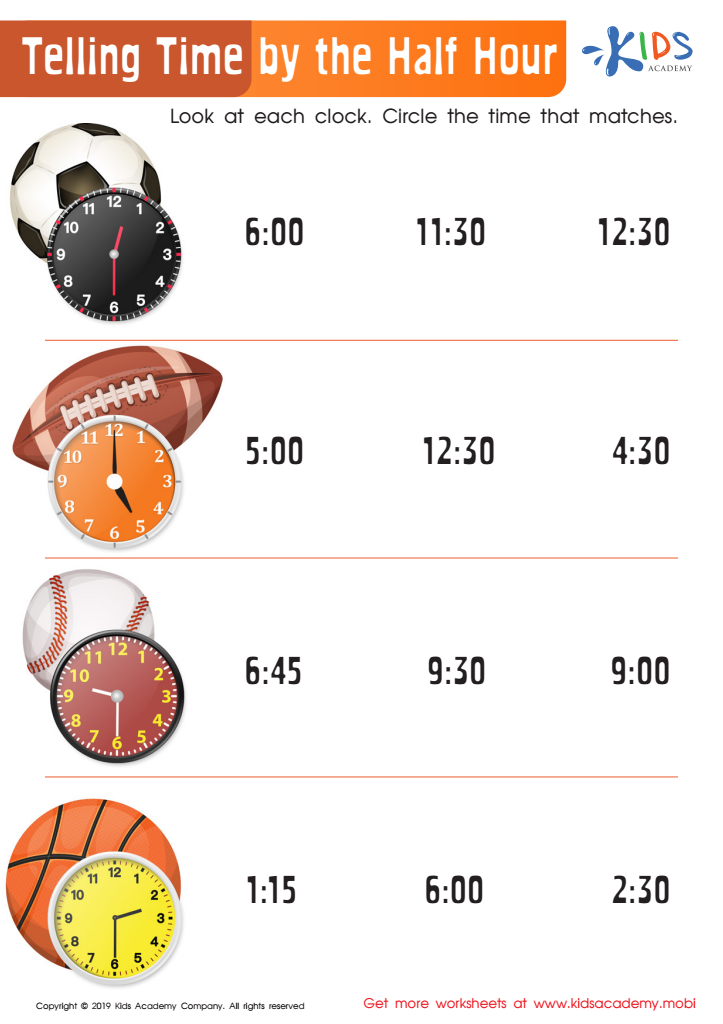
Telling Time by the Half Hour Worksheet
 Assign to My Students
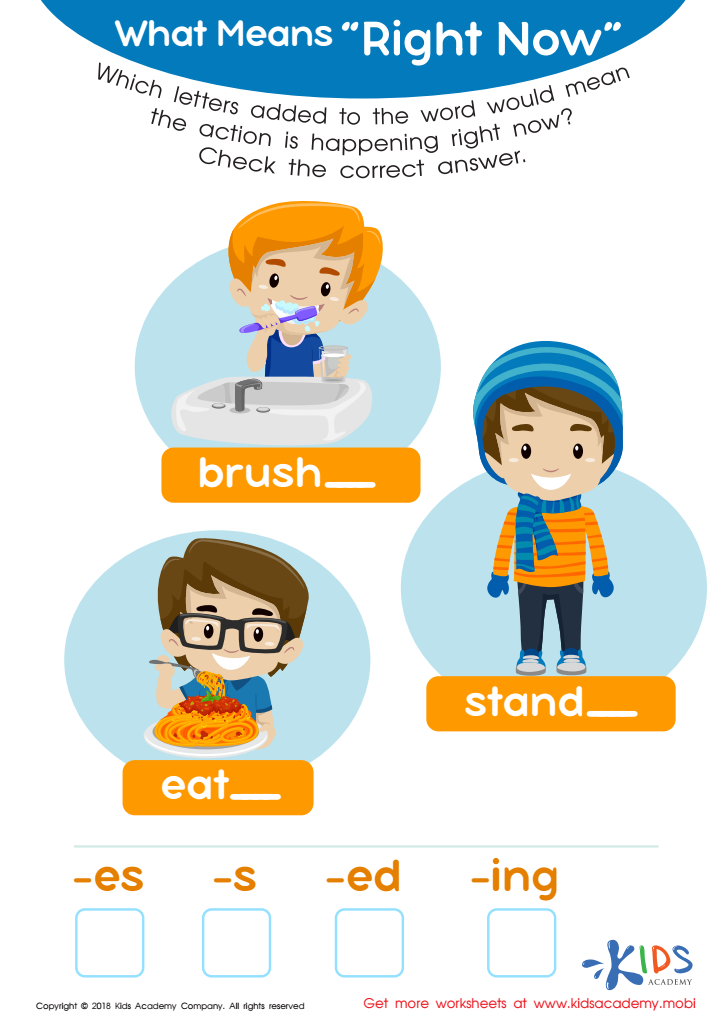
What Means "Right Now" Worksheet
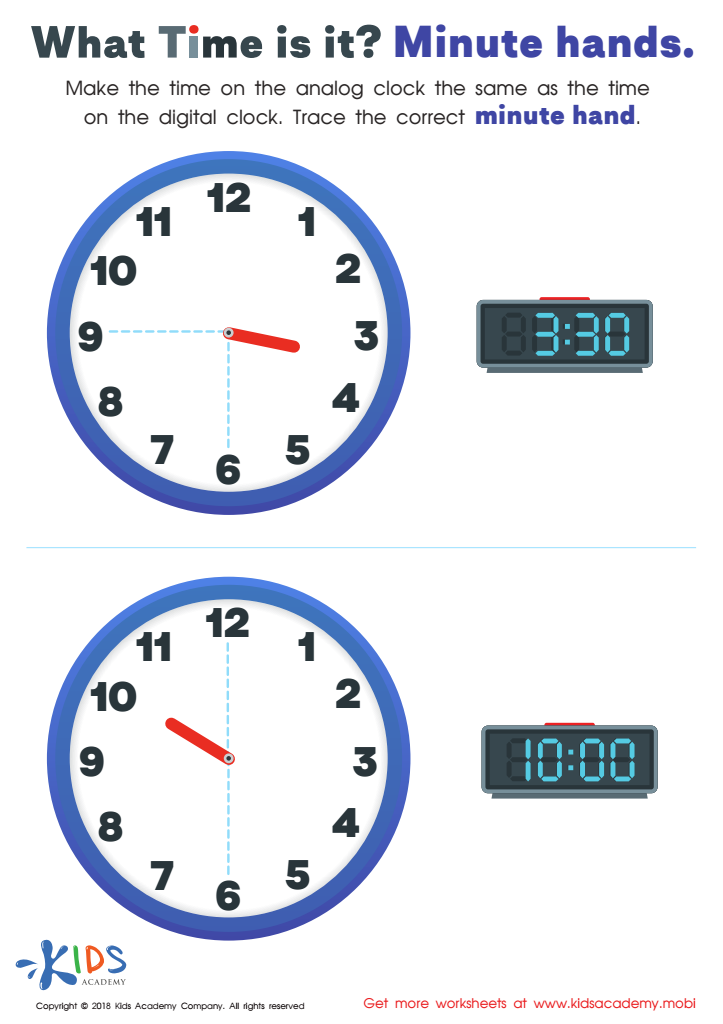
What Time Is it? Minute Hands Worksheet
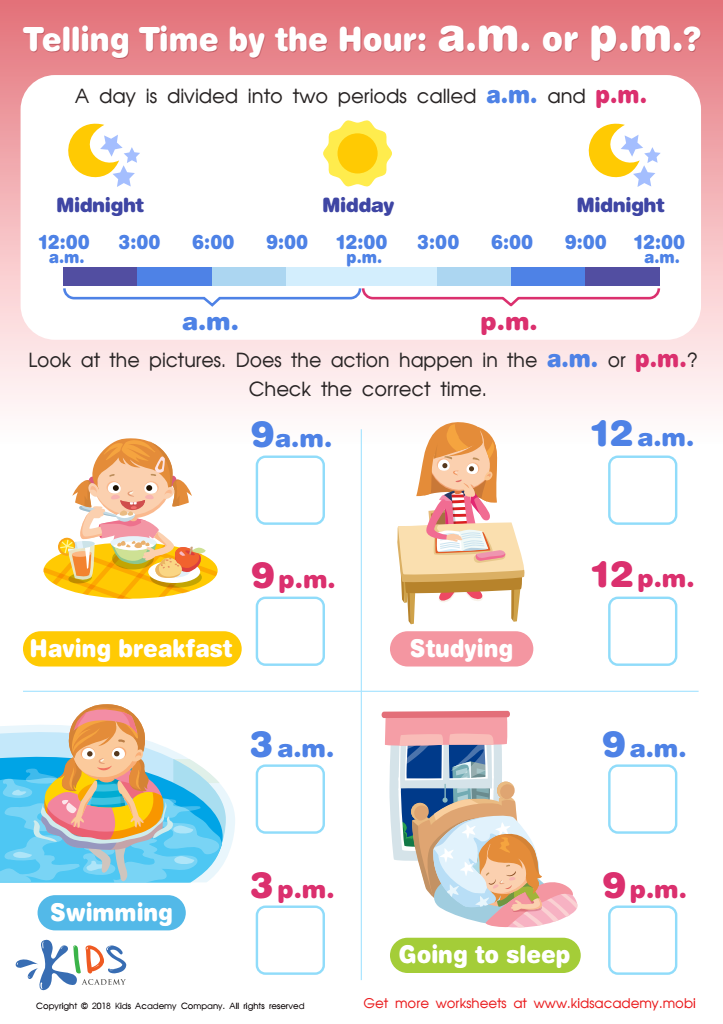
Tilling Time by the Hour: a.m. or p.m.? Worksheet
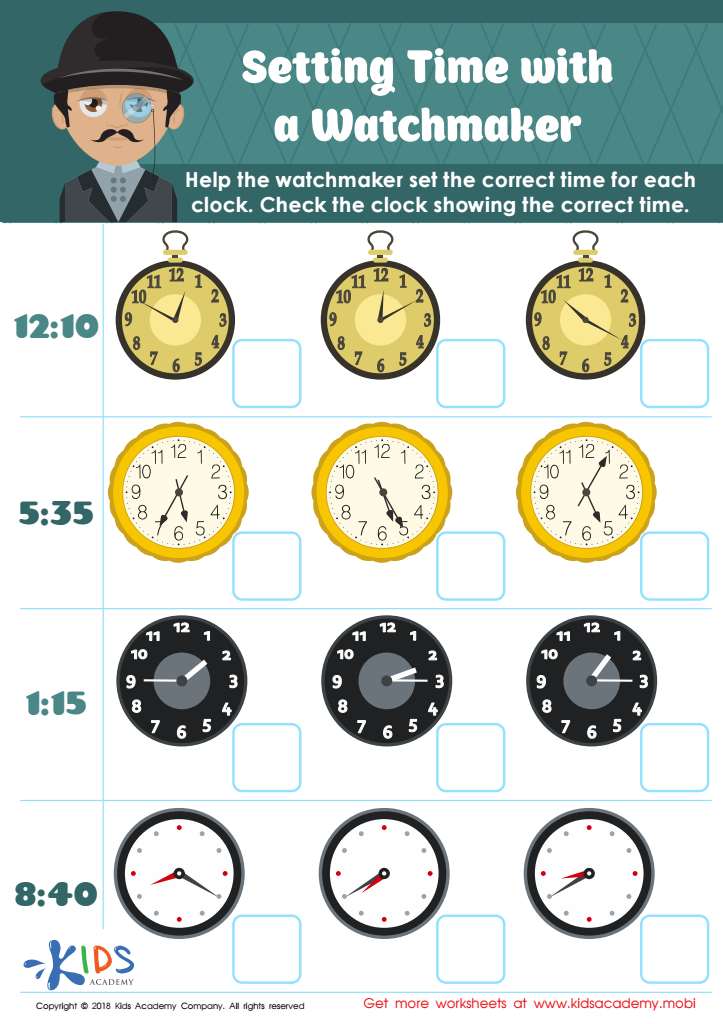
Setting Time with Watchmaker Worksheet







Parents and teachers should care about teaching children aged 5-7 to read analog clocks because it fosters crucial cognitive and life skills. Learning to read analog clocks develops children's understanding of time concepts such as hours, minutes, and the function of each hand on the clock. This understanding is foundational not only for time management but also for structuring their daily activities and being punctual.
Analog clocks offer a visual and spatial representation of time, unlike digital clocks. They help children grasp the passage of time and improve their fine motor skills through consistent hand placement. Furthermore, decoding an analog clock engages problem-solving and reasoning abilities, promoting overall cognitive development.
In addition, mastering this skill aligns with educational standards. It enhances children's confidence and independence, enabling them to transition smoothly into routine activities like bedtime, meal times, and class schedules. Learning to read analog clocks can also inspire curiosity about historical artifacts and technology, given the rich history behind clock-making.
By encouraging this skill early on, parents and teachers provide children with a practical tool that will benefit them throughout their lives, merging academic knowledge with real-world application, improving their awareness, and enhancing self-discipline and responsibility.








