Vowels and Consonants Worksheets for Ages 5-9 - Page 2
29 filtered results
-
From - To
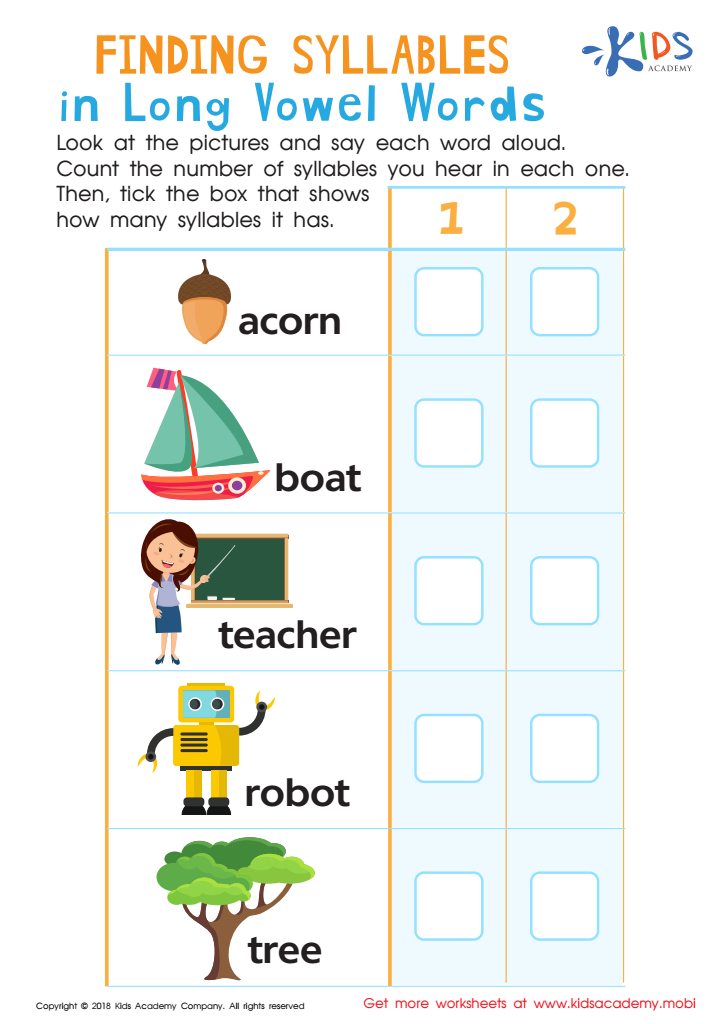
Finding Syllables in Long Vowel Words Worksheet
 Assign to My Students
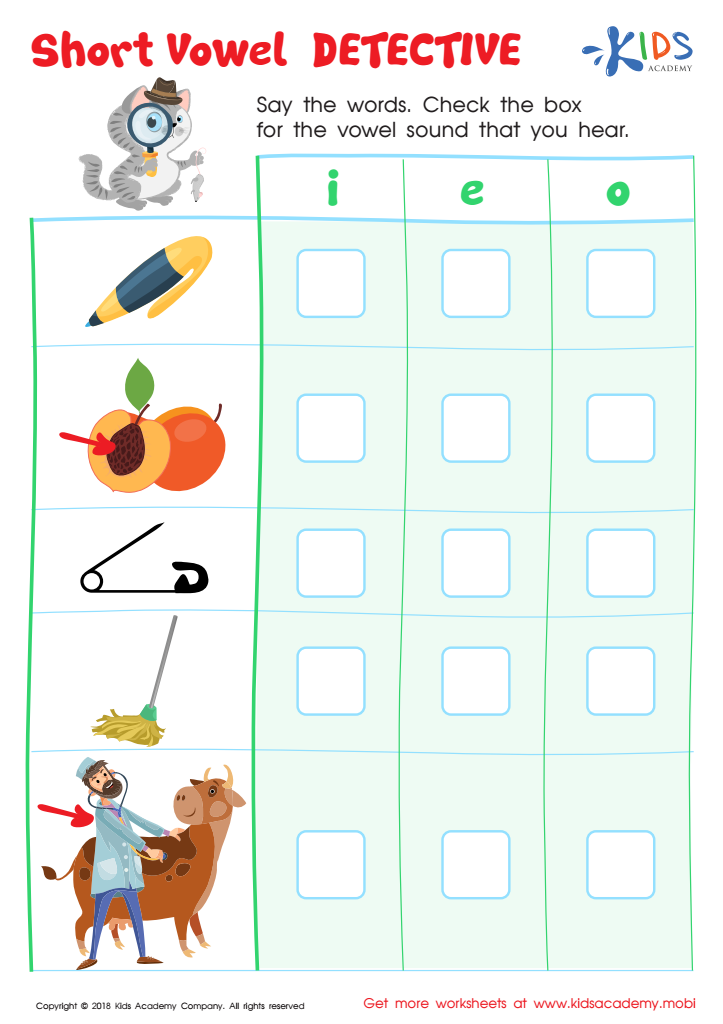
Short Vowel Detective Worksheet
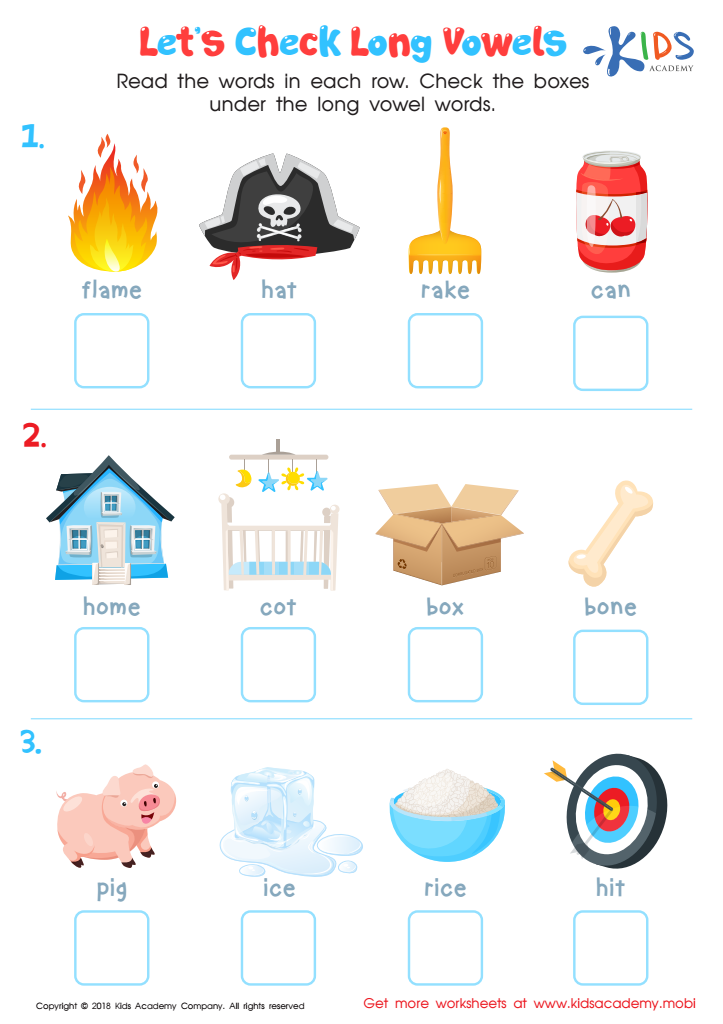
Let's Check Long Vowels: Assessment Worksheet
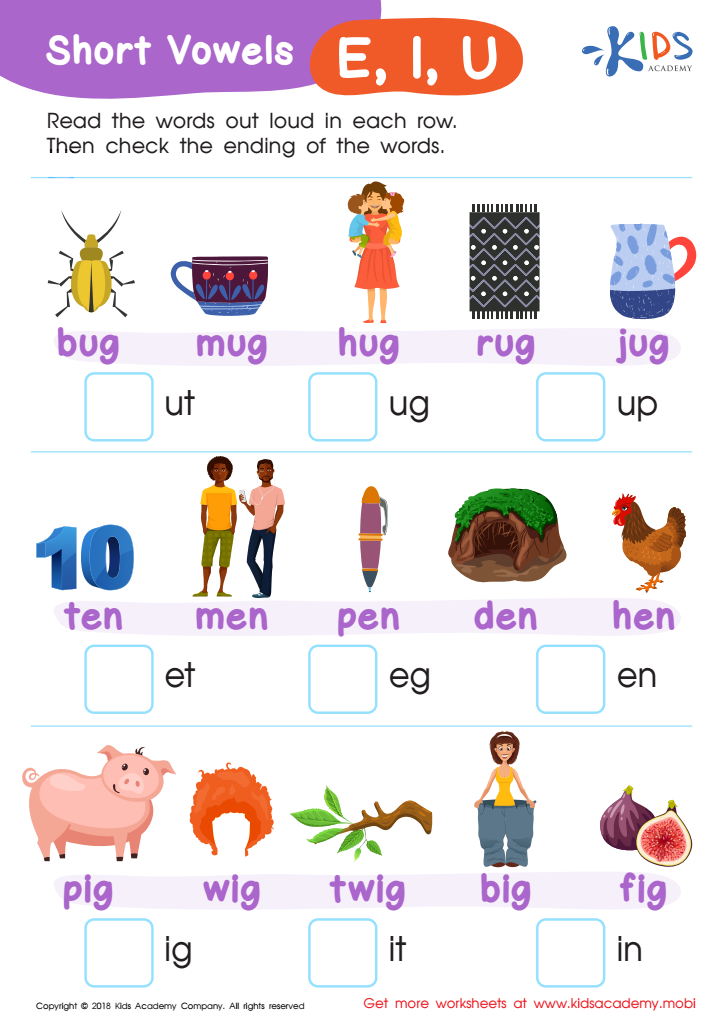
Short Vowels /e/, /i/, and /u/ Worksheet
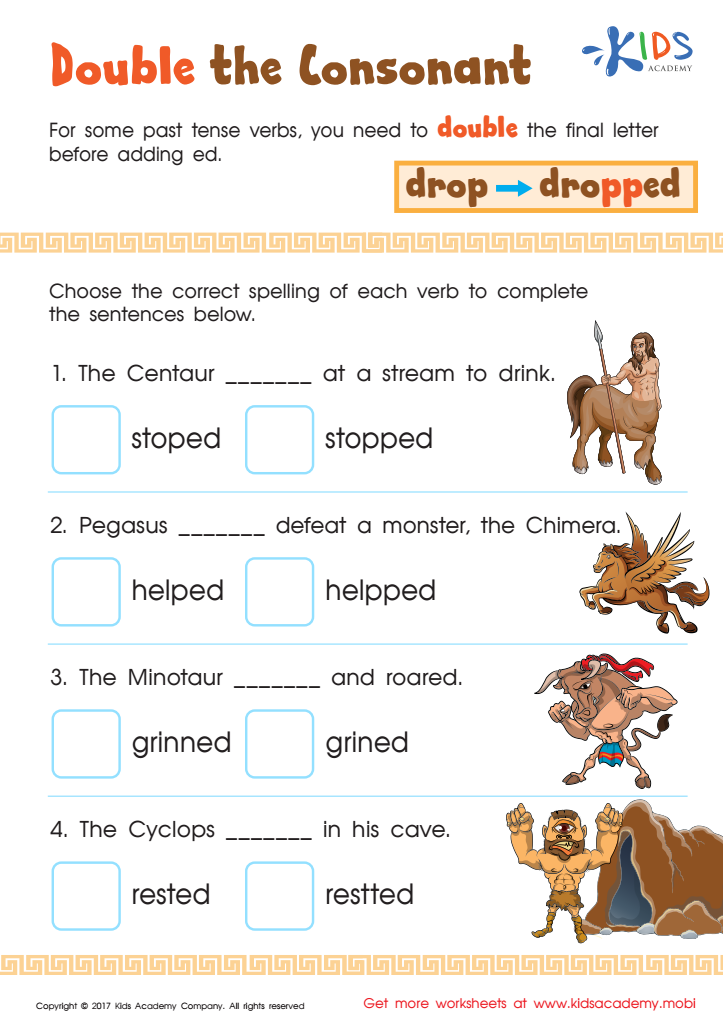
Double Consonant Spelling Worksheet



Understanding vowels and consonants is crucial for children ages 5-9 as it forms the foundation of literacy and language acquisition. At this developmental stage, grasping the roles of vowels and consonants helps in phonemic awareness, which is the ability to hear and manipulate individual sounds in words. This skill is directly linked to reading achievement; kids who master this early on find it easier to decode new words and improve their reading fluency.
Vowels and consonants make up the core structure of words, influencing pronunciation, spelling, and meaning. For instance, knowing that "cat" changes to "cut" with the substitution of one vowel helps children understand word manipulation. This skill is vital for expanding vocabulary, comprehension, and writing skills as they progress in their education.
Additionally, early competence in distinguishing and using vowels and consonants can boost a child's confidence in communication, both spoken and written. Teachers and parents who emphasize this knowledge provide children with tools to succeed academically and socially, setting a positive trajectory for future learning. Activities like phonics games, reading aloud, and interactive lessons make learning these basics enjoyable and engaging, fostering a love for reading that benefits children well beyond their early years.







