Filters

29 filtered results

Clear all filters
Favorites
With answer key
Interactive

29 filtered results

Difficulty Level

Grade


Subject

    Check out this FREE Trial Lesson on Vowels and Consonants for age 6-8!

    Short and Long Vowel Sort

    Favorites
    With answer key
    Interactive
    • 6-8
    • Interactive
    • Vowels and Consonants
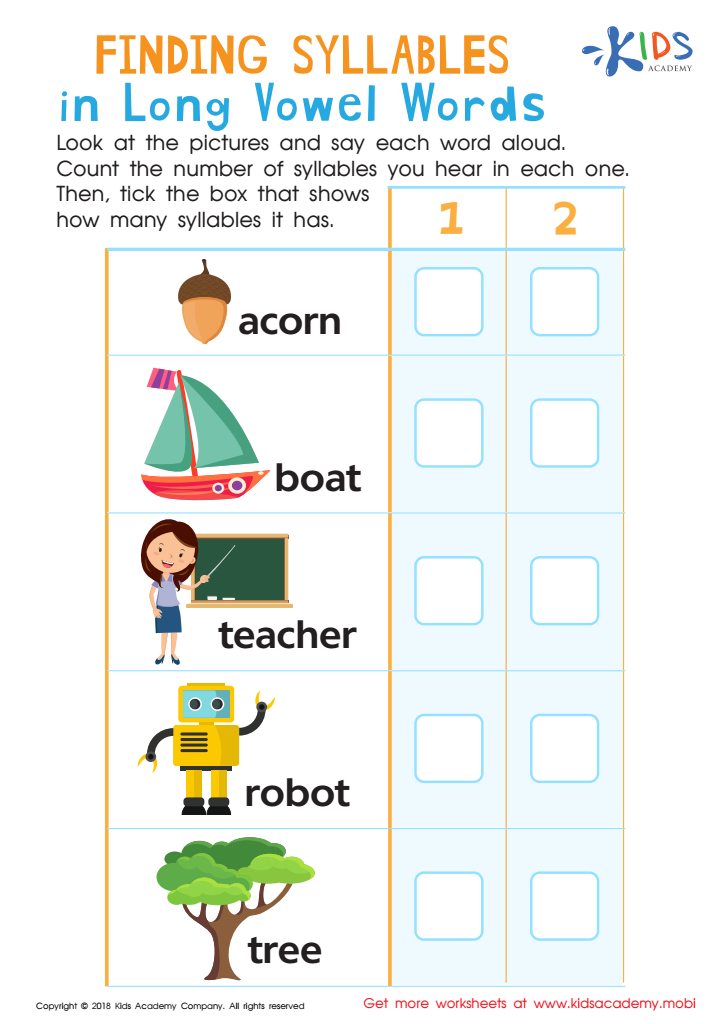
    Finding Syllables in Long Vowel Words Worksheet
    Finding Syllables in Long Vowel Words Worksheet

    Finding Syllables in Long Vowel Words Worksheet

    Help your kids identify objects and better count syllables in words. Look at the printout images with them and have them say each word out loud. Ask them to count syllables and tick the box with the correct number. With this worksheet, your kids will become more skilled.
    Finding Syllables in Long Vowel Words Worksheet
    Worksheet
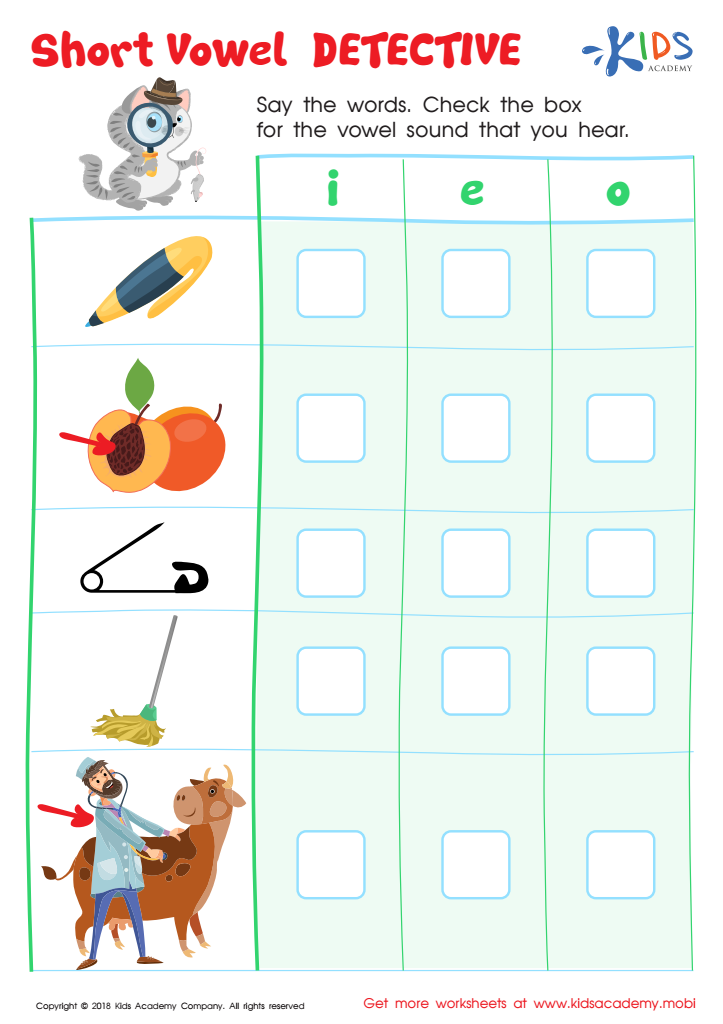
    Short Vowel Detective Worksheet
    Short Vowel Detective Worksheet

    Short Vowel Detective Worksheet

    Help your kids become phonetics masters by teaching them how to tell the difference between long and short vowels. As it may be difficult for them, take a look at a worksheet together. Have them pronounce the words and check the box for the vowel sound they hear. This is a great way for them to learn quickly and easily.
    Short Vowel Detective Worksheet
    Worksheet
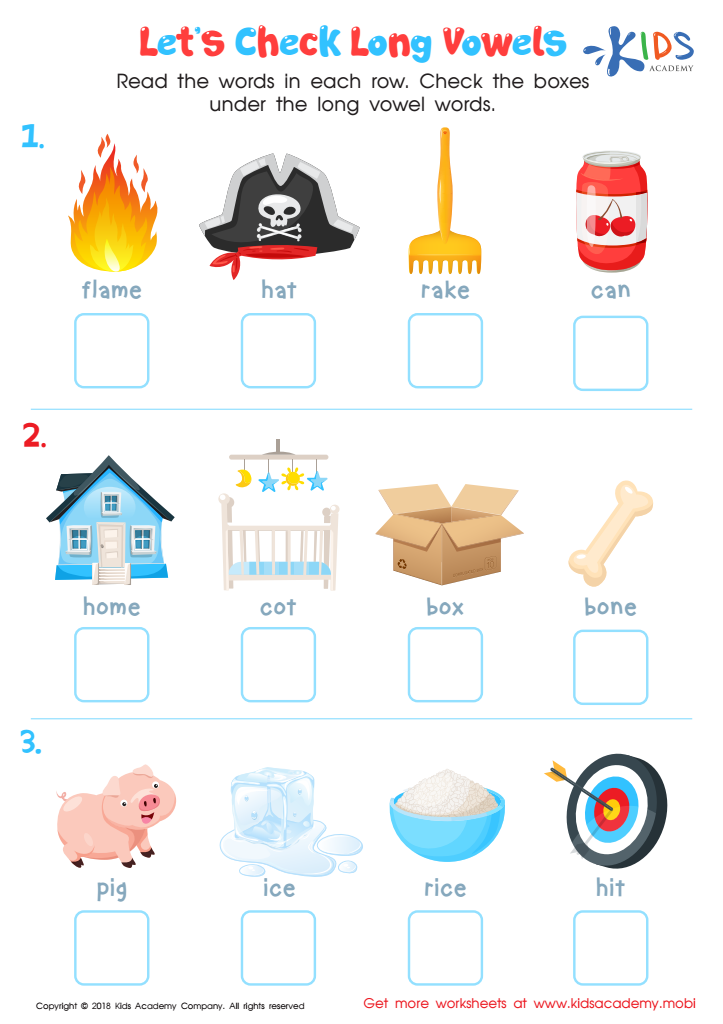
    Let's Check Long Vowels: Assessment Worksheet
    Let's Check Long Vowels: Assessment Worksheet

    Let's Check Long Vowels: Assessment Worksheet

    This worksheet helps your child identify objects and learn long vowel sounds. Ask them to say the names of the four objects in each row. Then, help them check the boxes to confirm they know the long vowel sounds. This will help them develop their reading skills.
    Let's Check Long Vowels: Assessment Worksheet
    Worksheet
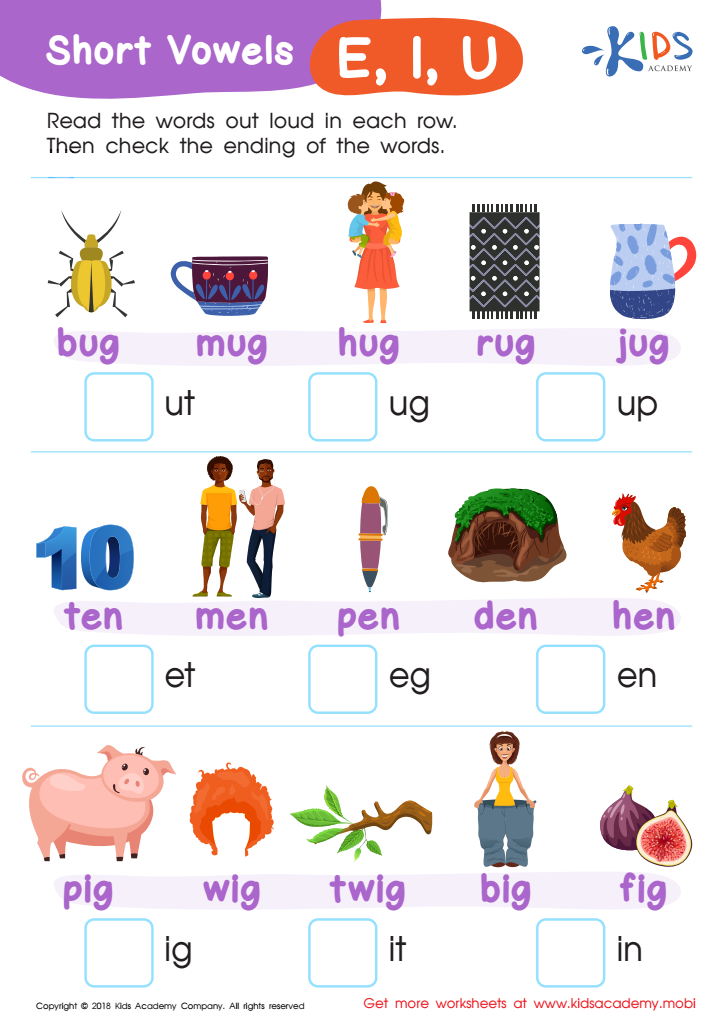
    Short Vowels /e/, /i/, and /u/ Worksheet
    Short Vowels /e/, /i/, and /u/ Worksheet

    Short Vowels /e/, /i/, and /u/ Worksheet

    Your emergent reader can have fun while practicing their short vowel sounds with this free, brightly colored worksheet. They'll identify one-syllable words by their pictures, then match the correct ending for each. They'll gain an understanding of how short vowel sounds vary in closed syllables with different endings, without even realizing it!
    Short Vowels /e/, /i/, and /u/ Worksheet
    Worksheet
    Double Consonant Worksheet 3rd Grade
    Double Consonant Worksheet 3rd Grade

    Double Consonant Spelling Worksheet

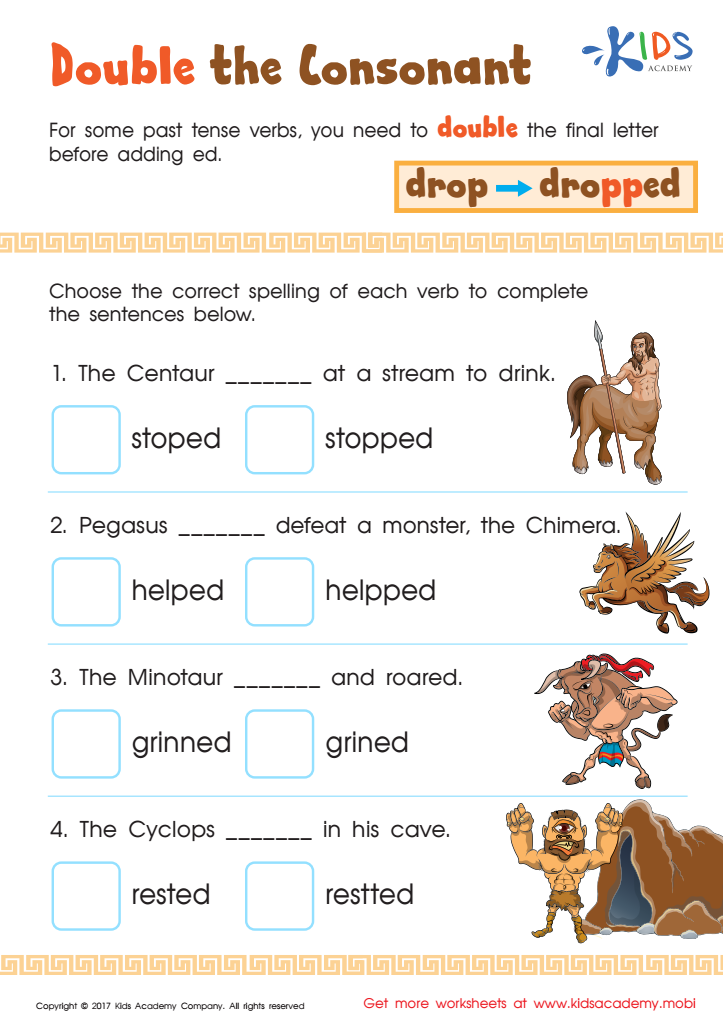
    Rewrite: This double consonant worksheet is perfect for 3rd graders to practice recognizing words with doubled letters in the past tense! With a mythology theme, your child can look through the answer choices to find the correct words.
    Double Consonant Spelling Worksheet
    Worksheet


    Understanding vowels and consonants is crucial for children ages 6-8 to establish a strong foundation in literacy. At this formative stage, vowels (a, e, i, o, u) and consonants (all other letters) play a central role in phonemic awareness, which is the ability to hear, identify, and manipulate individual sounds in spoken words. This skill is essential for successful reading and writing.

    First and foremost, knowing vowels and consonants helps children decode words when reading. For example, understanding how vowels can create different sounds according to their placement and combination with consonants allows children to sound out words correctly. This skill benefits their overall reading fluency and comprehension.

    In addition, when children grasp the basic differences between vowels and consonants, they improve their ability to spell correctly. Consonants often define the structure of a word, while vowels connect those structures in meaningful ways. Grasping this relationship aids in recognizing common spelling patterns and rules, including silent letters and vowel combinations.

    Also, learning about vowels and consonants enhances a child’s speaking and listening abilities. Recognizing different sounds aids in clear pronunciation and helps children better understand spoken instructions, stories, and lessons.

    For parents and teachers, emphasizing the importance of vowels and consonants equips young learners with essential tools for their academic journey, promoting confidence and competence in language-based tasks.