
Grammar practice Worksheets for Ages 8-9
3 filtered results
Difficulty Level
Grade
Age
-
From - To
Subject
Activity
Standards
Enhance your child's grammatical skills with our vibrant and engaging Grammar Practice Worksheets, tailored specifically for ages 8-9. Designed by educational experts, these worksheets provide a fun and effective way for third and fourth graders to practice key grammatical principles. Activities include exercises on punctuation, sentence structure, and parts of speech, ensuring comprehensive coverage of essential grammar concepts. Perfect for classroom use or at-home learning, our worksheets help build a strong foundation in language arts. Boost your child's confidence and proficiency in grammar with Kids Academy's high-quality resources suitable for young learners. Start improving language skills today!
Favorites
With answer key
Interactive
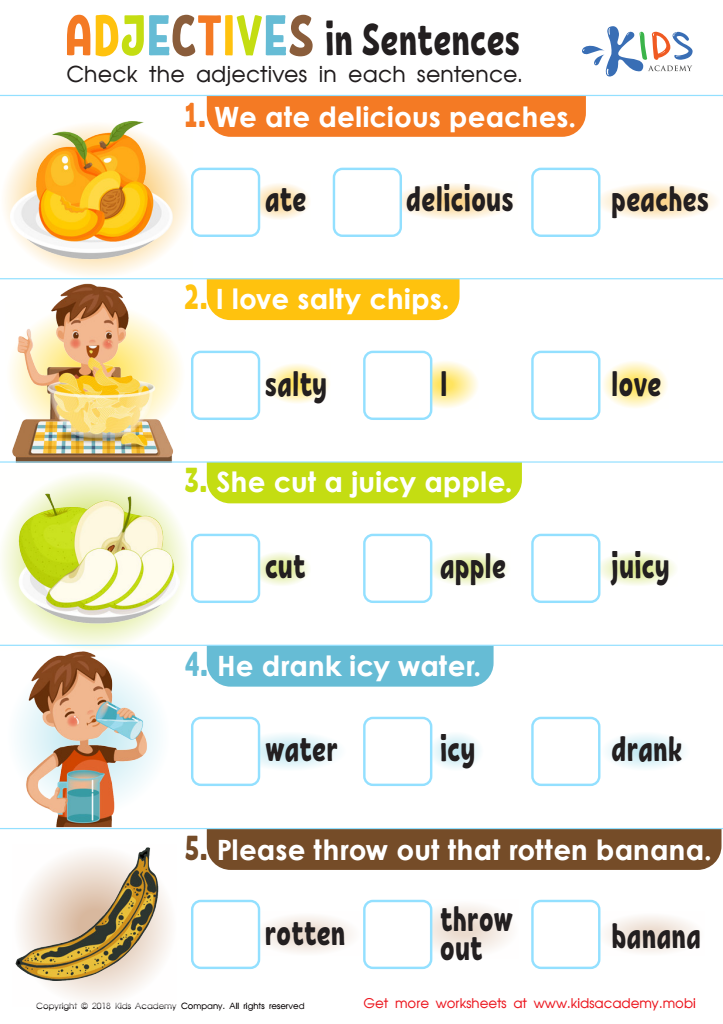
Adjectives in Sentences Worksheet
Our learners can find it hard to use writing to add detail, but adjectives can help. With this fun worksheet, kids can identify adjectives that describe food and drink. Guide them through each sentence, discussing the words and having them choose the one that gives information about the food/drink.
 Assign to My Students
Adjectives in Sentences Worksheet
Worksheet
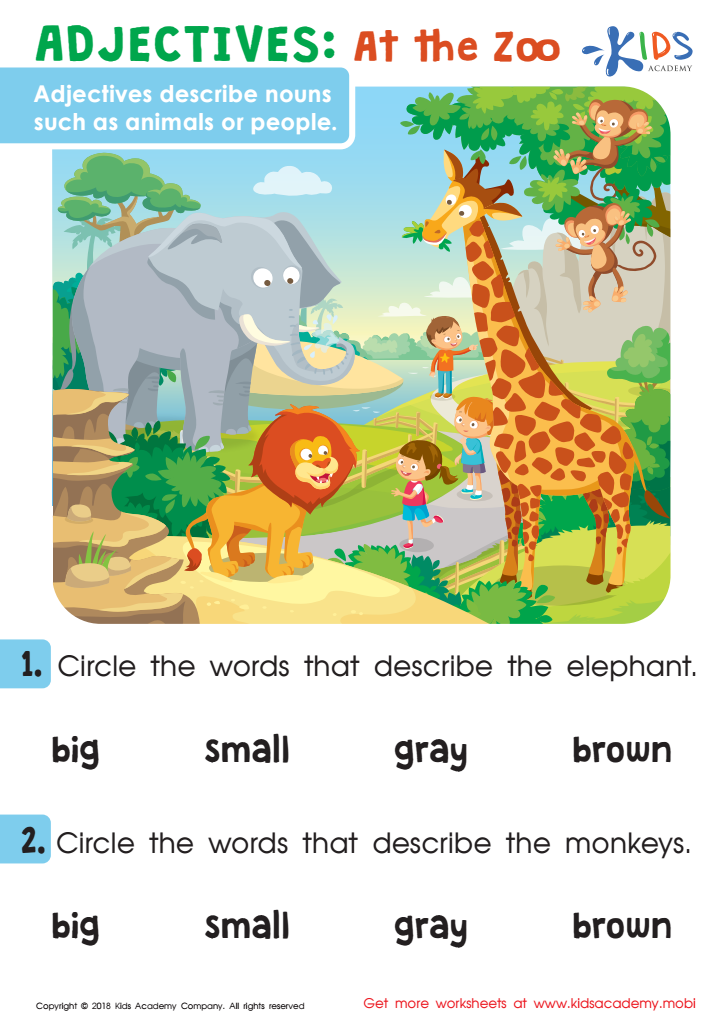
Adjectives: At The Zoo Worksheet
Take your kids to the zoo and ask them about their favorite activities and animals. This worksheet is a great way for kids to learn about adjectives. Explain that adjectives describe nouns like people or animals (e.g. big, tall, dark). Look at the printout with your kids and help them circle words that describe the animals in the picture.
Adjectives: At The Zoo Worksheet
Worksheet
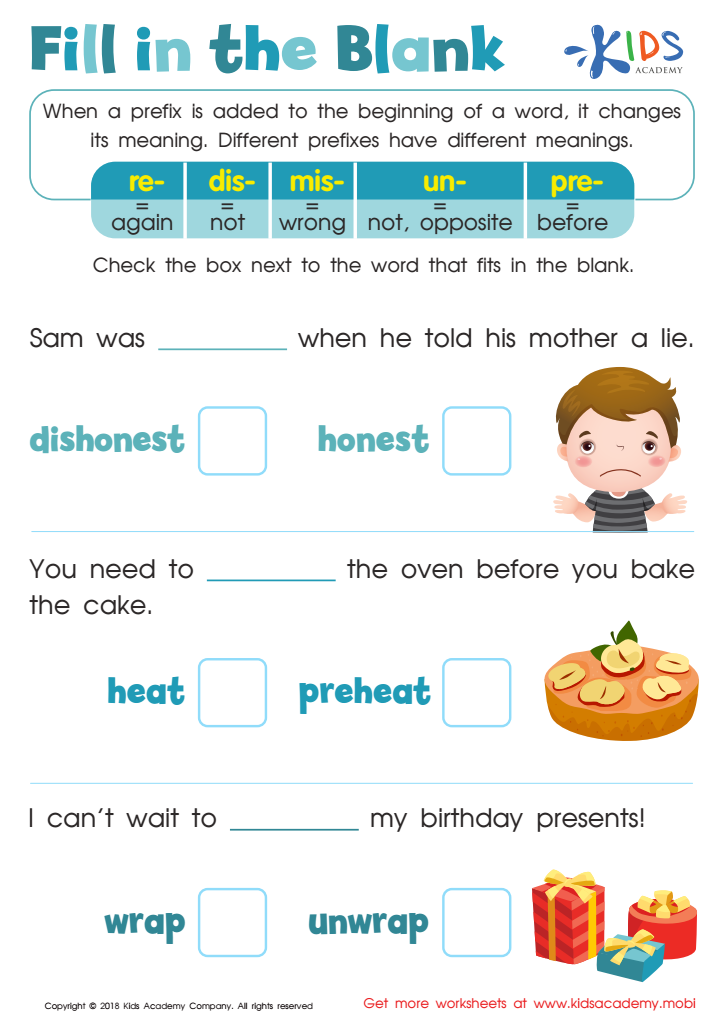
Reading: Fill in the Blank Worksheet
Students can practice understanding the meaning of common prefixes with this worksheet. They read sentences and pick the correct word with the appropriate prefix to complete it. Downloadable and a great addition to reading and vocabulary resources, this helps improve comprehension with mastery of the skill!
Reading: Fill in the Blank Worksheet
Worksheet
Join Kids Academy for Free
Who is primarily going to use this learning content?






Grammar practice for children aged 8-9 is essential because it's during these formative years that they're laying the foundation for future communication skills. At this age, kids are transitioning from simple sentence structures to more complex ones, and a strong grasp of grammar helps ensure they can clearly express their thoughts and ideas, both orally and in writing. Proper grammar education teaches them how to construct sentences correctly, which in turn improves their reading comprehension, making it easier for them to understand and retain what they read.
Additionally, practicing grammar enhances critical thinking skills. Children learn to recognize parts of speech and understand how sentences are put together, which supports logical reasoning and analytical skills. Good grammar also boosts self-confidence. Kids who can articulate their thoughts well tend to engage more in class discussions, and partnership projects improve interpersonal communication, reducing the likelihood of misunderstandings.
Moreover, strong grammar skills are linked to higher academic performance across subjects. As they advance in school, they will be required to write reports and essays, participate in written exams, and communicate effectively with teachers and peers. Therefore, focusing on grammar practice during the ages of 8-9 helps set children up for long-term success both academically and in everyday communication.








