Understanding Sequences Easy Math Worksheets for 4-Year-Olds
4 filtered results
-
From - To
Introduce your 4-year-old to the world of sequences with our easy math worksheets, perfect for little learners. These engaging worksheets from Kids Academy help children understand patterns and sequences through fun, age-appropriate activities. Designed specifically for younger kids, our worksheets encourage critical thinking and foundational math skills that are essential for future learning. By exploring bright and cheerful visuals, children can confidently grasp the concept of sequences in a playful and enjoyable manner. Make early math education a delightful experience with “Understanding Sequences Easy Math Worksheets,” aiming to build essential learning skills seamlessly. Start your child’s math adventure today!
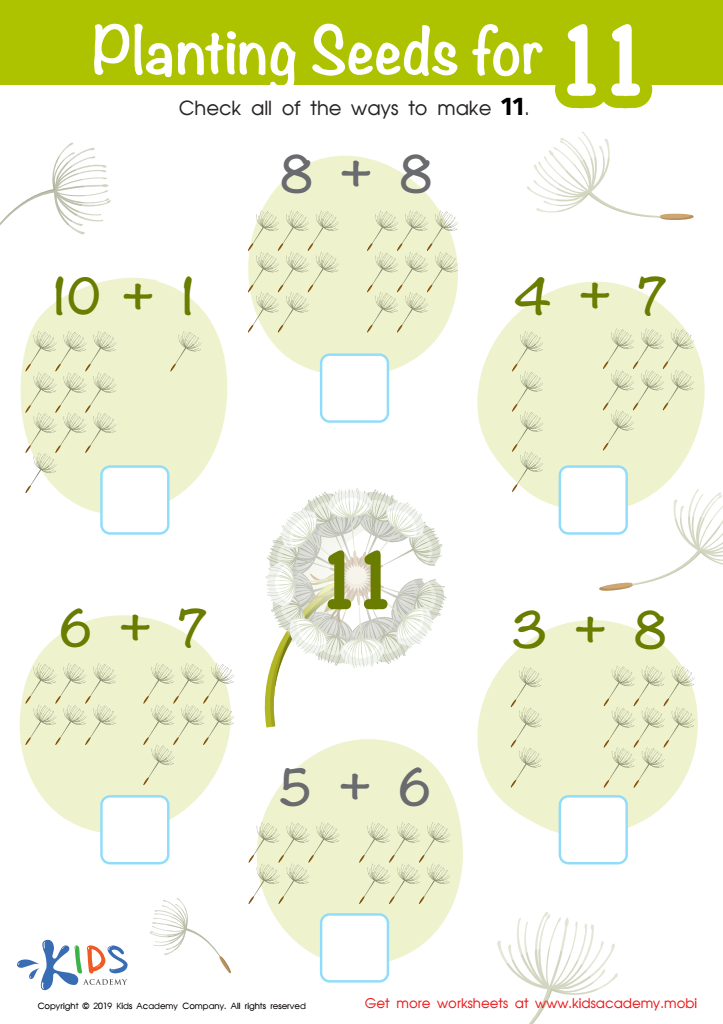
Planting Seeds for 11 Worksheet
 Assign to My Students
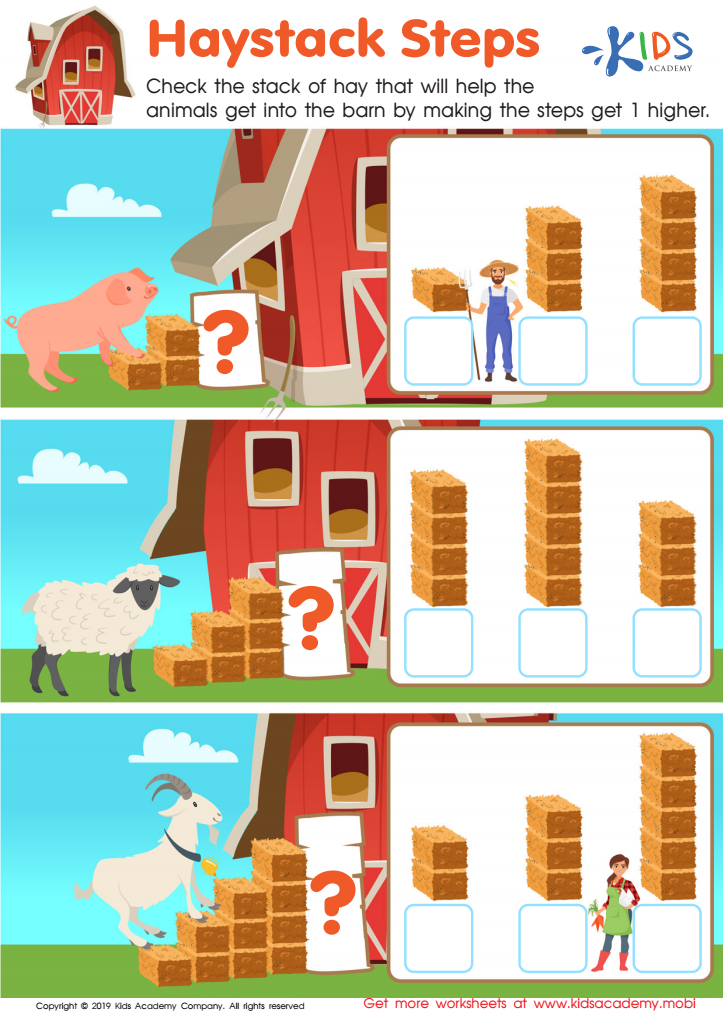
Haystack Steps Worksheet
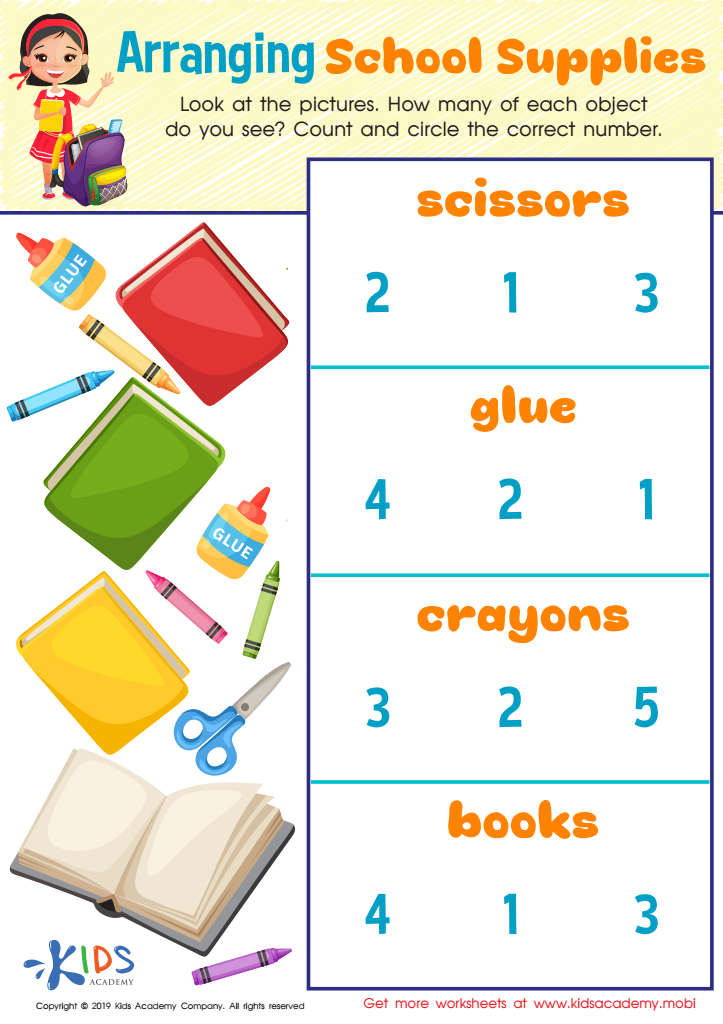
Arranging School Supplies Worksheet
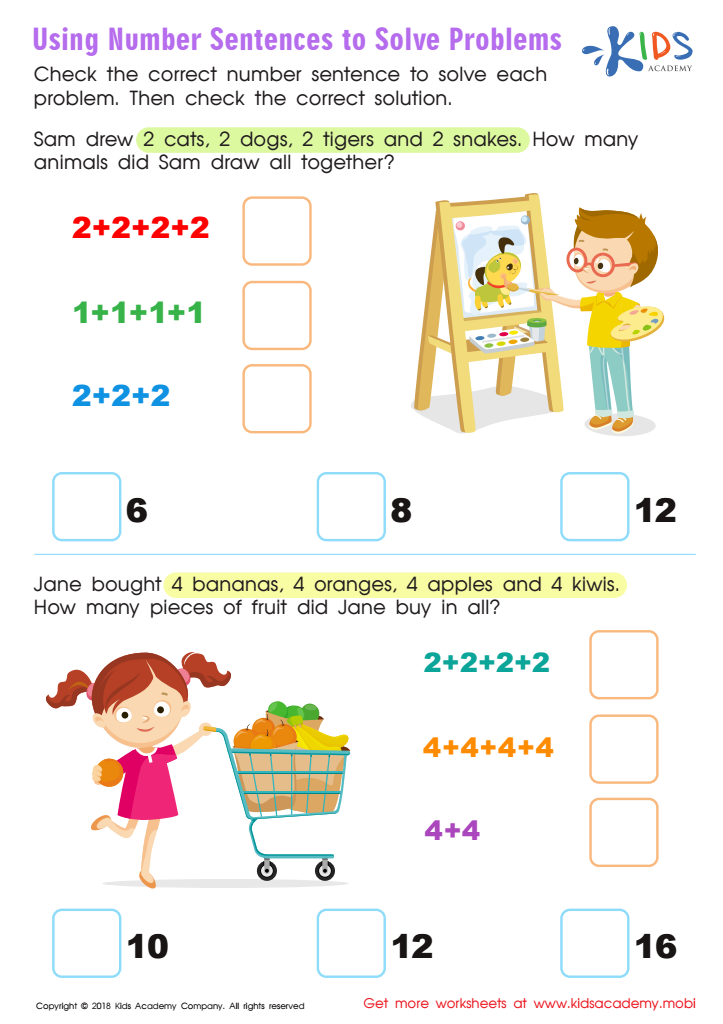
Using Number Sentences to Solve Problems Worksheet







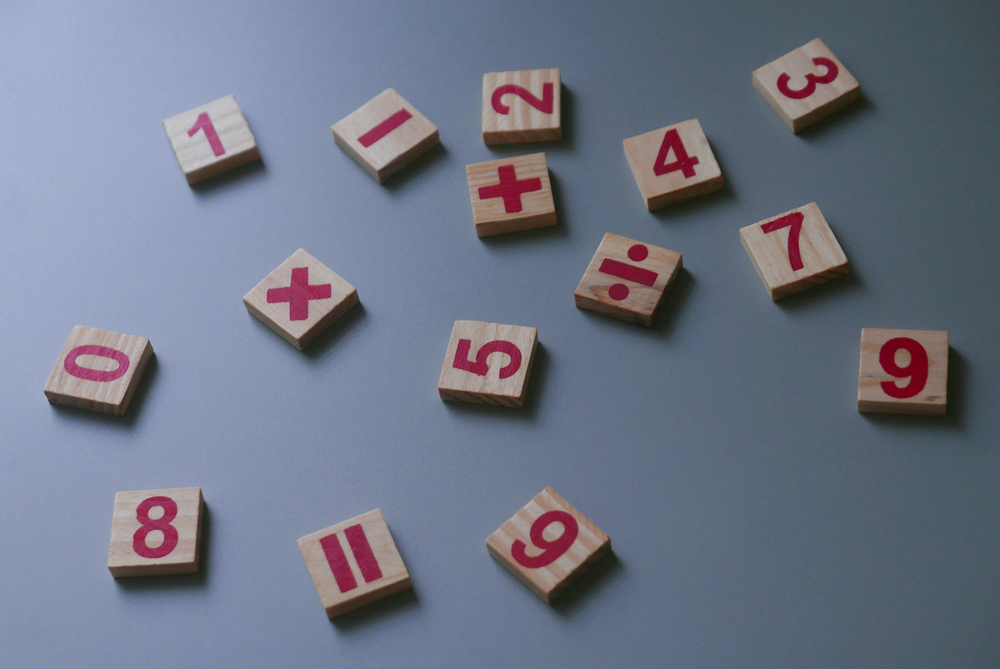
Understanding sequences in early math is crucial, especially for 4-year-olds, as it lays the foundation for future mathematical and cognitive development. Sequences help children recognize patterns and predict what comes next, which are vital skills in both math and everyday life. By grasping the basics of sequencing, children develop critical thinking and logical reasoning, enhancing their ability to solve problems and understand the world around them.
For parents and teachers, introducing sequences at an early age supports the development of essential cognitive processes. Patterns and sequences are everywhere, from daily routines to nature. Learning to identify and follow these sequences helps young children make sense of their environment and establishes a sense of order and predictability, which is comforting and empowering.
Moreover, early exposure to sequences prepares children for more complex mathematical concepts, such as counting, addition, and subtraction. It also aids in language development, as storytelling often involves sequences of events. For preschoolers, engaging activities like arranging colored blocks in patterns or following steps in a story provide fun and interactive ways to learn sequencing, making math a natural and enjoyable part of their daily activities.
Investing time in teaching sequences ensures that young children build a strong, confident foundation for future learning, setting them up for academic success and a lifelong love for learning.








