Easy Beginning Sounds Worksheets for Ages 6-9
3 filtered results
Difficulty Level
Grade
Age
-
From - To
Subject
Activity
Standards
Discover our engaging "Easy Beginning Sounds Worksheets" designed specifically for children ages 6-9! These worksheets provide a fun and interactive way for young learners to explore and identify beginning sounds in words. Our carefully crafted activities encourage phonetic awareness, helping kids enhance their reading and writing skills through playful exercises. Perfect for both classroom settings and at-home practice, these worksheets feature vibrant illustrations and simple instructions that make learning enjoyable. Encourage your child's literacy journey with these essential resources, tailored to support their developmental needs. Download now to spark a love for reading and boost confidence in phonics!
Favorites
With answer key
Interactive
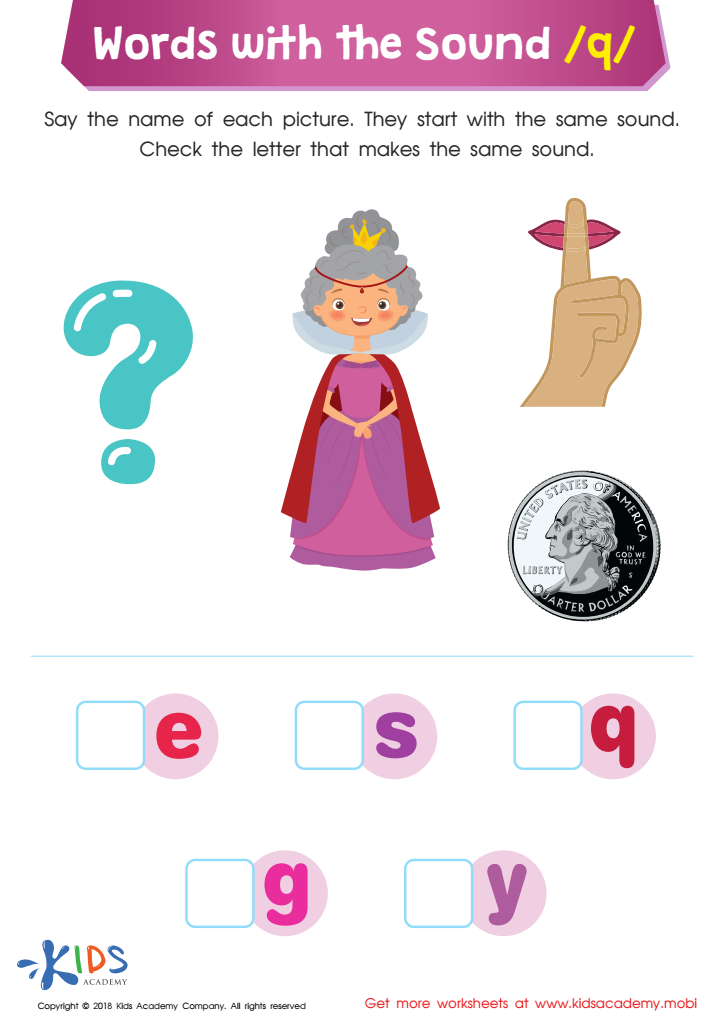
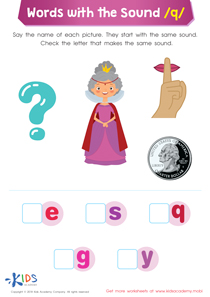
Words with Sound Q Reading Worksheet
Beginning readers will love this free PDF worksheet! Bright colors and familiar pictures make it fun, as they say the name of each image and work on fine motor skills. Letters “q” is featured among others, helping to recognize and isolate its sound, which is often seen with a “u” behind it.
 Assign to My Students
Words with Sound Q Reading Worksheet
Worksheet
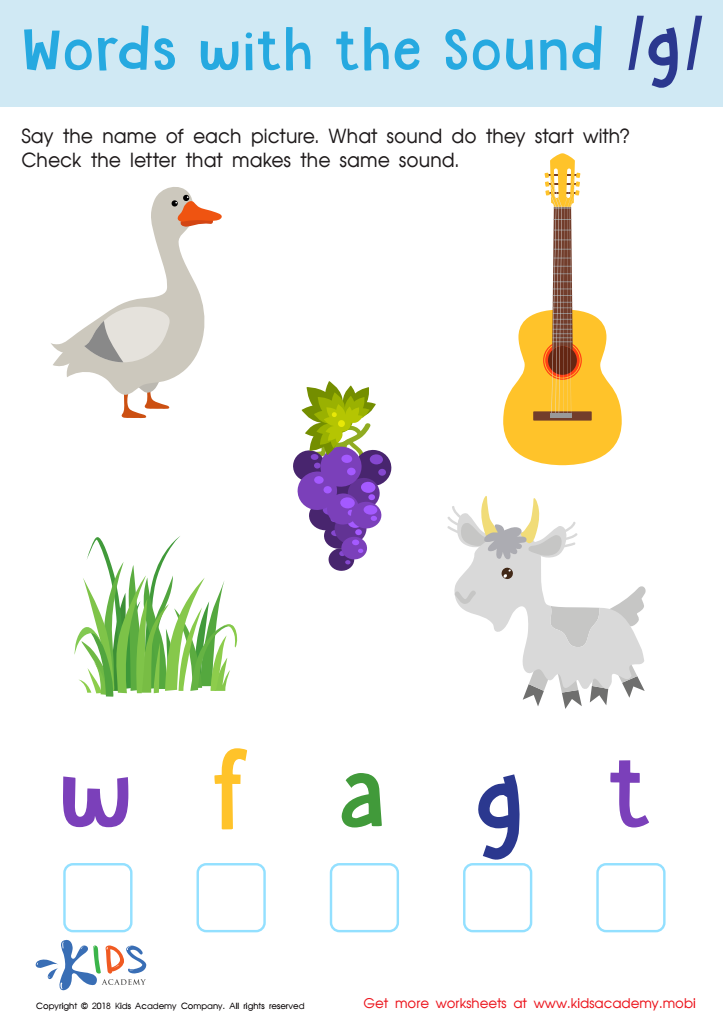
Words with sound g Reading Worksheet
Help your child learn the soft "g" sound with this phonics worksheet. Ask them to name each picture, then identify the letter sound it begins with. If it's "g", they can check the box. Have them repeat each word, listening for the soft "g" sound before moving on to the next page.
Words with sound g Reading Worksheet
Worksheet
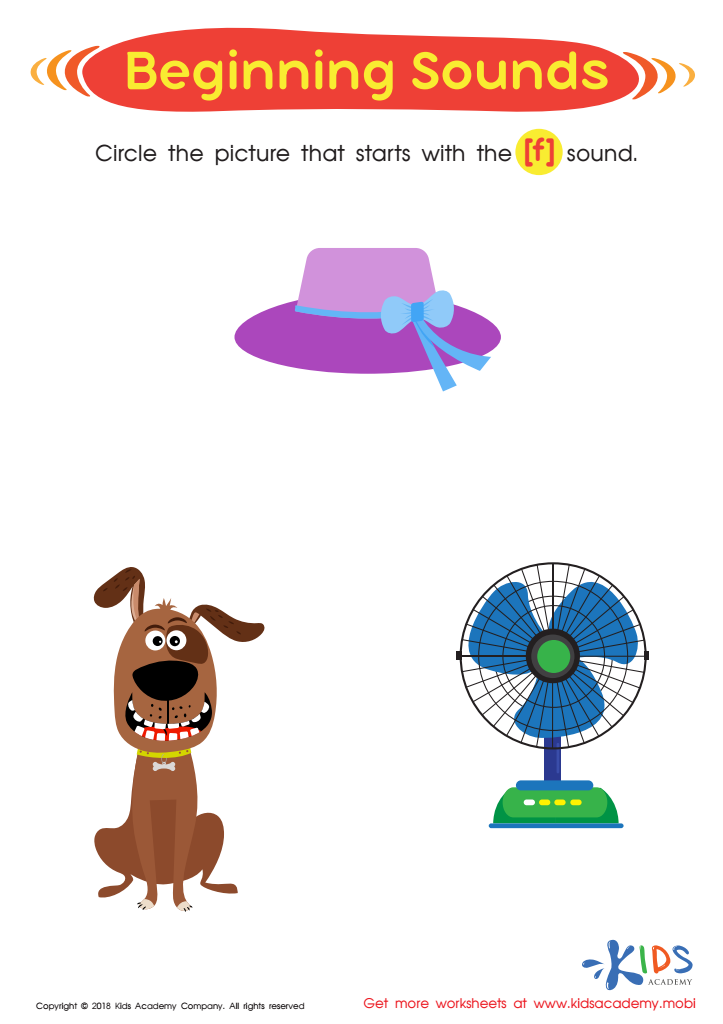
Beginning Sounds Assessment Printable
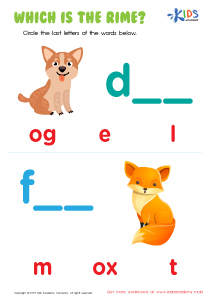
Test your child's knowledge of the alphabet. Ask them to recite the whole alphabet and the words for each letter. For example: A for apple, B for boy. Identify objects on this worksheet, then ask your child which one starts with the letter "f" and have them circle it.
Beginning Sounds Assessment Printable
Worksheet
Join Kids Academy for Free
Who is primarily going to use this learning content?








Teaching Easy Beginning Sounds is crucial for children aged 6-9 because it lays the foundation for literacy and effective communication skills. At this developmental stage, children are beginning to read and write independently, making phonemic awareness essential. By mastering beginning sounds, students can decode words more easily, improving their reading fluency and comprehension.
Parents and teachers play a pivotal role in this process. Engaging students with activities focused on beginning sounds can make learning fun and interactive, encouraging a love for reading. Simple techniques, such as using rhymes, songs, and games, help reinforce these sounds, making them memorable.
Moreover, proficiency in beginning sounds boosts children's confidence in their reading abilities. When students can accurately identify initial sounds, they feel empowered to share stories, engage in discussions, and express themselves clearly, enhancing their social skills.
Additionally, focusing on beginning sounds supports English Language Learners in building vocabulary and understanding the relationship between letters and sounds. As they grow, these foundational skills will aid in their overall academic performance.
In sum, prioritizing Easy Beginning Sounds equips children with crucial literacy skills, fostering a lifelong love for learning. Parents and teachers should collaboratively nurture this aspect of education to ensure every child’s success.