Logical Reasoning Easy Reading Worksheets
3 filtered results
Difficulty Level
Grade
Age
-
From - To
Subject
Activity
Standards
Discover our engaging Logical Reasoning Easy Reading Worksheets designed for young learners! These fun, educational worksheets enhance critical thinking and problem-solving skills through interactive reading activities. Ideal for K-2 students, they feature age-appropriate puzzles, story-based questions, and visual aids that simplify complex concepts. Foster your child's logical abilities in a stimulating and enjoyable way. Ensure a strong foundation in learning by integrating these expertly crafted resources into your educational routine. Boost your little one's intellectual development while making learning enjoyable with our high-quality, easy reading logical reasoning worksheets!
Favorites
With answer key
Interactive
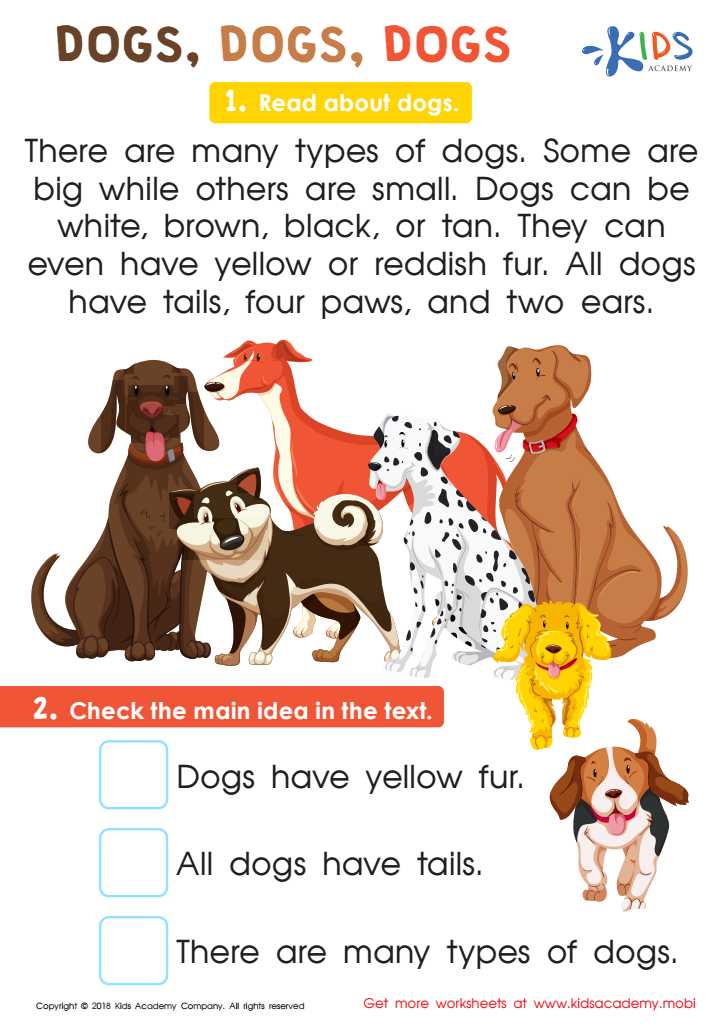
Dogs, Dogs Worksheet
Help your child understand main ideas with this fun doggy worksheet from Kids Academy! Have them read the passage and then discuss the main idea. After that, have them read the answer choices and pick the right one. This will help your kiddo hone their critical reading comprehension skills!
 Assign to My Students
Dogs, Dogs Worksheet
Worksheet
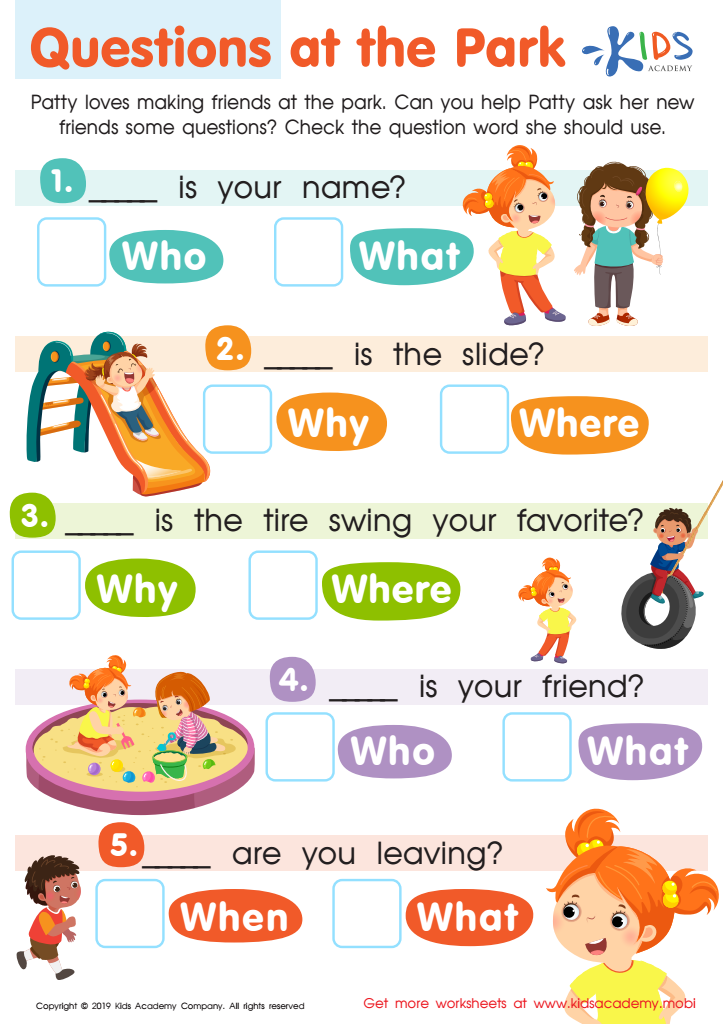
Questions at the Park Worksheet
Parks are great for fun! Kids can play, run and be as loud as they want! Ask them what their favorite activities are. If they love making friends, like Patty in this worksheet, help them practice their question words to get to know their new pals better.
Questions at the Park Worksheet
Worksheet
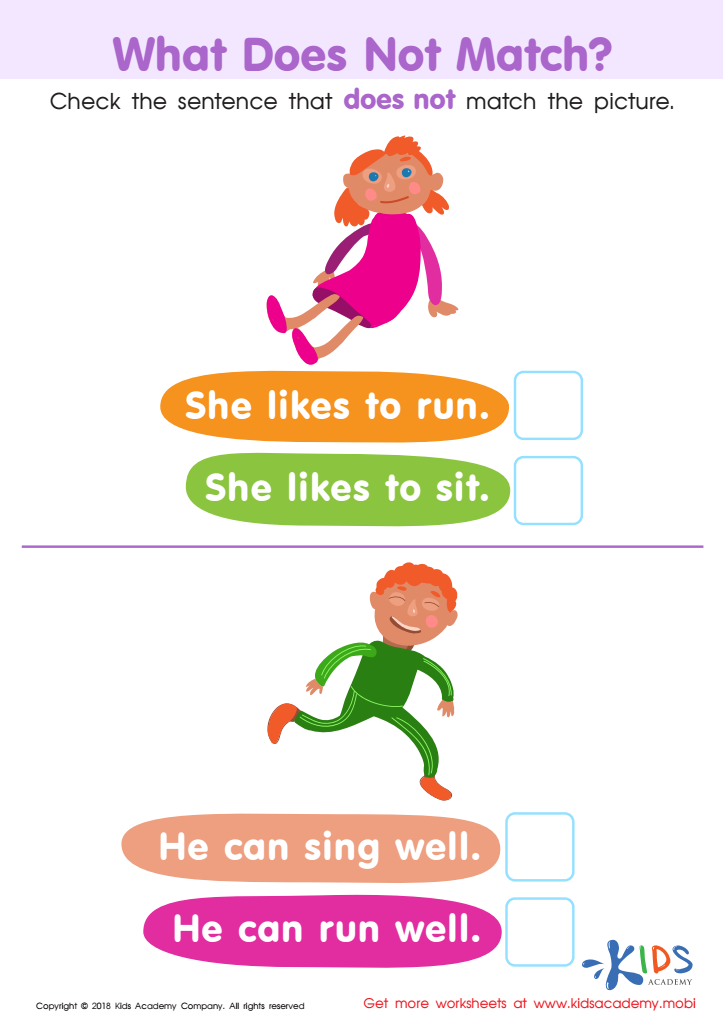
What Does Not Match? Worksheet
Emerging readers need to practice using visual cues and repetitive text. This colorful PDF provides them with an opportunity to look at pictures, use discrimination and discern which phrase does not match. It also enables them to gain familiarity with high-frequency words to aid decoding longer sentences.
What Does Not Match? Worksheet
Worksheet
Join Kids Academy for Free
Who is primarily going to use this learning content?






.jpg)
Logical Reasoning Easy Reading is vital for young learners as it serves as the foundation for critical thinking and problem-solving skills, both of which are essential in everyday life. For parents and teachers, fostering these skills early in children's education can yield long-term benefits.
First, logical reasoning enables children to make sense of the world around them. By organizing information systematically and recognizing patterns, children learn to solve problems effectively and make informed decisions. This is not just valuable inside the classroom but is also applicable in real-life situations such as following instructions, planning activities, and even resolving conflicts.
Additionally, developing strong reading skills at an early age strengthens cognitive development. Proficient readers are often better at verbal and written communication, which is crucial for academic success and social interaction. Easy reading materials, specifically curated to be age-appropriate, ensure that young children are engaged and capable of comprehending the text, thereby gradually enhancing their reading proficiency.
Moreover, logical reasoning and easy reading exercises bolster self-confidence. As children successfully engage with and solve these problems, they feel accomplished, fostering a positive attitude towards learning.
Thus, by prioritizing these skills, parents and teachers equip children with critical competencies that support lifelong learning and personal growth, setting a strong foundation for their future endeavors.