Fraction visualization Extra Challenge Worksheets for Ages 3-8
3 filtered results
-
From - To
Discover our Fraction Visualization Extra Challenge Worksheets, designed for ages 3-8 to make learning fractions fun and engaging! These worksheets provide colorful, hands-on activities to help kids grasp the concept of fractions through exciting visual aids and interactive challenges. Whether your child is just starting with simple halves or advancing to more complex fractions, our resources support every learning stage. Each worksheet encourages critical thinking and problem-solving skills. Perfect for at-home practice or additional classroom support, these materials ensure a thorough understanding of fractions while keeping young learners motivated and excited about math!
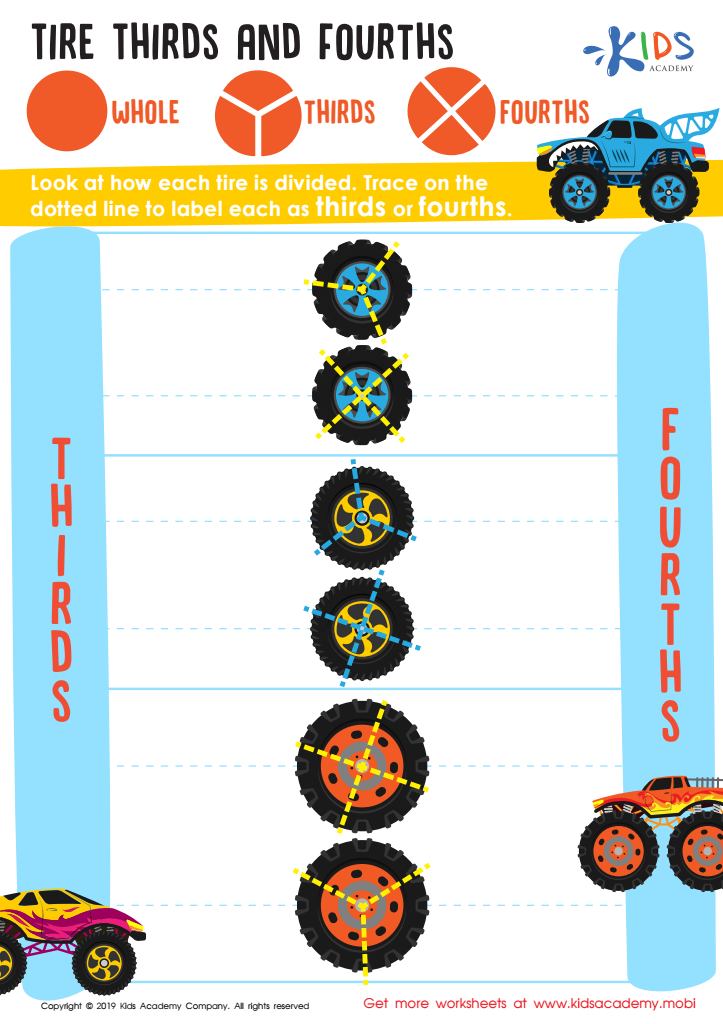
Tire Thirds and Fourths Worksheet
 Assign to My Students
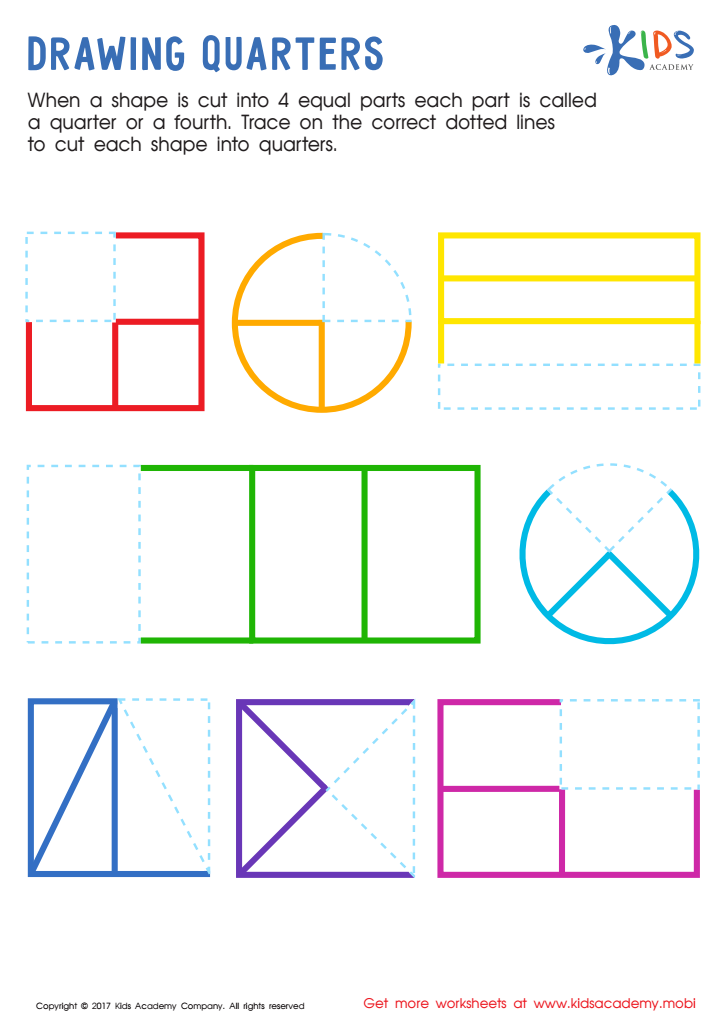
Drawing Quarters Worksheet
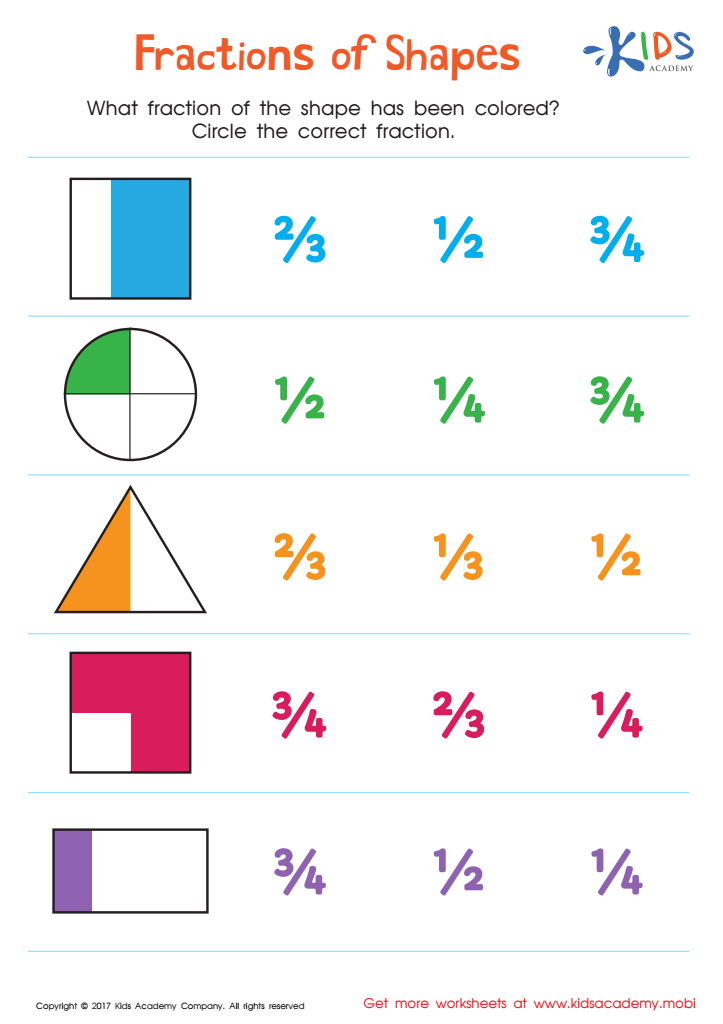
Fractions of Shapes: Math Concept Worksheet






Parents and teachers should care about Fraction Visualization Extra Challenge for ages 3-8 because early exposure to these concepts provides a solid groundwork for mathematical comprehension. Young children are in a critical stage for cognitive development, and introducing complex yet foundational ideas such as fractions can significantly enhance their future academic achievements.
Using visualization techniques makes abstract concepts tangible for young learners. For example, slicing a pizza into equal parts or dividing a set of toys can help children understand how fractions work in real-life contexts. These visual and hands-on techniques contribute to a deeper and more intuitive grasp of mathematics, essential for more advanced subjects.
Challenges designed for this age group can stimulate curiosity, cognitive skills, and problem-solving abilities. Encouraging children to visualize fractions reinforces their ability to recognize parts of a whole, enhancing spatial reasoning and critical-thinking skills.
Additionally, creating a positive and engaging learning environment can help children develop a love for mathematics early on, fostering a mindset that is more open and confident towards tackling challenging subjects in the future. Therefore, actively investing in fraction visualization exercises for young students is crucial for developing math skills, nurturing intellect, and setting a positive tone for lifelong learning.








