
Sorting skills Extra Challenge Worksheets for Ages 5-9
5 filtered results
Difficulty Level
Grade
Age
-
From - To
Subject
Activity
Standards
Enhance your child’s cognitive growth with our "Sorting Skills Extra Challenge Worksheets for Ages 5-9". Designed to make learning both fun and challenging, these worksheets stimulate young minds by engaging them in intricate sorting activities. Perfectly suited for children aged 5-9, they develop critical thinking, fine motor skills, and logic-based abilities. Each worksheet is meticulously crafted to progressively increase in difficulty, ensuring that your child is continually challenged and entertained. Give your child the extra edge in learning with enriching, visually appealing, and educationally rewarding sorting exercises from Kids Academy. Ideal for both classroom settings and at-home practice.
Favorites
With answer key
Interactive
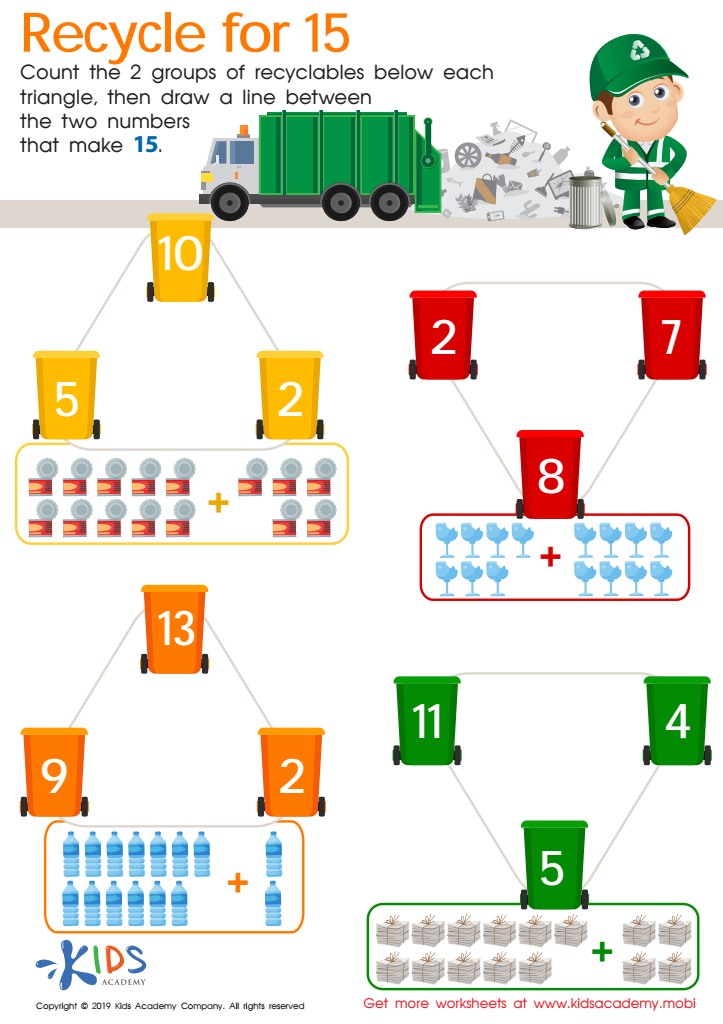
Recycle for 15 Worksheet
Recycle to help the planet! Have students count the recyclables and draw a line between the two numbers that make 15. This will help them understand the importance of recycling.
 Assign to My Students
Recycle for 15 Worksheet
Worksheet
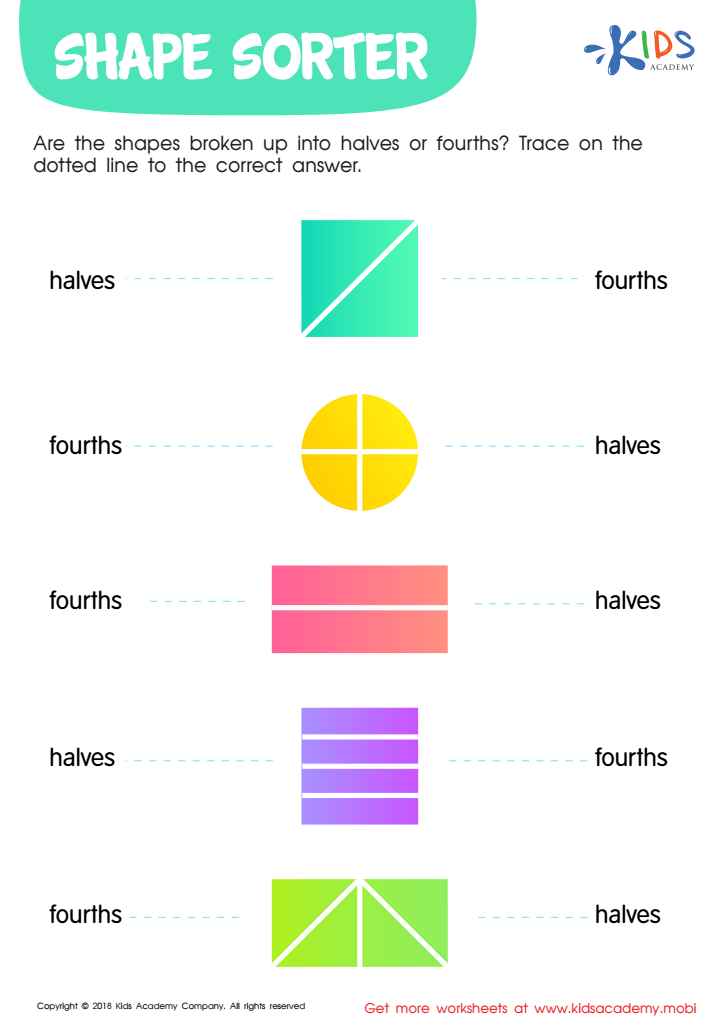
Shape Sorter Worksheet
Ask your child if they know halves and fourths. If not, explain that halves are when a shape is divided into two equal parts and fourths is when a shape is divided into four equal parts. Look through this worksheet with your child and let them trace the dotted lines to the correct answer to show whether the shapes are cut into halves or fourths.
Shape Sorter Worksheet
Worksheet
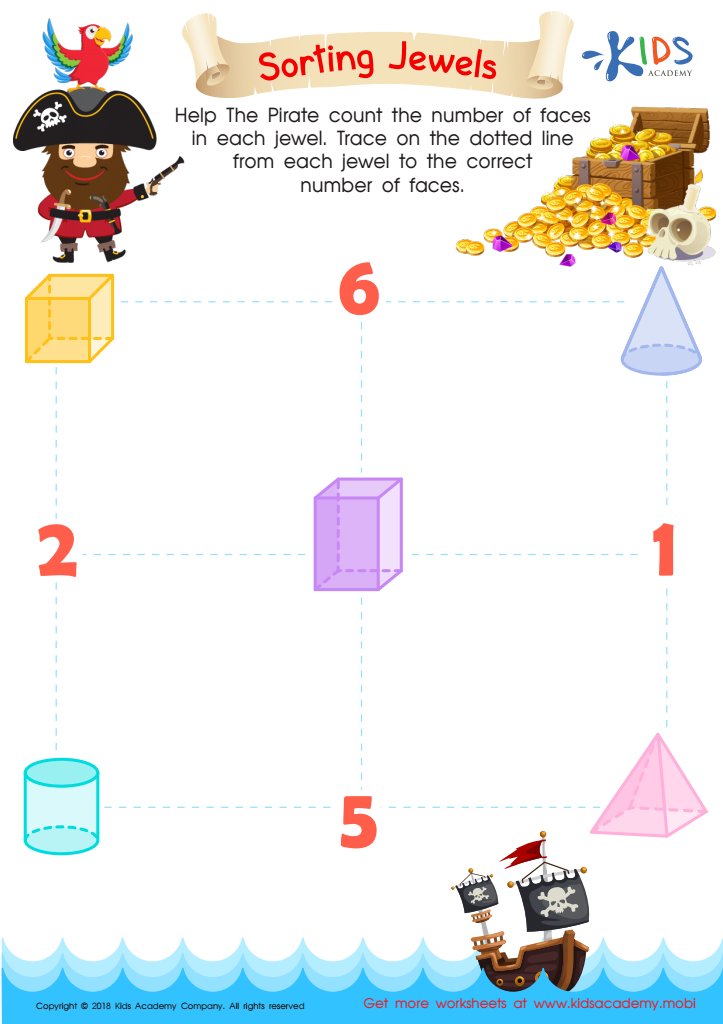
Sorting Jewels Worksheet
Help your kids explore their pirate fantasies with this tracing sheet. Ask them to count the number of faces in each jewel and then trace the dotted line to the correct number. How many faces does a rectangle have? What about a triangle and a cone? This fun worksheet is a great way to teach your kids the basics of identifying the number of faces on shapes.
Sorting Jewels Worksheet
Worksheet
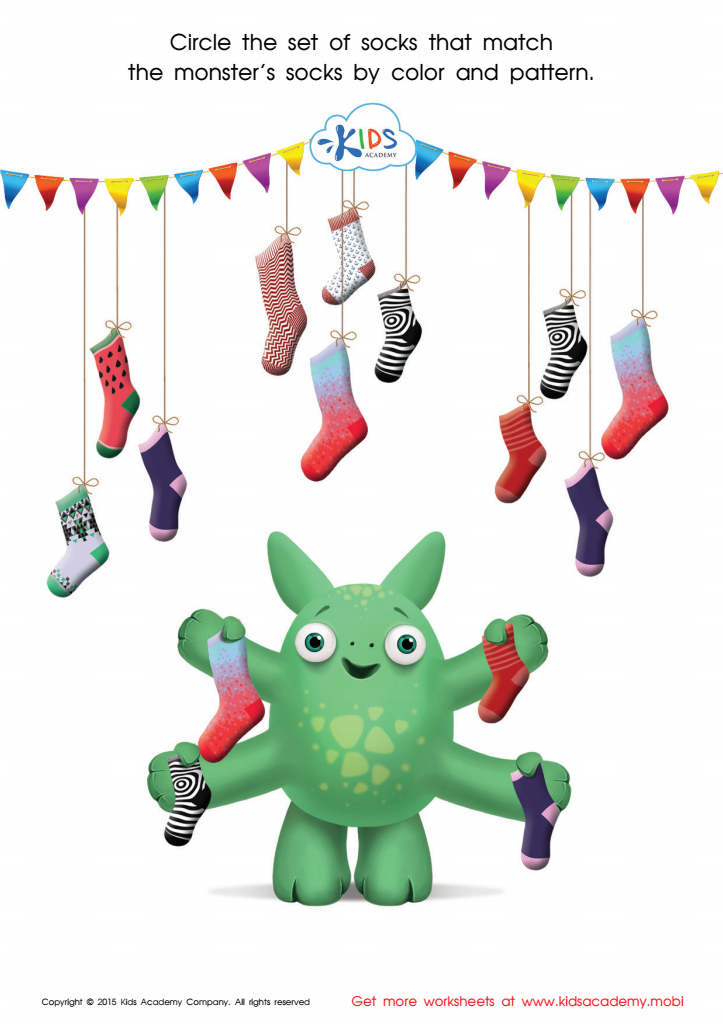
Sort the Monster's Socks Worksheet
Let your little one challenge herself and practice with matching Monster socks. She must be very attentive to match the same socks and draw a line connecting them!
Sort the Monster's Socks Worksheet
Worksheet
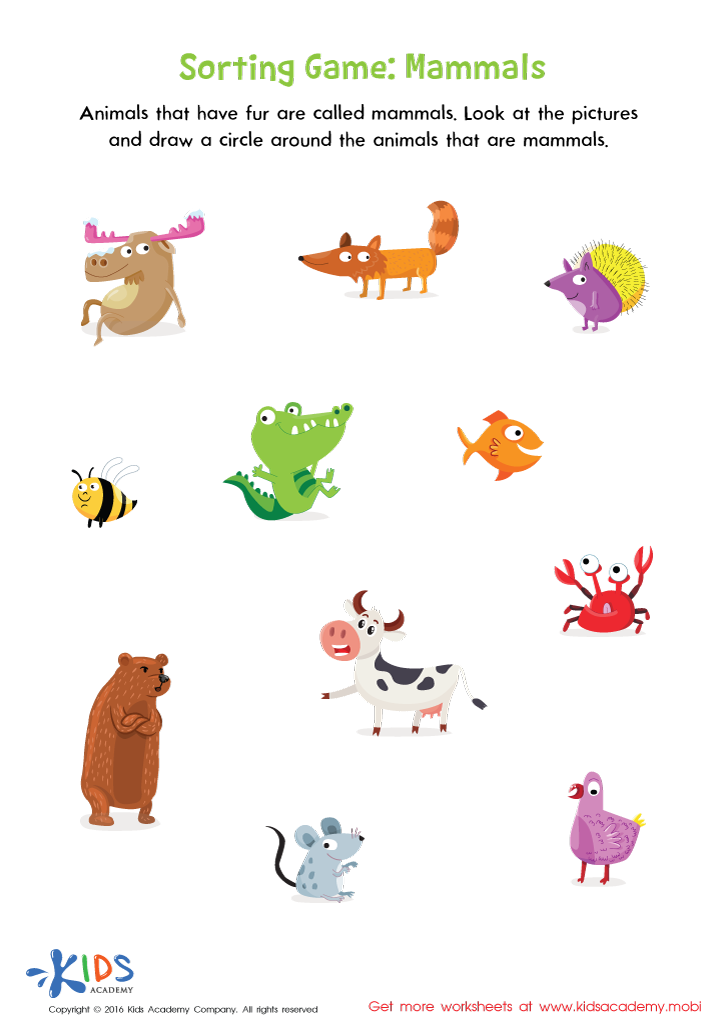
Mammals Sorting Worksheet
They'll practice sorting animals and learn their features with this fun worksheet.
Kids can test their scientific knowledge with this fun worksheet! They'll view pictures of animals, identify mammals based on their fur, and practice sorting them. This colorful worksheet is a great way for kids to learn about the differences between mammals and other animals.
Mammals Sorting Worksheet
Worksheet
Join Kids Academy for Free
Who is primarily going to use this learning content?








Developing sorting skills is crucial for children aged 5-9 because it forms the foundation for various cognitive and academic abilities. Parents and teachers should prioritize sorting exercises to promote several essential skills.
Firstly, sorting enhances critical thinking and problem-solving abilities by encouraging children to categorize items based on different attributes like color, size, shape, or texture. This practice improves their ability to make decisions and recognize patterns—key components in mathematics and science.
Additionally, sorting activities support language development. When children describe their sorting criteria, they enhance their vocabulary and learn to communicate more effectively. Sorting also aids in improving both fine motor skills and hand-eye coordination, as children manipulate and arrange objects physically.
Moreover, it strengthens organizational skills. Understanding how to sort and classify helps children with everyday tasks, making them more independent and efficient. In the classroom, these skills translate into better management of school materials and improved focus and attention to detail during learning activities.
Finally, sorting lays the groundwork for more complex academic concepts, such as data analysis, logical reasoning, and understanding relationships between objects. Early practice with sorting creates a smooth transition to these advanced topics, setting a solid academic foundation that benefits children throughout their educational journey.
Incorporating an extra challenge in sorting activities can deepen these benefits by pushing children to think more creatively and critically, fostering resilience and a growth mindset. These lifelong skills go beyond academics, supporting overall cognitive and personal development.








