Animal recognition Extra Challenge Math Worksheets for Ages 6-8
5 filtered results
-
From - To
Introduce your children to the exciting world of math with our "Animal Recognition Extra Challenge Math Worksheets for Ages 6-8." These engaging and educational worksheets provide a fun way to boost essential math skills including addition, subtraction, and place value, all while fostering a love for animals. Perfectly designed for early learners, each worksheet blends challenging math problems with captivating animal themes to maintain interest and involvement. Watch your kids' confidence grow as they master math concepts and improve their animal recognition abilities. Perfect for classroom use or at-home practice, these worksheets make learning a lively adventure!
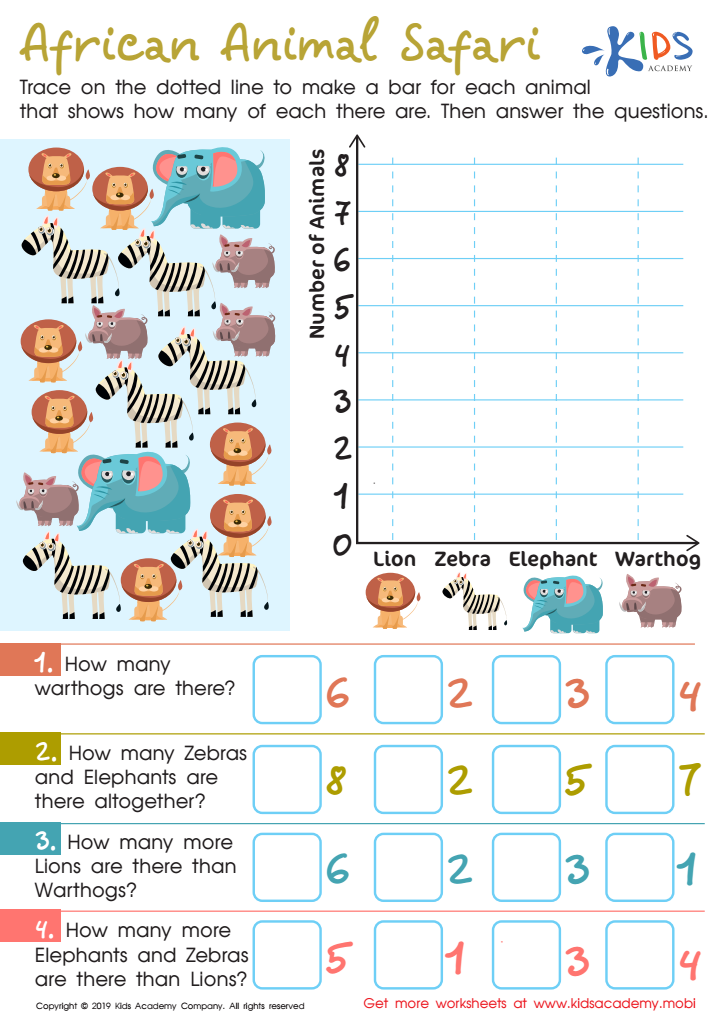
African Animal Safari Worksheet
 Assign to My Students
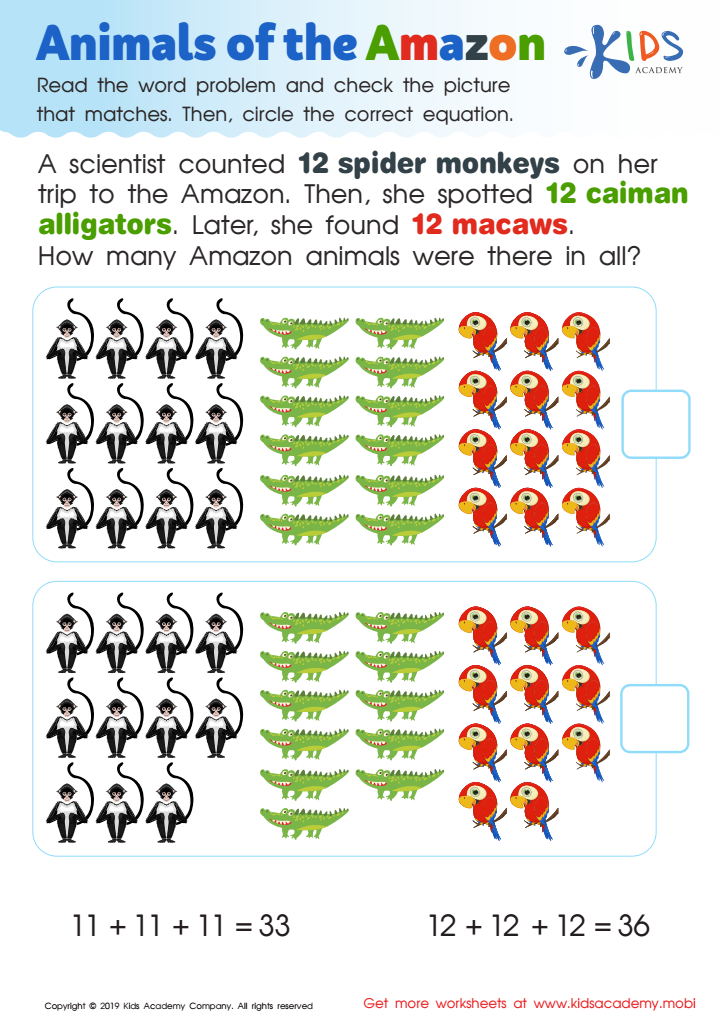
Animals of Amazon Worksheet
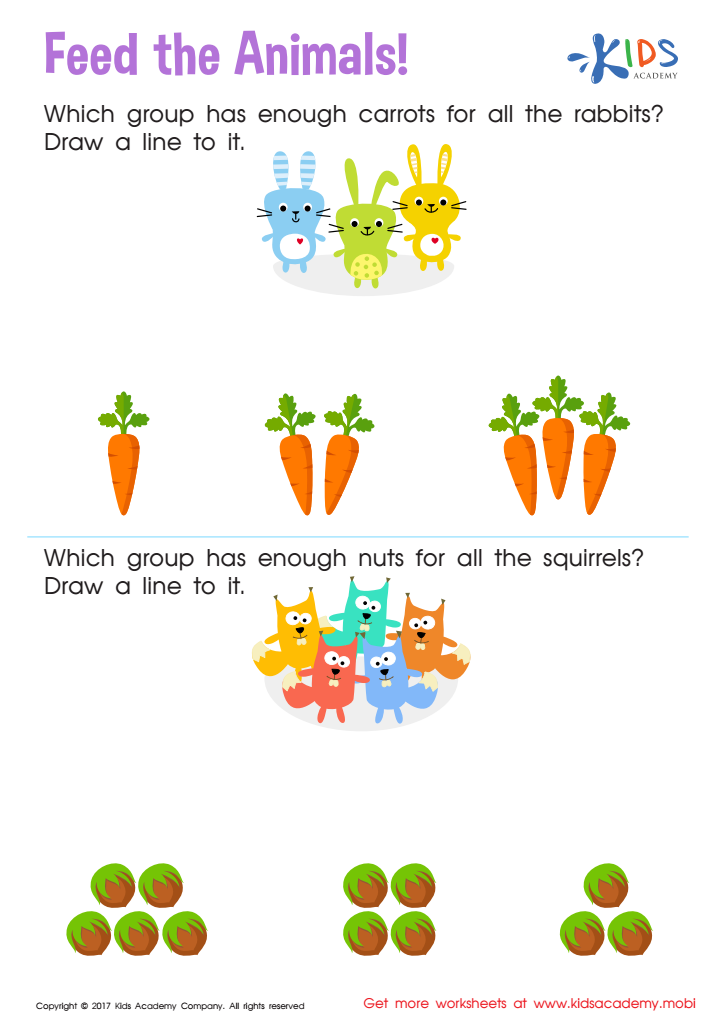
Count and Match: Feed the Animals Worksheet
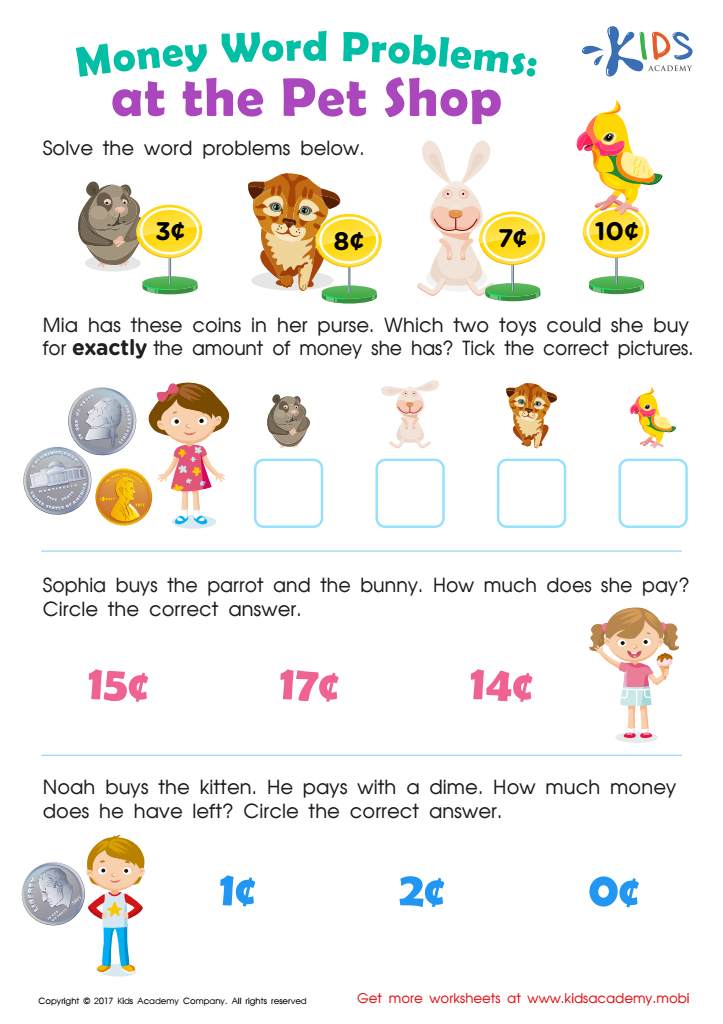
Pet Shop Worksheet
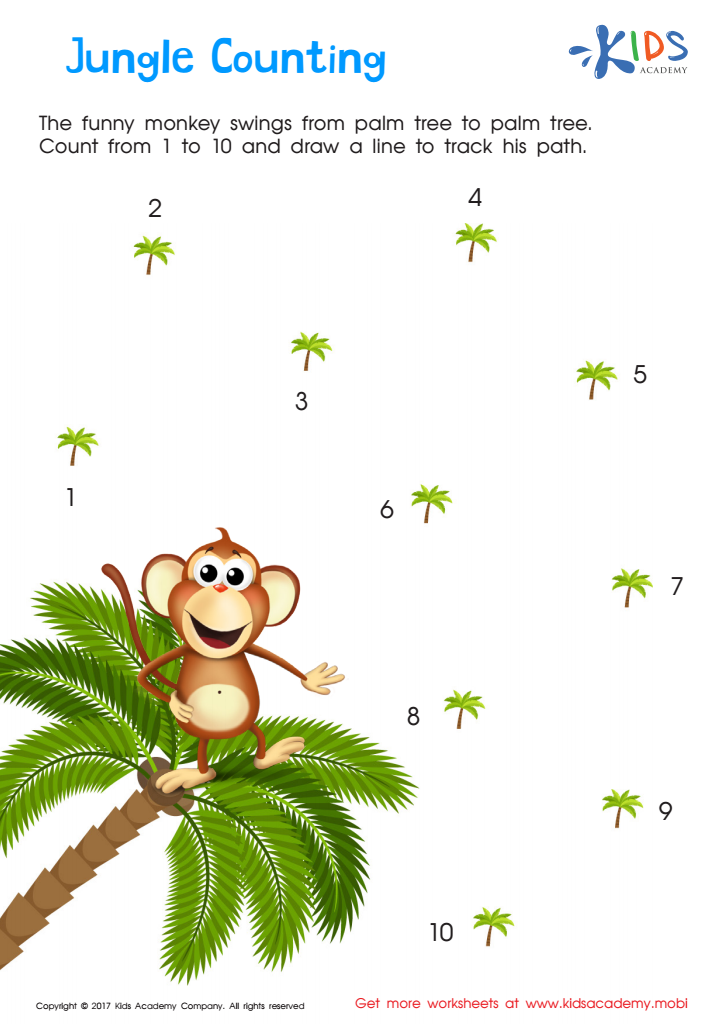
Jungle Counting Connect Dots Worksheet






Parents and teachers should care about Animal Recognition Extra Challenge Math for children ages 6-8 because it is an engaging and educational activity that simultaneously fosters cognitive development, emotional engagement, and foundational math skills. At this developmental stage, kids are naturally curious and have a penchant for learning through play. Incorporating animals, which many young children find fascinating, adds an element of fun and interest, making math less intimidating and more enjoyable.
By using Animal Recognition Extra Challenge Math, children can improve their observational skills and memory through recognizing and categorizing various animals. This activity supports learning by associating animals with numbers, basic arithmetic, or even patterns, allowing for an integrated approach to education. The brain flexibility of children aged 6-8 means they are ripe for developing critical thinking skills, and problem-solving activities that involve math can significantly benefit their logical reasoning.
Furthermore, starting math on a positive note is crucial for shaping children’s attitudes towards the subject in the future. Engaging with math in a context they find enjoyable can build confidence and create a can-do attitude toward challenges. Lastly, these activities can cultivate patience, attention to detail, and persistence, crucial traits for overall academic success and personal growth.








