Extra Challenge Online Two-step Word Problems Worksheets for Grade 2
3 filtered results
-
From - To
Introduce your Grade 2 students to our Extra Challenge Two-step Word Problems worksheets, a part of our educational online worksheets collection designed to enhance problem-solving skills. These worksheets provide an engaging way for children to master the complexity of two-step mathematical challenges using fun, relatable scenarios. Perfect for both classroom use and home practice, each worksheet encourages critical thinking, logical reasoning, and the practical application of math skills. Tailored specifically for second graders, these worksheets will boost confidence and improve academic performance through stimulating and interactive content. Equip your students with the tools they need to succeed in math and beyond!
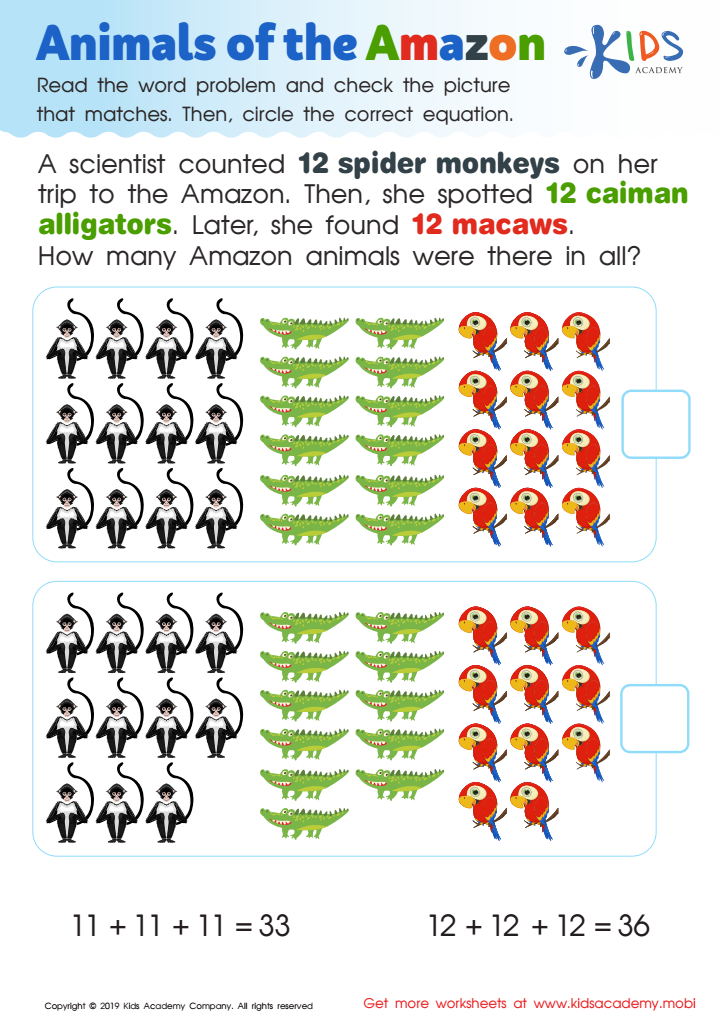
Animals of Amazon Worksheet
 Assign to My Students
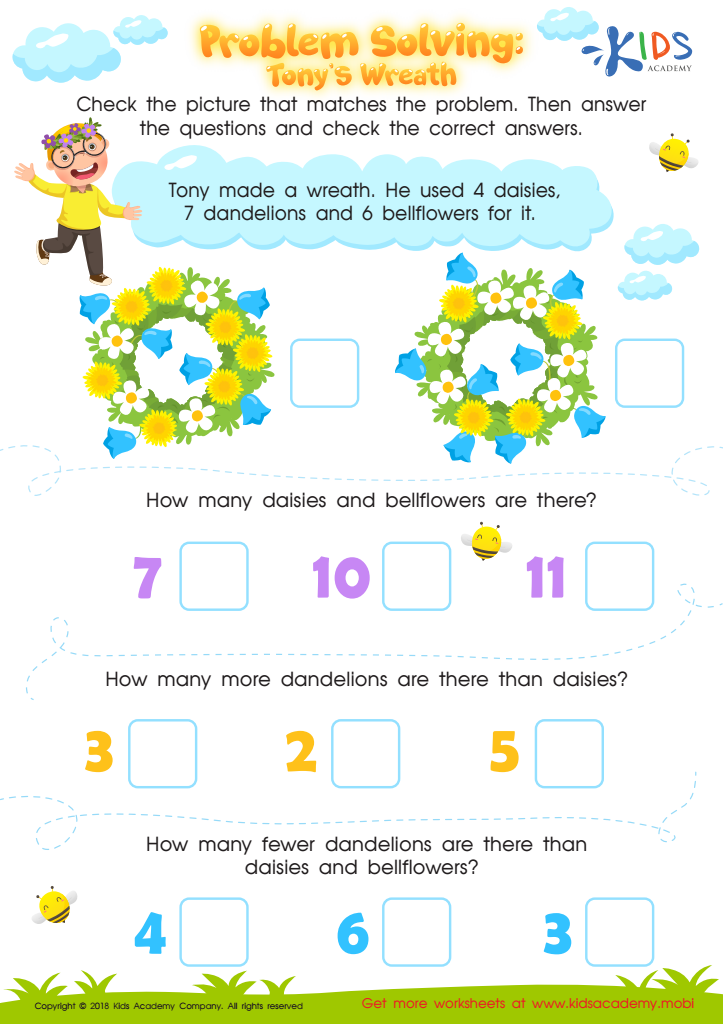
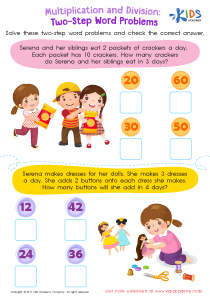
Problem Solving: Tony's Wreath Worksheet
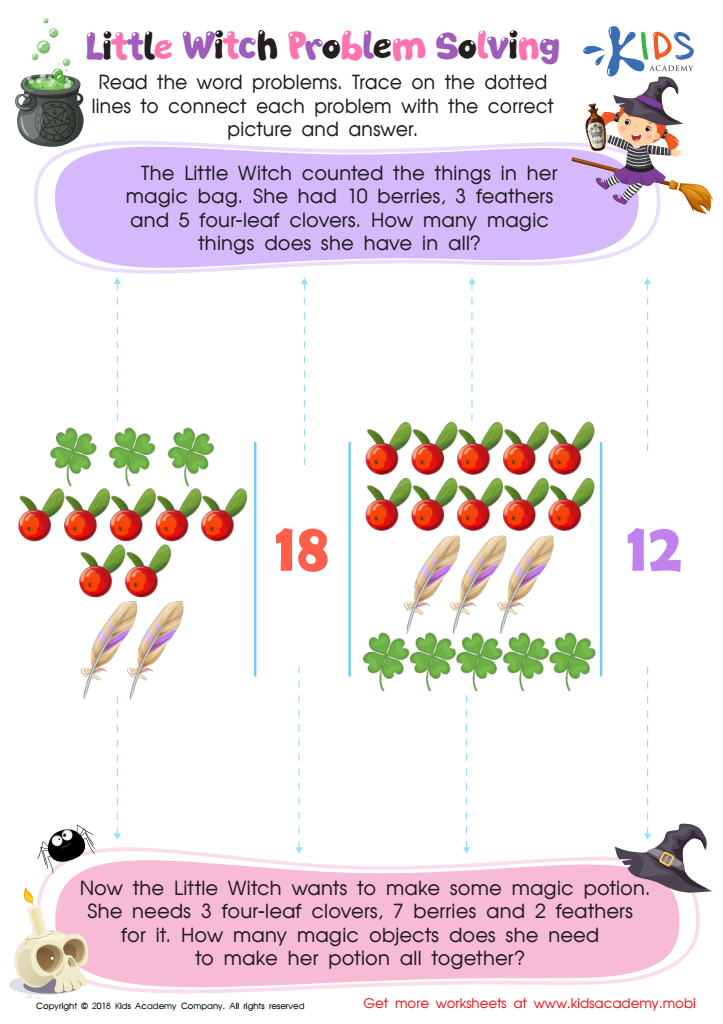
Little Witch Problem Solving Worksheet



Enhancing Problem-Solving Skills with Extra Challenge Worksheets on Two-Step Word Problems
In the world of elementary education, fostering critical thinking and problem-solving skills from an early age is crucial. This is particularly true in mathematics, where understanding beyond mere numbers is required to apply concepts to real-world scenarios. For second graders, grasping the fundamentals of math through engaging and appropriately challenging content is essential. This is where Extra Challenge worksheets on Two-Step Word Problems, a type of educational online printable, play a vital role.
Two-step word problems can be a significant leap for second graders, as these problems require students to perform two sequential operations to arrive at a solution. Typically, the first step involves identifying and solving the initial part of the problem, which then leads to a second, often related, mathematical challenge. This process not only tests their mathematical knowledge but also enhances their ability to think logically and sequentially.
Why are Extra Challenge Worksheets on Two-Step Word Problems Beneficial?
-
Development of Critical Thinking: These worksheets are designed to push students slightly beyond their comfort zones, fostering a mindset geared towards problem-solving. Children learn to read the problem, decode it, and devise a multi-step strategy to find the solution. This methodical approach is beneficial across all areas of learning and decision-making.
-
Mastery of Mathematical Concepts: Two-step word problems require a good grasp of basic arithmetic operations like addition, subtraction, and the beginnings of multiplication and division. By repeatedly working through these types of problems, students reinforce their understanding and become proficient in applying these operations in various contexts.
-
Real-World Application: The scenarios presented in two-step word problems often mimic real-life situations. Whether it’s figuring out the total cost of items at a store or calculating the time needed to complete two consecutive tasks, these problems help children see the relevance of math in daily life. This relevance boosts their interest and engagement in the subject.
-
Boost in Confidence: There’s a significant confidence boost that comes from solving complex problems. Educational online printables that offer an extra challenge help children experience success in a guided environment. This success is crucial for their academic self-esteem and encourages a positive attitude towards challenging tasks.
-
Customizability and Accessibility: Being educational online printables, these worksheets are easily accessible and can be customized to suit the learning pace and style of each child. Teachers and parents can choose from a variety of problems that best meet their educational goals for their students or children. This flexibility ensures that learning remains dynamic and tailored, which is more effective than a one-size-fits-all approach.
-
Preparation for Advanced Concepts: Early exposure to structured problem solving, like that required in two-step word problems, prepares students for more complex mathematical concepts down the line. As they progress through their schooling, the foundation laid by tackling these early challenges will prove invaluable, especially in subjects requiring analytical skills and logical reasoning.
-
Interactive Learning: Many educational online printables are designed to be interactive, which can keep children engaged and motivated. Some worksheets include colorful graphics, drag-and-drop elements, or even small reward animations upon completion of problems. This level of interactivity can make learning feel more like play, which is a powerful method in educational psychology.
-
Immediate Feedback: One significant advantage of using educational online printables for learning is the possibility of immediate feedback. Many platforms provide instant corrections and explanations, which helps in quickly addressing misconceptions and reinforcing correct understanding. This instant feedback loop helps children learn and adjust more swiftly than traditional methods might allow.
-
Encourages Independent Learning: With clear instructions and intuitive design, these worksheets encourage students to undertake learning initiatives independently. This fosters a sense of responsibility and self-motivation, qualities that are beneficial throughout their educational journey and beyond.
-
Supports Diverse Learning Styles: Every child learns differently, and educational online printables can cater to a wide range of learning styles. Whether a child is a visual learner, prefers reading/writing, or benefits from kinesthetic activities, there's likely a printable that matches their preferred style of engagement.
In conclusion, Extra Challenge worksheets on Two-Step Word Problems are more than just arithmetic drills. They are a multifaceted educational tool designed to enhance various skills that are essential both in academic settings and in everyday life. For second graders, these worksheets provide a challenging, yet accessible means to grow intellectually, making them an invaluable resource in the primary educational toolkit. By integrating these educational online printables into regular learning activities, educators and parents can significantly boost children's abilities in both math and general cognitive development.