Normal Addition and Subtraction Word Problems Worksheets for Ages 3-7 - Page 2
29 filtered results
-
From - To
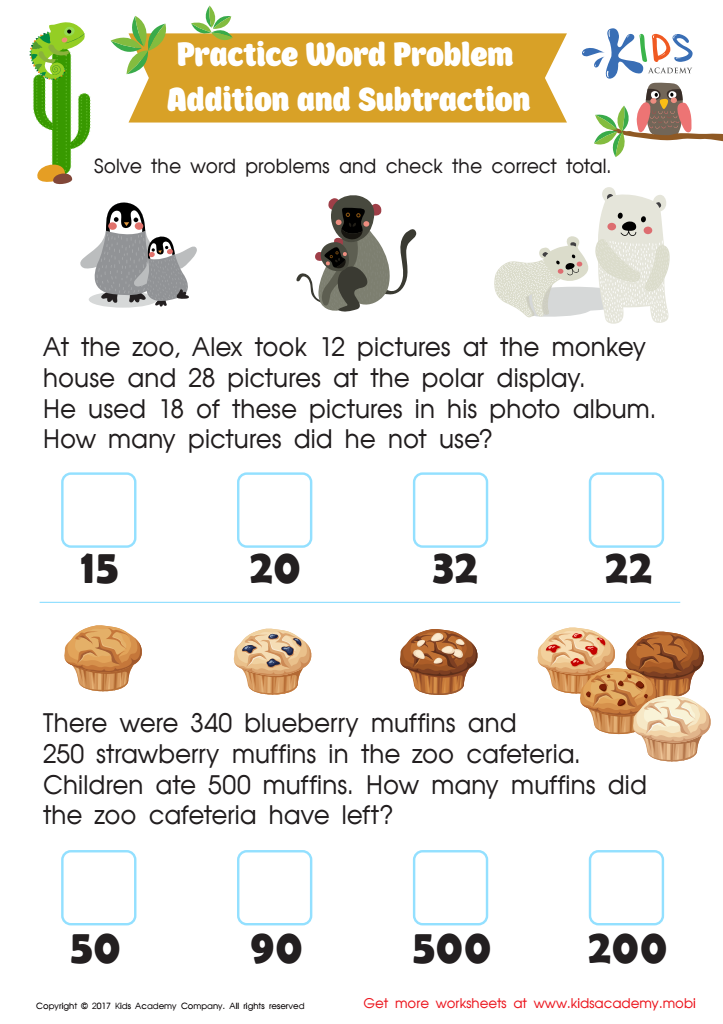
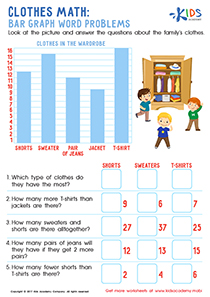
Addition and Subtraction: Word Problems Worksheet
 Assign to My Students
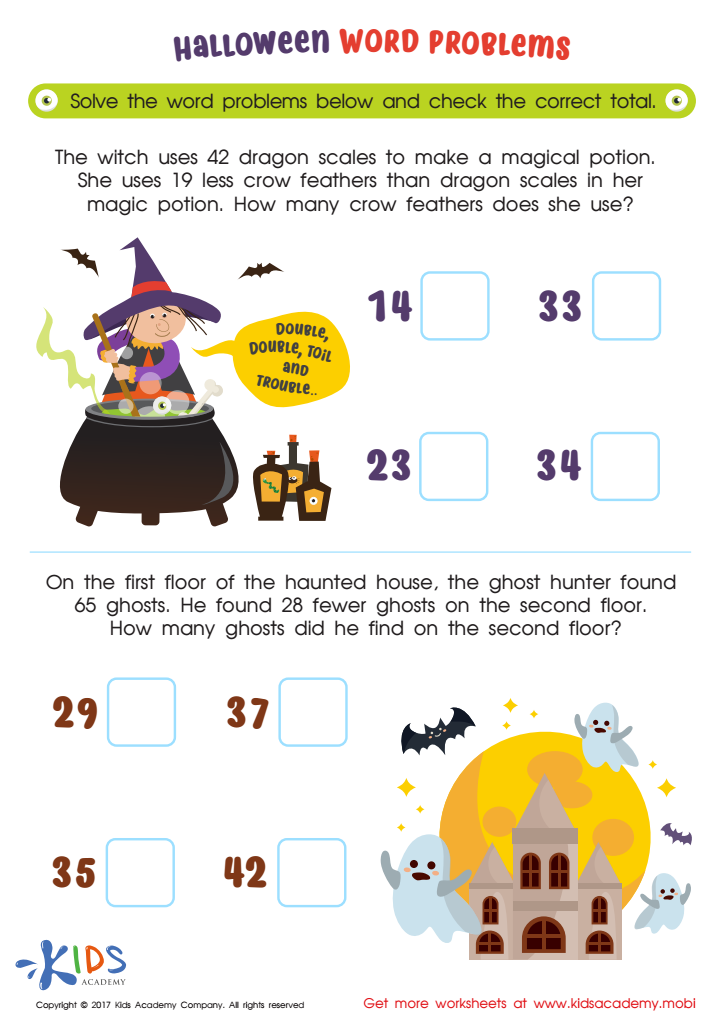
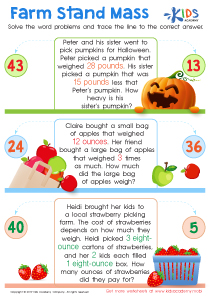
Halloween Word Problems Printable
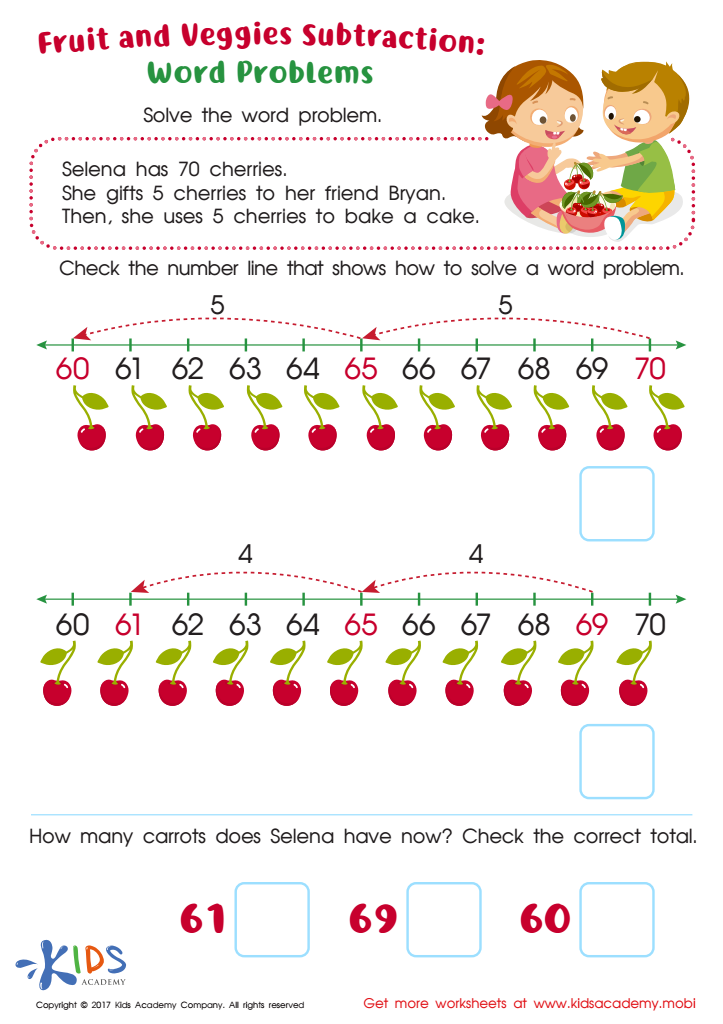
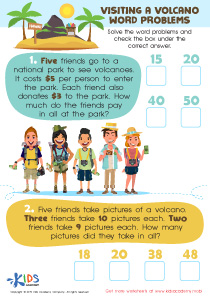
Subtraction Word Problems Free Printable
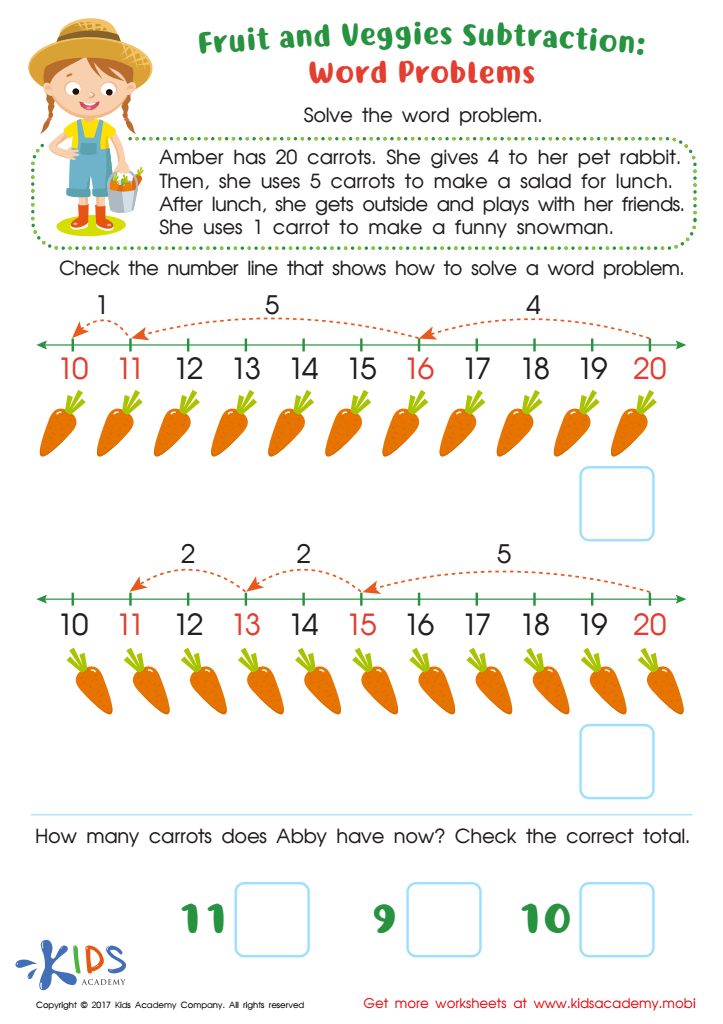
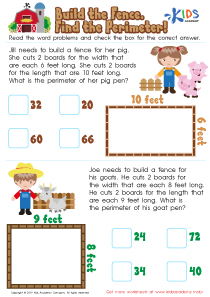
Subtraction Word Problems Printable
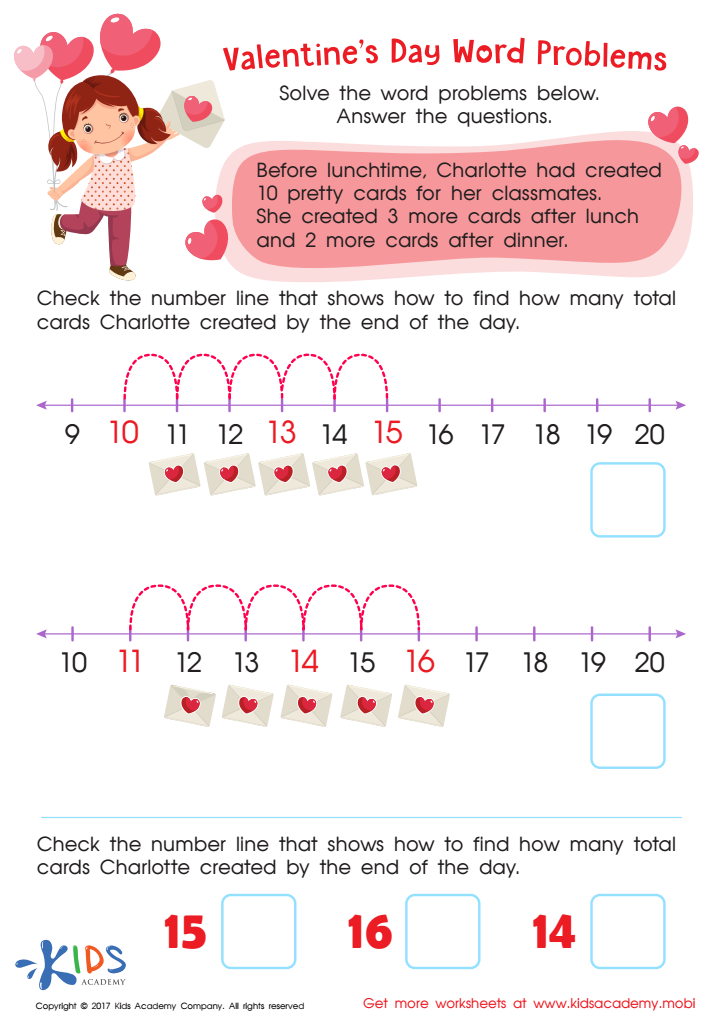
Valentines Day Word Problem Worksheet








Normal addition and subtraction word problems are crucial for children ages 3-7 for several reasons. At this developmental stage, young minds are exceptionally receptive, making it an ideal time to introduce foundational math concepts. These types of problems help develop essential numerical skills and promote logical reasoning.
By engaging with word problems, children connect abstract numbers to real-world scenarios, enhancing their understanding of how math functions in daily life. For instance, solving a word problem about sharing apples not only teaches addition or subtraction but also involves a context they find relatable and interesting.
Moreover, word problems improve language and comprehension skills, as children need to read or listen carefully to understand what the problem wants them to find. This dual focus on math and language boosts cognitive development and encourages multi-step thinking.
This is especially vital because a strong early grasp of these concepts can lead to greater confidence and interest in more complex mathematics as the children grow. Additionally, early success in math can positively impact overall academic achievement and promote a love for learning.
Therefore, parents and teachers should prioritize normal addition and subtraction word problems to build a solid foundation for lifelong learning and problem-solving skills.