Normal Vowels and Consonants Worksheets for Ages 3-8 - Page 2
26 filtered results
-
From - To
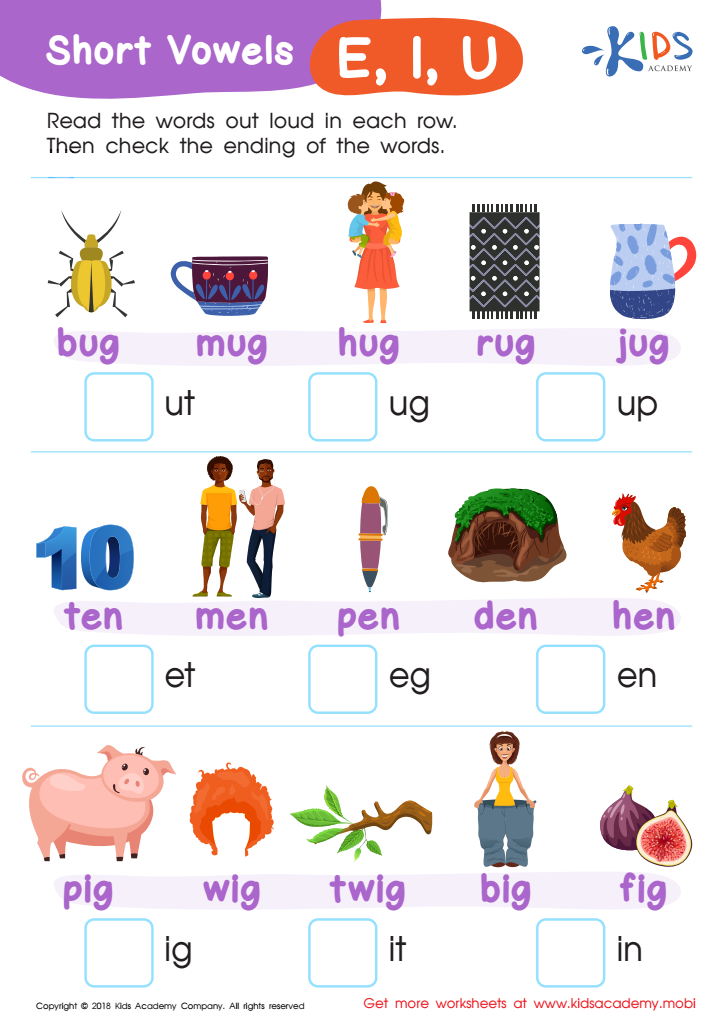
Short Vowels /e/, /i/, and /u/ Worksheet
 Assign to My Students
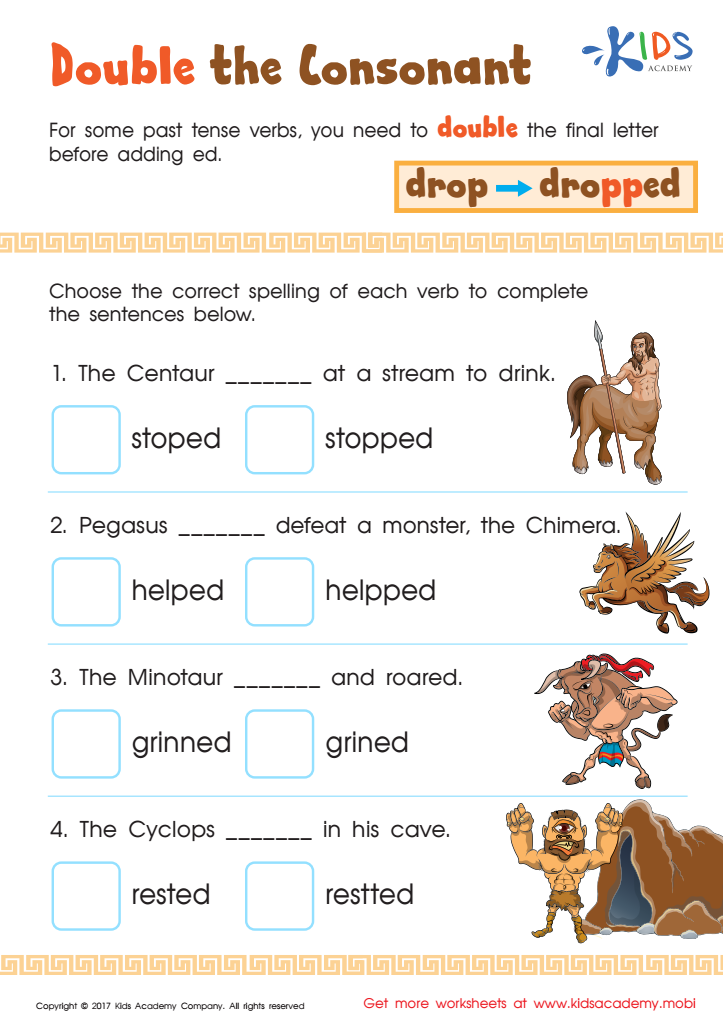
Double Consonant Spelling Worksheet



Understanding normal vowels and consonants is essential for children ages 3-8 as it forms the foundation of their literacy skills. These early years are critical for language development, and recognizing sounds helps children in phonemic awareness, which is the ability to hear, identify, and manipulate sounds in words.
Normal vowels and consonants are the building blocks of language. When children learn these sounds, they enhance their ability to decode words, which is crucial for reading proficiency. Mastery of vowels is particularly important, as they often change the meaning of words, making it important for children to recognize different vowel sounds in context.
Furthermore, attention to sound development promotes better spelling and writing skills later on. It equips children to form words correctly, ensuring a more streamlined communication process. For parents and teachers, fostering this understanding through engaging activities like songs, games, and storytelling can significantly impact a child's confidence and competence in literacy.
By appreciating the significance of normal vowels and consonants, adults can play a vital role in enriching a child's language experience, leading to lifelong learning and academic success.






