Normal Addition and Subtraction Word Problems Worksheets for Ages 4-7 - Page 2
29 filtered results
-
From - To
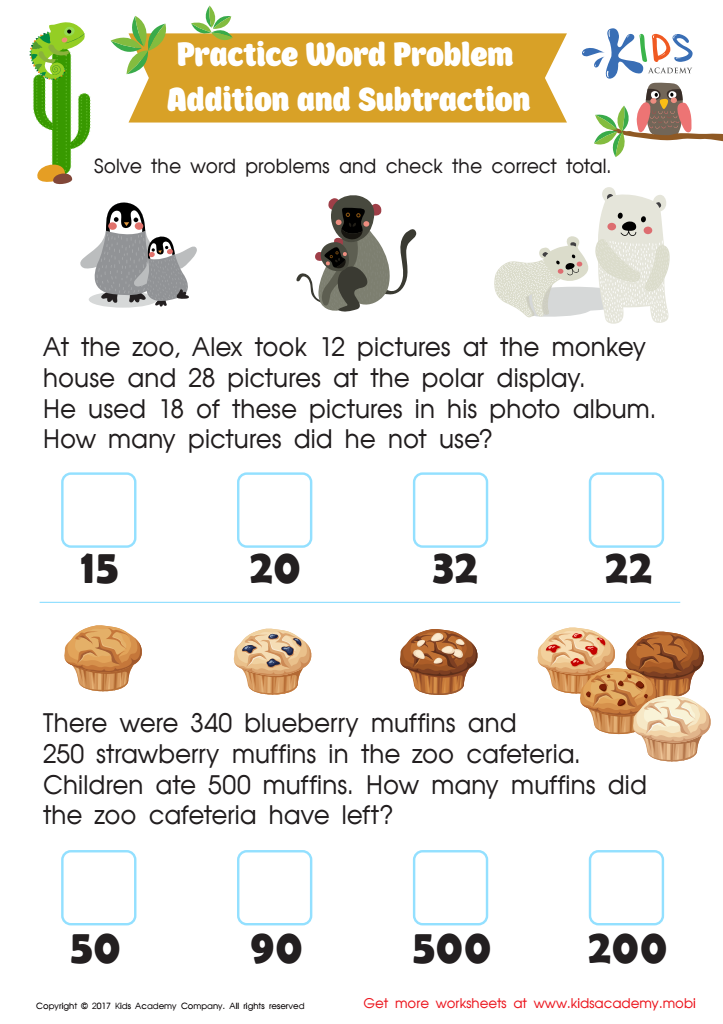
Addition and Subtraction: Word Problems Worksheet
 Assign to My Students
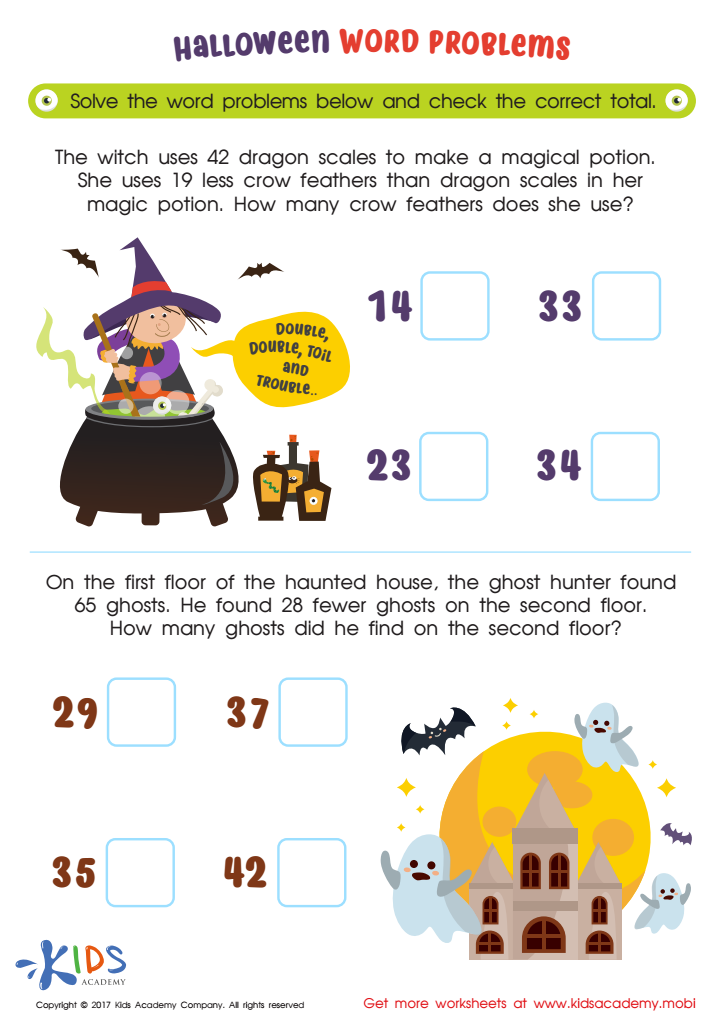
Halloween Word Problems Printable
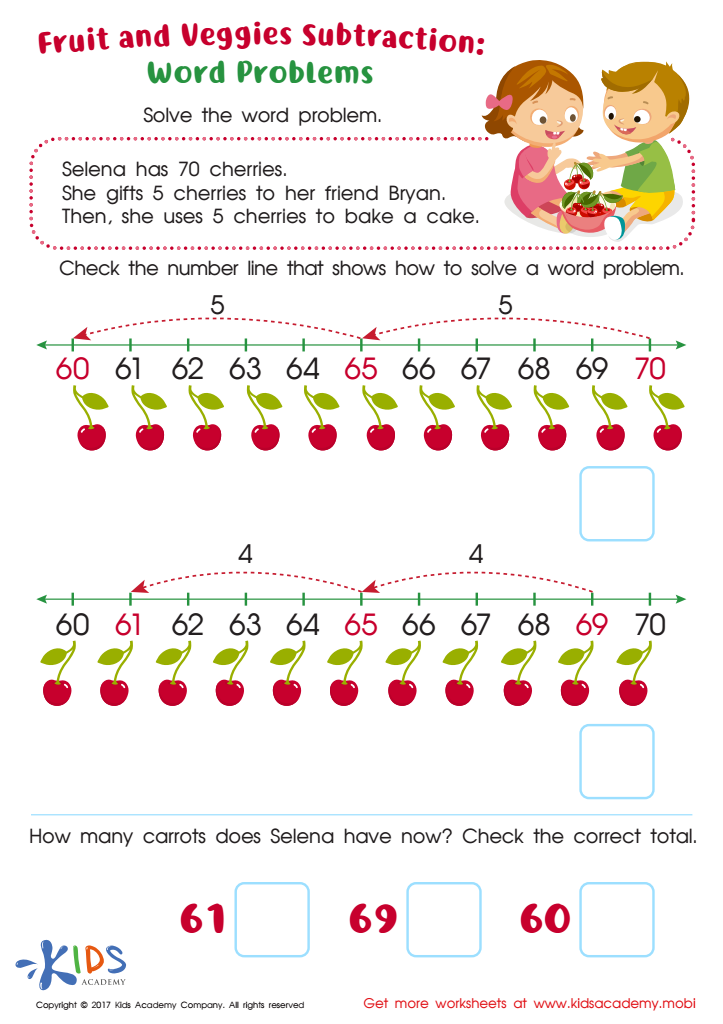
Subtraction Word Problems Free Printable
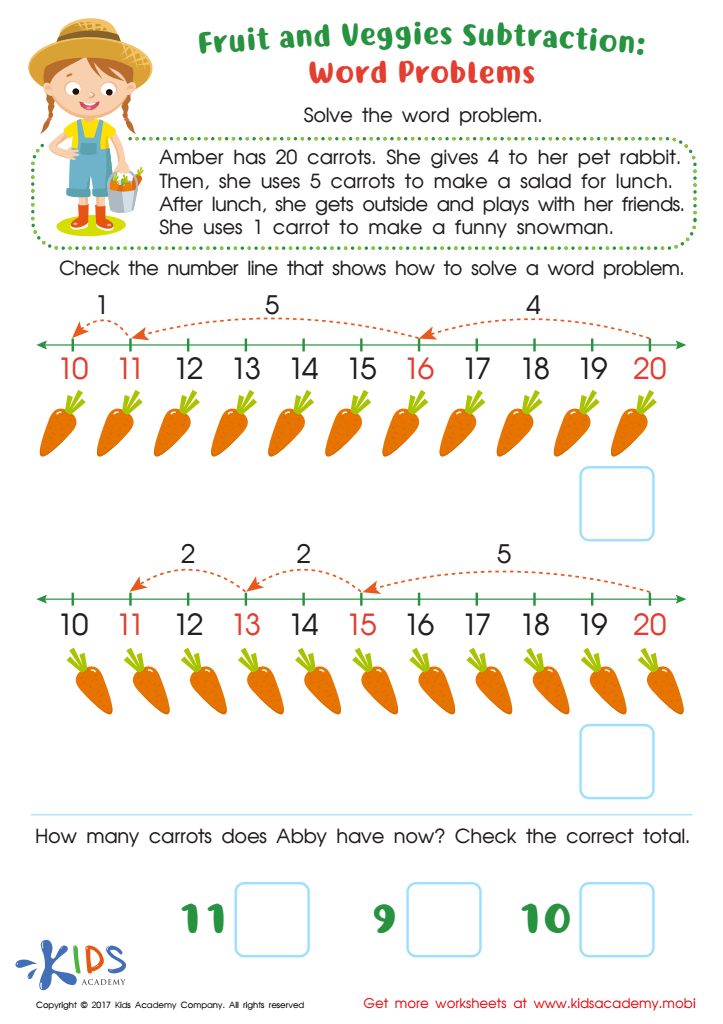
Subtraction Word Problems Printable
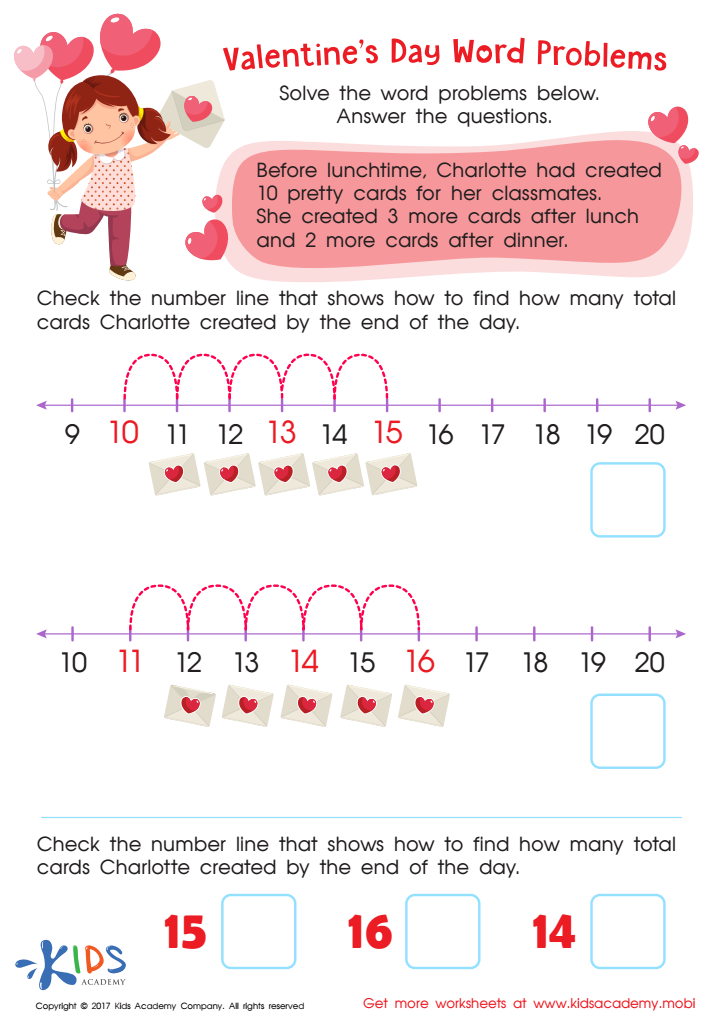
Valentines Day Word Problem Worksheet








Normal addition and subtraction word problems hold particular importance for young children, ages 4-7, as they lay the groundwork for essential math concepts and critical thinking skills. At this developmental stage, kids are transitioning from basic number recognition to more complex cognitive processes. Word problems contextualize math, making abstract concepts tangible and easier to understand. For parents and teachers, engaging children in these exercises fosters a deeper comprehension of addition and subtraction beyond rote memorization.
Furthermore, word problems integrate math into real-life scenarios, enhancing the child's problem-solving and analytical skills. They begin to see how math applies to everyday activities, such as sharing toys or comparing quantities, thereby improving their practical understanding. This early exposure also aids in developing language skills as children must comprehend the narrative of the problem, decode it, and derive a solution.
Interactive and story-based word problems can catch students' interest more effectively than mere equations, making learning a fun and engaging experience. Overall, effective early exposure to these foundational problems supports academic success by building a strong mathematical base and nurturing a positive attitude toward problem-solving and learning, which can last a lifetime.