Normal Missing Letters Worksheets for Ages 4-7
4 filtered results
-
From - To
Discover our engaging "Normal Missing Letters Worksheets" designed for children ages 4-7. These interactive worksheets help young learners develop essential literacy skills by encouraging letter recognition and completion. Each page features fun and captivating themes, allowing kids to identify missing letters in words, enhancing their phonemic awareness and spelling abilities. Whether used at home or in the classroom, these worksheets are perfect for early learners to practice their alphabet skills in an enjoyable way. Download and print them easily to support your child's writing and reading journey while fostering their love for learning. Dive into the world of letters today!
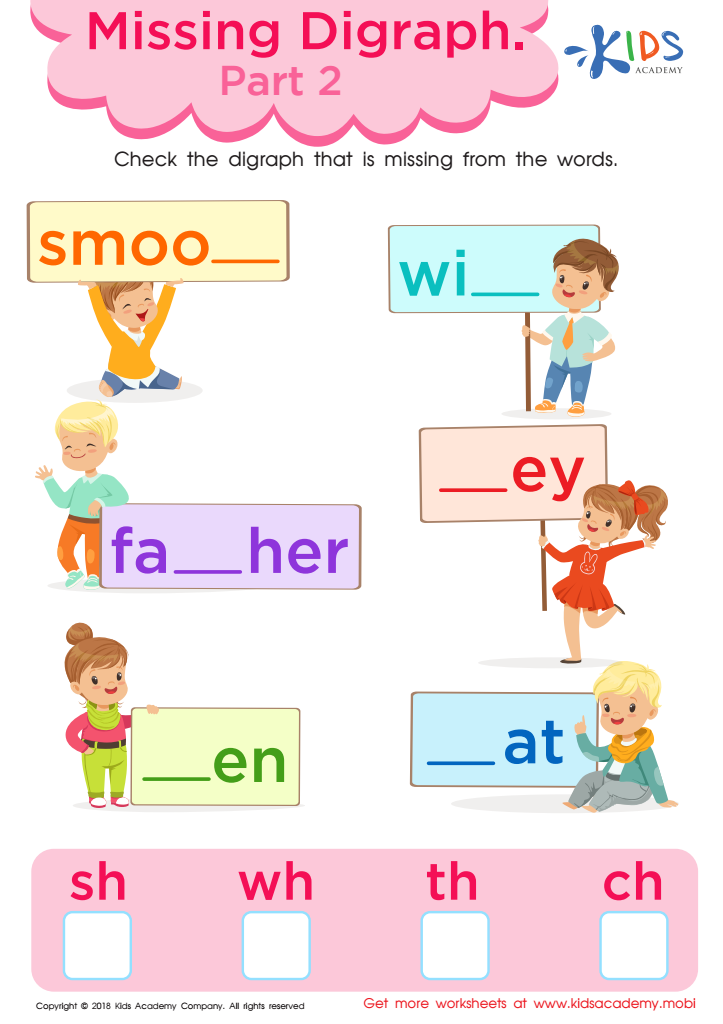
Missing Digraph: Part 2 Worksheet
 Assign to My Students
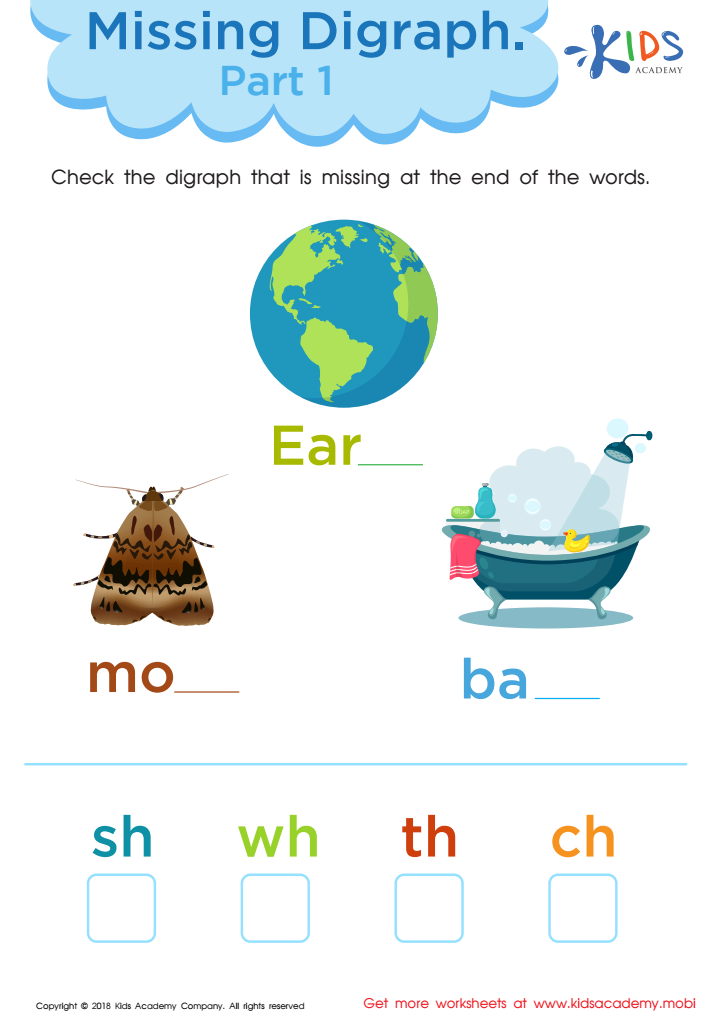
Missing Digraph: Part 1 Worksheet
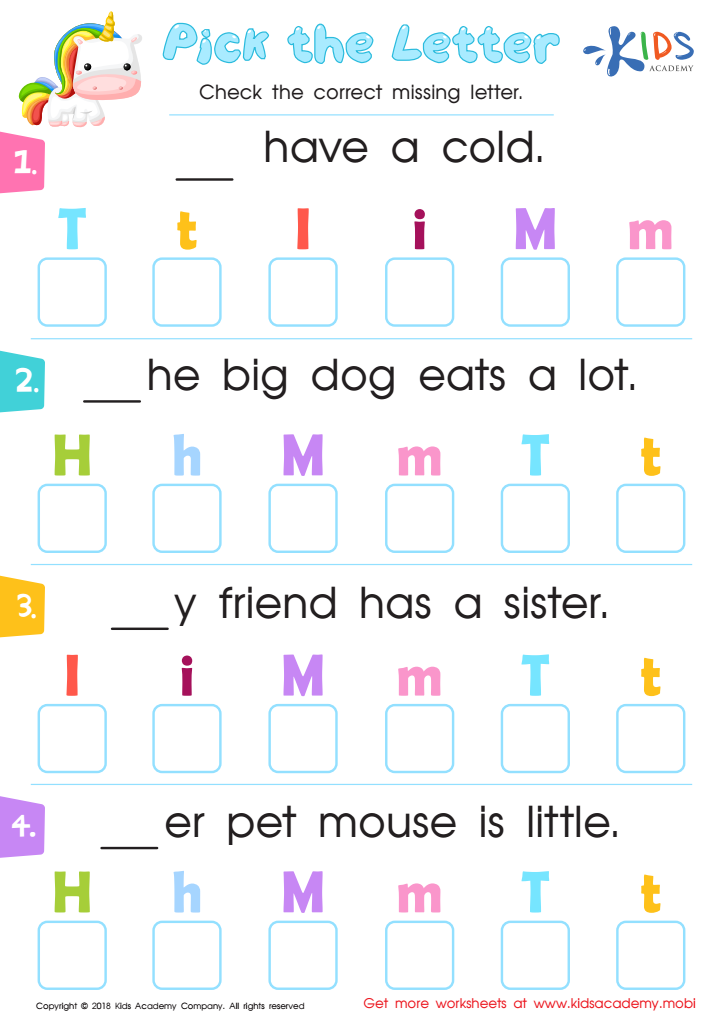
Pick the Letter Worksheet
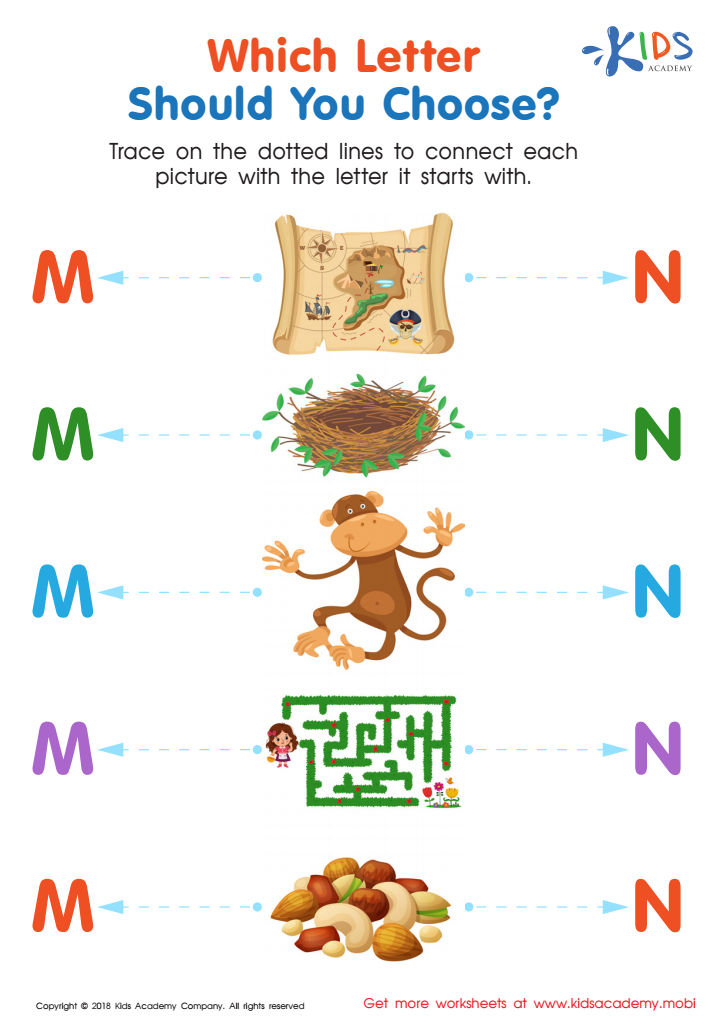
Which Letter Should you Choose? Worksheet



Normal Missing Letters is a valuable literacy activity for children ages 4-7 as it plays a crucial role in developing foundational reading and writing skills. During this stage, children are learning to recognize letters and sounds, which are essential for decoding words and forming sentences. Engaging with missing letters helps them strengthen their phonemic awareness, boost their vocabulary, and enhance their comprehension abilities.
Parents and teachers should care about this activity because it nurtures critical thinking and problem-solving skills. As children fill in the blanks, they use context clues and prior knowledge, fostering a deeper understanding of language structure and spelling patterns. This playful yet purposeful activity makes learning enjoyable, promoting a positive attitude towards reading.
Moreover, Normal Missing Letters encourages fine motor skills, as children practice writing and letter formation. It can be easily integrated into everyday learning, making it accessible and effective for home and classroom settings. Encouraging participation in such activities also helps build confidence; as children succeed in identifying and filling in missing letters, they will be more enthusiastic about exploring language further. Ultimately, prioritizing Normal Missing Letters enriches children’s literacy journey, laying a solid foundation for their future academic success.







