Normal Missing Letters Worksheets for Ages 5-7
4 filtered results
-
From - To
Discover engaging and educational "Normal Missing Letters Worksheets" designed for children ages 5-7! Our printable worksheets help young learners master the alphabet by identifying and filling in missing letters. These activities support early reading and writing skills, promoting letter recognition, sequence understanding, and fine motor development. Perfect for both classroom use and at-home practice, our fun and interactive worksheets feature engaging themes and colorful illustrations to keep kids motivated and excited. Help your child build a strong foundation in literacy with our expertly crafted worksheets. Explore and download today at Kids Academy!
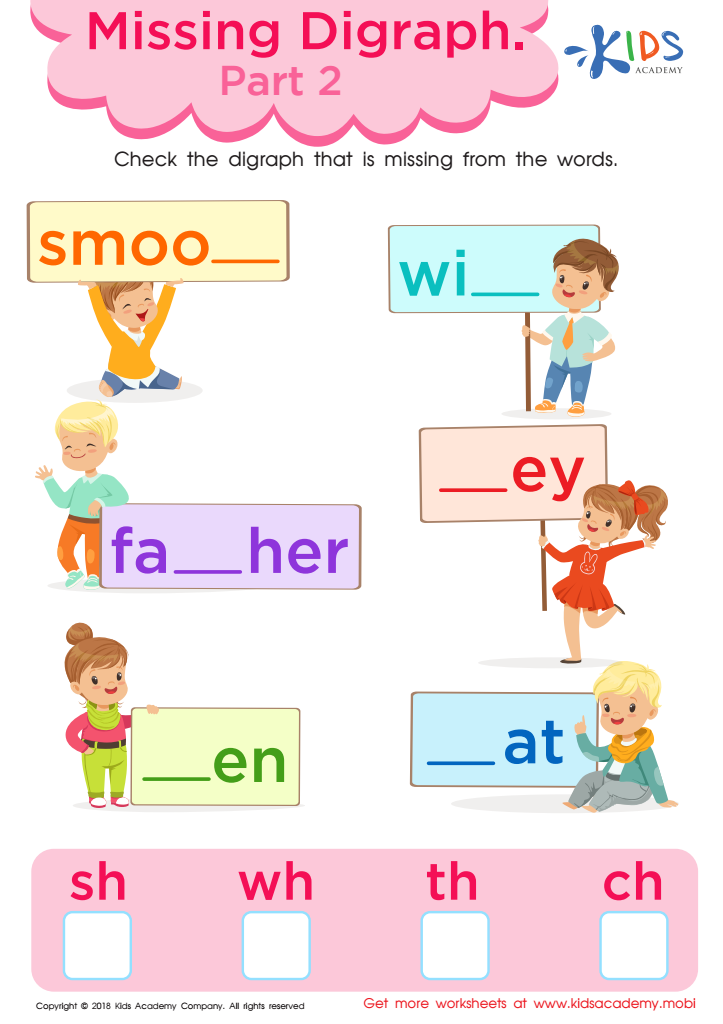
Missing Digraph: Part 2 Worksheet
 Assign to My Students
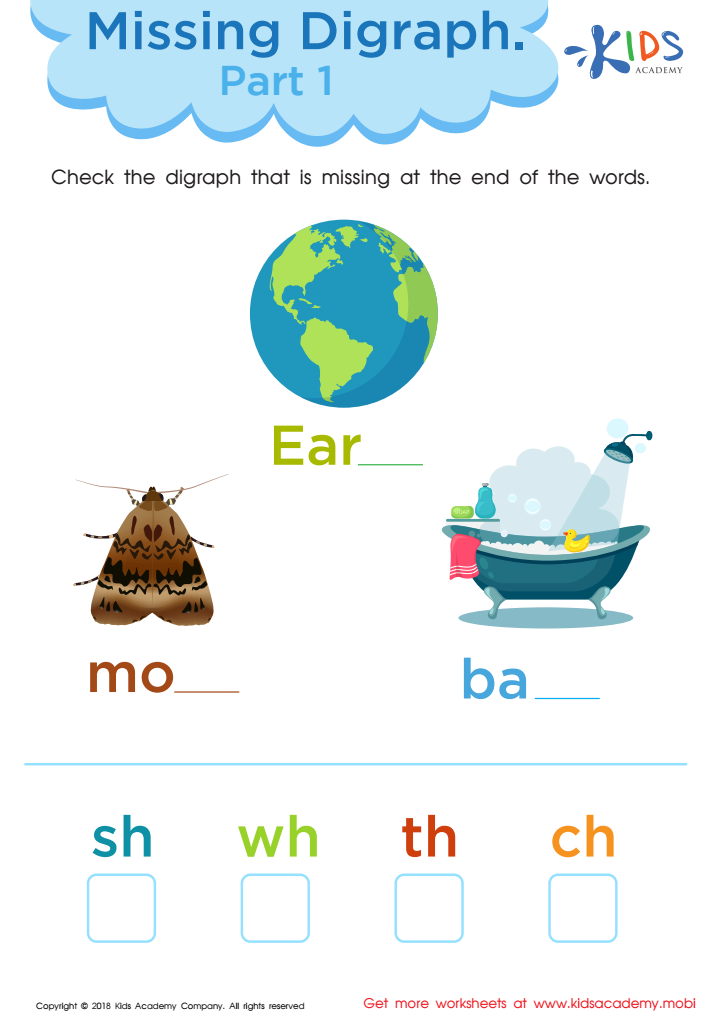
Missing Digraph: Part 1 Worksheet
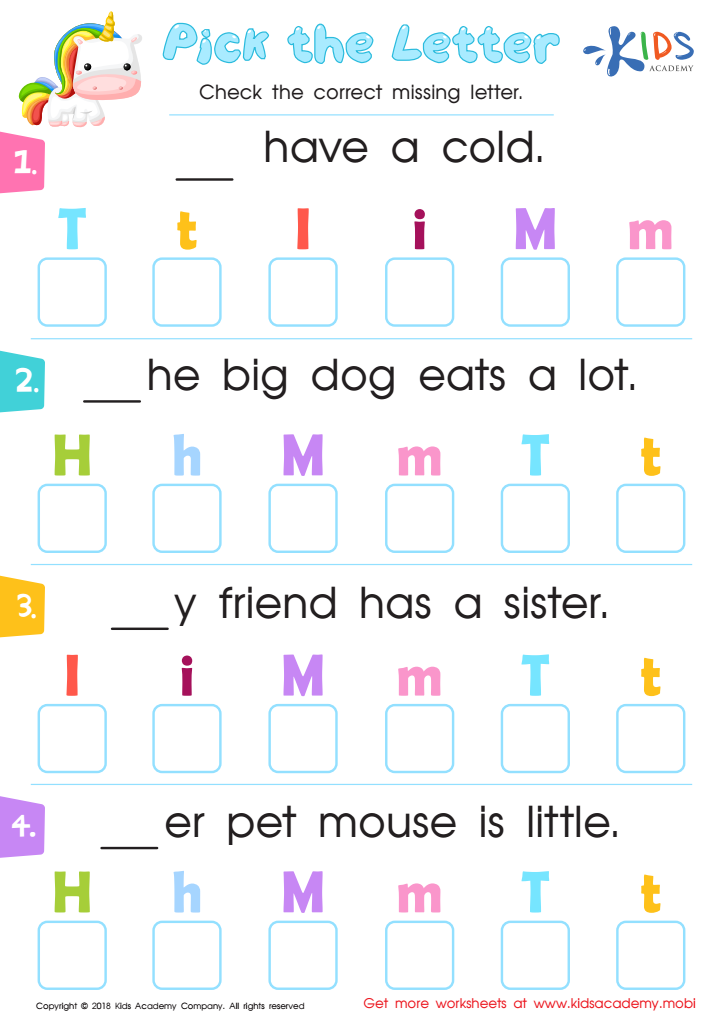
Pick the Letter Worksheet
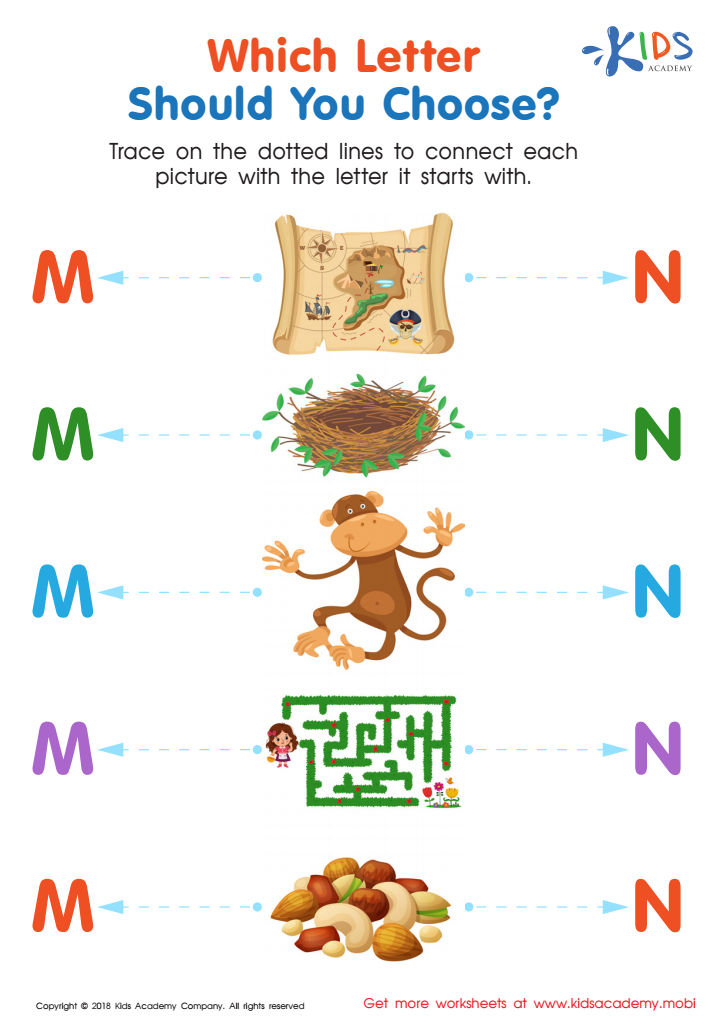
Which Letter Should you Choose? Worksheet



Parents and teachers play crucial roles in early childhood education, and they should care deeply about the concept of normal missing letters for children aged 5-7. During these formative years, children are actively developing foundational skills in reading and writing. Normal missing letters refer to common and developmentally appropriate spelling errors where young children might omit certain letters in words, such as writing "apl" instead of "apple" or "cn" instead of "can."
Recognizing and understanding these normal spelling errors are essential for several reasons. First, it helps parents and teachers gauge a child's phonetic development and their ability to sound out words. By seeing the types of letters that are consistently missed, adults can tailor their instruction and support to address gaps in phonemic awareness effectively.
Furthermore, acknowledging that these errors are a typical part of learning can reduce unnecessary stress for both children and adults. It creates a more supportive and patient learning environment, wherein children feel safe to make mistakes and learn from them, fostering a growth mindset. Early communication about normal developmental patterns also empowers parents to support literacy practices at home with confidence, reinforcing the child's learning experience. Overall, caring about normal missing letters equips adults to better support children's early literacy journeys, leading to more successful and confident readers and writers.







