Filters

31 filtered results

Clear all filters
Favorites
With answer key
Interactive

31 filtered results

Difficulty Level

Grade


Check out this FREE Trial Lesson on Tracing Letters for age 4!

L

Favorites
With answer key
Interactive
  • 4
  • Interactive
  • Tracing Letters
  • Normal
Letter J worksheets
Letter J worksheets

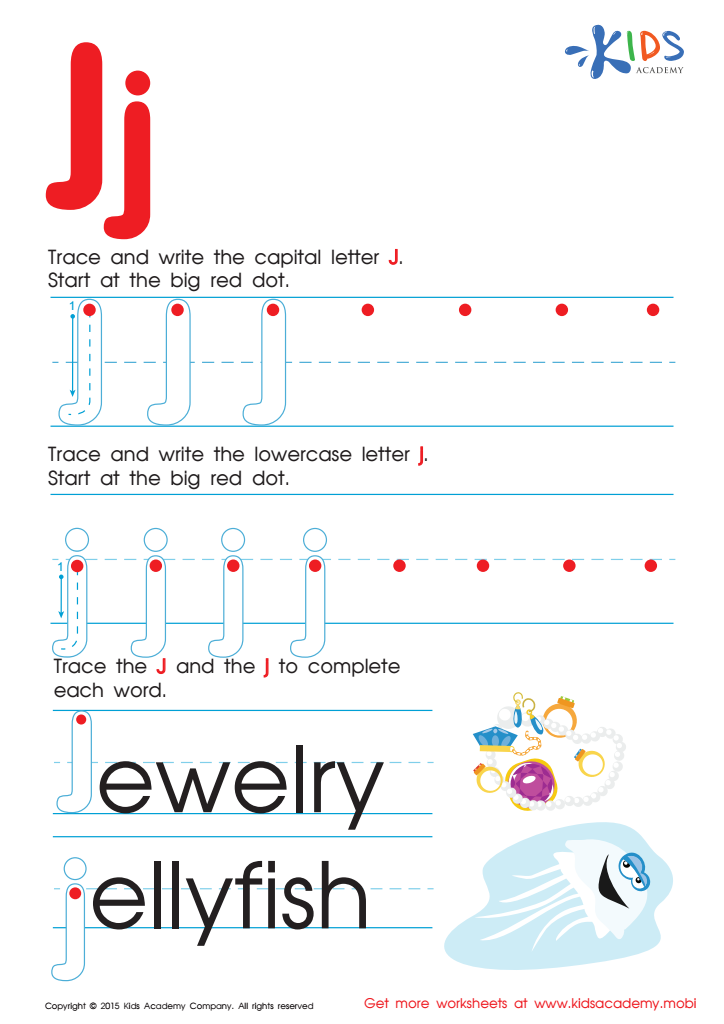
Letter J Tracing Page

Trace and write the letter "J" with our ABC worksheet - start at the big red dot! Have fun completing words like jewelry, jellyfish and more. Check out our kindergarten activities for more alphabet practice.
Letter J Tracing Page
Worksheet
Letter K worksheets
Letter K worksheets

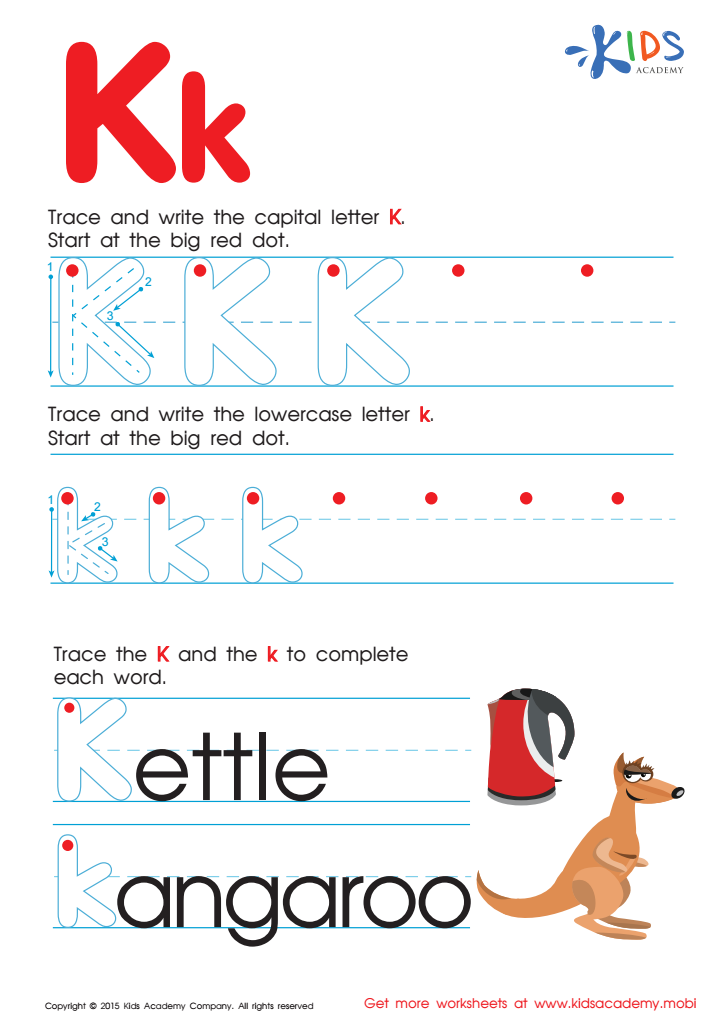
Letter K Tracing Page

Trace and write the letter K; start at the big red dot. Use it to complete words like "Kettle" and "Kangaroo". Visit Kids Academy for more free alphabet worksheets for kindergarten.
Letter K Tracing Page
Worksheet
Letter L worksheets
Letter L worksheets

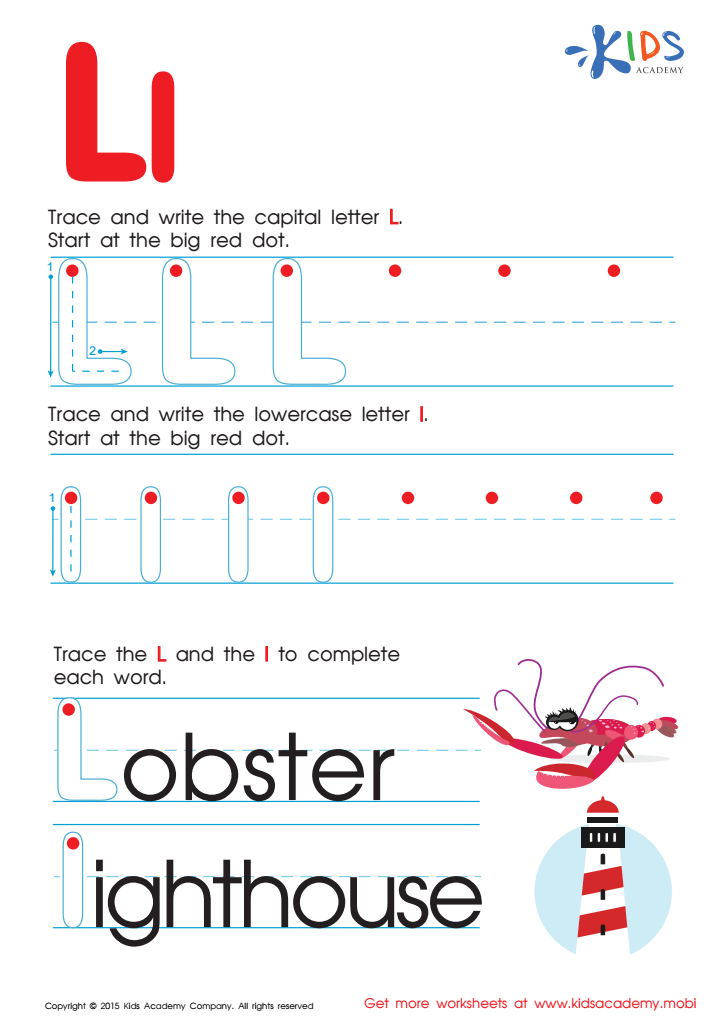
Letter L Tracing Page

Trace uppercase and lowercase letters to practice writing. Pay attention to the lowercase letters, like the "L", that are not as tall as an uppercase "I" or as short as a lowercase "i". Words like "lobster" and "lighthouse" are waiting to be completed. Enjoy!
Letter L Tracing Page
Worksheet
Letter М worksheets
Letter М worksheets

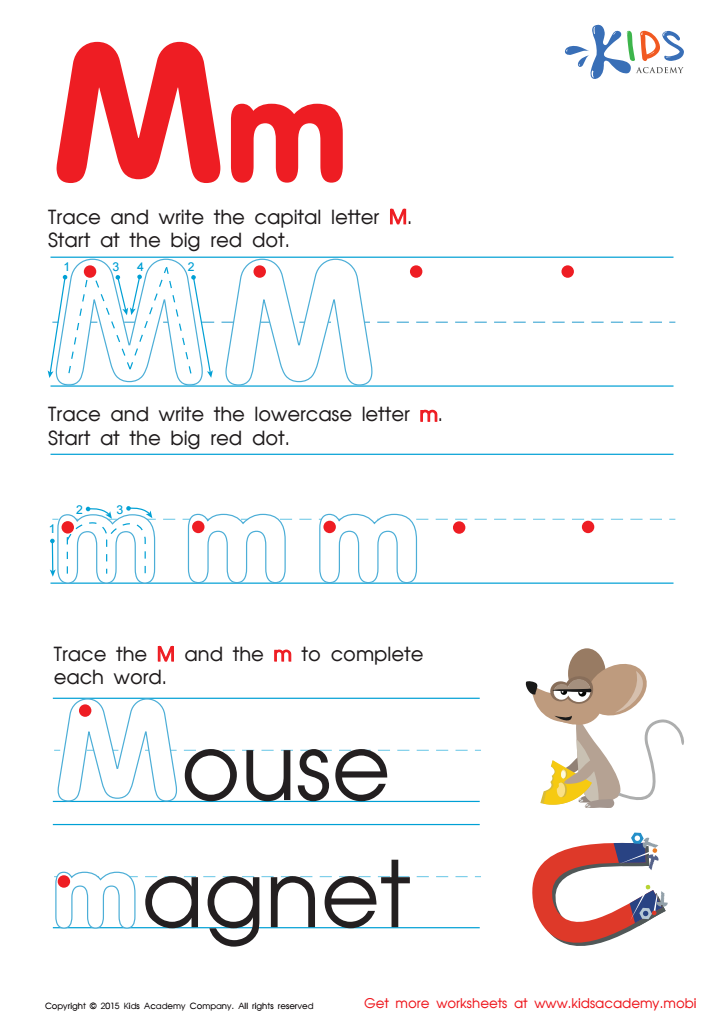
Letter M Tracing Page

Trace and write the letter "M" to help kids learn the alphabet. Start at the red dot and practice several times. Trace the capital letter first, then move on to the lowercase. Complete words like "mouse" and "magnet" in the further exercise. Get more free printables here.
Letter M Tracing Page
Worksheet
Letter N worksheets
Letter N worksheets

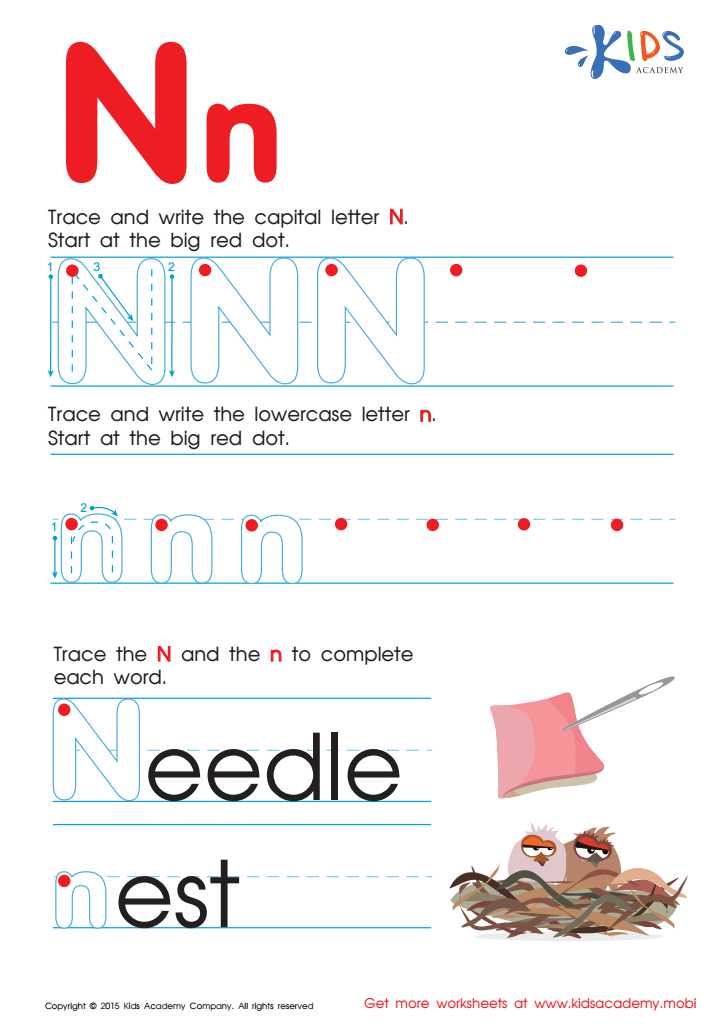
Letter N Tracing Page

Trace and write capital "N" and lowercase "n" several times. Then try forming words like "needle" and "nest". Master letter writing with Kids Academy's collection of ABC worksheets for kindergarten.
Letter N Tracing Page
Worksheet
Letter O worksheets
Letter O worksheets

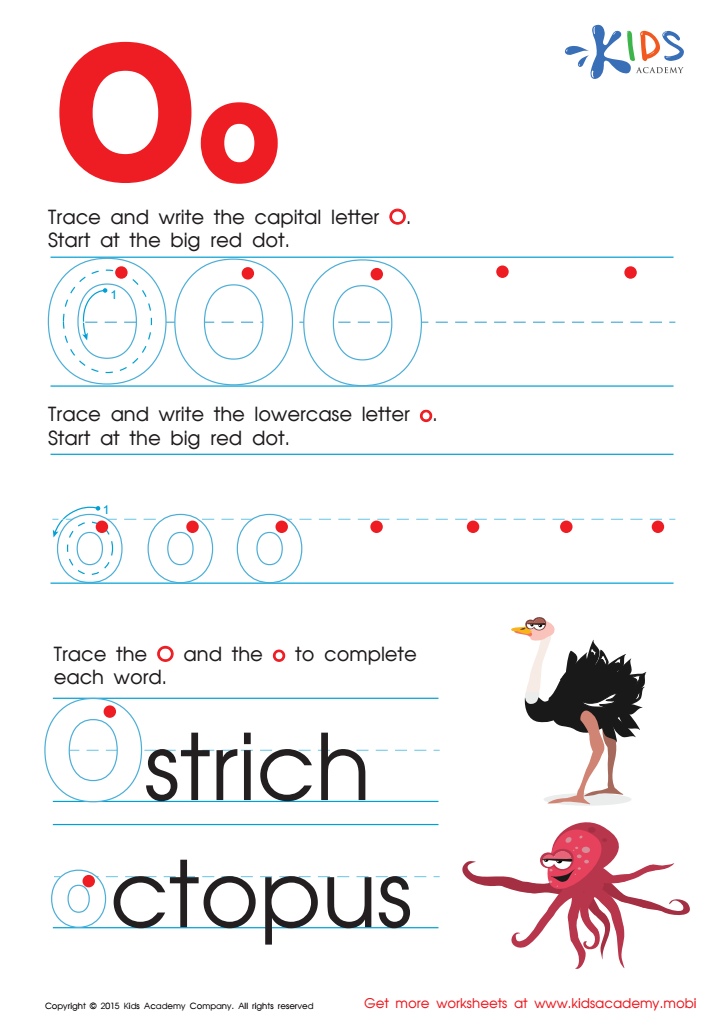
Letter O Tracing Page

Practice writing the letter "O" with our new worksheet. Trace and write the letter several times, starting at the red dot. First do the uppercase letter, then the lowercase. Use the pictures to complete the words "Ostrich" and "octopus". Kids Academy offers more fun alphabet worksheets.
Letter O Tracing Page
Worksheet
Letter P worksheets
Letter P worksheets

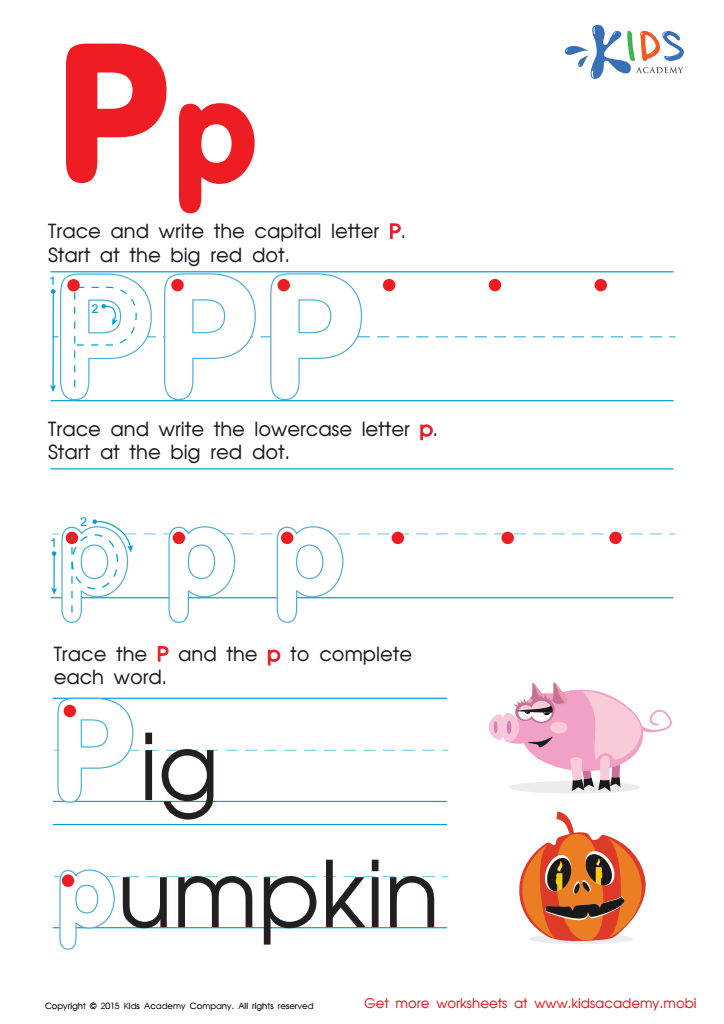
Letter P Tracing Page

Trace the lines from the red dot to learn to write "P"! Then practice this letter with the fun activities: complete the word "Pig" and "Pumpkin". Check out Kids Academy to get more free ABC worksheets.
Letter P Tracing Page
Worksheet


Normal Tracing Letters worksheets for 4-Year-Olds are an essential tool for early childhood education, offering a multitude of benefits that support the development of young learners. These worksheets are specifically designed to cater to the fine motor skills and cognitive abilities of 4-year-olds, making the process of learning to write letters both engaging and accessible.

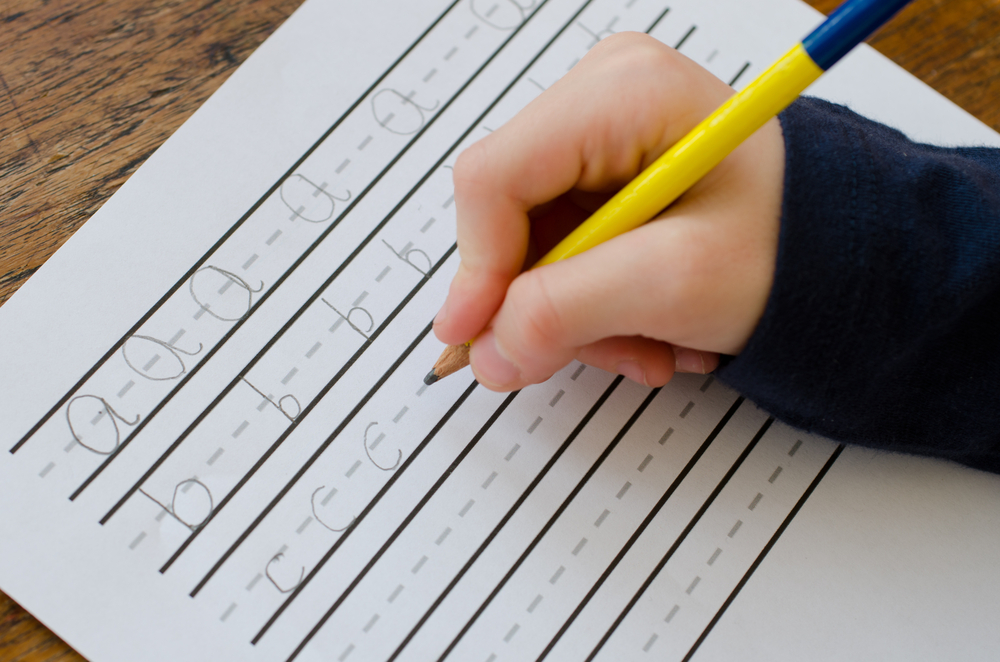
First and foremost, Normal Tracing Letters worksheets for 4-Year-Olds help to improve hand-eye coordination. As children follow the dots or lines to form letters, they learn to control their pencil movements, which is critical for writing. This practice not only enhances their fine motor skills but also prepares them for more complex writing tasks in the future.

Additionally, these worksheets introduce 4-year-olds to the alphabet in a structured manner, promoting letter recognition, an essential skill for early reading. By tracing each letter, children become familiar with its shape and sound, laying a strong foundation for literacy.

Moreover, Normal Tracing Letters worksheets for 4-Year-Olds encourage independence and confidence. Completing a worksheet provides a sense of achievement, motivating young learners to explore further and take on new challenges. This boost in self-esteem is pivotal for their overall academic journey.

In conclusion, Normal Tracing Letters worksheets for 4-Year-Olds are a valuable educational resource. They not only support the development of fine motor skills and letter recognition but also foster a positive learning environment that encourages independence and confidence in young learners.