Normal Consonants Worksheets for Ages 5-9 - Page 2
26 filtered results
-
From - To
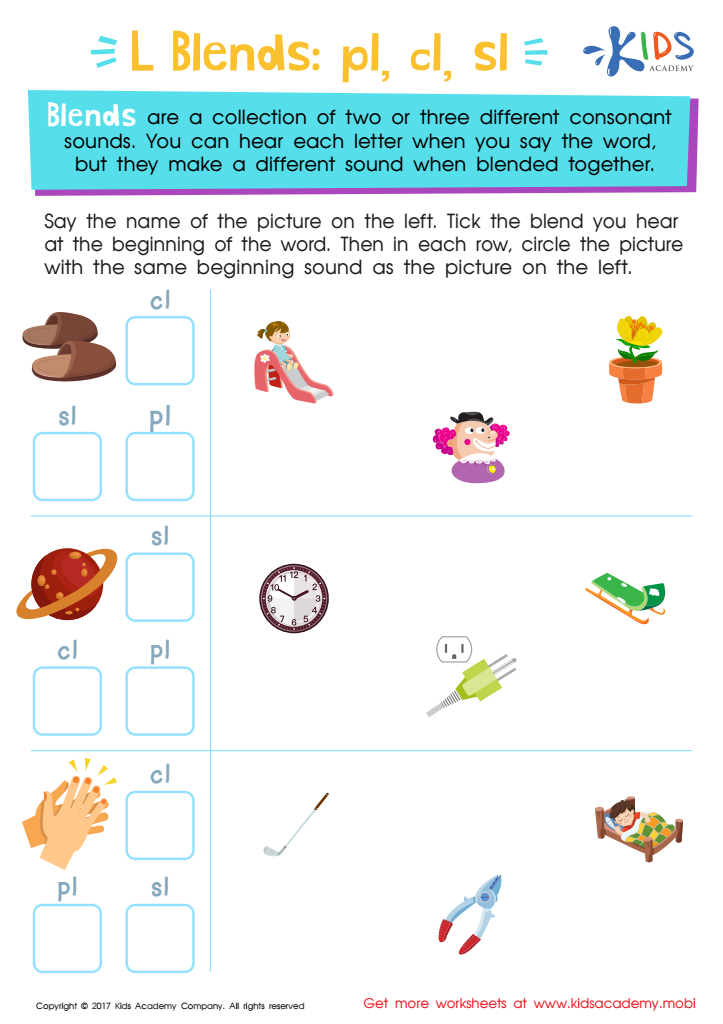
L Blends: "Pl", "Cl" and "Sl" Printable
 Assign to My Students
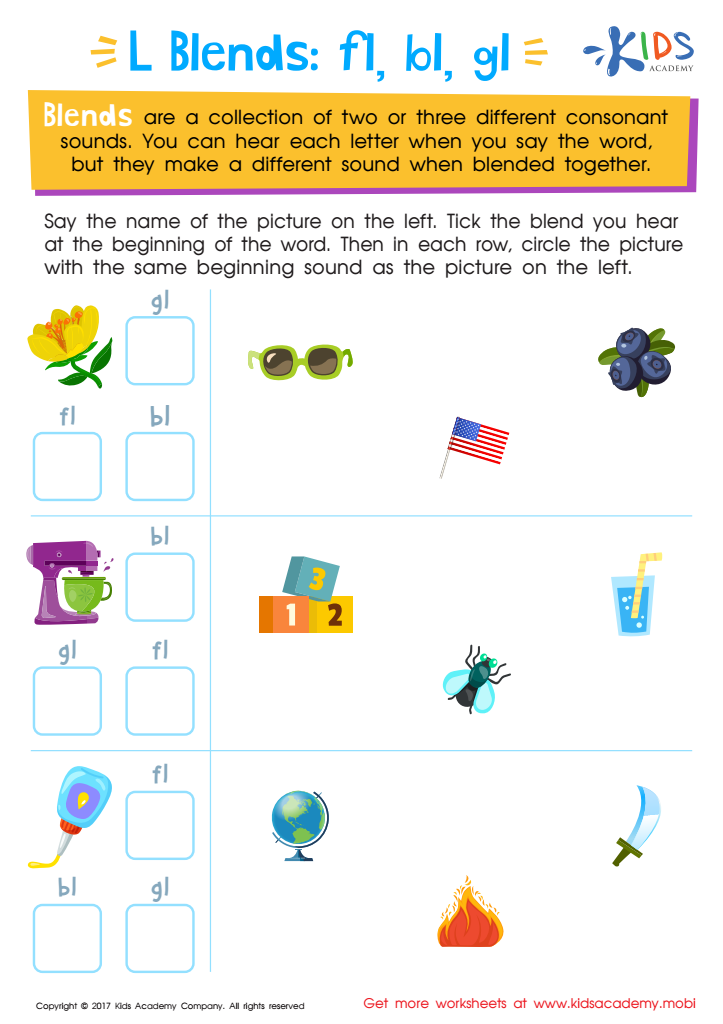
Blending Consonants: "Fl", "Bl" and "Gl" Printable



Understanding and focusing on the development of normal consonant sounds in children ages 5-9 is crucial for several reasons. First, proficient speech and pronunciation abilities lay the foundation for effective communication skills. During these formative years, children learn to articulate words clearly, enabling them to express themselves and understand others better. Proper consonant use is essential in preventing misunderstandings and bridge-building effective interpersonal interactions in peer groups and academic settings.
Second, grasping normal consonant sounds at this stage can significantly influence a child's reading and writing skills. Early literacy heavily depends on phonemic awareness—the ability to hear, identify, and play with individual sounds in spoken words. Mastery of consonant sounds aids in decoding new words and fosters confidence and enthusiasm in reading, essentially making literacy acquisition smoother.
Additionally, addressing any issues with consonant pronunciation early on helps to tackle potential speech or language disorders effectively. Early detection through parent and teacher vigilance can lead to timely speech therapy or interventions, minimizing long-term impacts on academic performance and social integration.
In conclusion, the importance of normal consonants in early childhood cannot be overstated. They build the foundation for communication, literacy, and overall cognitive development, making their mastery indispensable for a child's educational journey and personal growth.






