Normal Vowel Diphthongs Worksheets for Ages 5-9 - Page 2
25 filtered results
-
From - To
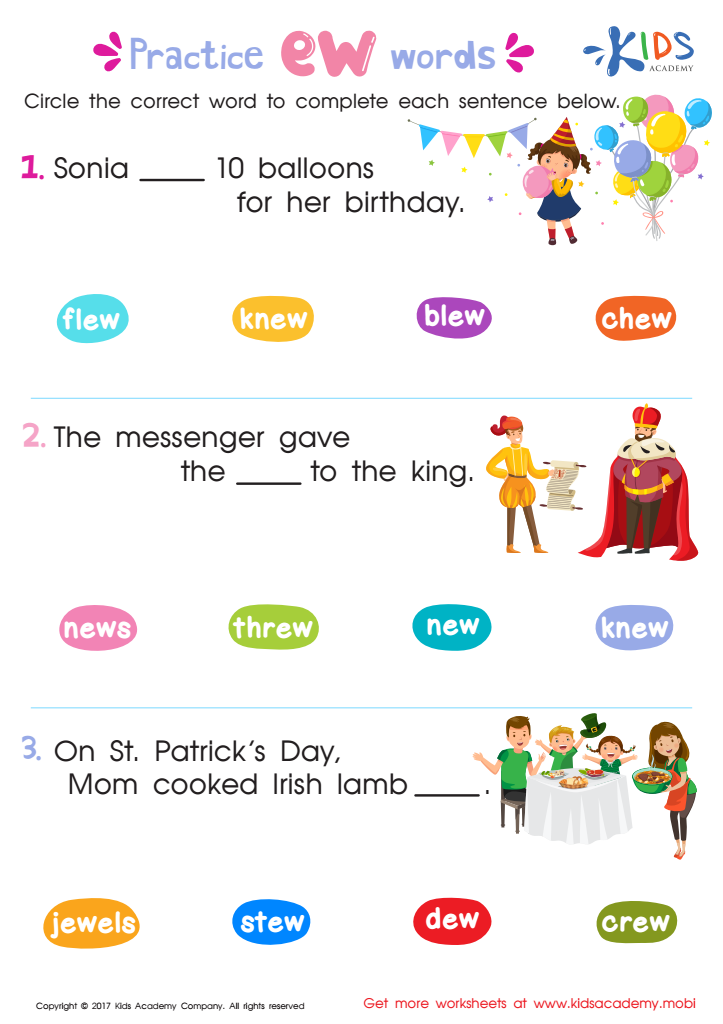
EW Words Worksheet
 Assign to My Students


Parents and teachers should care about normal vowel diphthongs for children ages 5-9 because mastering these phonetic elements is crucial for developing strong reading and speaking skills. Diphthongs are complex vowel sounds created by the glide of one vowel into another, such as in words like "coin," "loud," or "bait." Understanding diphthongs helps young learners distinguish between similar sounds, enhancing their phonemic awareness—an essential foundation for literacy.
At this age, children are rapidly acquiring language and sound recognition skills. Teaching them diphthongs improves their pronunciation and spelling, thus boosting overall language comprehension. Diphthongs appear frequently in English words, meaning familiarity with these sounds can significantly enhance vocabulary mastery.
In addition, grappling with diphthongs aids in developing auditory processing skills, enabling children to listen carefully and replicate sounds accurately. With better phonetic skills, children become more confident in reading aloud, which fosters both fluency and enjoyment in literature. Lastly, comfortable handling of diphthongs by this age can lay the groundwork for further language studies, equipping children with the skills they need for more complex language and literacy tasks in the future. Therefore, prioritizing diphthong education lays a sturdy foundation for lifelong communication skills.