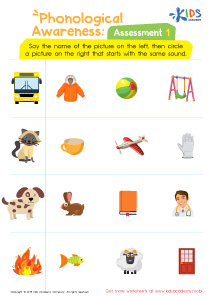
Normal Vowels Worksheets for Ages 5-9 - Page 4
73 filtered results
-
From - To
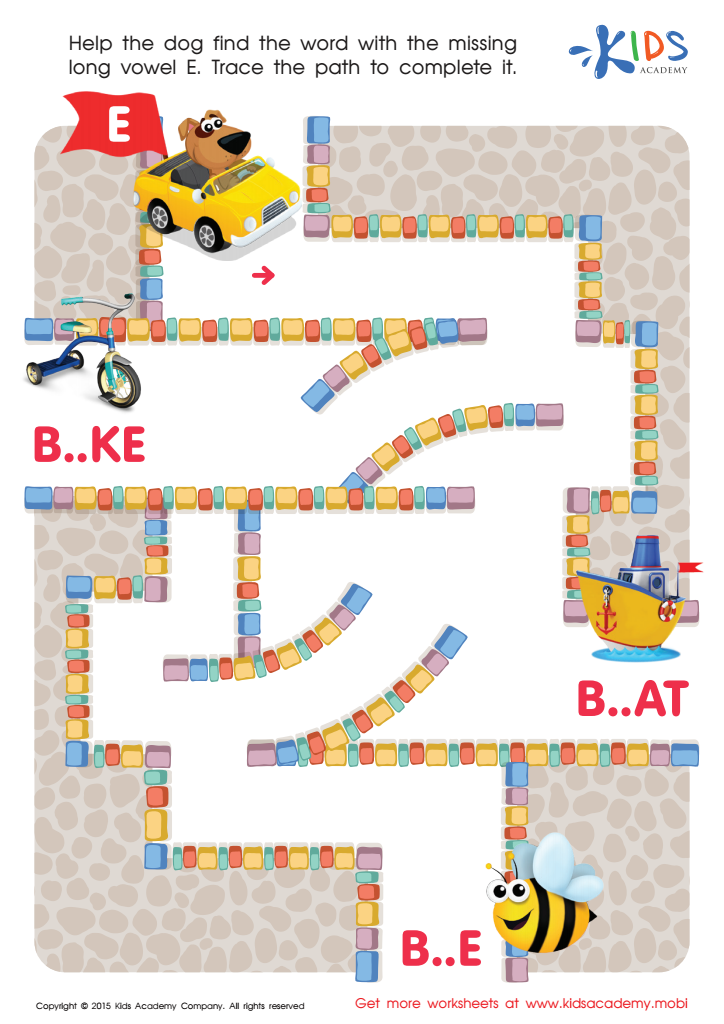
Long Vowel Sound E Worksheet
 Assign to My Students





Understanding normal vowels is crucial for children aged 5-9 because it forms the foundation for reading, writing, and effective communication. At this developmental stage, children are typically learning basic phonics, which includes recognizing vowel sounds and understanding their role in forming words. Mastery of vowel sounds is essential because vowels are present in nearly every word; they help in decoding words, which is a critical skill in early reading.
For parents and teachers, emphasizing normal vowels can significantly enhance a child's literacy skills. When children can correctly pronounce and identify vowel sounds, they are more likely to develop strong reading fluency and accuracy. Additionally, proper understanding of vowels aids in spelling, because many spelling conventions rely on vowel patterns (like long and short vowel sounds).
Furthermore, early proficiency with vowels improves word recognition and vocabulary acquisition. This ultimately leads to better comprehension when reading, as students are more capable of decoding unfamiliar words. Given the importance of literacy in academic success and lifelong learning, investing time in teaching normal vowels yields long-term benefits. Parents and teachers, by supporting this fundamental aspect of language, set the stage for more advanced literacy skills, enhancing overall educational outcomes and communication abilities.