Reading comprehension Normal History Worksheets for Ages 5-9 - Page 2
31 filtered results
-
From - To
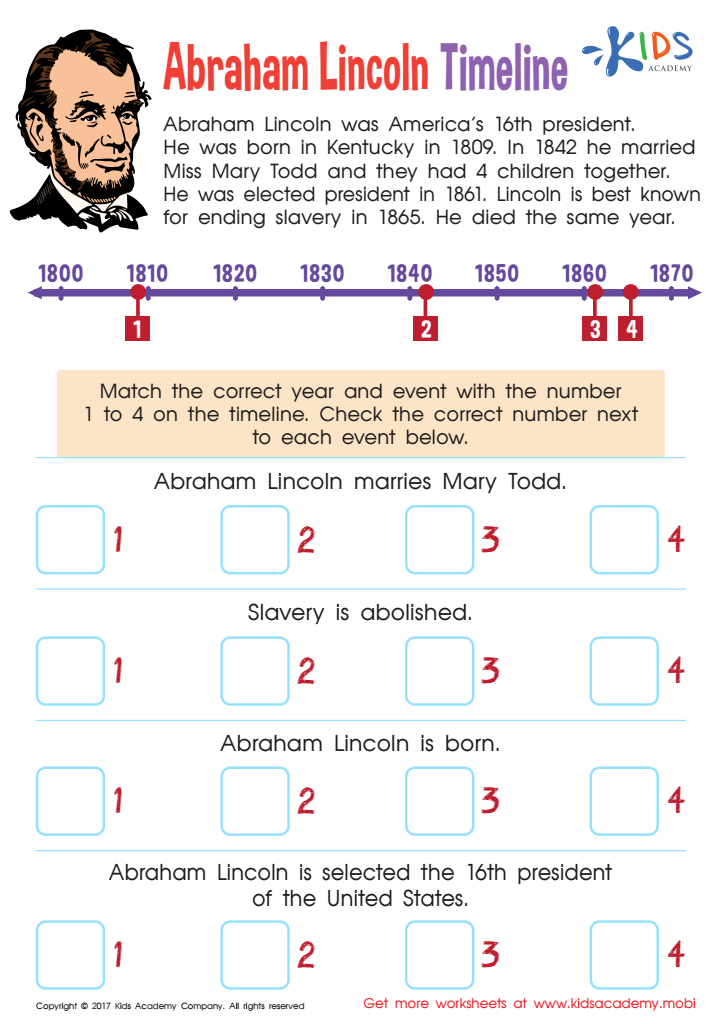
Abraham Lincoln Timeline Worksheet
 Assign to My Students
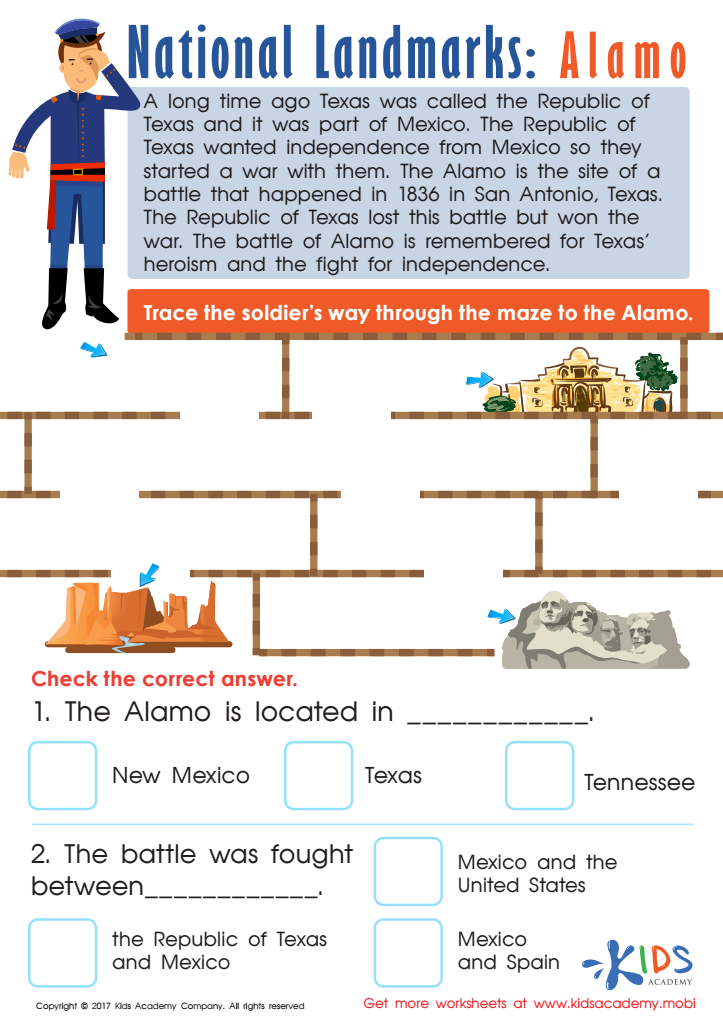
Alamo Printable Worksheet
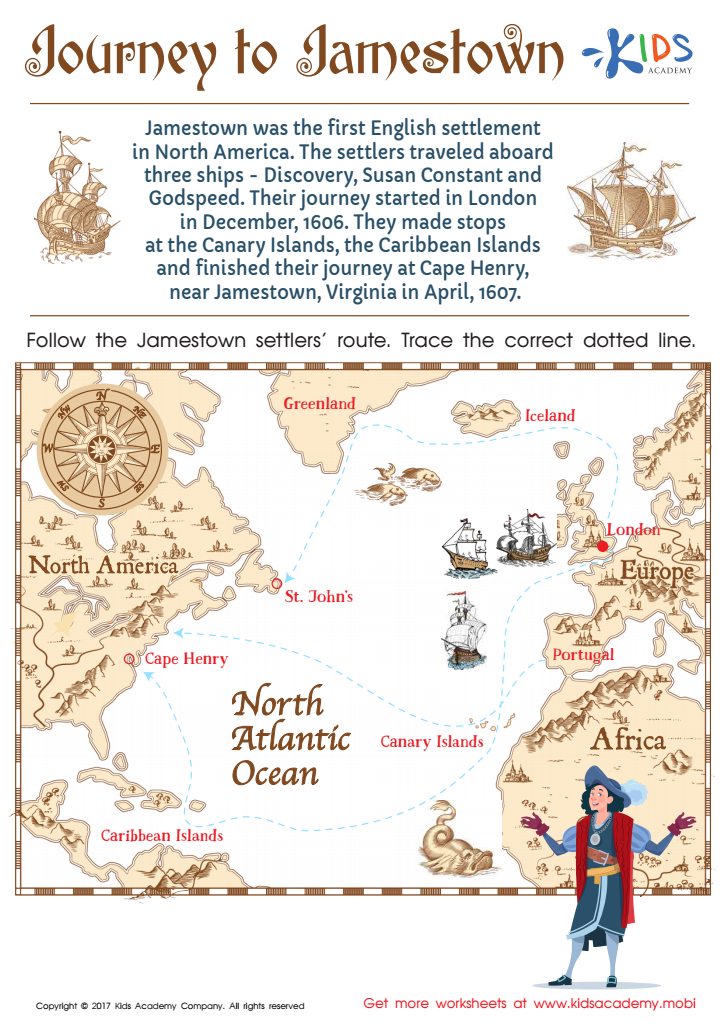
Journey to Jamestown Worksheet
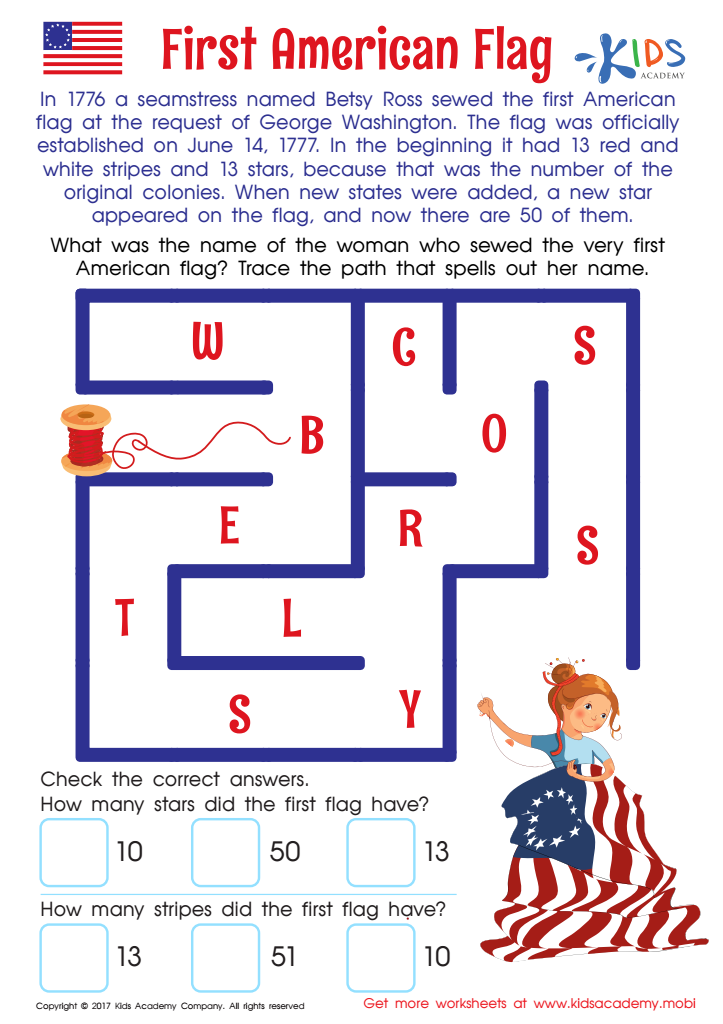
First American Flag Worksheet
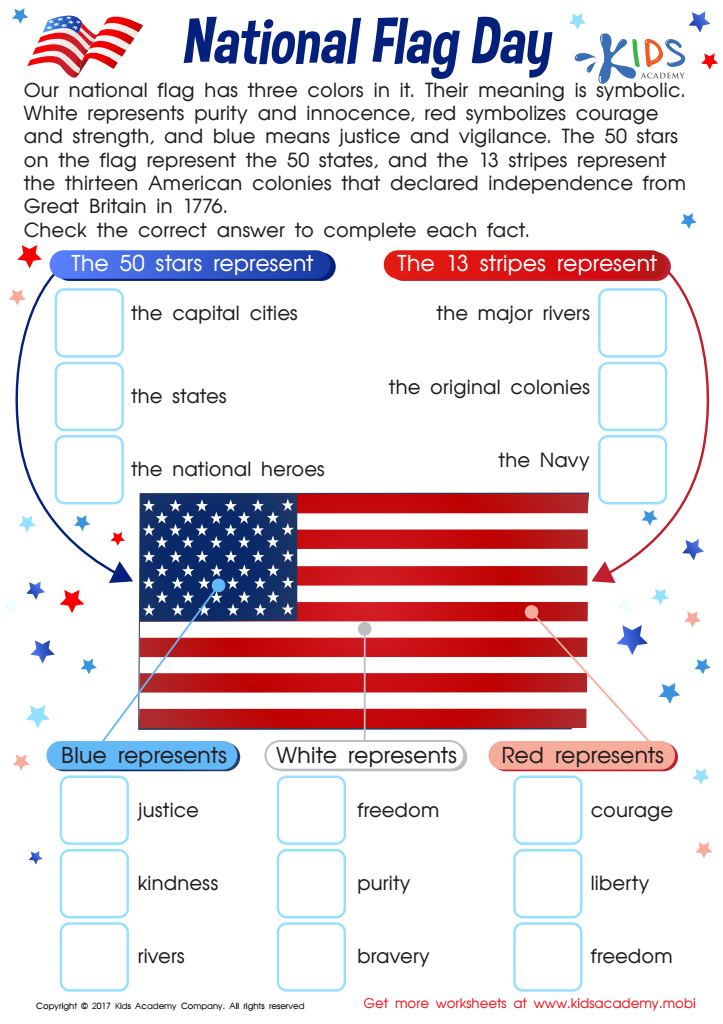
US National Flag Day Worksheet
Halloween Holiday Worksheet
Thanksgiving Holiday Printable








Reading comprehension is a cornerstone of a child's academic and lifelong success, especially within the dynamic 5-9 age group. During these formative years, children transition from learning to read to reading to learn—a vital cognitive leap. Parents and teachers must prioritize reading comprehension because it equips children with the skills necessary to understand, process, and retain information—the foundation for all other learning.
Firstly, strong reading comprehension fosters critical thinking. As children engage with stories from diverse perspectives and contexts, they begin to analyze plotlines, infer meanings, and anticipate outcomes. This nurtures their problem-solving abilities and enhances their capacity for empathy.
Moreover, early proficiency in understanding text boosts overall academic performance. Subjects such as math, science, and history inherently involve reading and interpreting questions, problems, and instructions. Children with solid reading comprehension are thus better prepared to excel across the curriculum.
Beyond academics, strong reading skills develop communication abilities. Understanding narratives helps children express themselves more clearly, both in writing and verbally. They learn new vocabulary, sentence structures, and ideas.
By investing time and resources into developing reading comprehension, parents and teachers ensure children have the foundational skills necessary not only for academic success but also for personal growth, allowing them to become informed, empathetic, and curious individuals.