Normal Difficulty Online Building VocabularyWorksheets for Kids - Page 4
173 filtered results
Difficulty Level
Grade
Age
-
From - To
Subject
Activity
Standards
Favorites
With answer key
Interactive
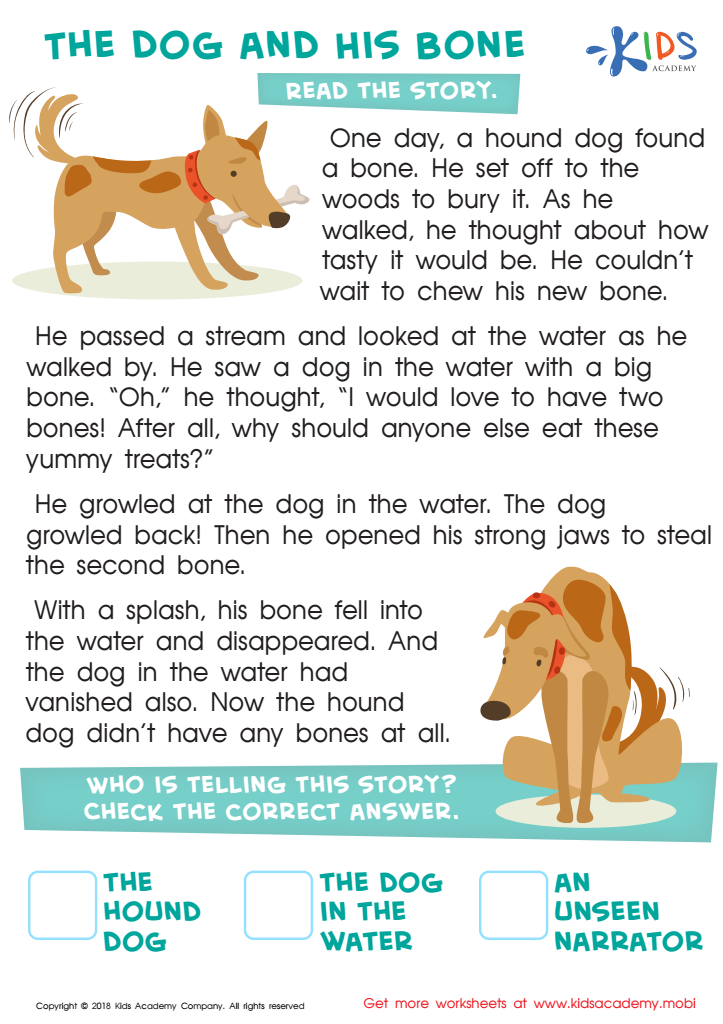
The Dog and His Bone Worksheet
Read the story of The Dog and His Bone to your kids, making sure they take in the details. Ask them the questions in this worksheet and help them check the answers. Encourage them to think carefully.
 Assign to My Students
The Dog and His Bone Worksheet
Worksheet











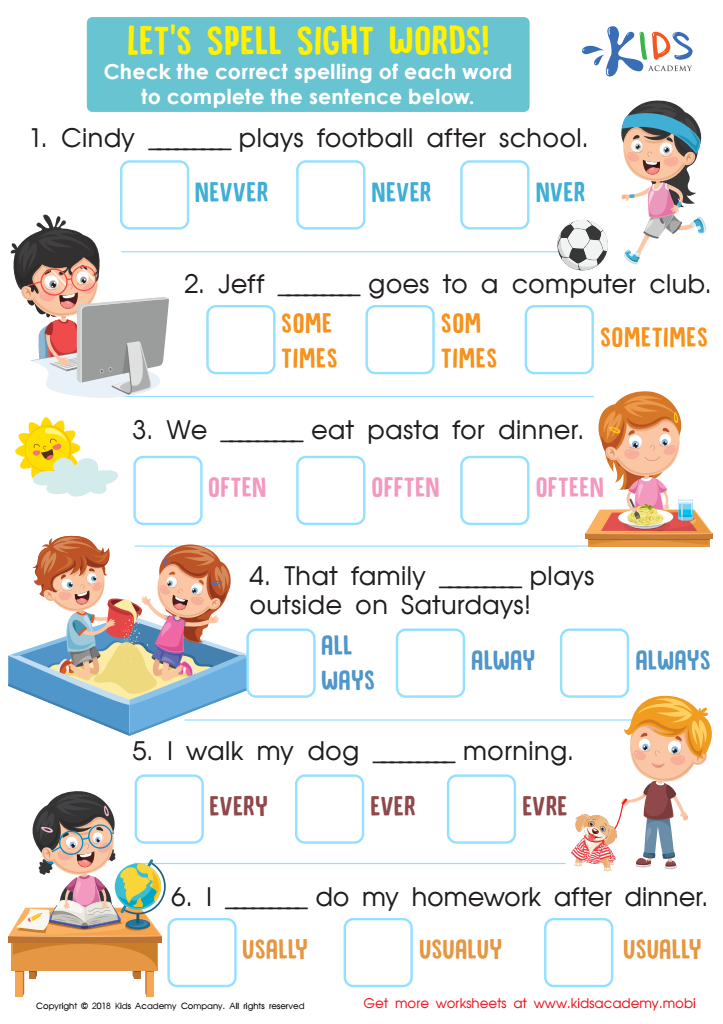
Let's Spell Sight Words Worksheet
Help your kids spell tricky sight words by asking them to spot differences in the sentences of activities they do regularly. This worksheet contains incomplete sentences, with the correct spelling of the word in the options for them to fill in. Get them to look out for words with the wrong spellings.
Let's Spell Sight Words Worksheet
Worksheet
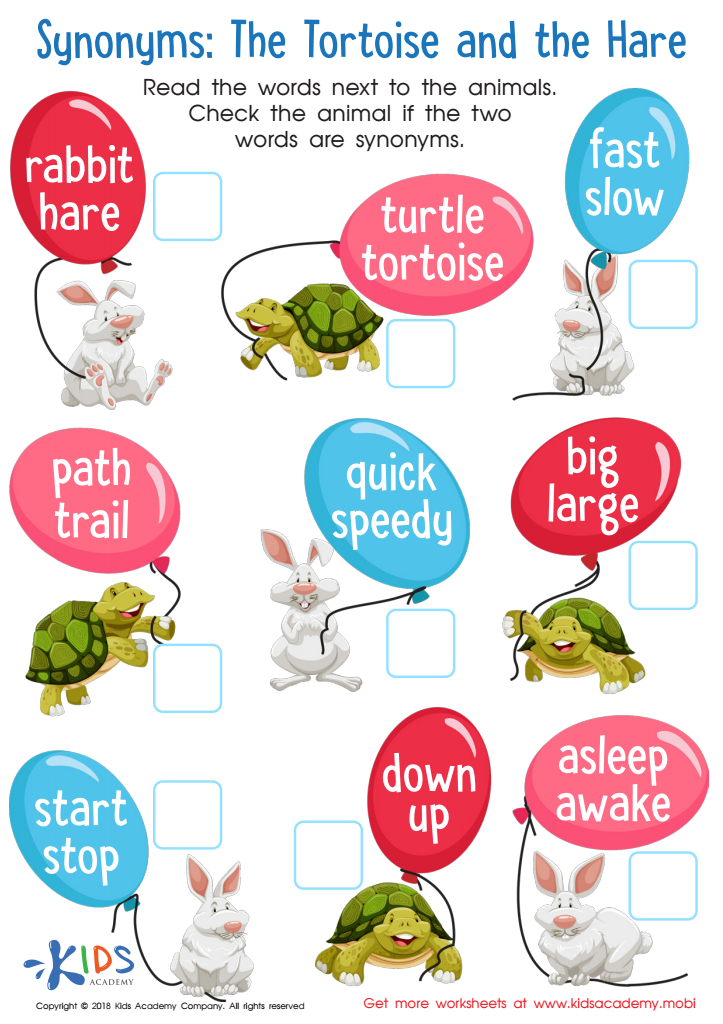
Synonyms: The Tortoise and Hare Worksheet
Help your kids identify words with similar meanings with this worksheet featuring a colourful picture of the Tortoise and the Hare. Show them how to check the boxes of animals with words that have similar meaning, then let them find more on their own. They'll love the challenge and you'll appreciate the educational value.
Synonyms: The Tortoise and Hare Worksheet
Worksheet
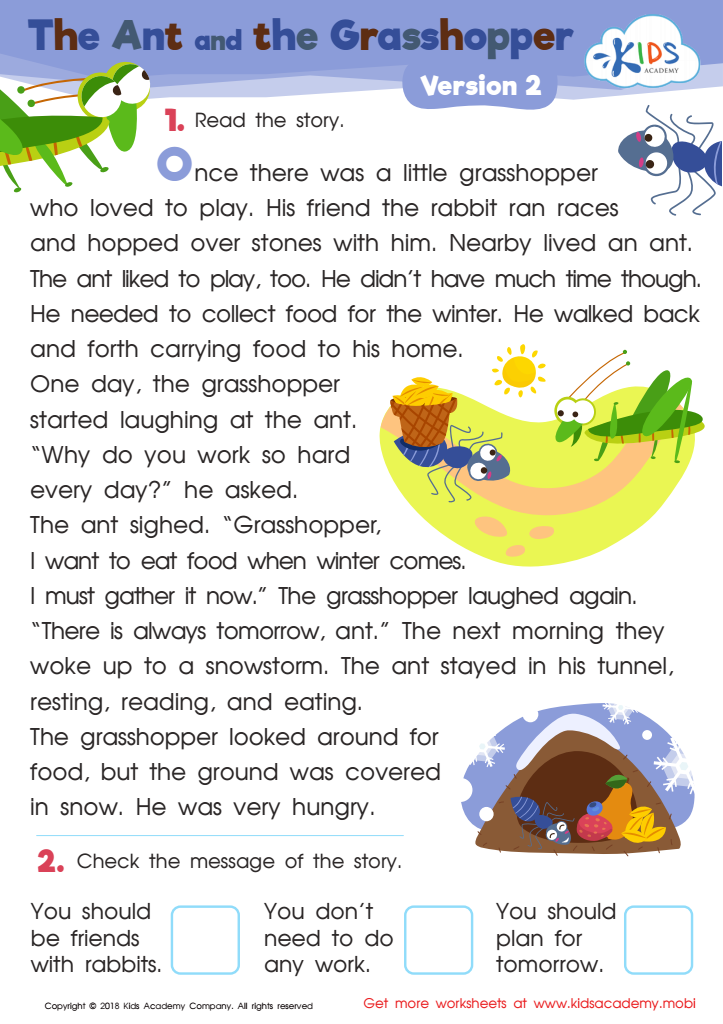
The Ant and The Grasshopper Version 2 Worksheet
Story time is a great way to bond with kids and share a fun story. The Ant and the Grasshopper is a classic with a lesson for everyone. Listen together and then ask your students what the message of the story was. Prompt them with choices from the worksheet and see which one they select. It's a great way to increase their vocabulary and help them learn important lessons.
The Ant and The Grasshopper Version 2 Worksheet
Worksheet
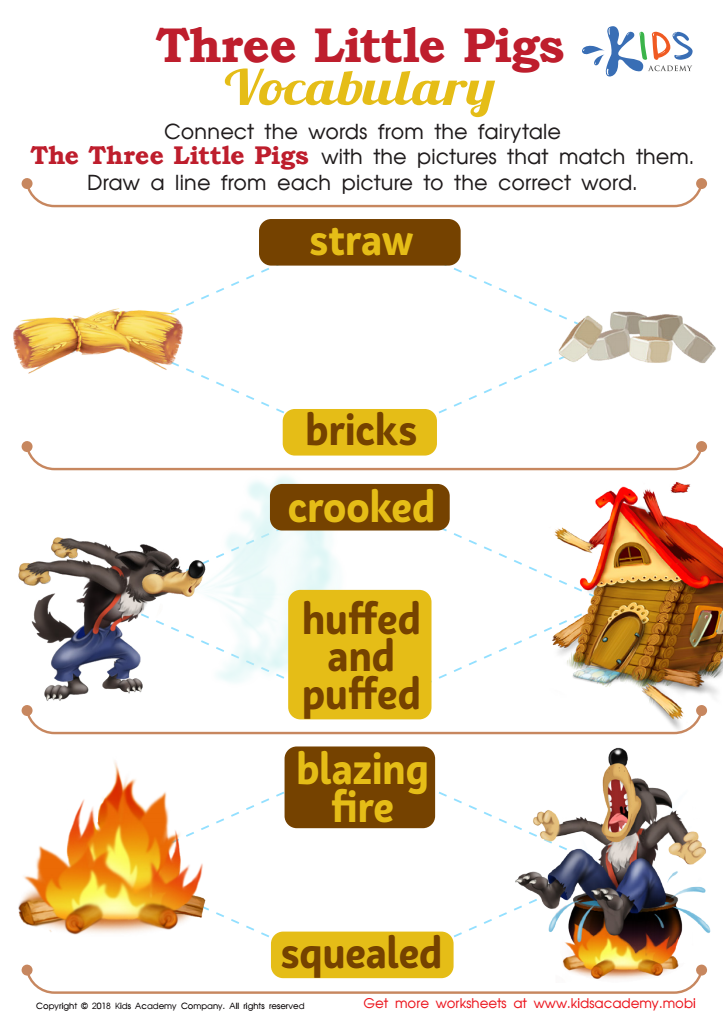
Three Little Pigs Vocabulary Worksheet
Read the Three Little Pigs to your children. Have them use the tracing sheet to connect the story words with the pictures. This is a fun and educational way to help them build their vocabulary.
Three Little Pigs Vocabulary Worksheet
Worksheet
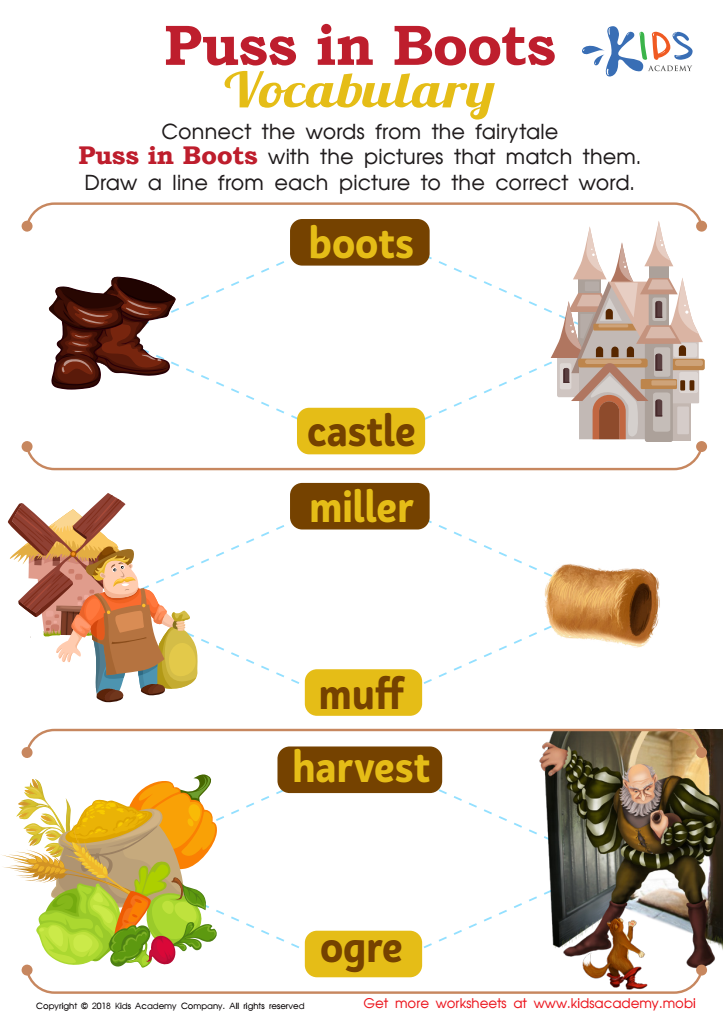
Puss in Boots Vocabulary Worksheet
Let your kids enjoy story-telling while learning at the same time. Help them learn from the fairytale, Puss in Boots, by connecting words from the worksheet with the matching pictures. Ask them to draw a line between each picture and corresponding word to build their vocabulary.
Puss in Boots Vocabulary Worksheet
Worksheet
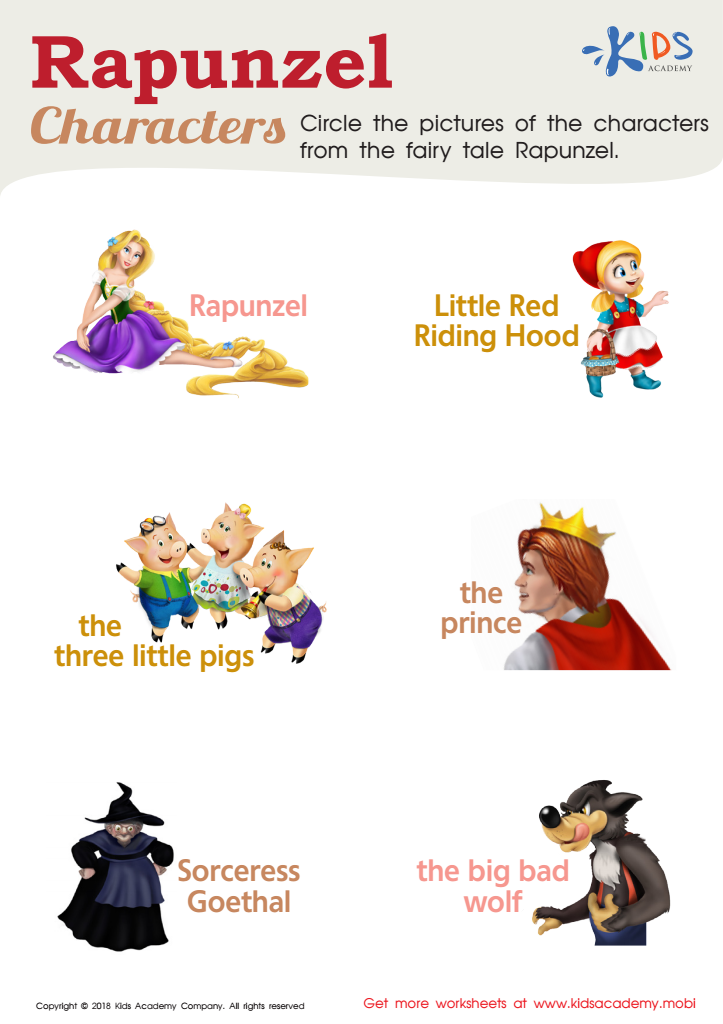
Rapunzel Characters Worksheet
This fun and colourful worksheet is perfect to see what your kids have learned from story time. Test their knowledge with a Rapunzel-themed exercise! Ask them to circle the pictures of the characters from the fairy tale. Helping them to remember the lessons taught in the stories you have read.
Rapunzel Characters Worksheet
Worksheet
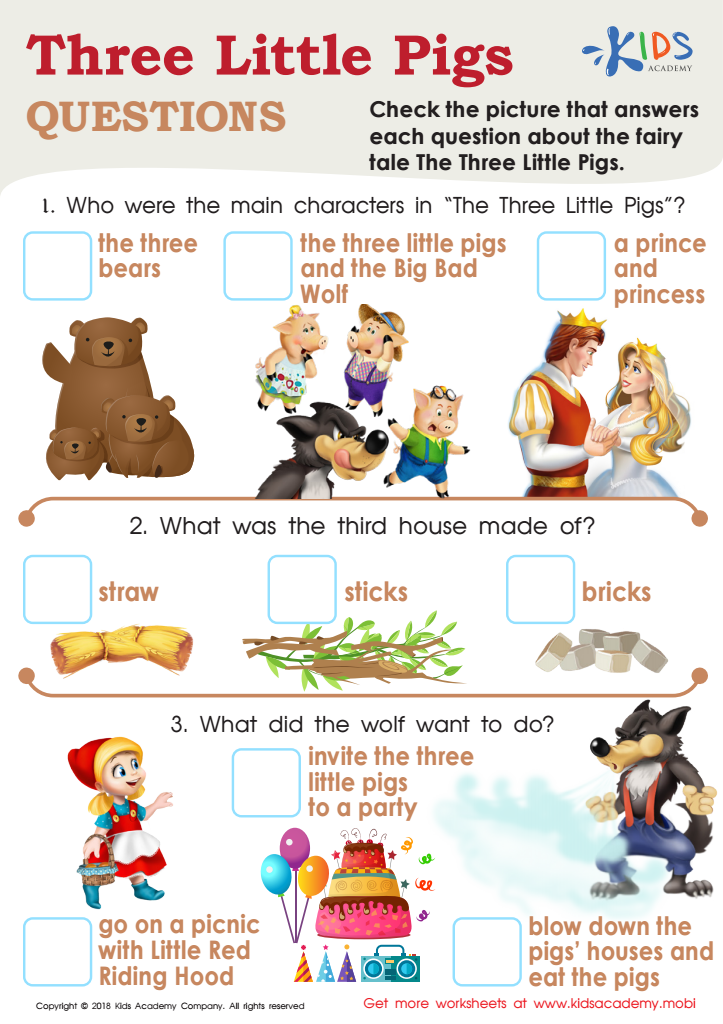
Three Little Pigs Questions Worksheet
Does your kid love bedtime stories? Test their classic fairytale knowledge with this worksheet! If they mention The Three Little Pigs, they're in luck - this pdf has them answering questions based off the classic fairytale. They'll check the picture that answers each question about the story. Is their fairytale knowledge up to scratch?
Three Little Pigs Questions Worksheet
Worksheet
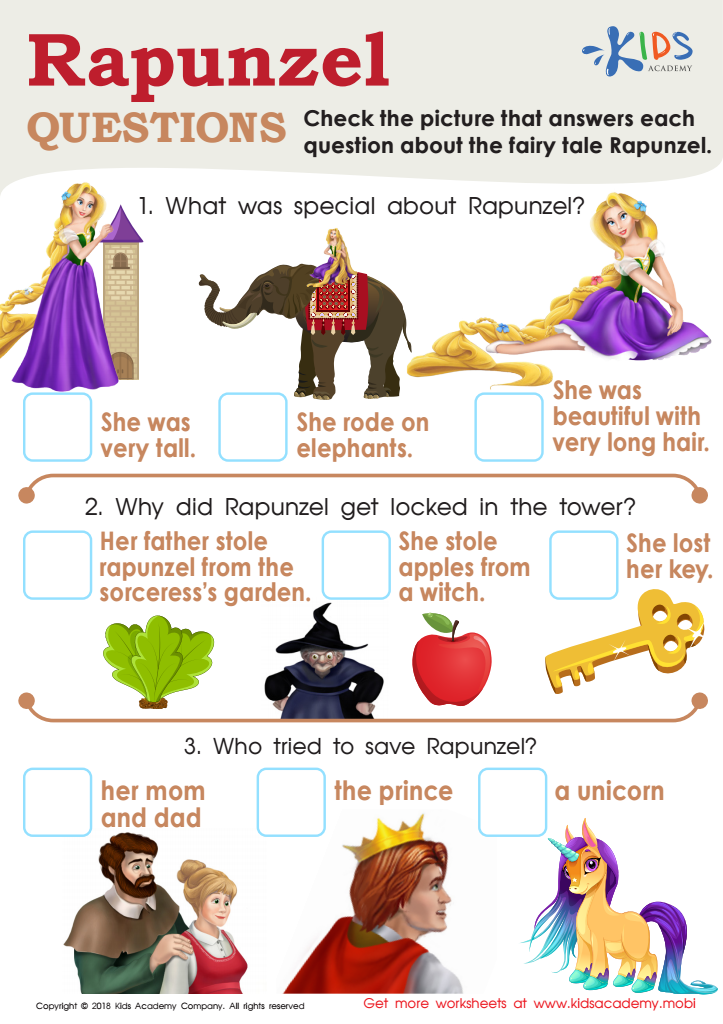
Rapunzel Questions Worksheet
Read the fairy tale 'Rapunzel' to your kids. For those who really enjoyed it, read it twice and ask questions to test their understanding. Then, get them to check the pictures related to the questions to test their comprehension of the story.
Rapunzel Questions Worksheet
Worksheet
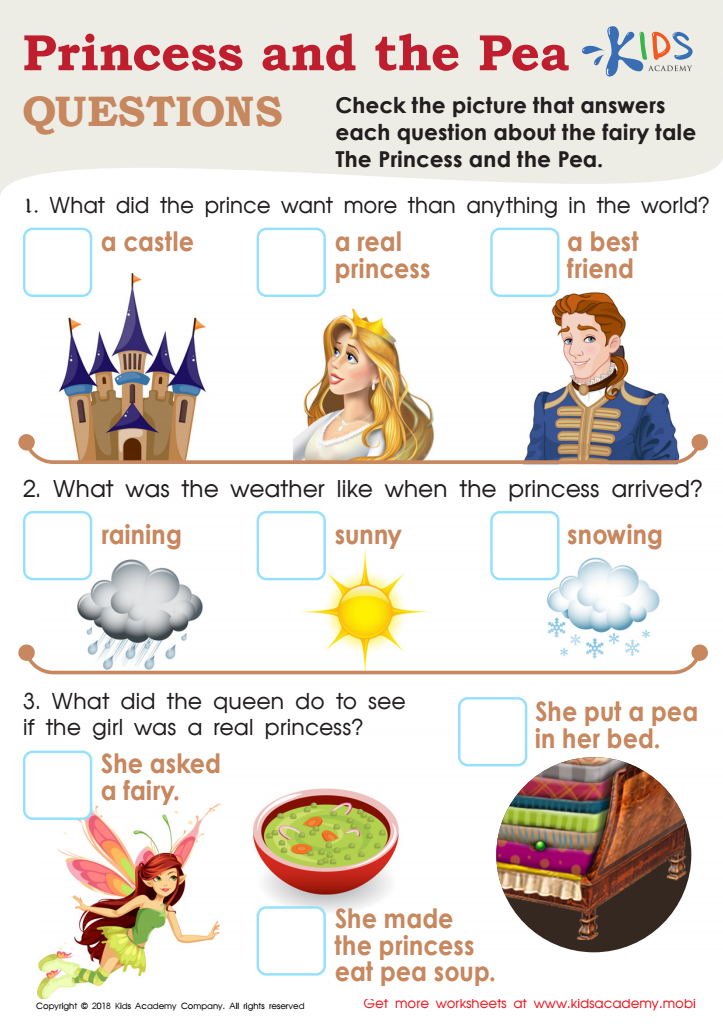
Princess and the Pea Questions Worksheet
Your kid knows The Princess and the Pea inside-out? Test their knowledge with this worksheet. Ask your little one to read the questions and match each one to the picture. It's a fun way to see just how much attention they've paid to their bedtime story.
Princess and the Pea Questions Worksheet
Worksheet
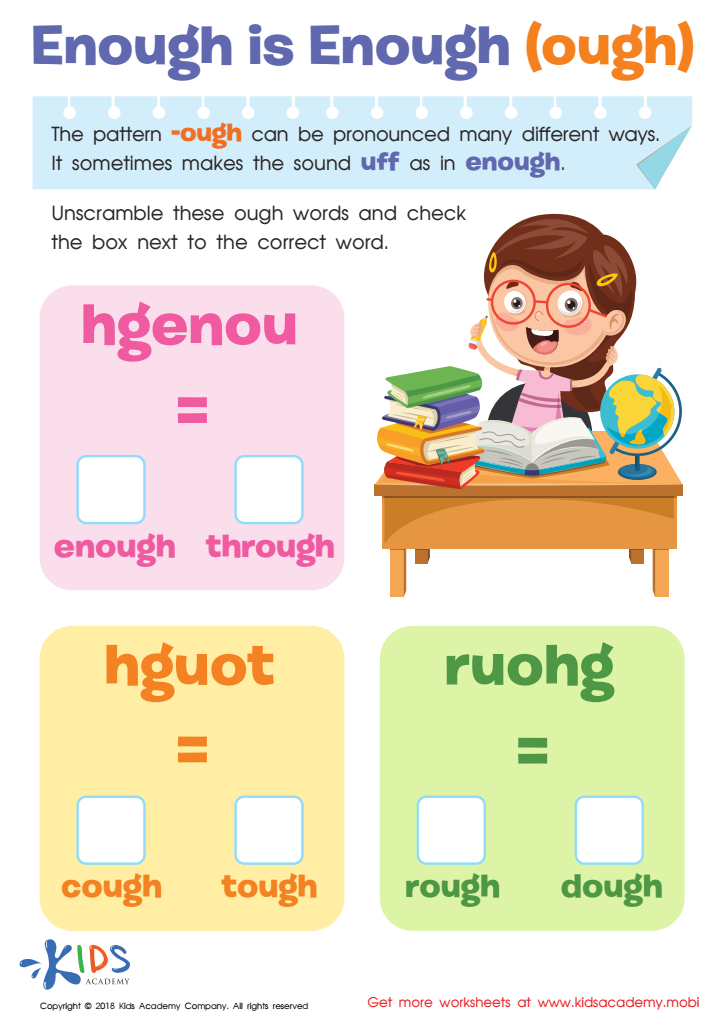
Enough Is Enough (ough) Worksheet
As your students learn more about reading and pronouncing words, they can explore how some word patterns can be said differently. The 'ough' pattern, for instance, can be pronounced several ways. 'Enough' has the 'uff' sound. Provide your students with examples of words pronounced similarly and help them unscramble 'ough' words on this worksheet, ticking the box for the correct word.
Enough Is Enough (ough) Worksheet
Worksheet
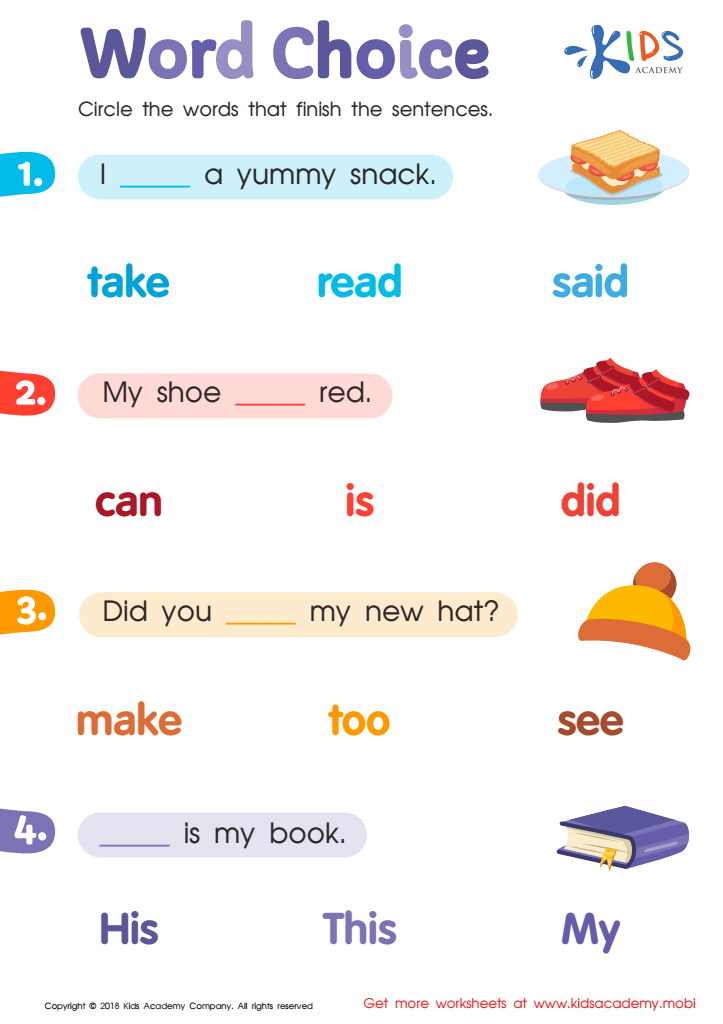
Word Choice Worksheet
This worksheet can help your children become better readers. By now, you should have an idea of their reading level. Read the incomplete sentences aloud and point to the missing piece. Have your students pick the correct word they think best fits the sentence out of the options given.
Word Choice Worksheet
Worksheet
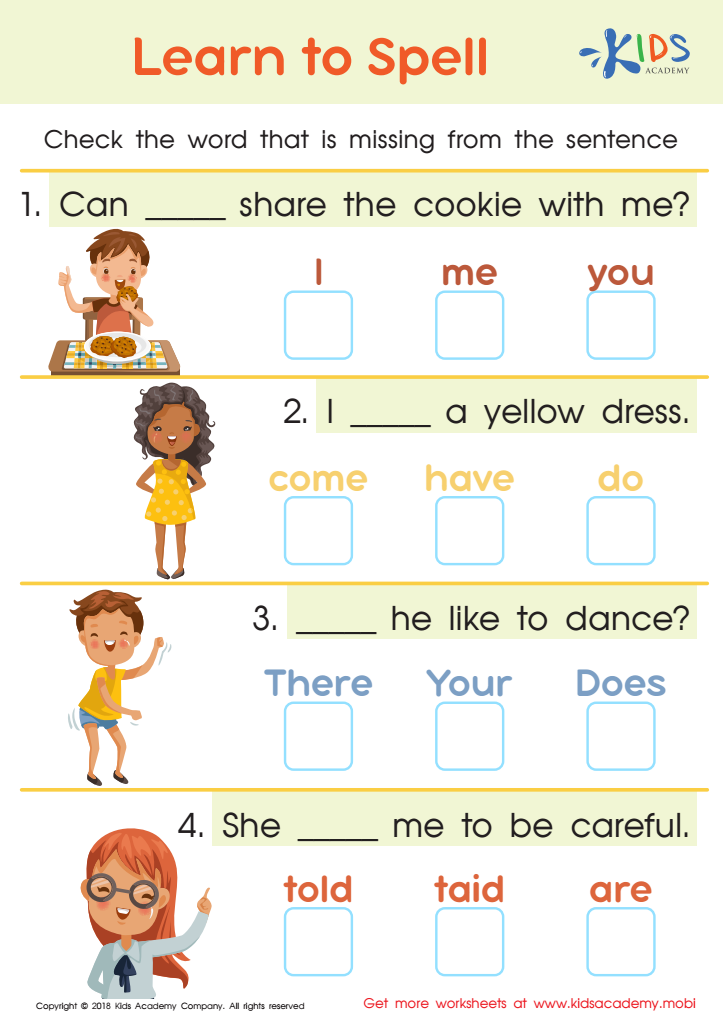
Learn to Spell Worksheet
Help sharpen spelling skills with a simple worksheet. Read sentences aloud and show which word is missing. Ask students to pick the correct word from the options. Ensure they check the missing word for accuracy.
Learn to Spell Worksheet
Worksheet
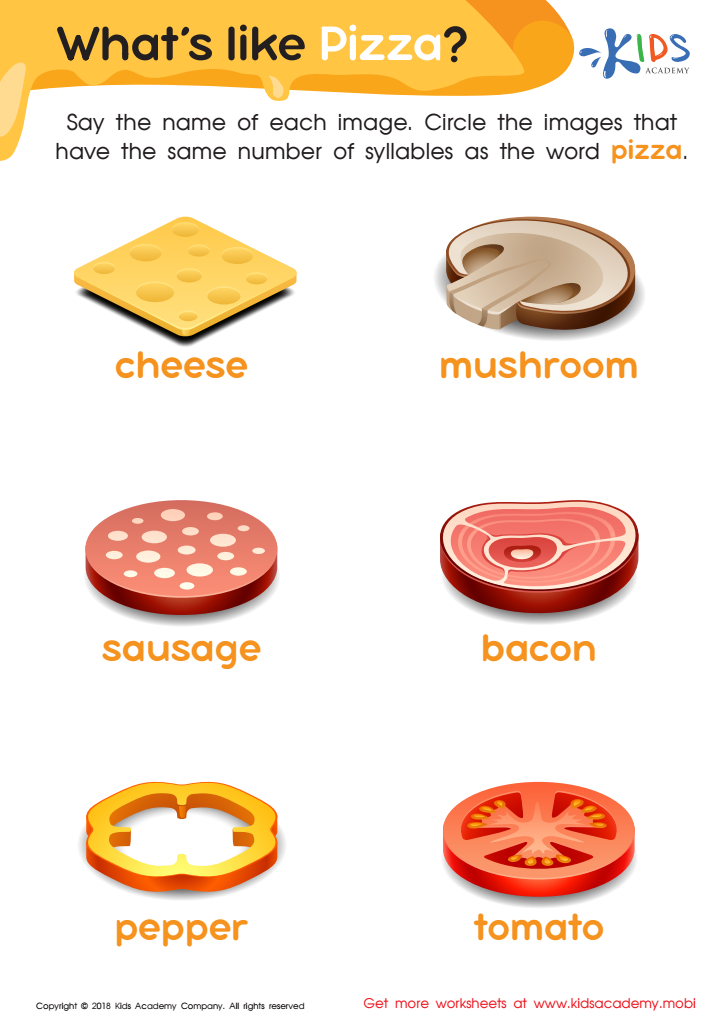
What's Like Pizza? Worksheet
Encourage your kids to exercise their minds with this pizza worksheet! Ask them to name the ingredients they like on their favourite pizzas. Then, help them circle the images that have the same number of syllables as 'pizza'. They'll have fun while learning too!
What's Like Pizza? Worksheet
Worksheet
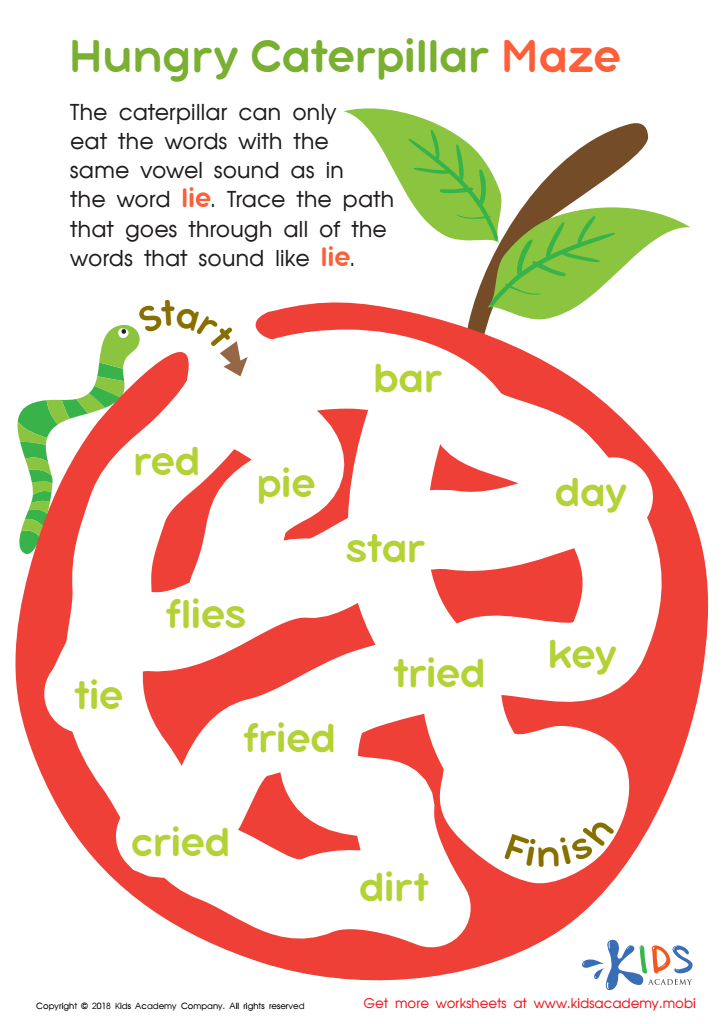
Hungry Caterpillar Maze Worksheet
Remind the kids that caterpillars turn into butterflies! This worksheet helps them practice their vowel sounds. They must trace the path of words that sound like ‘lie’ to help the caterpillar reach the finish line. It's a fun way to learn and explore!
Hungry Caterpillar Maze Worksheet
Worksheet
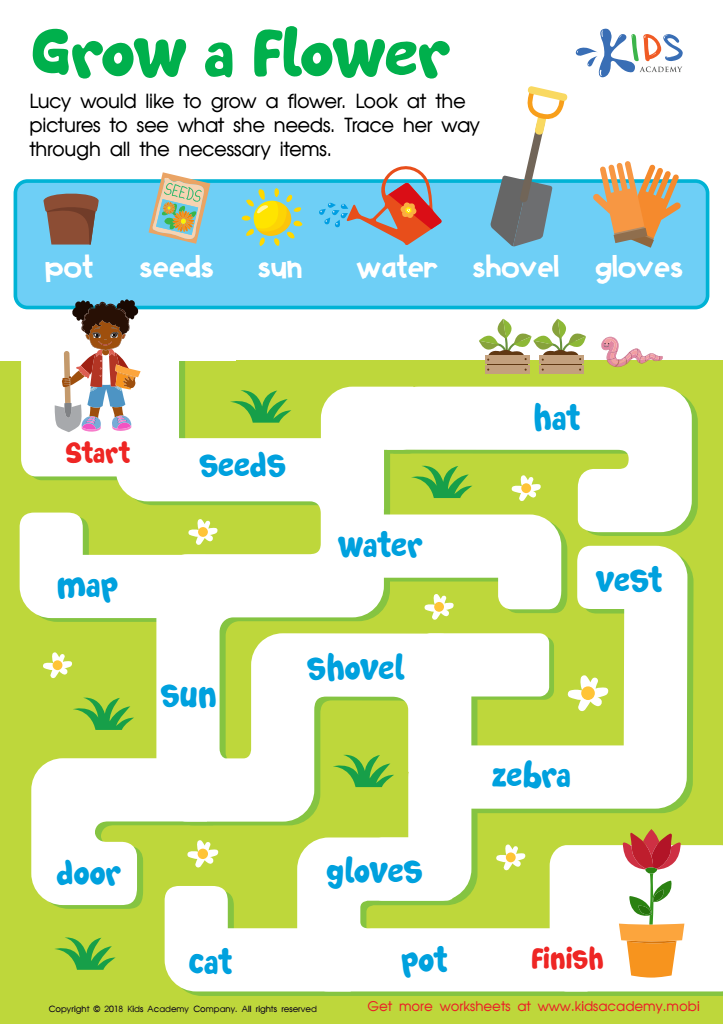
Grow a Flower Worksheet
Download this worksheet to teach your kids how to grow a flower with Lucy. Ask them to look at the pictures and trace the necessary steps. Help them go through the process of growing a beautiful flower with Lucy!
Grow a Flower Worksheet
Worksheet
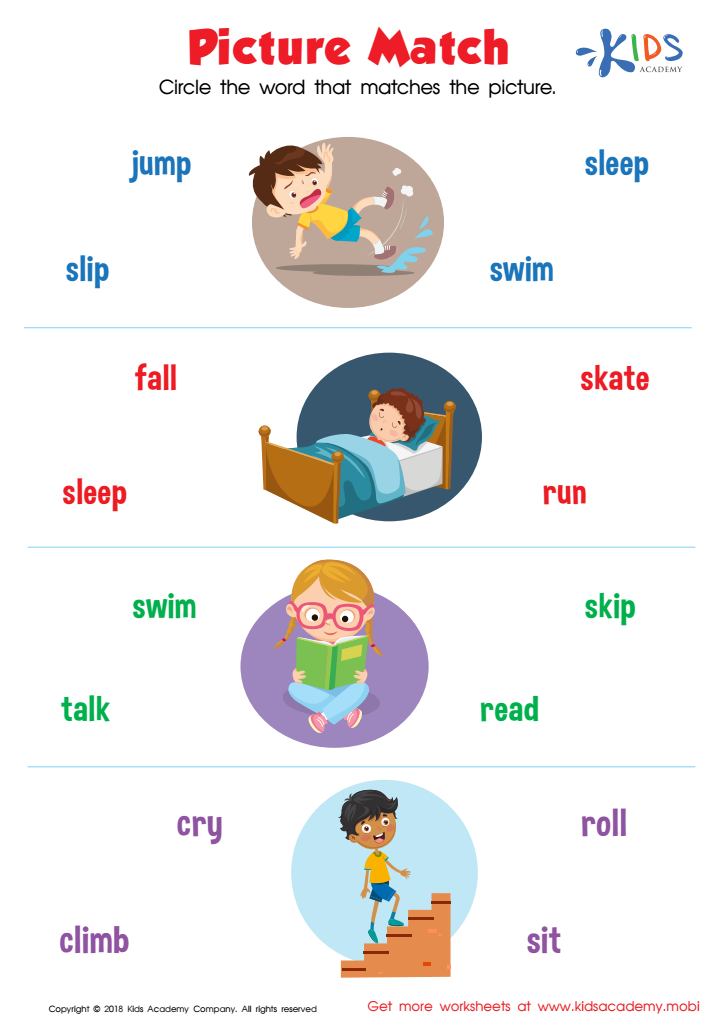
Picture Match Worksheet
If your kids can read, this exercise will be a breeze. Show the pictures and ask them what's happening. Read the words and see if they can identify any of them and help them circle the word that matches the picture. Simple!
Picture Match Worksheet
Worksheet
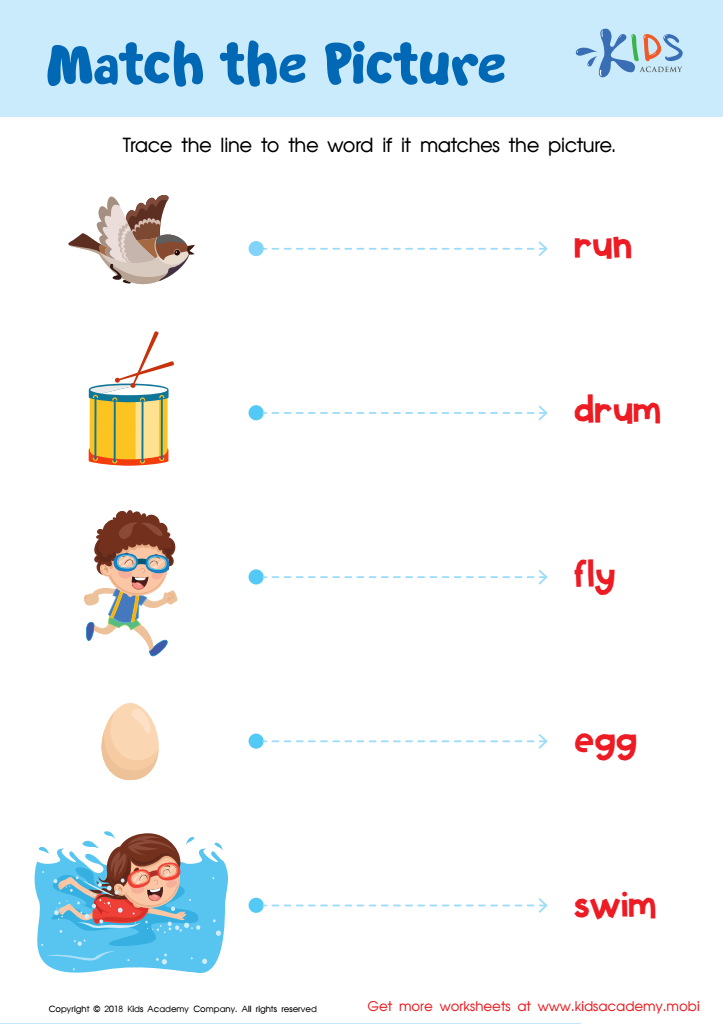
Match the Picture Worksheet
This tracing worksheet is a fun way to teach little ones that learning can be fun! Ask them to name the five images on the left and then read the words on the right. Do they match? Help them trace the line connecting the picture to the word that matches. Learning doesn't have to mean stuffy classrooms and drudgery!
Match the Picture Worksheet
Worksheet
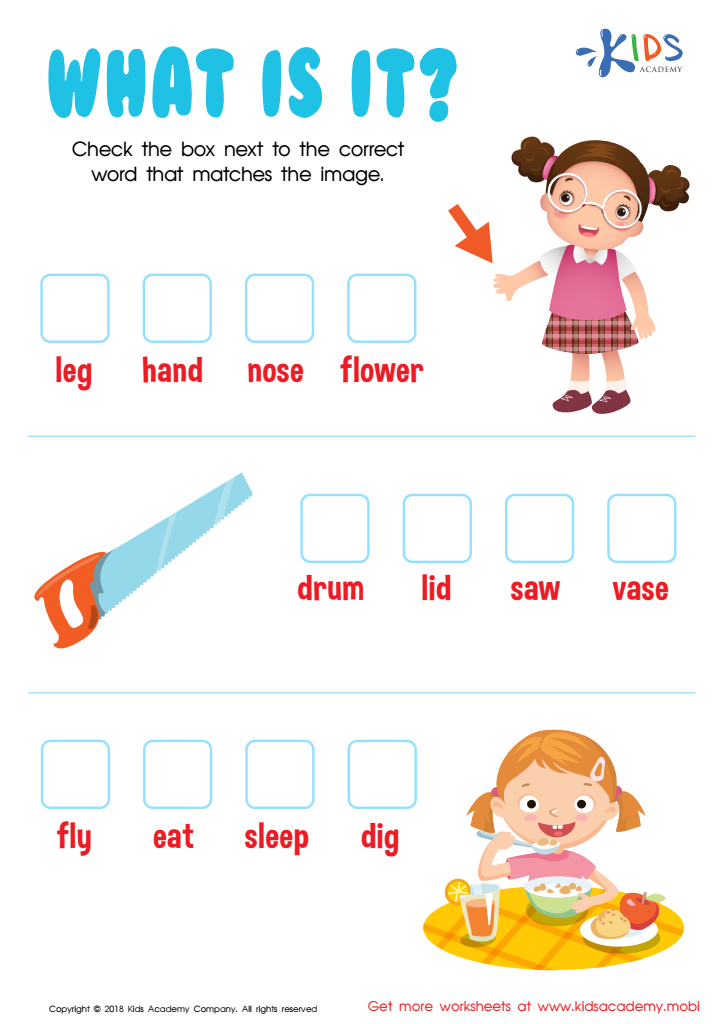
What Is It? Worksheet
Test your kids' object recognition skills with this worksheet. Have them identify each picture, then check the box next to the correct word. Point to the image and ask your child what it is; then help them select the correct answer. It's a great way to see how well they can recognize objects from pictures.
What Is It? Worksheet
Worksheet
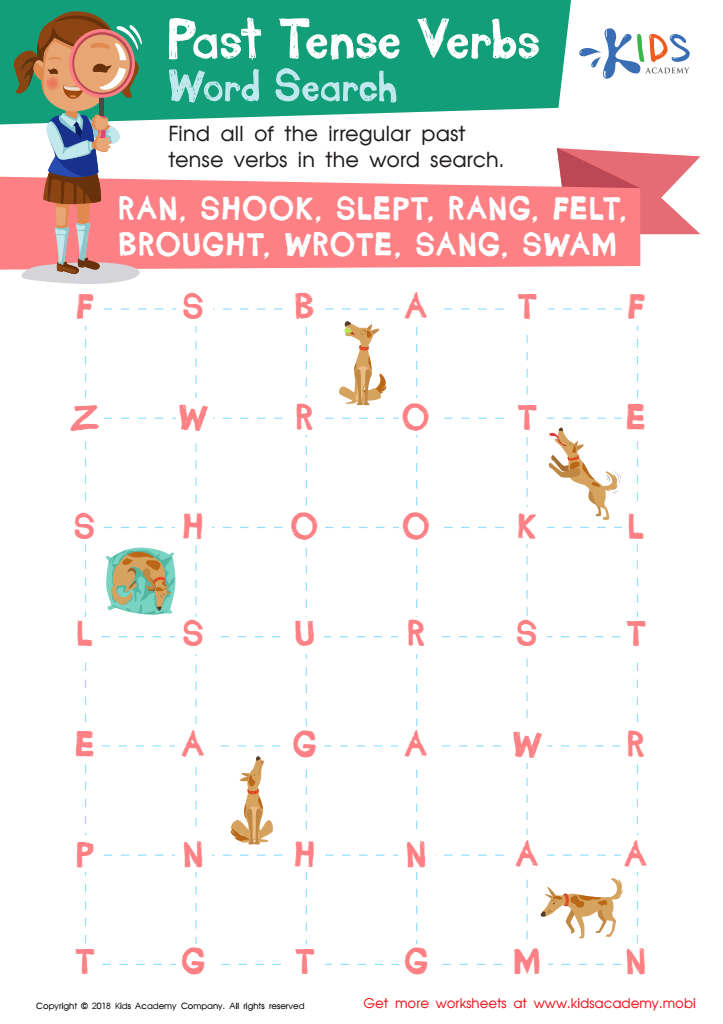
Past Tense Verbs Word Search Worksheet
Kids must learn the rules of past tenses to speak English correctly. This worksheet helps them understand irregular past tense verbs. As they search for them, ask them to read the words aloud; this reinforces the learning.
Past Tense Verbs Word Search Worksheet
Worksheet
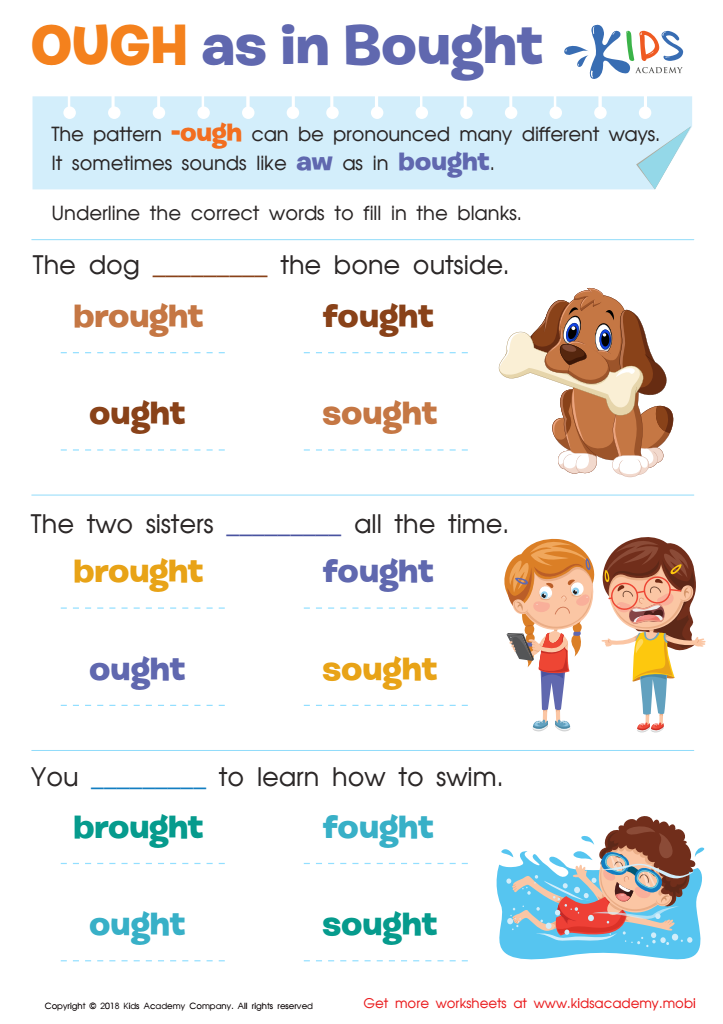
OUGH as in Bought Worksheet
Use this worksheet to teach your child the different pronunciations of -ough. For example, -ough can sound like ‘aw’ in ‘bought’. Ask your child to give more examples and help them underline the correct answers to fill in the blanks.
OUGH as in Bought Worksheet
Worksheet
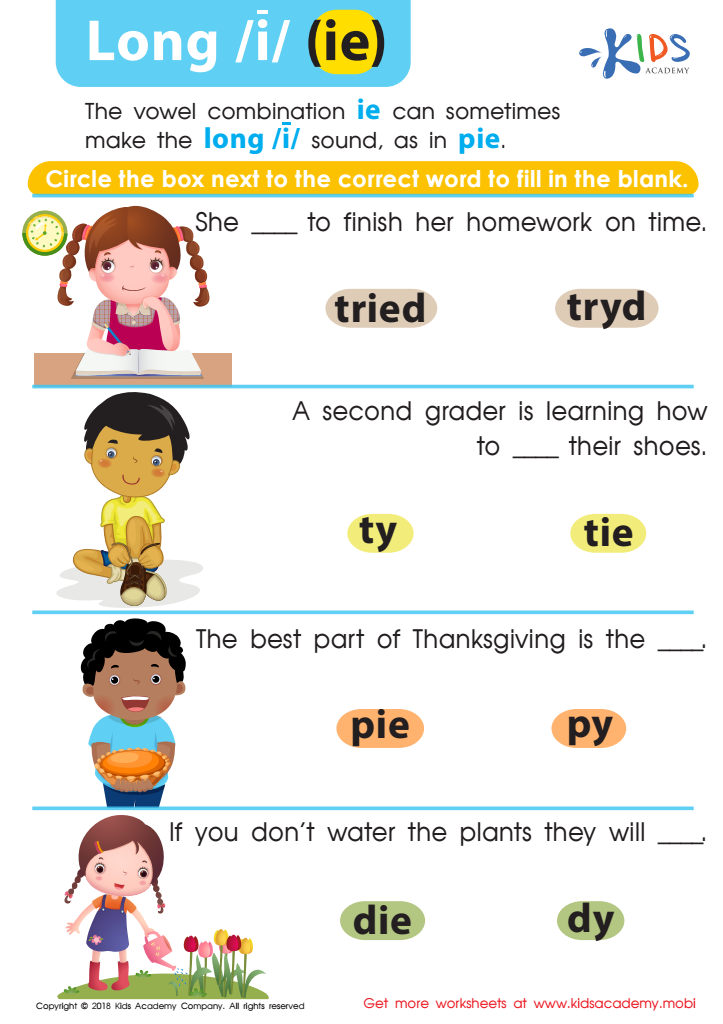
Reading: Long I and IE Worksheet
Have your child list words with the long /i/ sound (eg. 'pie'), and if needed, help them out with some examples. Read each word in the worksheet together and check their answer by having them circle the correct word.
Reading: Long I and IE Worksheet
Worksheet
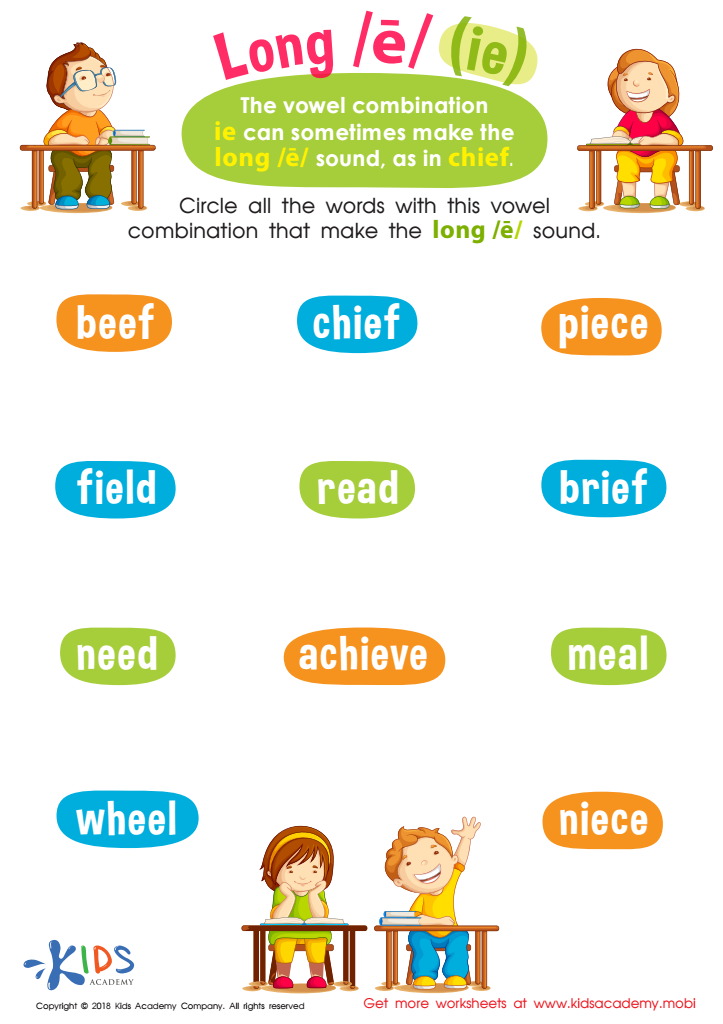
Reading: Long E and IE Worksheet
Ask your child to name some words with the long /e/ sound they hear every day. Then, read aloud all the words in the worksheet with them. Ask them to circle the words containing ie that make this sound.
Reading: Long E and IE Worksheet
Worksheet
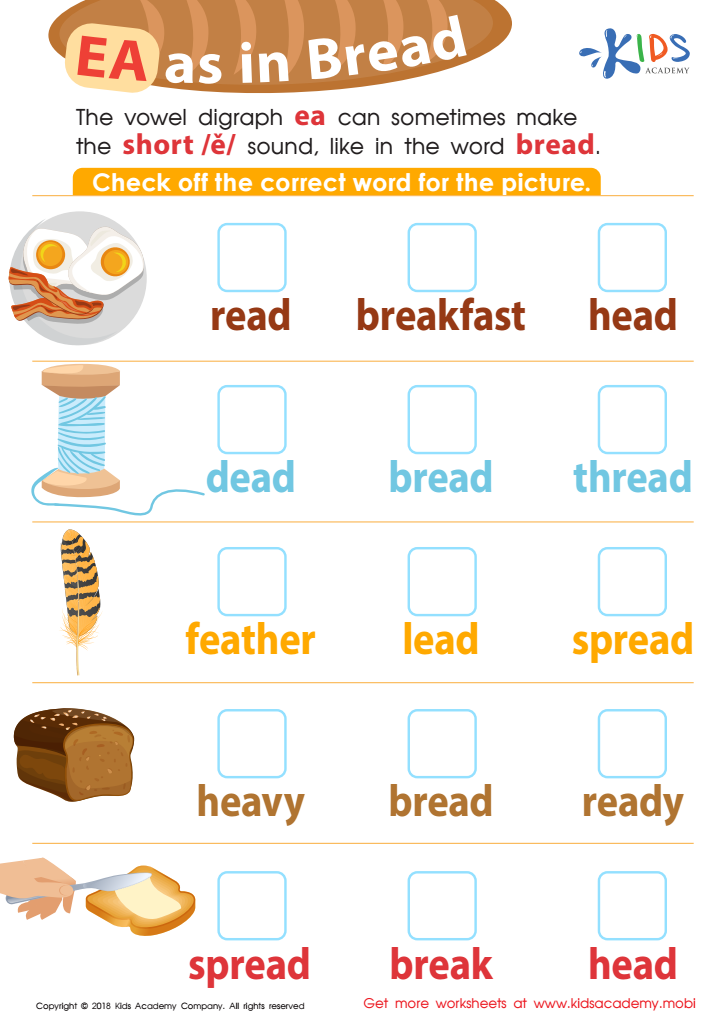
Reading: EA as in Bread Worksheet
The vowel digraph ea can be read in two ways. Examples of the long sound are "read" and "lead"; examples of the short sound are "bread" and "head". Ask your kids to give you more examples and then have them check off the correct word for the pictures on this worksheet. This will help them understand the ea sound.
Reading: EA as in Bread Worksheet
Worksheet
Join Kids Academy for Free
Who is primarily going to use this learning content?




.jpg)










