Vowel Recognition Normal Grade 2 Phonics Worksheets
3 filtered results
-
From - To
Boost your child's phonics skills with our Grade 2 Vowel Recognition Worksheets! Crafted by experts, these engaging worksheets help students effortlessly recognize and differentiate vowels, fostering essential reading and writing abilities. Kids will love the interactive exercises designed to reinforce their understanding through fun word games, matching activities, and more. Perfect for at-home practice or classroom use, our second-grade phonics worksheets support effortless learning in a vibrant and engaging format. With our Vowel Recognition Normal Grade 2 Phonics Worksheets, unlock your child's potential and set a strong foundation for their literacy journey. Download today from Kids Academy!
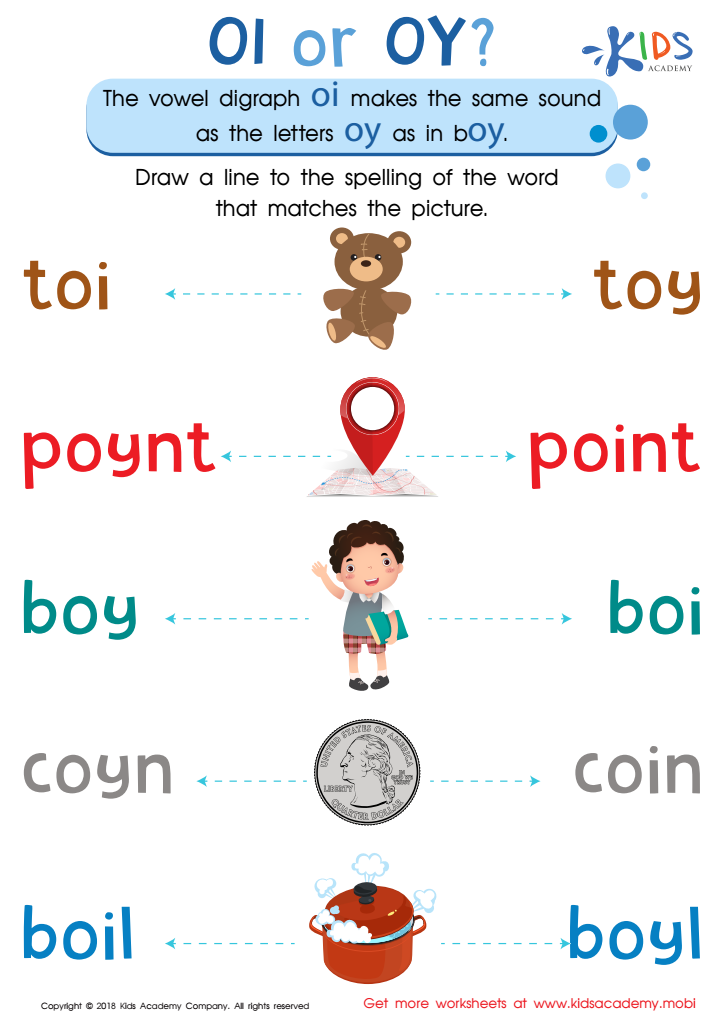
Reading: OI and OY Worksheet
 Assign to My Students
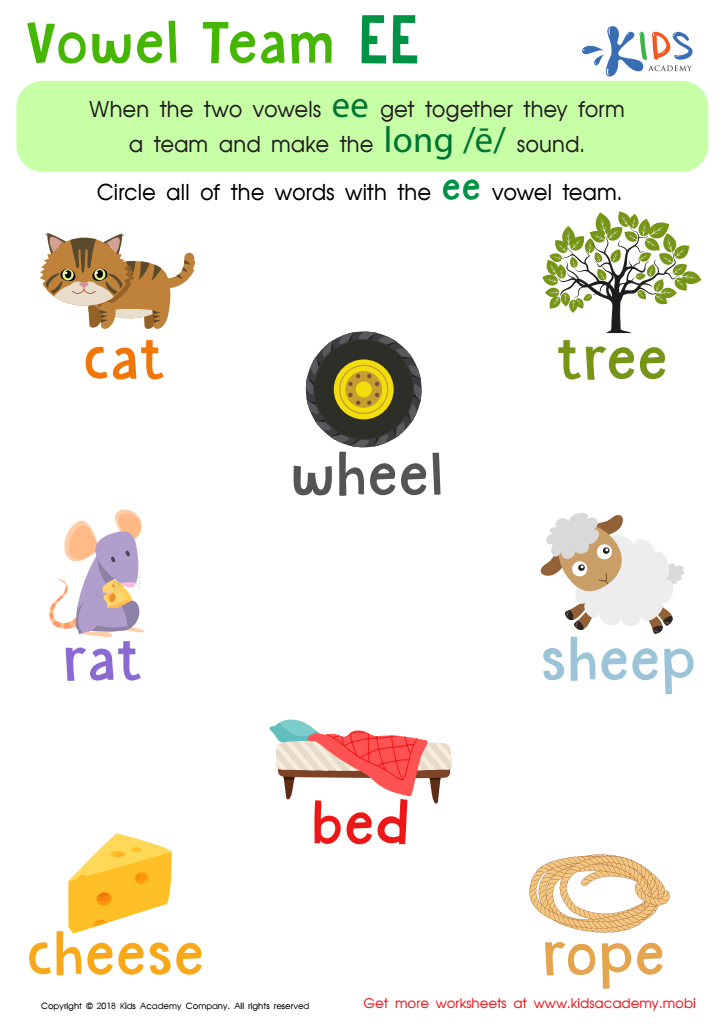
Reading: Vowel Team EE Worksheet
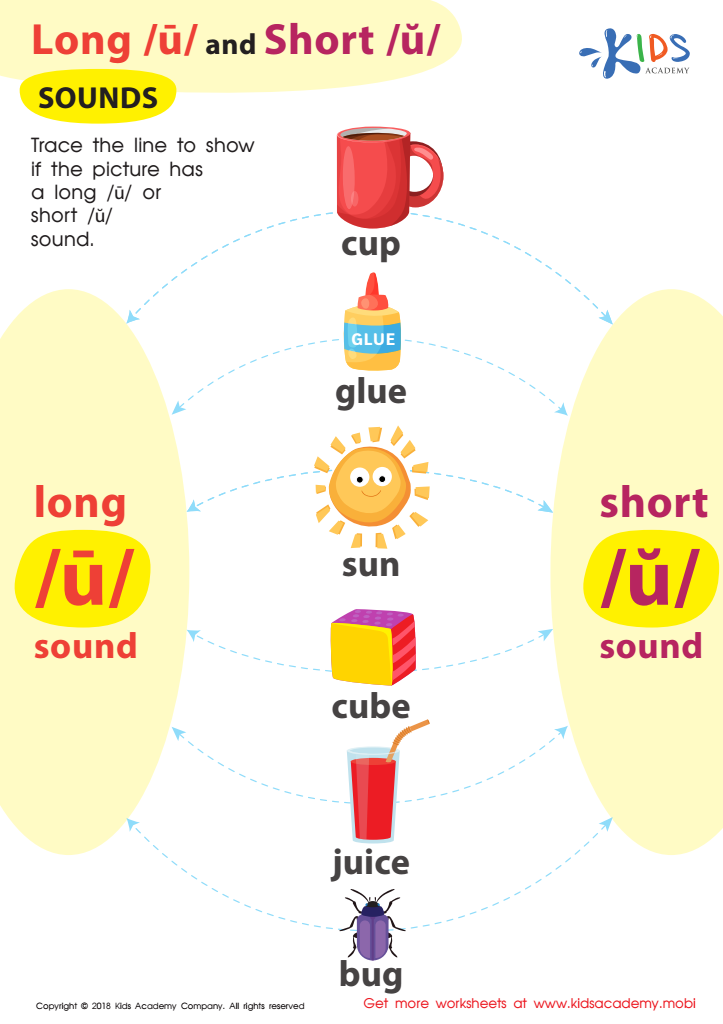
Reading: Long U and Short U Sounds Worksheet



Vowel recognition is a foundational component of early literacy that significantly impacts a child’s reading and writing ability. By second grade, children are expected to have progressed from simple letter recognition to understanding the vital role vowels play in word formation and pronunciation. Mastery of vowel sounds is crucial for decoding skills, which directly influence reading fluency and comprehension.
Parents and teachers should prioritize vowel recognition because it helps children accurately sound out words, enhancing their ability to read independently. When children grasp that vowels can change the meaning and pronunciation of words (like 'bit' versus 'bite'), they become more proficient readers. This understanding also fosters better spelling, as recognizing vowel patterns aids in identifying correct letter sequences in words.
Moreover, phonics, which integrates vowel recognition, supports cognitive development. It enhances phonemic awareness, enabling children to discern subtle differences between words, which is essential for expanding their vocabulary. Ensuring that second graders achieve normal grade-level proficiency in vowel recognition sets a solid foundation for future academic success, improves their confidence in reading and writing tasks, and cultivates a lifelong interest in learning. This concerted effort from parents and teachers helps children develop the essential skills needed for effective communication and literacy.