Alphabet Recognition Preschool ABC Order Worksheets
11 filtered results
Difficulty Level
Grade
Age
-
From - To
Subject
Activity
Standards
Boost your child's early literacy skills with our Alphabet Recognition Preschool ABC Order Worksheets! Perfect for young learners, these engaging, printable worksheets help children master the alphabet in a fun, interactive way. Each sheet challenges kids to identify, trace, and place letters in the correct order, enhancing their understanding of letter sequences. Our ABC order worksheets are designed to develop foundational reading skills and improve memory retention through playful practice. Ideal for preschoolers, these activities make learning the alphabet an enjoyable and rewarding experience. Download and print to start your child on an exciting educational journey today!
Favorites
With answer key
Interactive
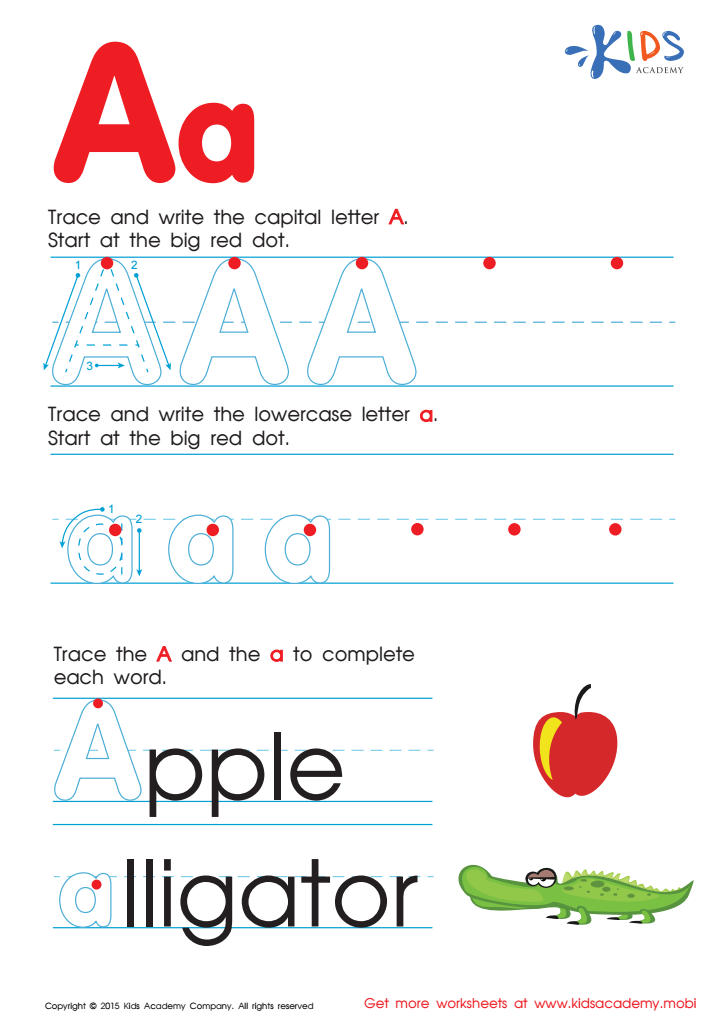
Letter A Tracing Page
Trace and write the letter "A"! Start with the big red dot, then do the capital and lowercase versions. Then write it again with two words - apple and alligator. Download more tracing worksheets at Kids Academy.
 Assign to My Students
Letter A Tracing Page
Worksheet
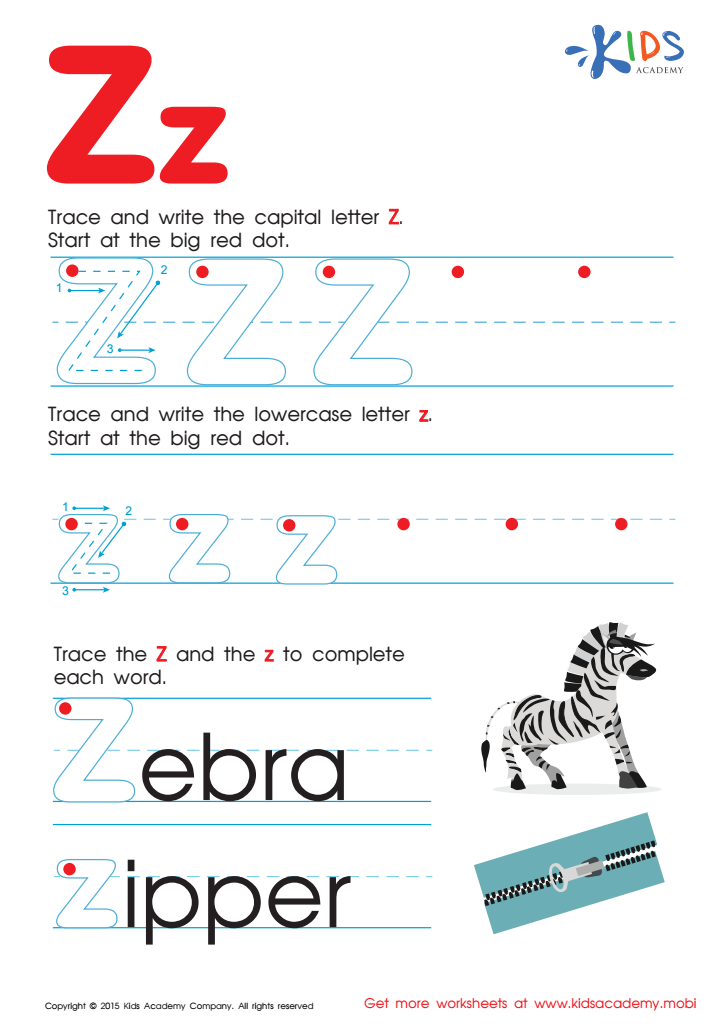
Letter Z Tracing Page
Trace and write capital "Z" and lowercase "z". Complete words "zebra" and "zipper". Be attentive and have fun! (80 words)
Letter Z Tracing Page
Worksheet
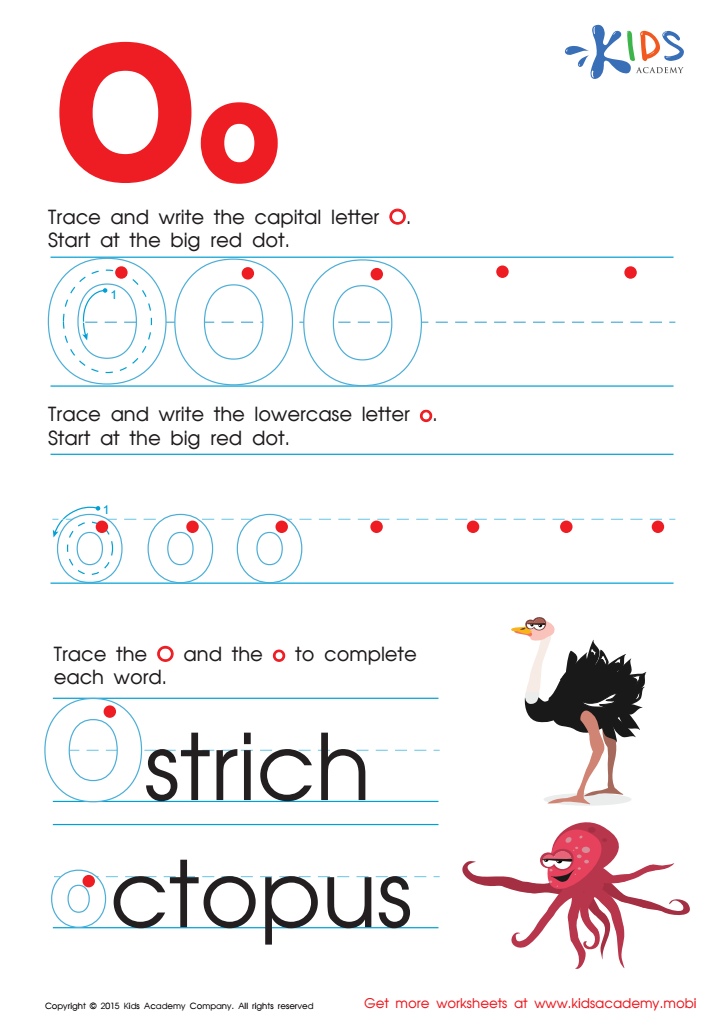
Letter O Tracing Page
Practice writing the letter "O" with our new worksheet. Trace and write the letter several times, starting at the red dot. First do the uppercase letter, then the lowercase. Use the pictures to complete the words "Ostrich" and "octopus". Kids Academy offers more fun alphabet worksheets.
Letter O Tracing Page
Worksheet
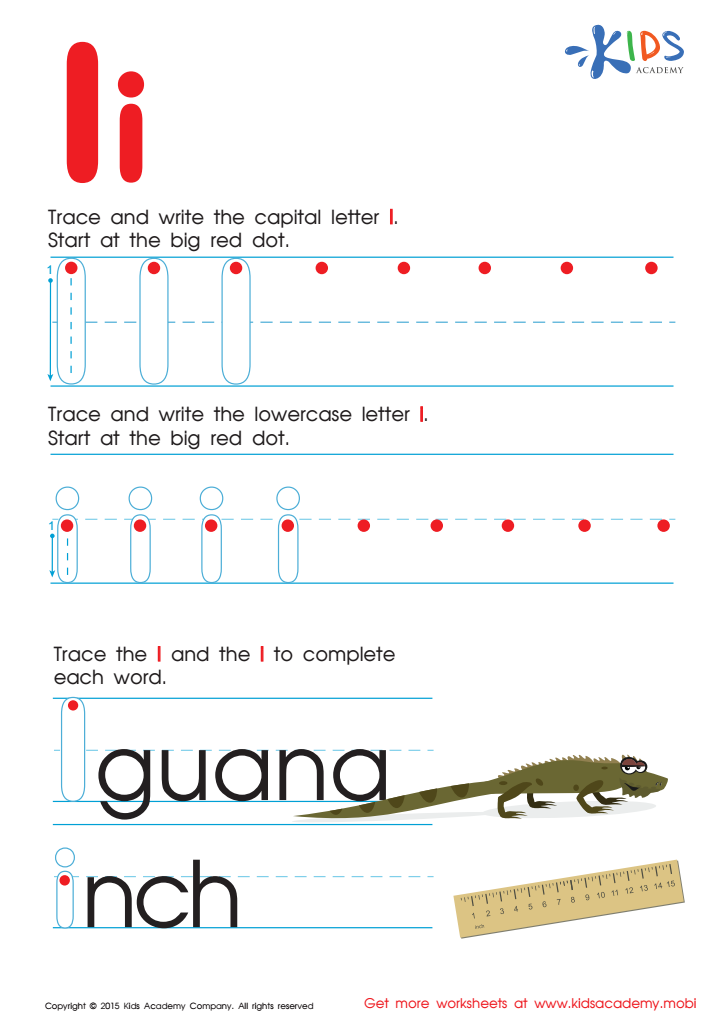
Letter I Tracing Page
Trace and write "I" uppercase and lowercase. An iguana's tail looks like the uppercase "I" and the lowercase "i" is as small as an inch. Make learning fun with Kids Academy worksheets.
Letter I Tracing Page
Worksheet
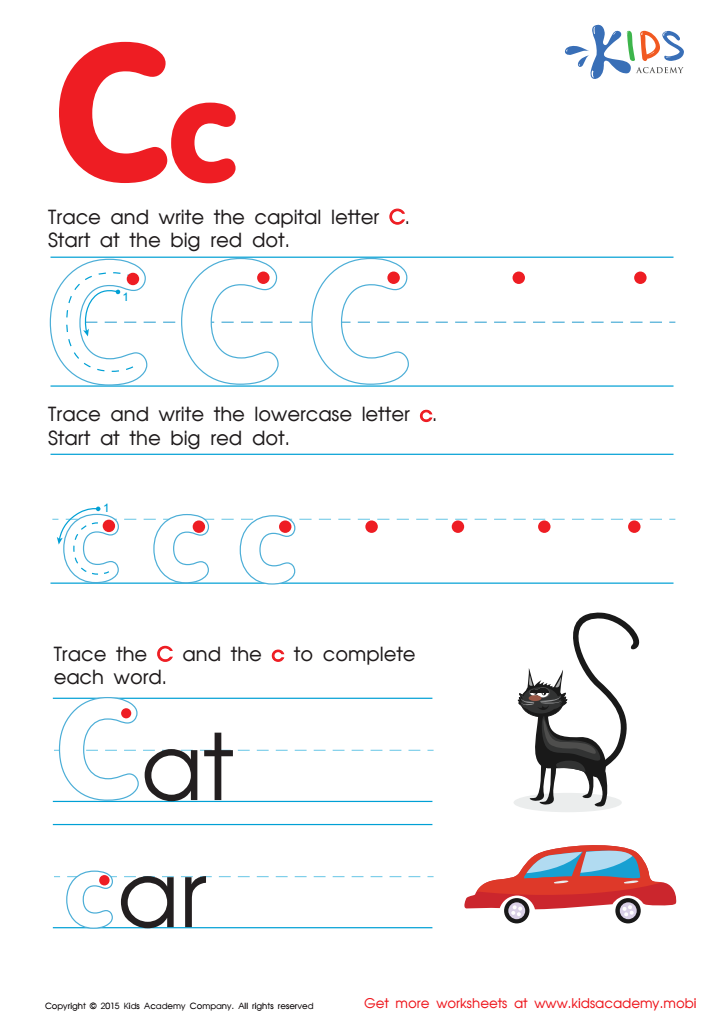
Letter C Tracing Page
Trace and write the letter 'C'! Put the pencil at the red dot then follow the lines – the capital letter first then the lowercase one. Cats love it and so will you! Get more free printables to practice tracing and writing.
Letter C Tracing Page
Worksheet
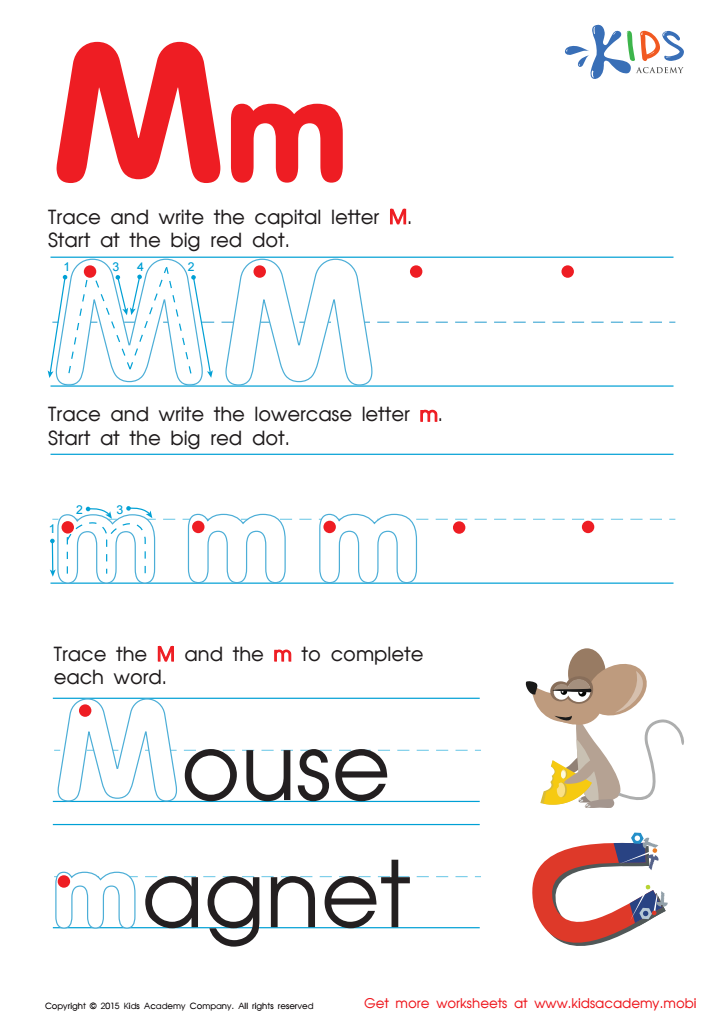
Letter M Tracing Page
Trace and write the letter "M" to help kids learn the alphabet. Start at the red dot and practice several times. Trace the capital letter first, then move on to the lowercase. Complete words like "mouse" and "magnet" in the further exercise. Get more free printables here.
Letter M Tracing Page
Worksheet
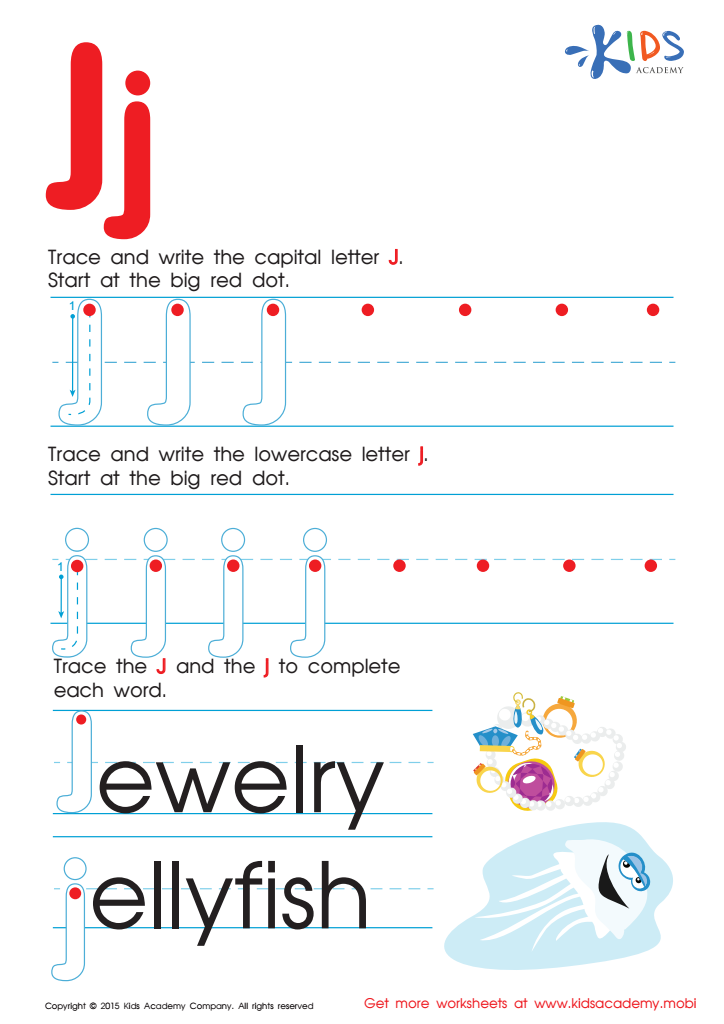
Letter J Tracing Page
Trace and write the letter "J" with our ABC worksheet - start at the big red dot! Have fun completing words like jewelry, jellyfish and more. Check out our kindergarten activities for more alphabet practice.
Letter J Tracing Page
Worksheet
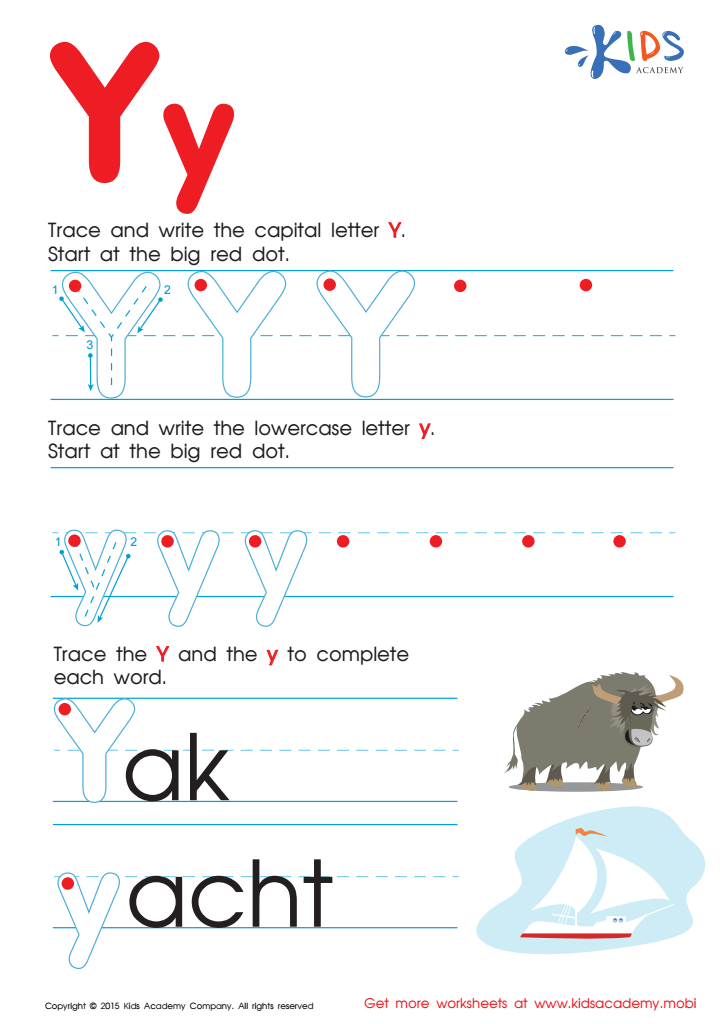
Letter Y Tracing Page
Trace the capital letter "Y" on the red dot, then trace and write the lowercase letter. Complete the words to help the Yak walk and the yacht swim. More worksheets at Kids Academy.
Letter Y Tracing Page
Worksheet
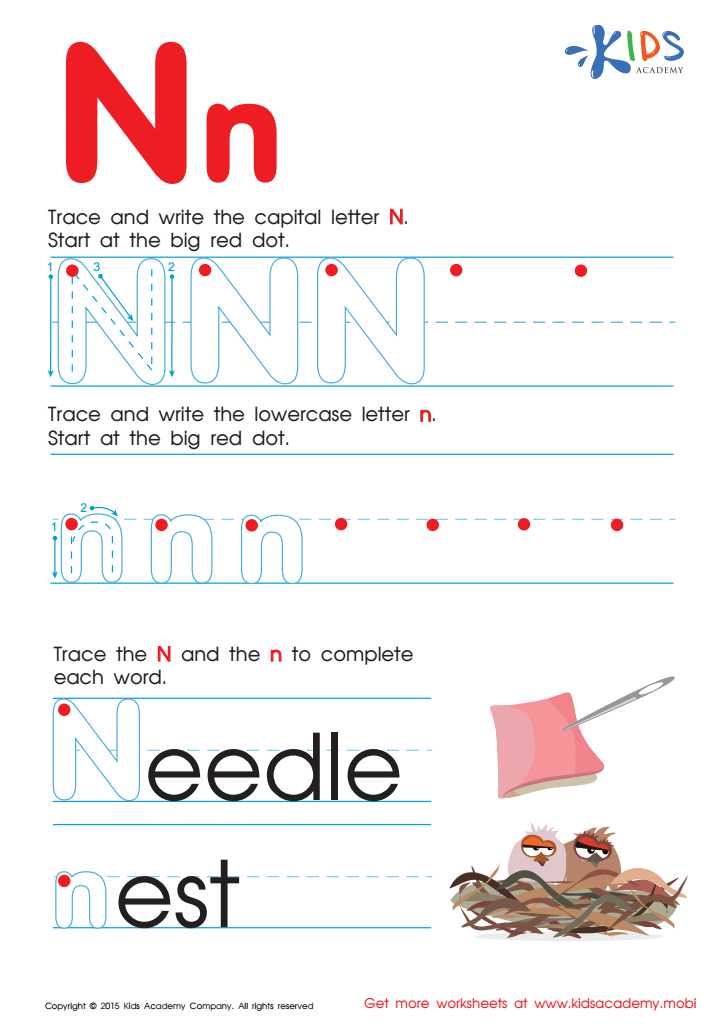
Letter N Tracing Page
Trace and write capital "N" and lowercase "n" several times. Then try forming words like "needle" and "nest". Master letter writing with Kids Academy's collection of ABC worksheets for kindergarten.
Letter N Tracing Page
Worksheet
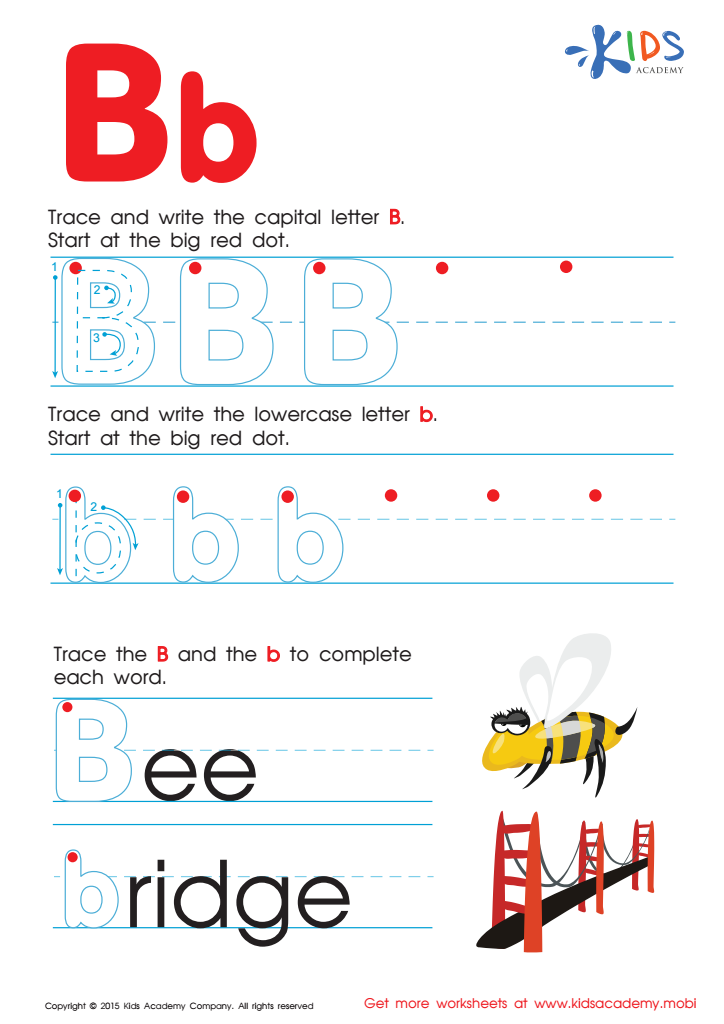
Letter B Tracing Page
Ready to learn the Alphabet? Put your pencil on the red dot and trace & write both capital & lowercase "B". Then have a look at the pictures. Catch the bee, cross the bridge & write the letters to complete the words. More ABC worksheets for kindergarten available!
Letter B Tracing Page
Worksheet
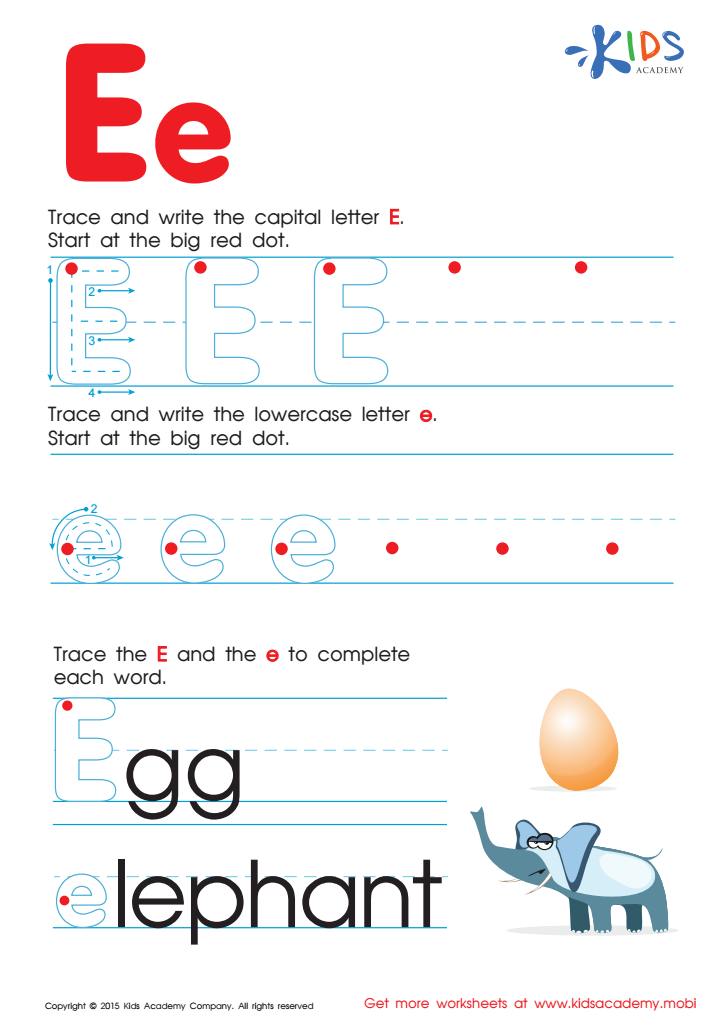
Letter E Tracing Page
Trace and write the uppercase and lowercase "E" starting at the big red dot. Complete words to perfect letter writing. Egg and Elephant must be written carefully. More alphabet worksheets for kindergarten are available for download to spend more time with your children learning.
Letter E Tracing Page
Worksheet
Join Kids Academy for Free
Who is primarily going to use this learning content?






Alphabet recognition and understanding the ABC order are foundational skills for preschool children, serving as crucial stepping stones in their literacy journey. Parents and teachers must prioritize these areas because they form the basis for essential reading and writing capabilities. Recognizing and remembering letter shapes and their respective sounds promote phonemic awareness, enabling children to decode words independently. This early skill fosters a love for reading and boosts confidence in young learners as they begin to recognize words in their environment, such as in signs, books, and labels.
Moreover, knowing the alphabetical order helps in cognitive development by enhancing organizational and sequential thought processes. Children learn to categorize and sort information, aiding in mnemonic development and memory retention. These abilities are not solely isolated to literacy; they extend to numeracy and overall learning patterns, improving problem-solving skills and academic performance across disciplines.
Early exposure to the alphabet also prepares children for future school readiness, allowing them to meet or exceed kindergarten literacy benchmarks. Ensuring strong alphabet recognition through engaging activities such as singing alphabet songs, playing letter-based games, and using interactive storytelling sets a robust educational foundation. By fostering these skills early, parents and teachers significantly contribute to a child's lifelong learning trajectory.