Listening skills Preschool Alphabet Worksheets
5 filtered results
-
From - To
Enhance your child's listening abilities with our engaging Preschool Alphabet Worksheets. Specially designed for young learners, these worksheets aid in building critical listening skills foundational for academic success. Through fun and interactive exercises, children practice recognizing and writing letters while developing sound discrimination, comprehension, and auditory memory. Perfect for early childhood education, our worksheets foster a love for learning and sharpen focus. Available in downloadable, printable formats, they are ideal for both classroom use and at-home practice. Start your little learner on the path to literacy with our comprehensive listening skills resources. Join Kids Academy today and watch your child excel!
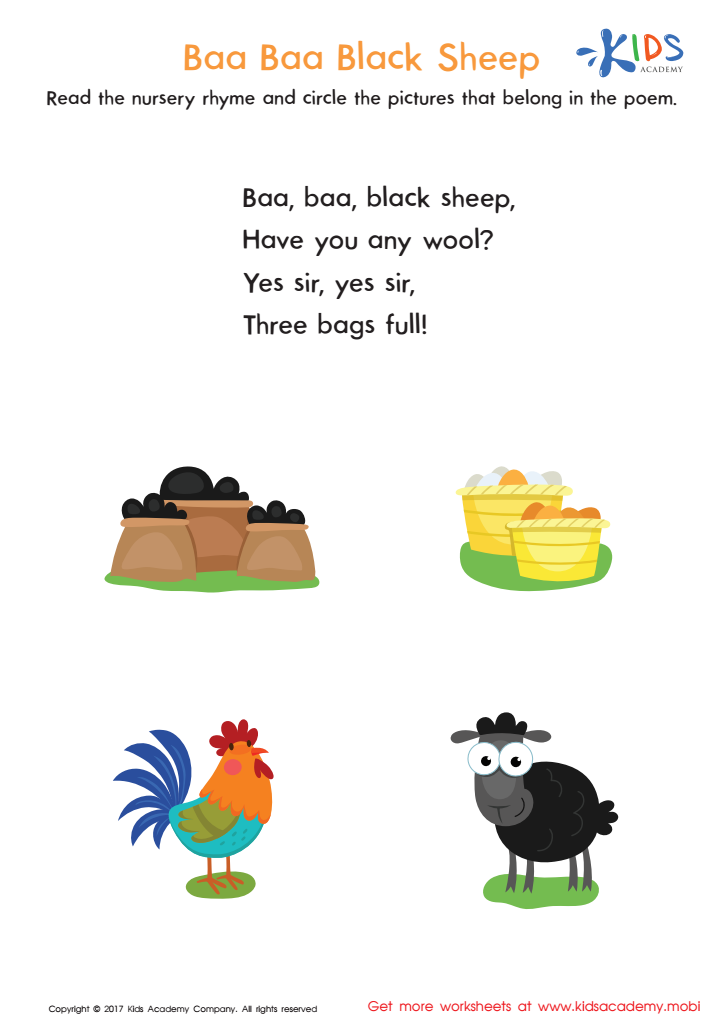
Baa Baa Black Sheep Printable
 Assign to My Students
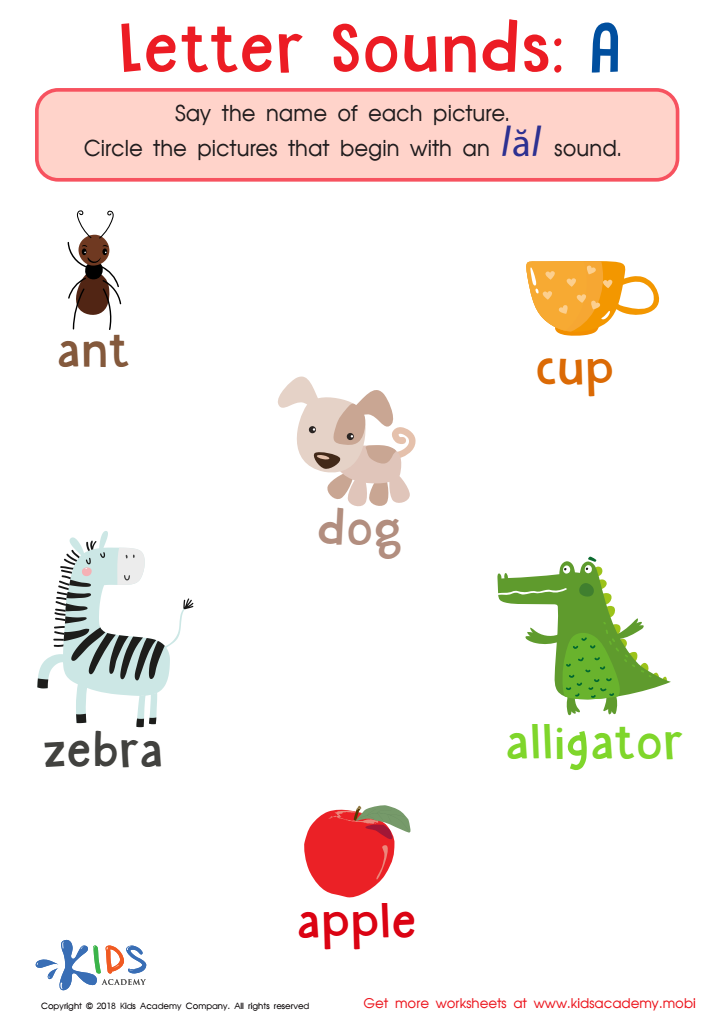
Letter A Sounds Worksheet
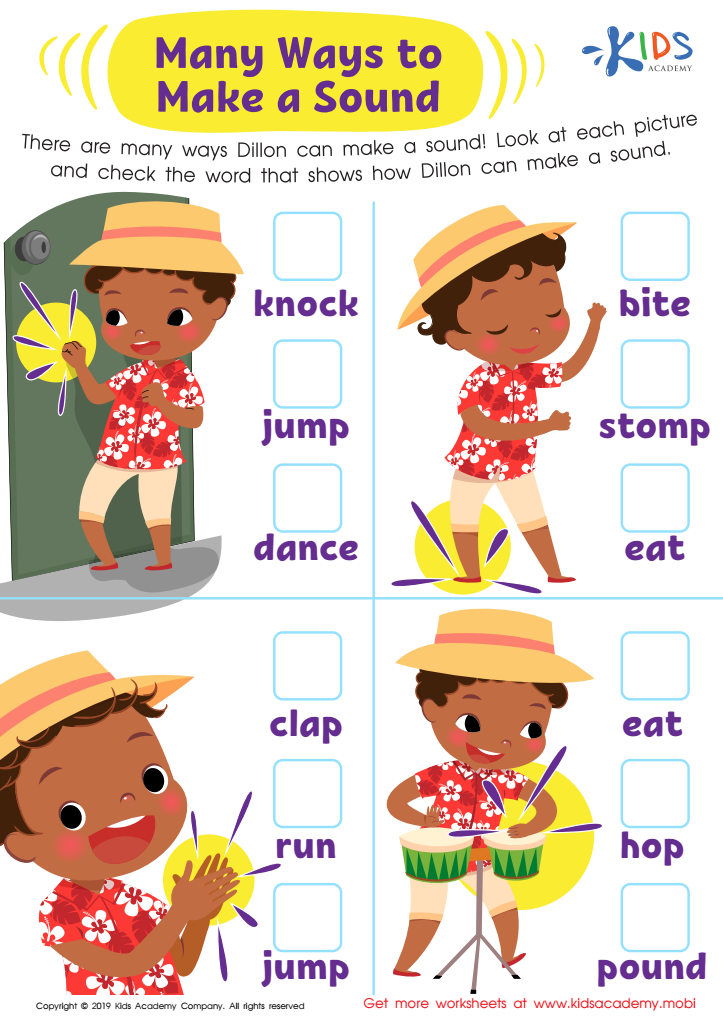
Many Ways to Make a Sound Worksheet
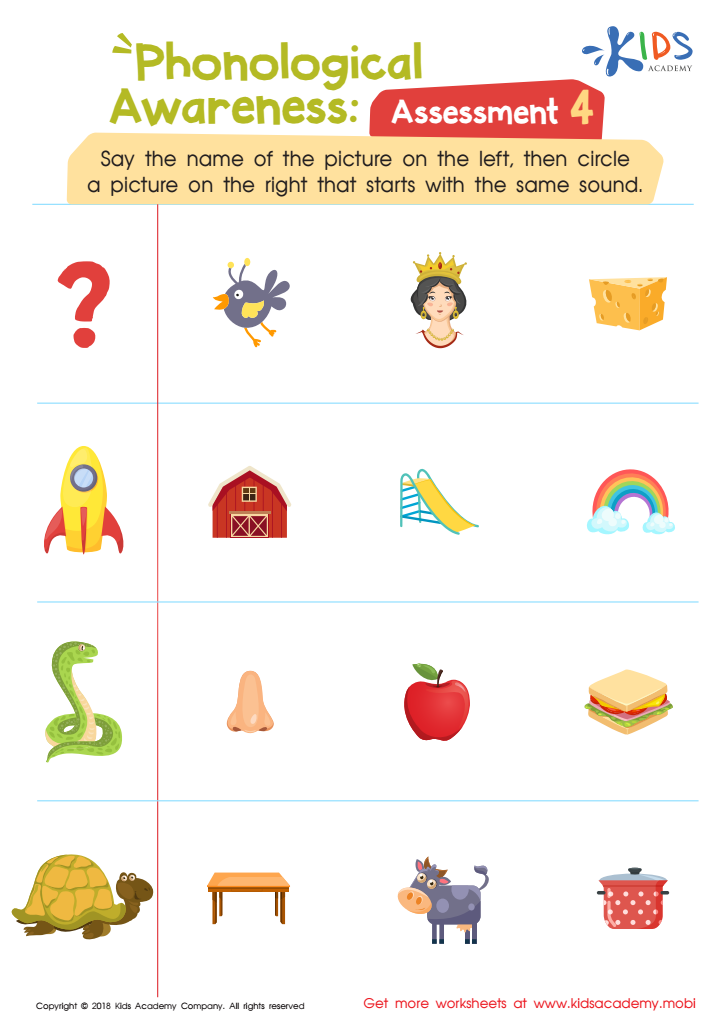
Phonological Awareness: Assessment 4 Worksheet
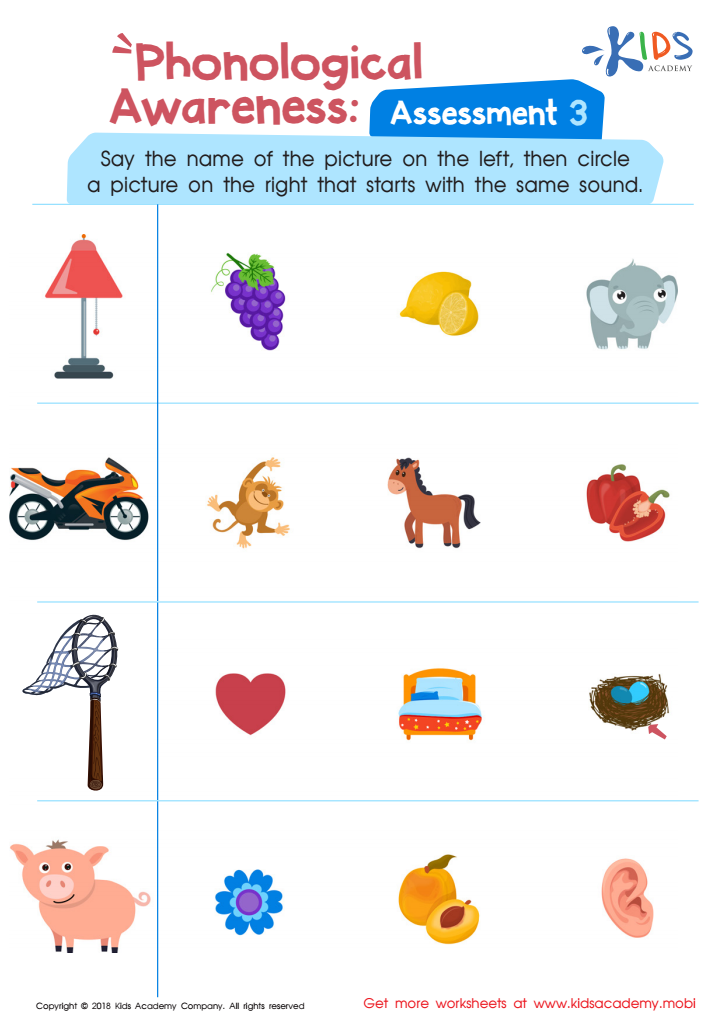
Phonological Awareness: Assessment 3 Worksheet




.jpg)



Listening skills in preschoolers are crucial for their overall language development and academic success. When parents and teachers prioritize and nurture these skills, they set a strong foundation for effective communication, comprehension, and lifelong learning.
At an early age, children are highly receptive to new sounds, words, and expressions. By frequently exposing them to the alphabet through various listening activities, we help them distinguish between different sounds and letters. This phonemic awareness is essential for reading and writing development. For instance, recognizing that the letter 'A' sounds like 'ah' paves the way for understanding how words are formed and pronounced.
Moreover, listening activities that focus on the alphabet also enhance children's attention spans and memory. When a child listens actively to a story or a song about letters, they learn to concentrate, follow instructions, and recall information. These skills are vital for succeeding not only in early education but throughout their school years.
Socially, listening skills contribute to better interactions and relationships. A child who listens well can understand peers and adults better, respond appropriately, and engage in meaningful conversations. This fosters a sense of confidence and belonging.
In summary, investing in preschoolers' listening skills, particularly through alphabet-related activities, lays a critical groundwork for their linguistic, cognitive, and social development.