Phonological awareness Preschool Alphabet Worksheets
7 filtered results
-
From - To
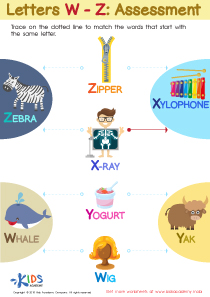
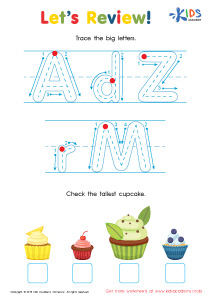
Kickstart your child's reading journey with our Phonological Awareness Preschool Alphabet Worksheets! These engaging, educator-designed activities help young learners recognize, understand, and manipulate sounds within words. Develop essential pre-reading skills through playful exercises, including rhyming, segmenting, and blending phonemes. Our colorful worksheets make learning effortless and enjoyable, laying a solid foundation for future literacy success. Perfect for classroom use or at-home practice, explore a wide range of resources tailored to support your preschooler's phonological awareness and alphabet knowledge. Set the stage for lifelong reading confidence with Kids Academy today!
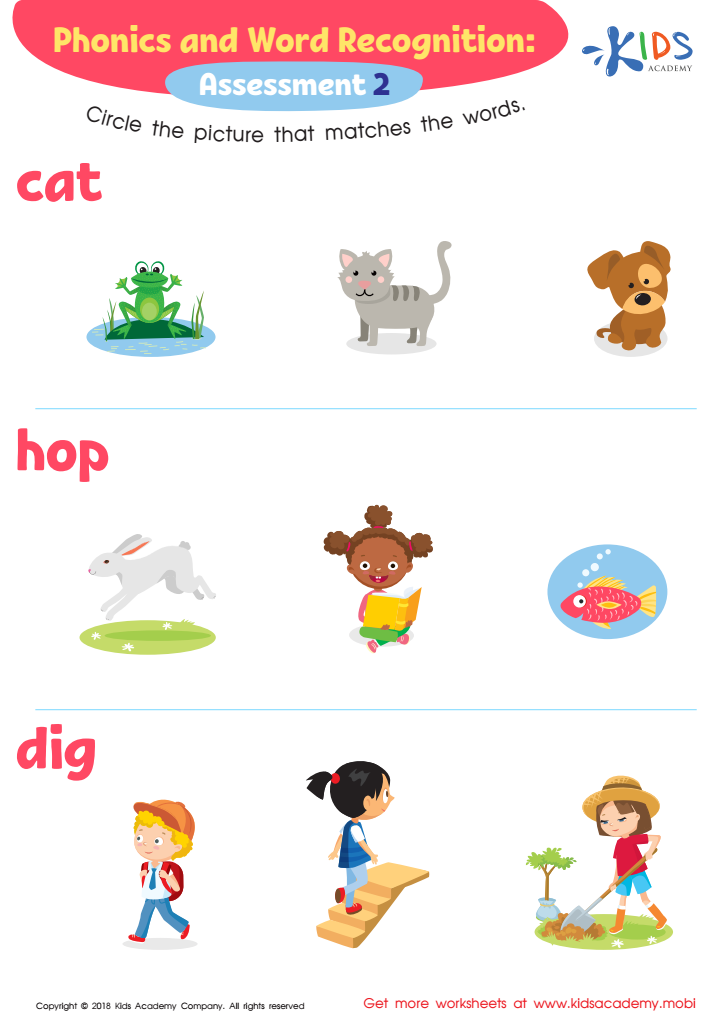
Phonological Awareness: Assessment 2 ELA Worksheet
 Assign to My Students
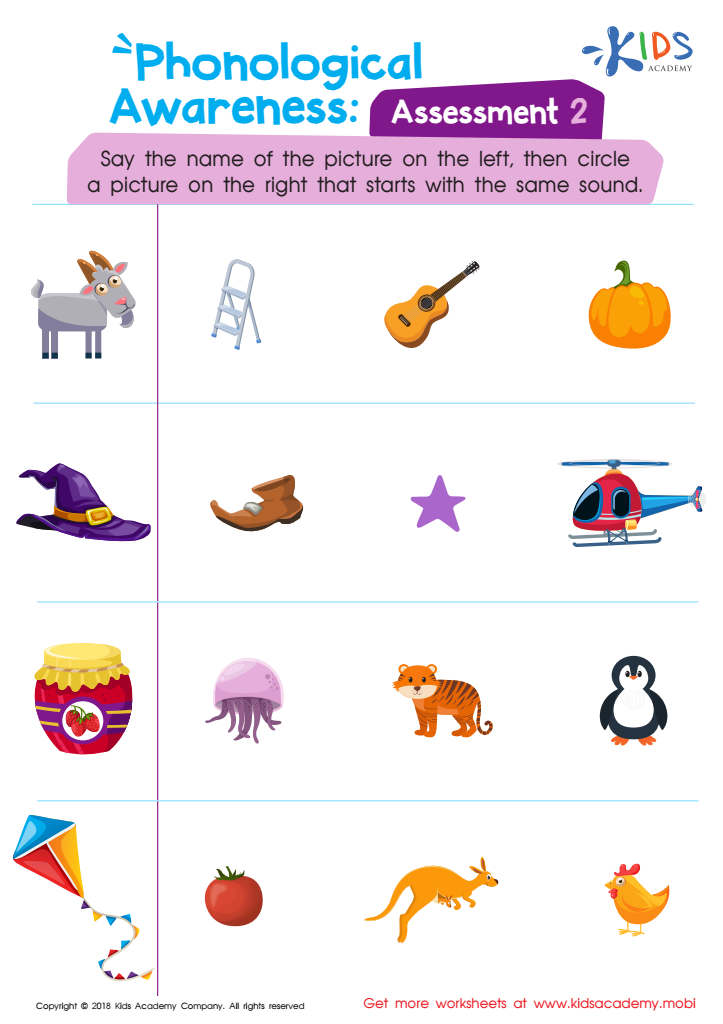
Phonological Awareness: Assessment 2 Worksheet
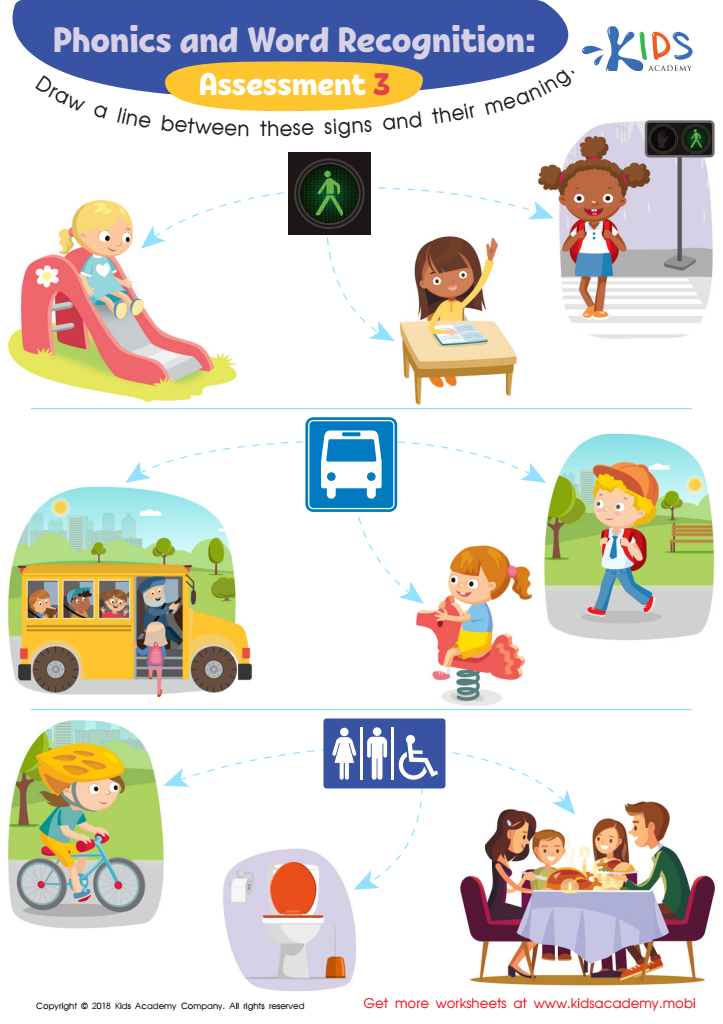
Phonological Awareness: Assessment 3 ELA Worksheet
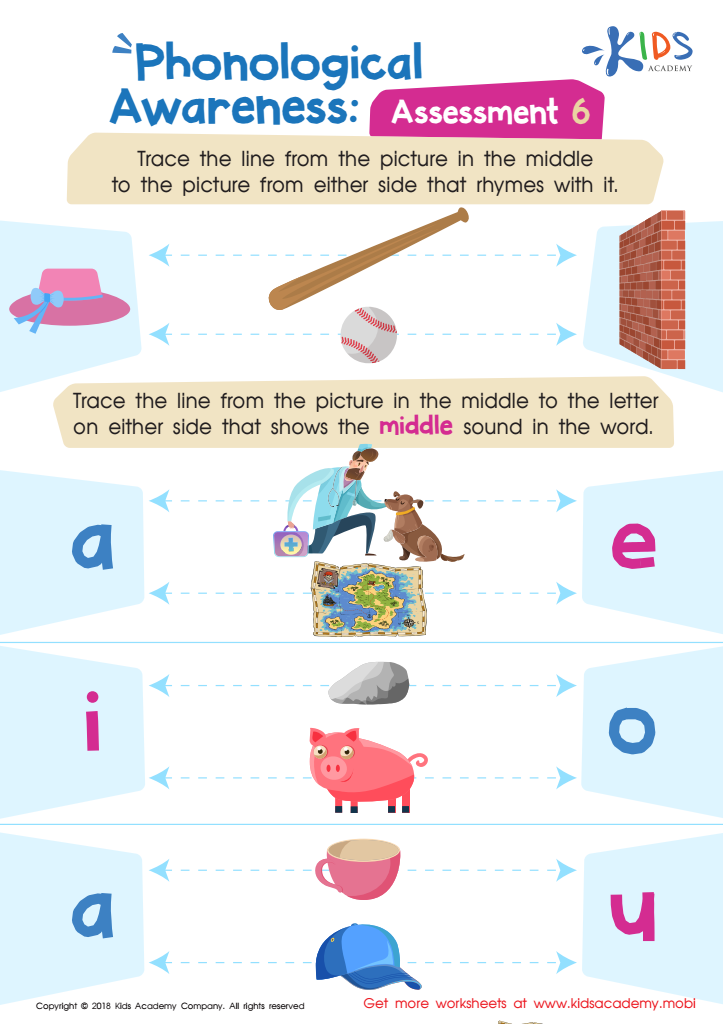
Phonological Awareness: Assessment 6 Worksheet
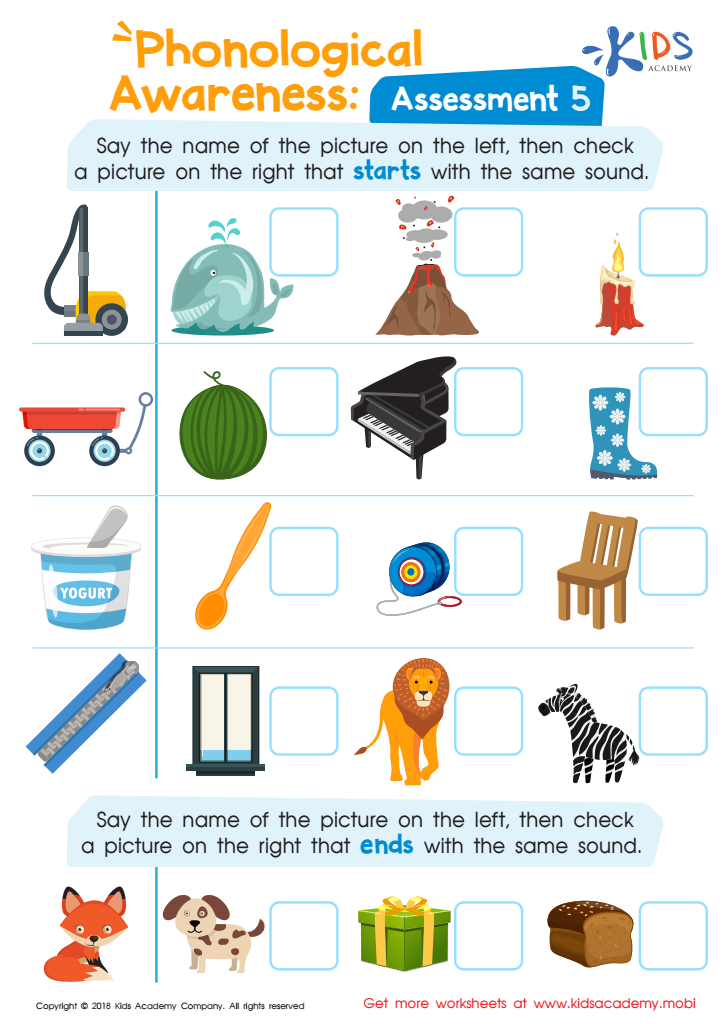
Phonological Awareness: Assessment 5 Worksheet
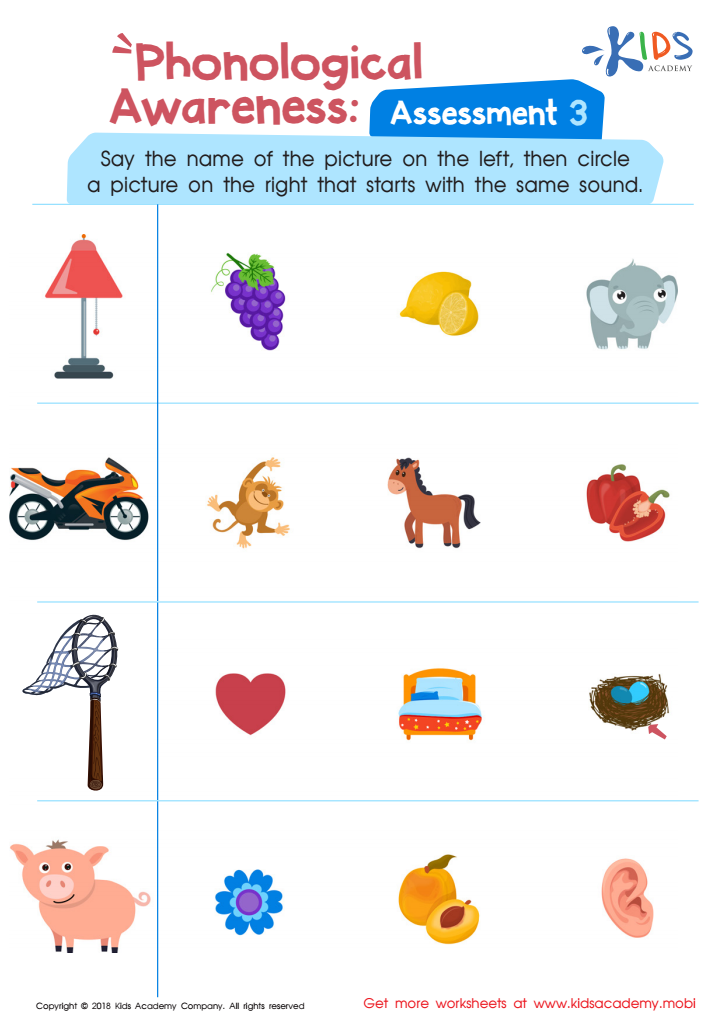
Phonological Awareness: Assessment 3 Worksheet
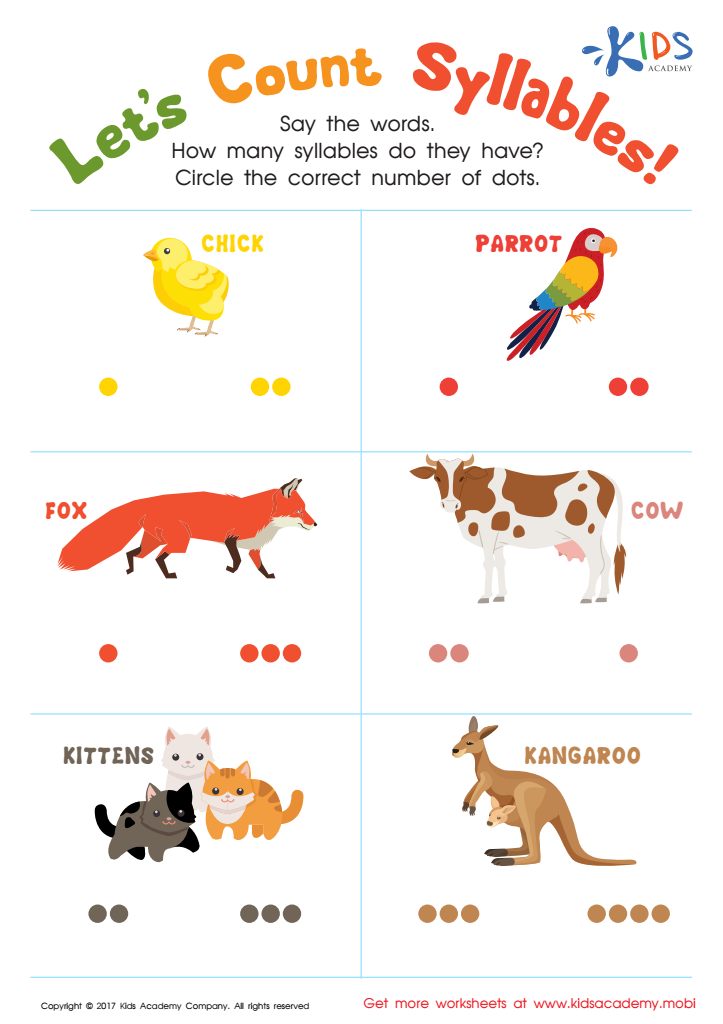
Lets Count Syllables Worksheet








Phonological awareness and the preschool alphabet play crucial roles in a child’s early literacy development, acting as foundational skills for reading and writing. Phonological awareness refers to a child’s ability to recognize and manipulate the sound structures in language, such as rhymes, syllables, and individual phonemes (sounds). It is essential because it helps children understand that spoken words are composed of smaller sound units, an understanding critical for decoding words during reading.
Introducing the alphabet in preschool is equally vital. Familiarizing young children with letters and their corresponding sounds aids in the development of the alphabetic principle – the concept that letters and letter patterns represent sounds in spoken language. This knowledge is fundamental for developing efficient reading and spelling skills.
Parents and teachers should place importance on these early literacy skills because they directly impact future academic success. Research shows that children with strong phonological awareness and alphabet knowledge are more likely to become proficient readers and writers. Engaging children in fun, play-based activities that involve rhyming, segmenting words into sounds, and recognizing letters can foster an early love for reading and boost their confidence. By laying a solid foundation through these skills, parents and teachers can provide children with the tools they need for lifelong learning and literacy achievements.