Sound identification Preschool Alphabet Worksheets
5 filtered results
-
From - To
Help your preschooler master foundational reading skills with our expert-designed Sound Identification Alphabet Worksheets. Perfect for little learners, these worksheets blend interactive activities with engaging visuals to make the process of recognizing letter sounds both fun and effective. Focusing on one letter at a time, our carefully curated exercises support proper pronunciation and phonemic awareness. Each worksheet stimulates auditory and visual learning pathways, setting the stage for long-term reading success. Ideal for home or classroom use, these resources empower children to identify sounds with confidence. Make learning the alphabet a delightful adventure with our Sound Identification Alphabet Worksheets!
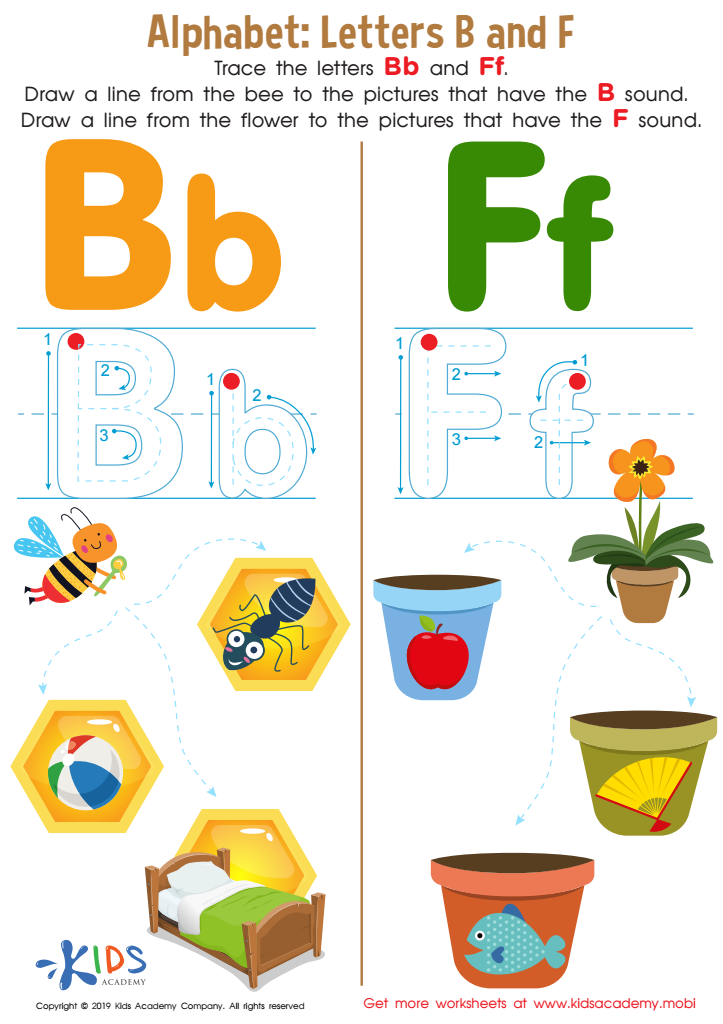
Letters B and F Tracing Worksheet
 Assign to My Students
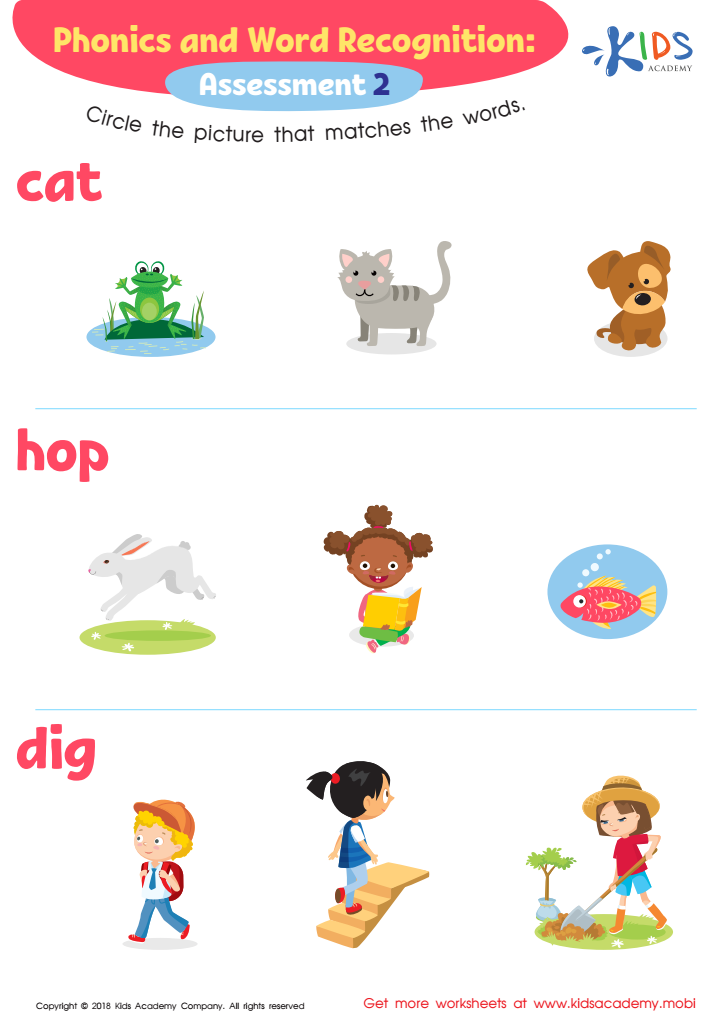
Phonological Awareness: Assessment 2 ELA Worksheet
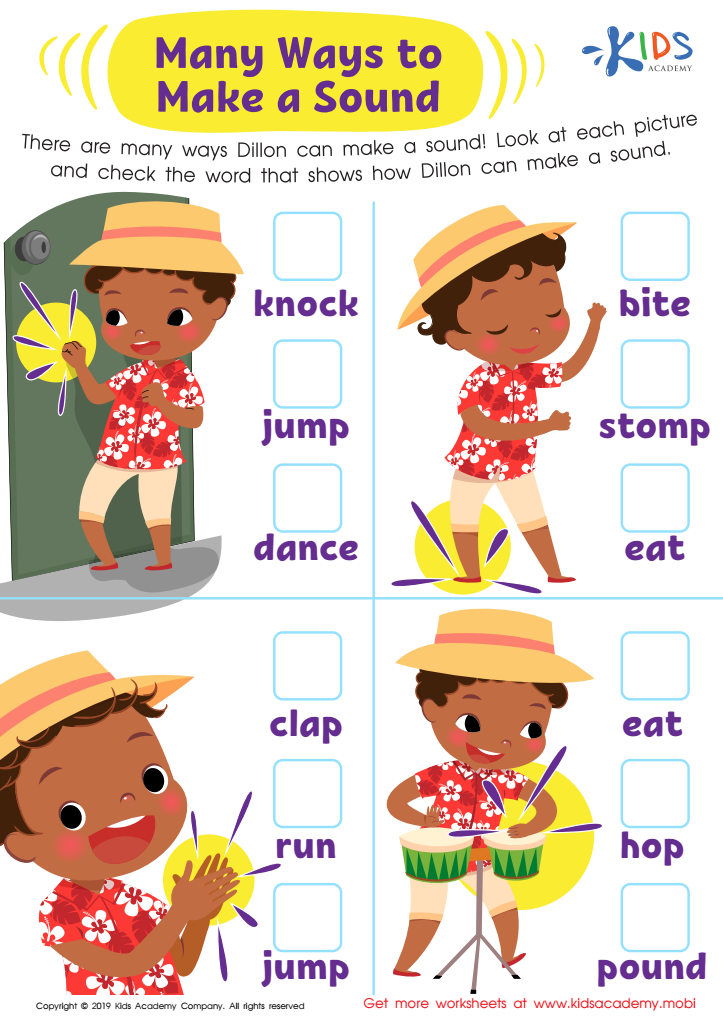
Many Ways to Make a Sound Worksheet
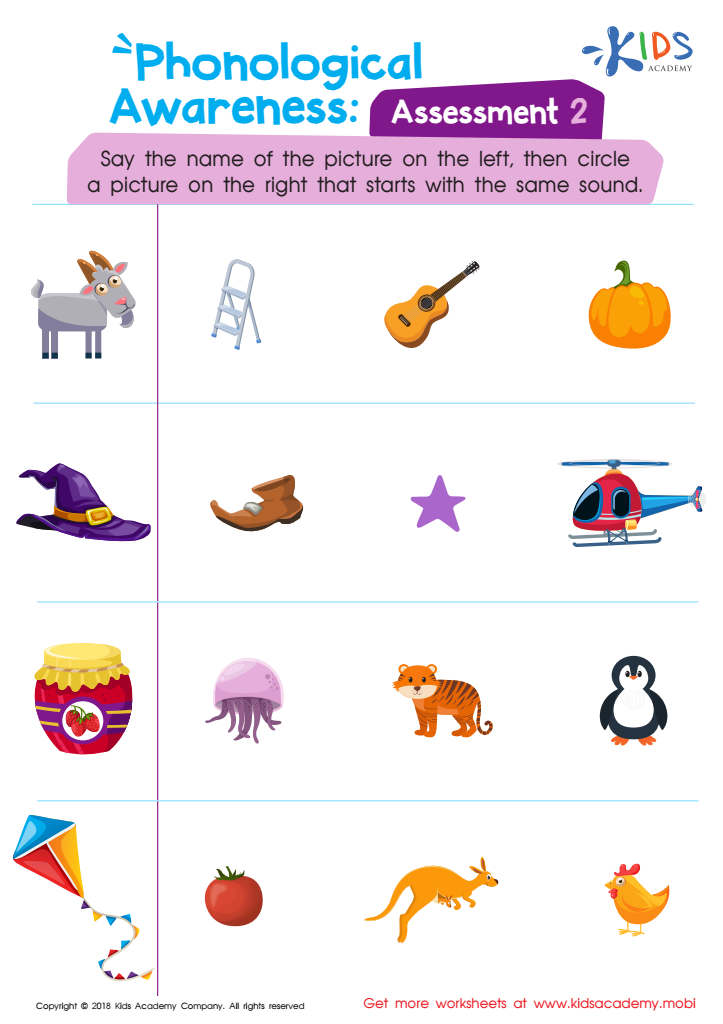
Phonological Awareness: Assessment 2 Worksheet
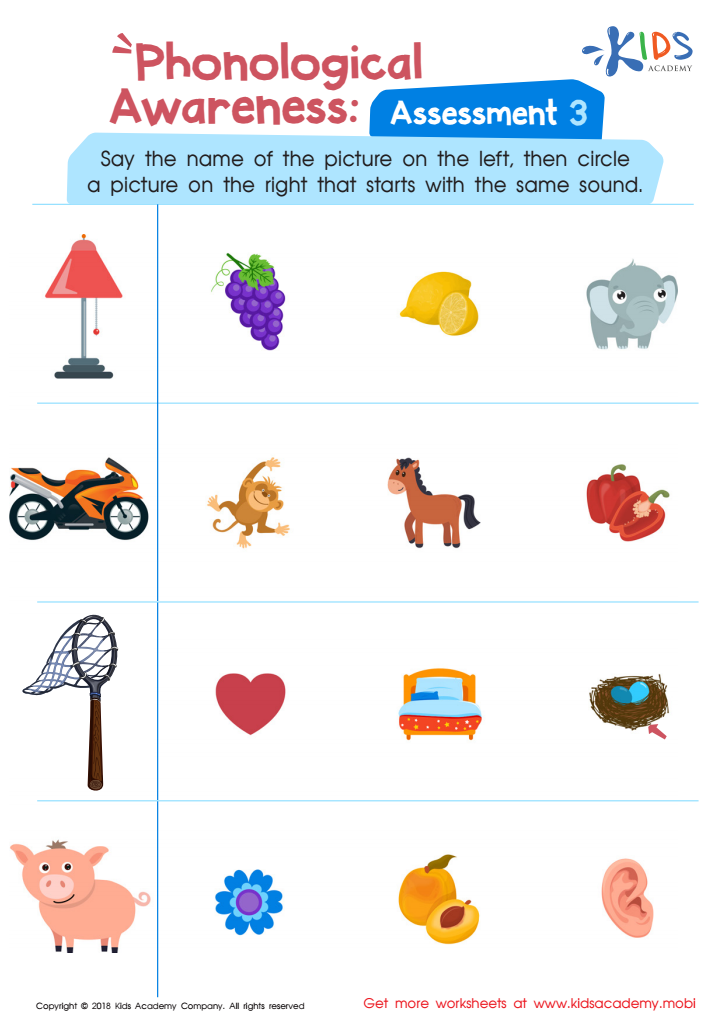
Phonological Awareness: Assessment 3 Worksheet



.jpg)




Sound identification in learning the alphabet is foundational for preschoolers as it serves as the building block for later literacy skills. Parents and teachers should pay attention to this aspect due to several vital reasons.
First, developing strong sound identification skills helps children comprehend the relationship between letters and sounds, which is essential for reading and writing. When kids can quickly recognize and articulate the sounds that letters make, they are better equipped to decode new words, enhancing their reading proficiency.
Second, early success in reading fosters a sense of accomplishment and motivates children to engage more with learning activities. This eagerness can lead to a lasting interest in reading and education, setting them on a path of academic achievement.
Additionally, phonemic awareness, which includes sound identification, is closely linked to spelling. Children who can identify individual sounds within words are more likely to understand spelling patterns, aiding their ability to write correctly.
Engagement with sound identification also strengthens cognitive development, including memory, attention, and auditory skills. These cognitive benefits further enhance learning across different subjects.
Therefore, investing time in sound identification activities helps create a solid foundation, ensuring children develop essential literacy skills that influence their overall academic journey and lifelong learning.