Boost your child's cognitive development with our Analytical Skills Preschool Worksheets. Designed for early learners, these engaging activities focus on enhancing critical thinking, problem-solving, and logic. Whether it's puzzles, pattern recognition, or simple comparisons, each worksheet fosters analytical abilities that are fundamental for academic success. Perfect for preschool classrooms or at-home practice, our printable worksheets make learning fun and effective. Help your child build a strong foundation in analytical skills, setting them up for future achievement. Visit Kids Academy and explore a variety of tailored exercises that cater to your preschooler's learning needs.

Check out this FREE Preschool "Analytical skills" Trial Lesson!

Describe Connection Between Two Events/ Pieces of Information in a Text

Favorites
With answer key
Interactive
  • Preschool
  • Analytical skills
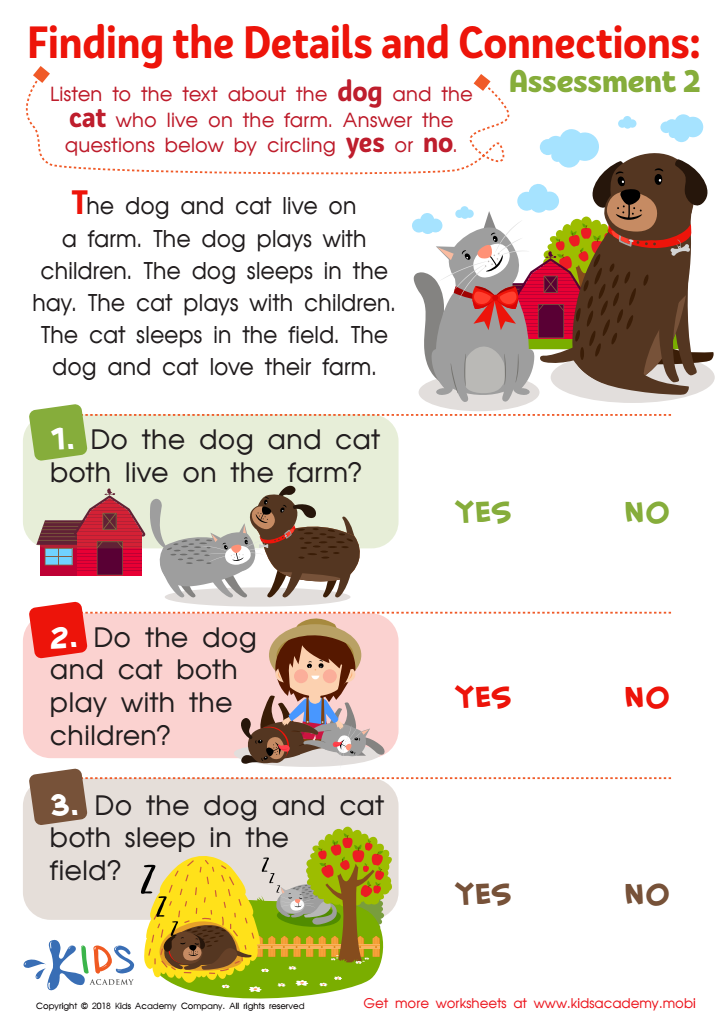
Finding the Details and Connections: Assessment 2 Worksheet

Finding the Details and Connections: Assessment 2 Worksheet

Does your child love animals? If you have pets, they'll relate to the text in this worksheet. Read it aloud to them and help them answer the simple questions by circling yes or no. The story is about a dog and cat living on a farm. Let your child read it aloud to you if they can.
Finding the Details and Connections: Assessment 2 Worksheet
Worksheet
Growing Jamestown Worksheet

Growing Jamestown Worksheet

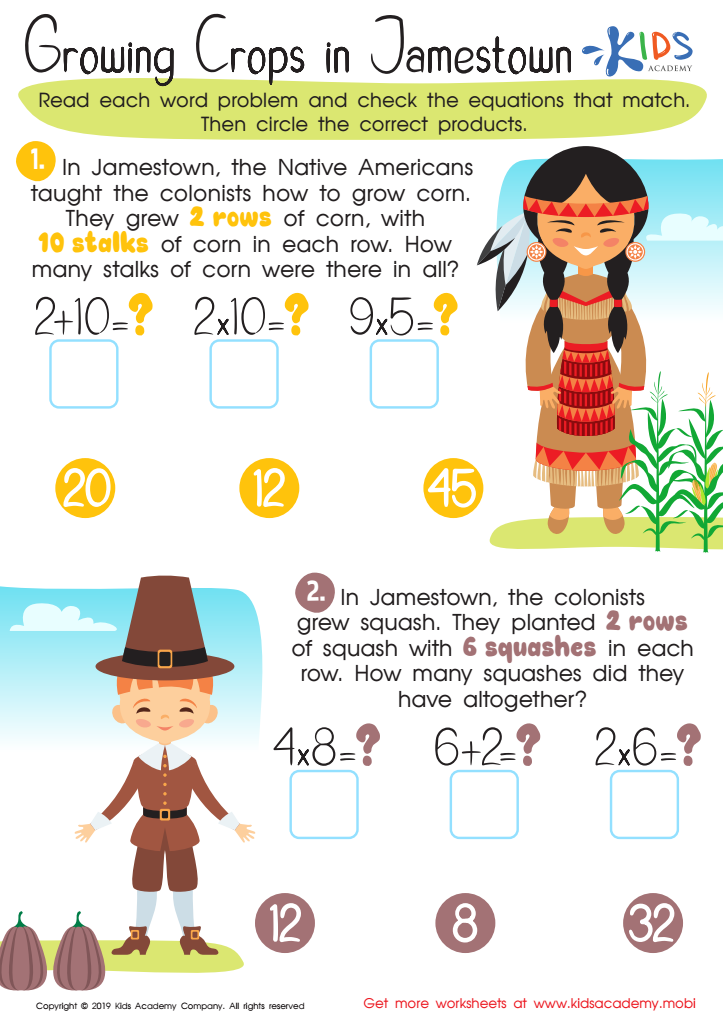
This exciting multiplication worksheet from Kids Academy uses American history facts as its theme. Kids learn about Native Americans helping early Americans at Jamestown, then read the word problems, match the equations and solve for the product. Finally, circle the correct answer!
Growing Jamestown Worksheet
Worksheet
Walk In the Woods: Finding Connections Worksheet

Walk In the Woods: Finding Connections Worksheet

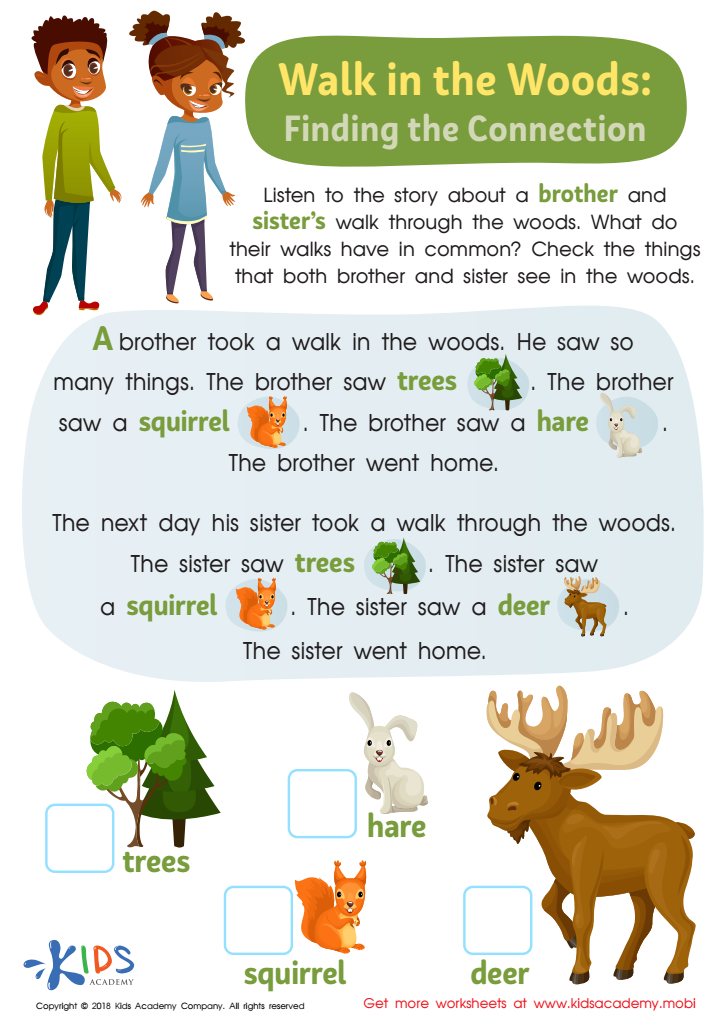
Brother and sister took a walk in the woods to connect with nature and get some exercise. As they went, they noted different things like birds and plants, which they share in this story. Read it to your little ones, and help them check off the items the two saw. It's a great way to learn about nature and enjoy the outdoors.
Walk In the Woods: Finding Connections Worksheet
Worksheet
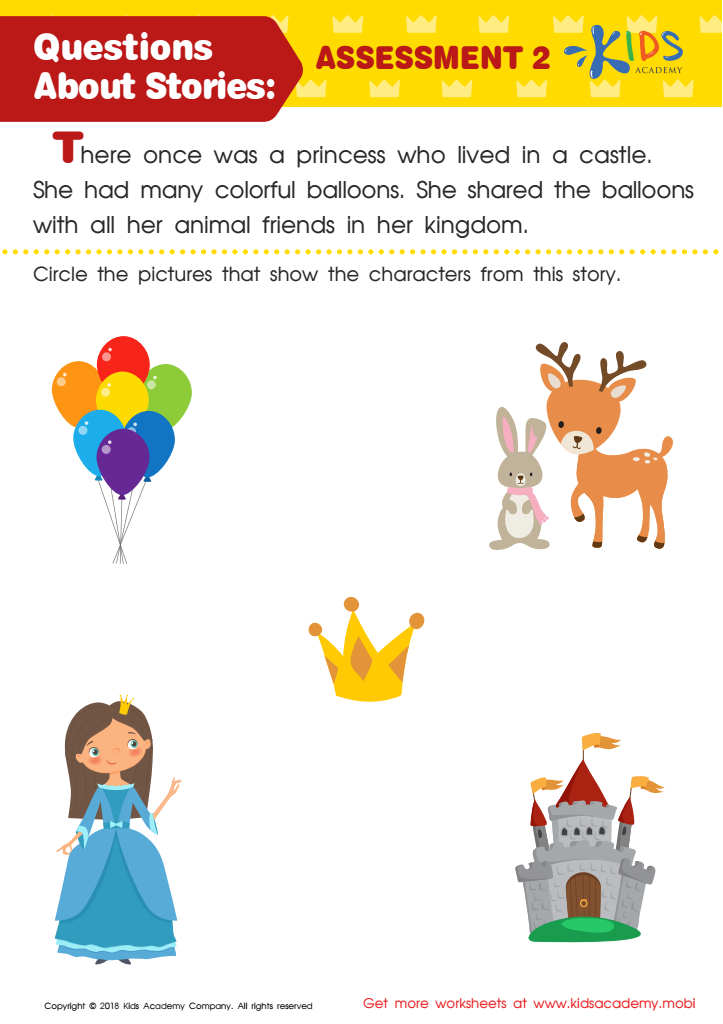
Questions About Stories: Assessment 2 Worksheet

Questions About Stories: Assessment 2 Worksheet

Talk to your child about what a princess is and what activities they associate with that word. Then, read the story to them and help them identify characters in the pictures. Look out for details and ask them questions to ensure they understand.
Questions About Stories: Assessment 2 Worksheet
Worksheet
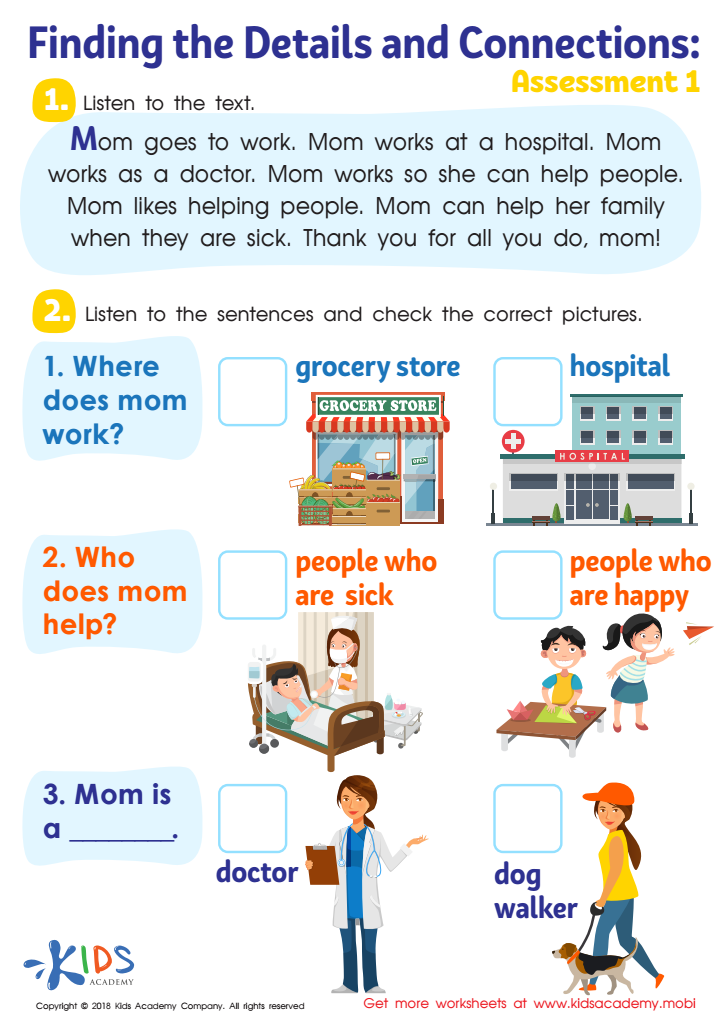
Finding the Details and Connections: Assessment 1 Worksheet

Finding the Details and Connections: Assessment 1 Worksheet

Ask your students what their parents do for a job. Do they know what profession their mom is in and where she works? Professionals have places they go to do their job. In this task, Mom goes to a hospital and is a doctor. Read the text and help them check the right pictures.
Finding the Details and Connections: Assessment 1 Worksheet
Worksheet
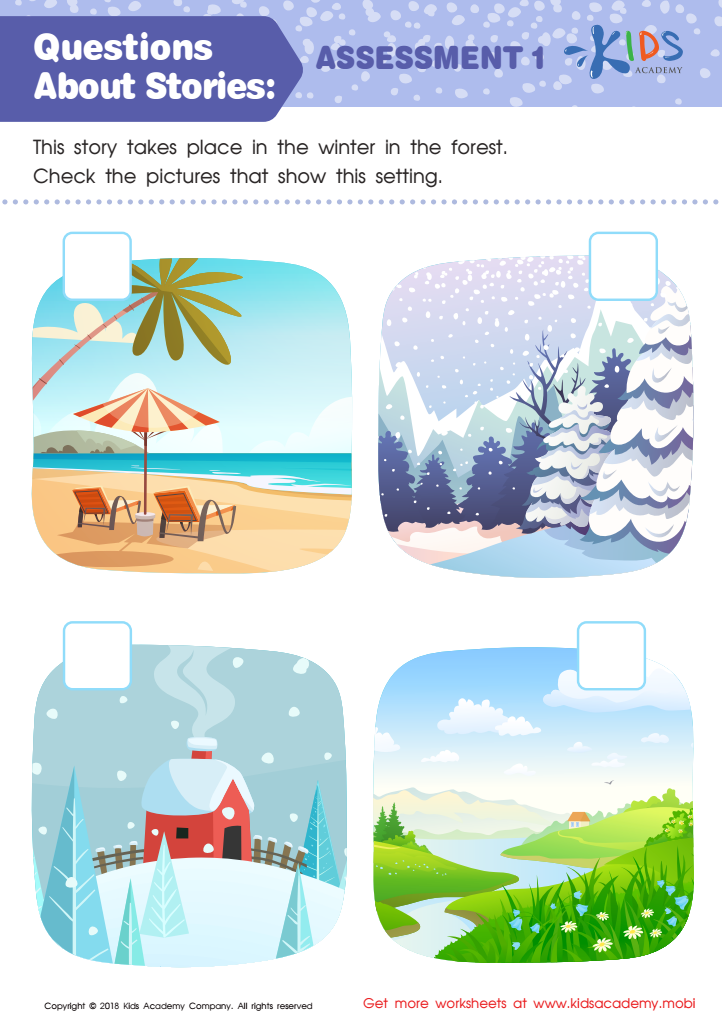
Questions About Stories: Assessment 1 Worksheet


Questions About Stories: Assessment 1 Worksheet

Winter brings snow, cold, short days, and darkness. Schools can even close due to heavy snow. Ask your child what their favourite winter activities are and what color they associate with 'winter'. This worksheet takes place in a winter forest. Look at the 4 pictures with your child, and help them identify which one shows the correct setting.
Questions About Stories: Assessment 1 Worksheet

Worksheet


Parents and teachers should deeply care about developing analytical skills in preschoolers because these skills form the foundation for critical thinking, problem-solving, and decision-making abilities that children will use throughout their lives. Analytical skills help children understand how to break down complex problems into smaller, more manageable parts, enhancing their cognitive development. At a young age, fostering these abilities can improve not only academic performance but also everyday life skills.

Introducing analytical thinking early encourages curiosity and a love for learning. Preschoolers who can analyze situations and make sense of their experiences are more likely to ask questions, seek out information, and engage meaningfully with the world around them. This sets a precedent for a lifelong pursuit of knowledge and intellectual growth.

Moreover, strong analytical skills are often linked to better communication and social interactions. As children learn to reason and solve problems, they also learn how to articulate their thoughts and understand others' perspectives, leading to improved interpersonal relationships.

Finally, in an ever-evolving world that highly values innovation and adaptability, children with well-developed analytical skills are better equipped to navigate future challenges and opportunities. Investing in these skills during the preschool years provides a crucial head start for personal and academic success.