Logical Reasoning Preschool Worksheets - Page 2
25 filtered results
-
From - To








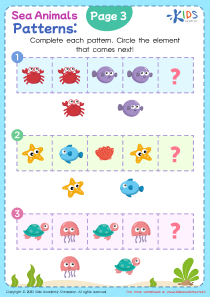
Parents and teachers should care about Logical Reasoning in preschool because it lays a crucial foundation for critical thinking and problem-solving skills early in a child's development. During these formative years, children are naturally curious and eager to explore their environment. Engaging them in activities that promote logical reasoning helps deepen their understanding of cause and effect, patterns, and categorization.
Logical reasoning exercises, such as puzzles, sequencing activities, and matching games, stimulate cognitive development, enhancing memory and attention span. They encourage children to think independently, analyze situations, and draw conclusions, equipping them with tools necessary for academic success in later years. Additionally, developing these skills can foster creativity and innovation, allowing children to approach problems from various angles.
Moreover, promoting logical reasoning nurtures social-emotional skills as children learn to collaborate with peers, share ideas, and resolve conflicts through logical discussions. Ultimately, early exposure to logical reasoning cultivates lifelong learners who are prepared to navigate an increasingly complex world. By prioritizing logical reasoning activities, parents and teachers set the stage for their children's future educational journeys and overall development.