Rhyming skills Preschool Worksheets
5 filtered results
-
From - To
Enhance your preschooler's phonemic awareness with our engaging Rhyming Skills Worksheets! These printable activities are designed to make learning fun while helping young learners recognize and produce rhyming words. With colorful illustrations and interactive exercises, our worksheets encourage creativity, critical thinking, and vocabulary development. Ideal for home or classroom use, these resources support early literacy skills through playful learning. Watch your child gain confidence as they explore sounds and patterns in words! Perfect for preschool educators and parents alike, our Rhyming Skills Worksheets pave the way for a strong foundation in reading. Start nurturing your child's love for language today!
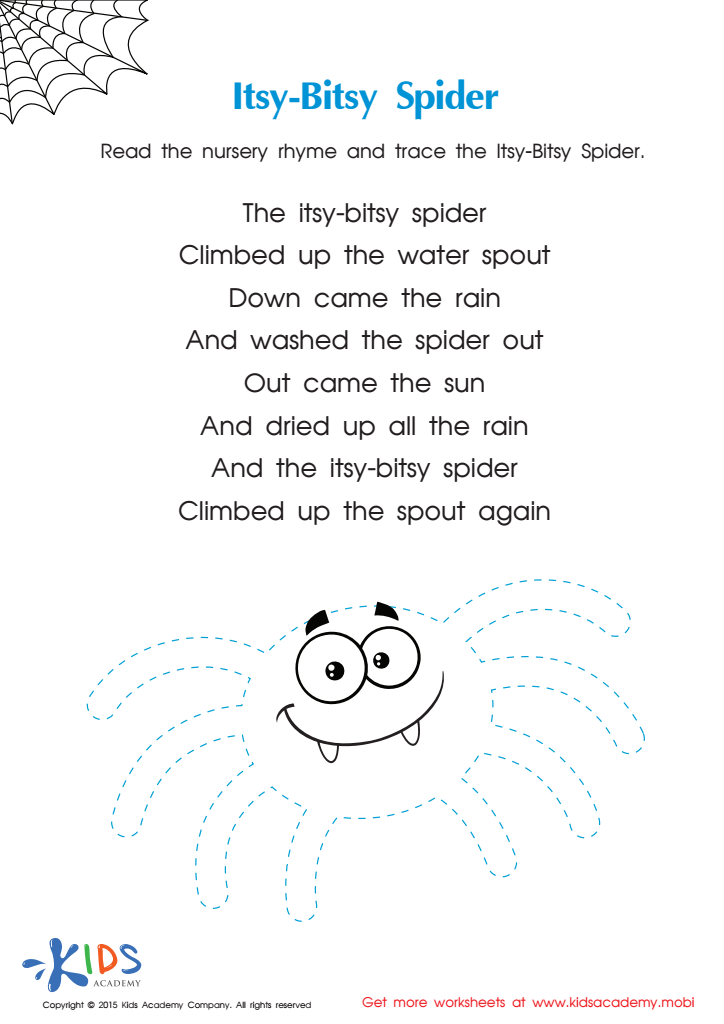
Itsy Bitsy Spider Nursery Rhyme PDF Worksheet
 Assign to My Students
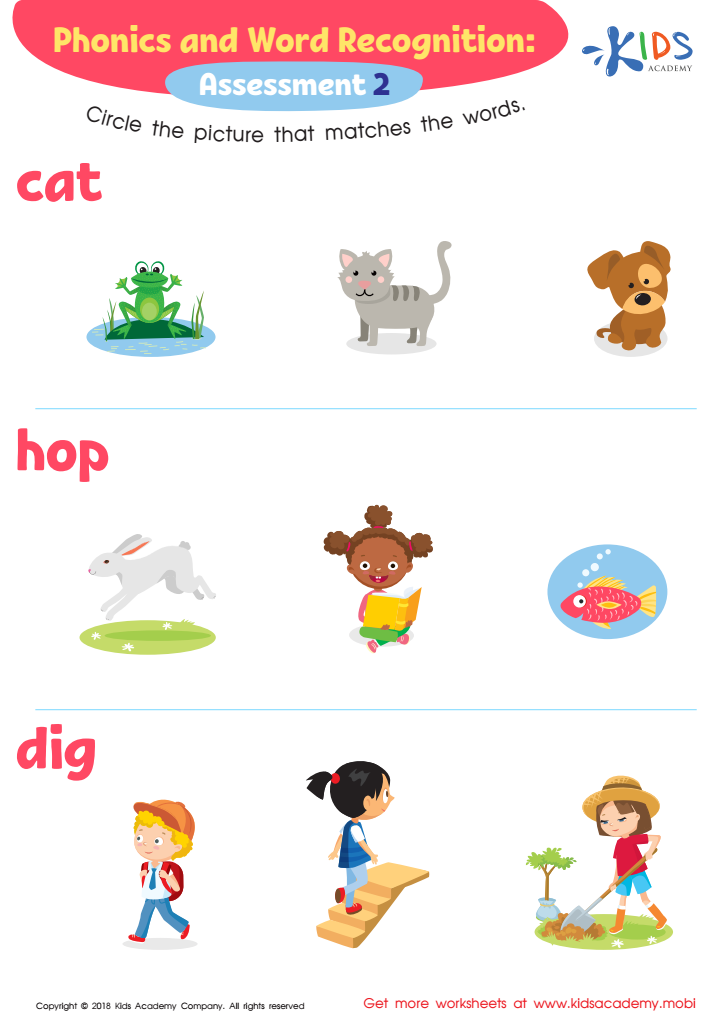
Phonological Awareness: Assessment 2 ELA Worksheet
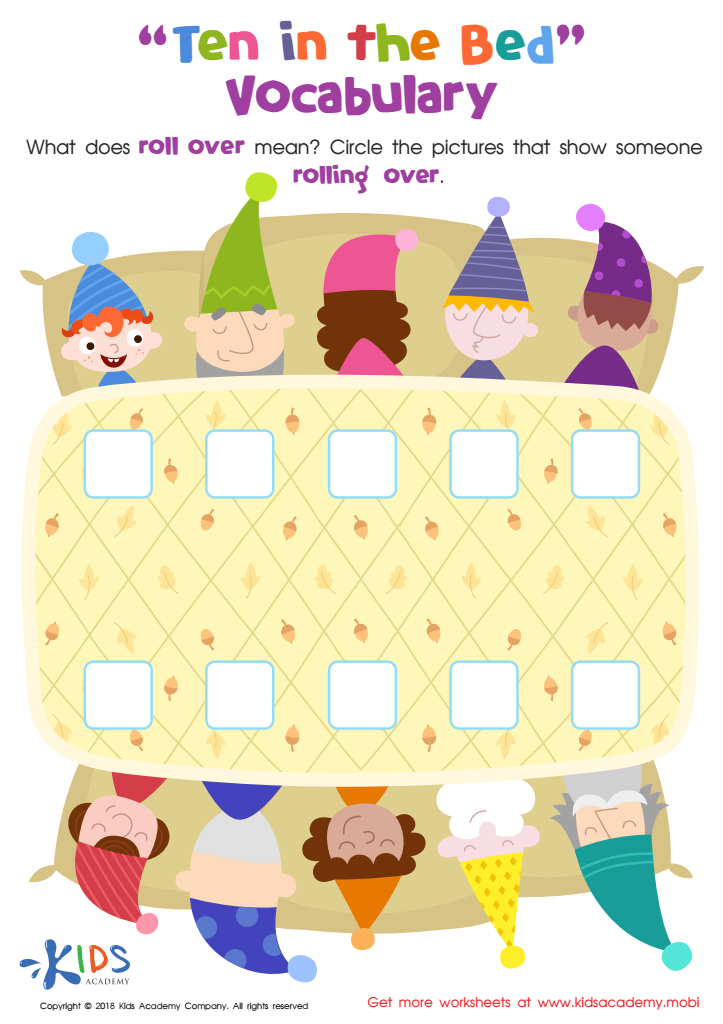
Ten in the Bed: Vocabulary Worksheet
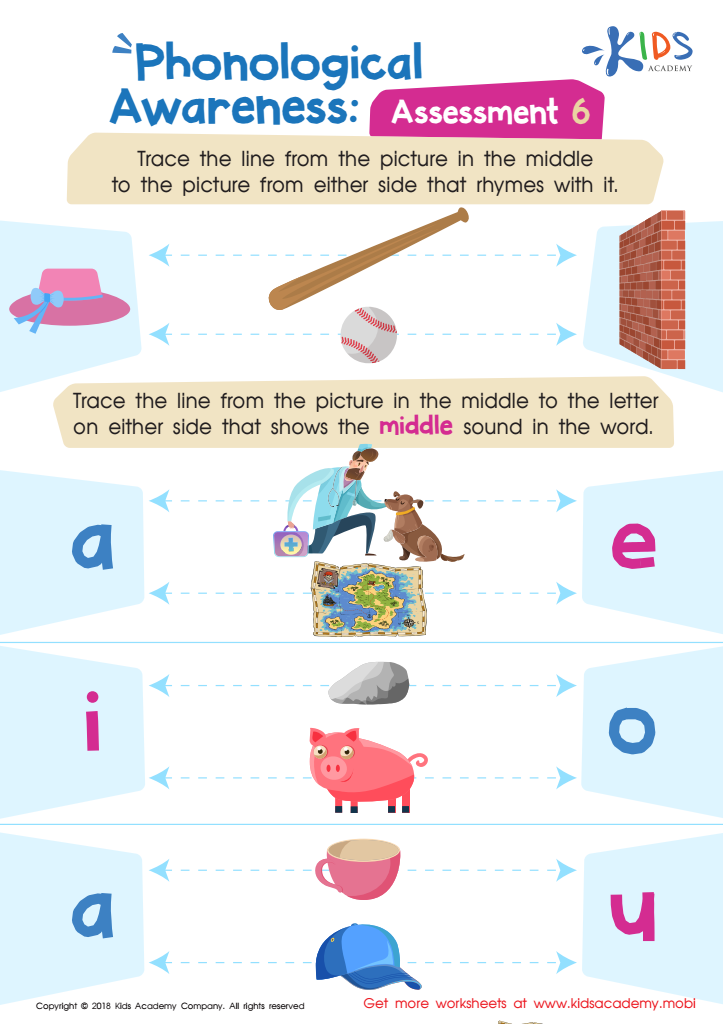
Phonological Awareness: Assessment 6 Worksheet
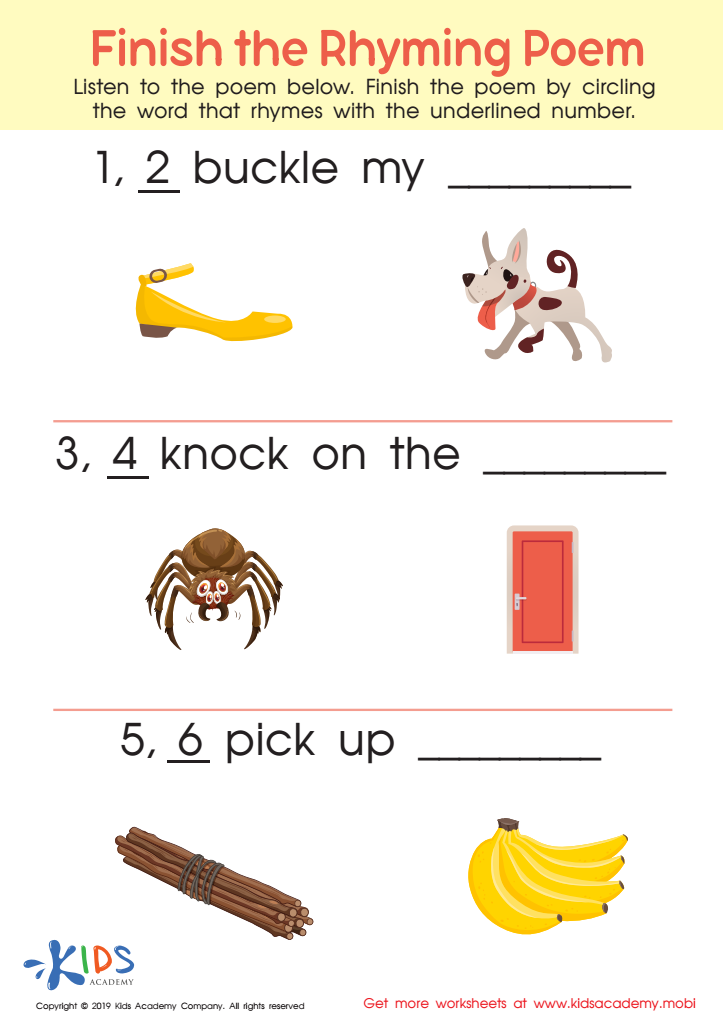
Finish Rhyming Poem Worksheet






.jpg)

Rhyming skills are fundamental in preschool education, as they lay the groundwork for children’s literacy development. Engaging with rhymes helps young learners recognize and produce sounds, fostering phonemic awareness—a crucial skill for reading. When children can identify and manipulate syllables, they gain confidence in their reading abilities and are better prepared for future language tasks.
Furthermore, rhyming activities enhance vocabulary and language skills. By exploring words that sound alike, children expand their word bank and learn new terms in a fun, interactive way. This not only promotes language diversity but also supports spelling skills.
Additionally, rhyming nurtures cognitive development. It encourages critical thinking as children learn to make connections between words, patterns, and meanings, improving their overall cognitive flexibility. Rhymes also contribute to memory retention; catchy phrases are easier to remember, which can aid language acquisition.
Parents and teachers should prioritize rhyming skills as these activities create a playful, engaging learning environment that nurtures essential literacy skills. Early exposure to rhyming sets a positive foundation for reading and writing, ultimately igniting a love for language that can benefit children throughout their education and beyond.