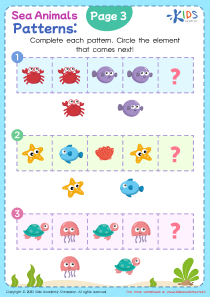
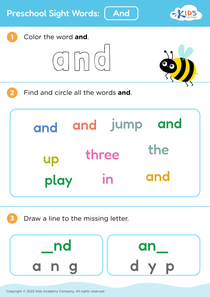
Sound identification Preschool Worksheets
5 filtered results
-
From - To
Discover our engaging Sound Identification Preschool Worksheets, designed to enhance young learners’ phonemic awareness! These interactive printables help children recognize and distinguish various sounds, enabling them to build essential early literacy skills. Our thoughtfully crafted activities feature lively illustrations that make learning fun and motivating. From matching sounds to identifying starting sounds in words, these worksheets cater to diverse learning styles. Perfect for teachers and parents, our resources provide a comprehensive approach to sound identification through play-based learning. Foster a love for reading in your preschooler while laying a solid foundation for future language successes with our expertly designed worksheets!
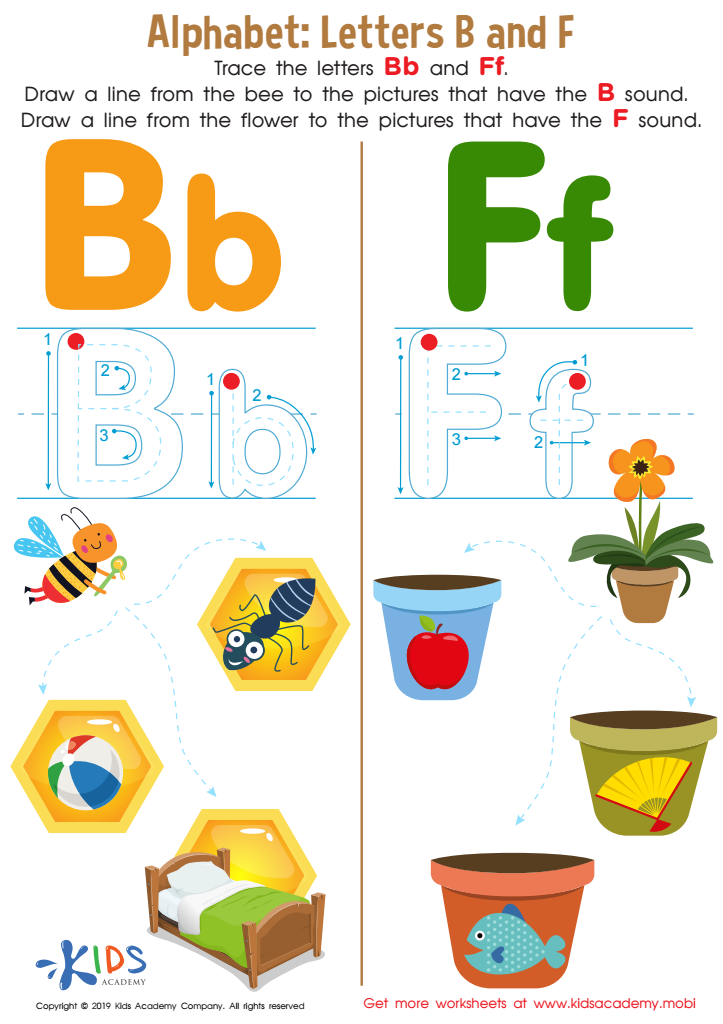
Letters B and F Tracing Worksheet
 Assign to My Students
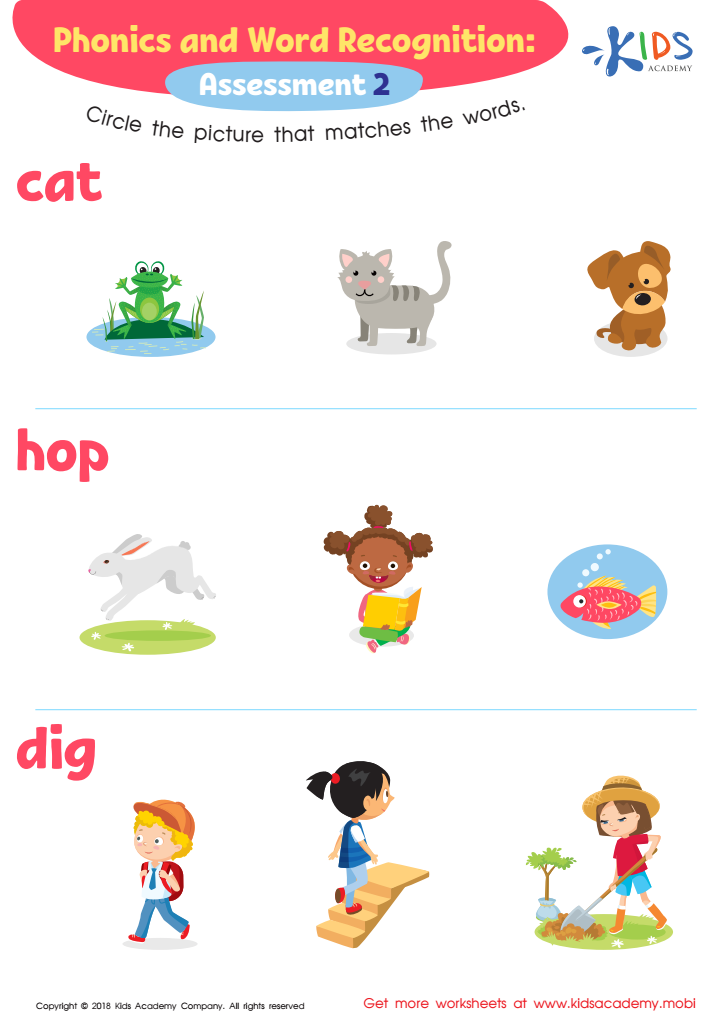
Phonological Awareness: Assessment 2 ELA Worksheet
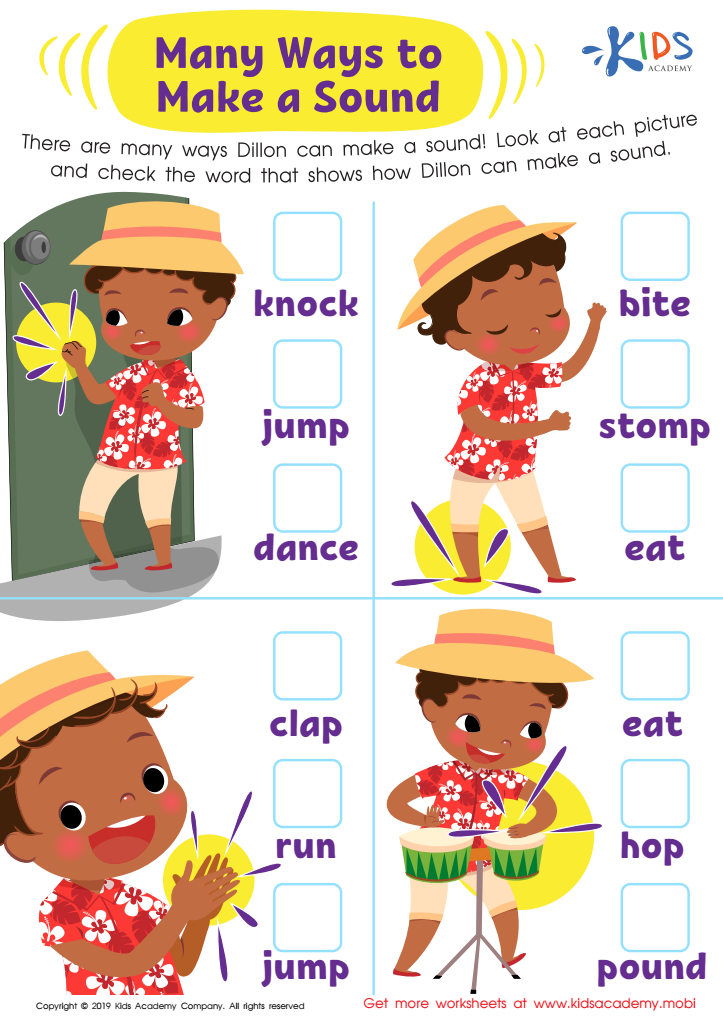
Many Ways to Make a Sound Worksheet
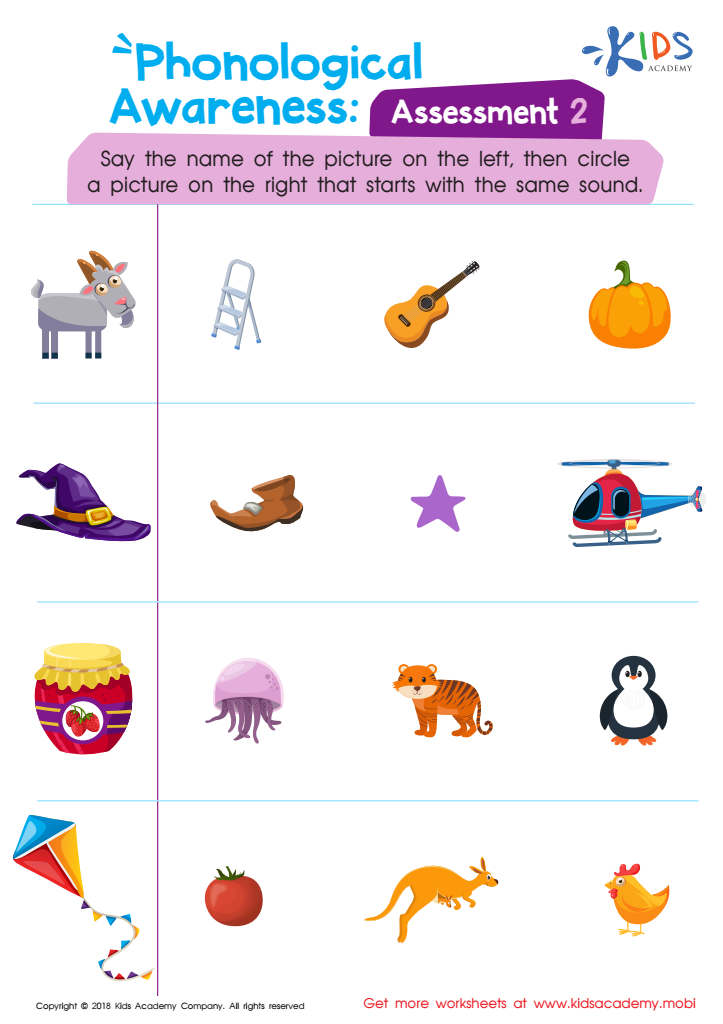
Phonological Awareness: Assessment 2 Worksheet
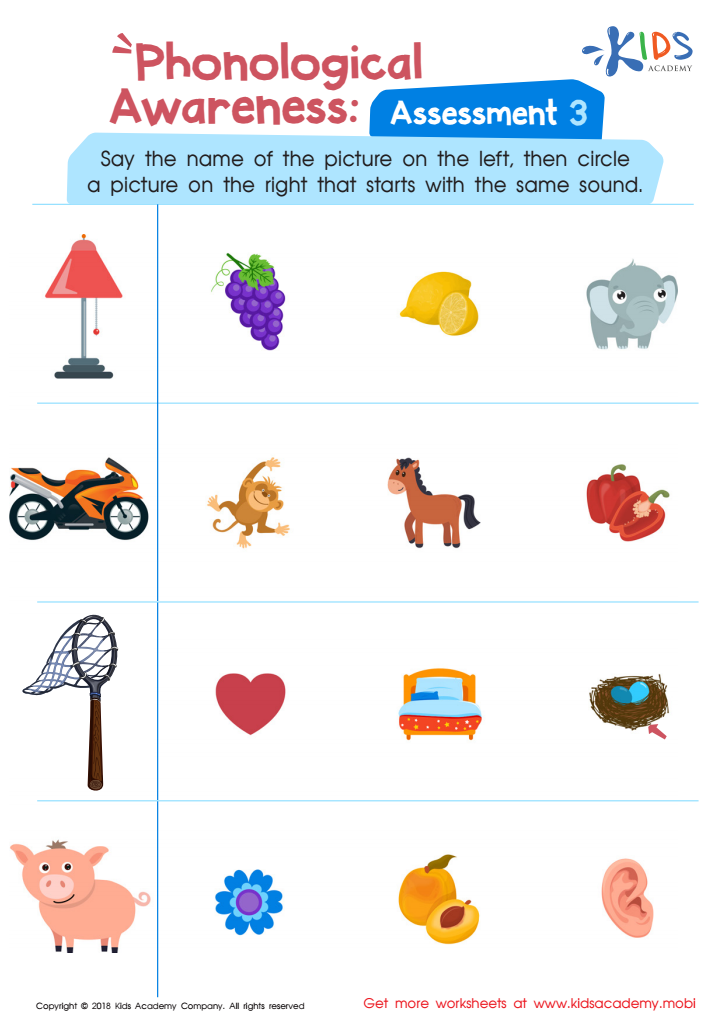
Phonological Awareness: Assessment 3 Worksheet





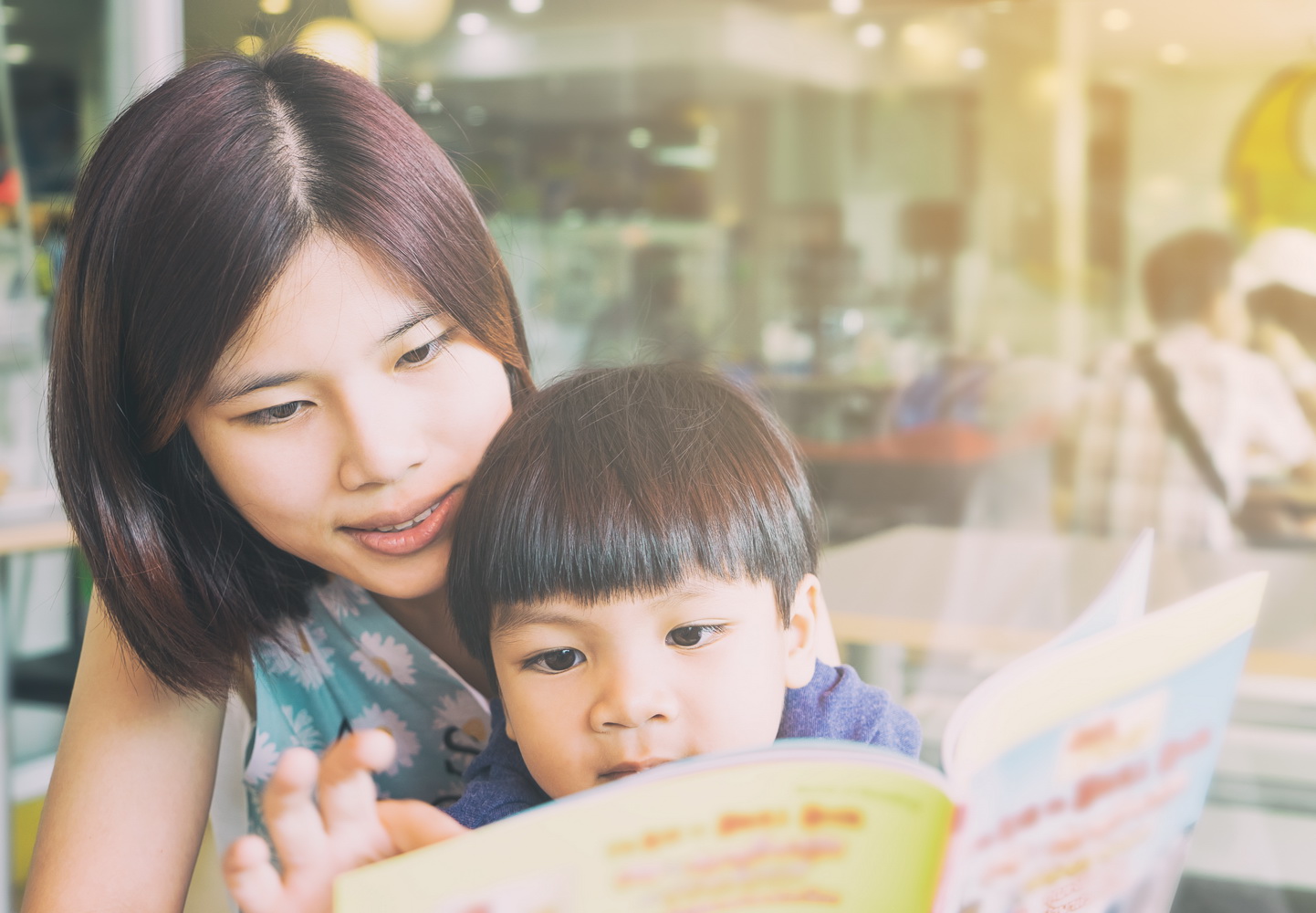


Sound identification in preschool is crucial because it lays the foundation for literacy development. During this early stage, children are introduced to phonemic awareness—the ability to hear, identify, and manipulate sound units in words. Mastery of sound identification enables young learners to decode words and contributes significantly to their reading skills. When parents and teachers engage in sound identification activities, they foster not just language skills, but cognitive development, enhancing children's ability to comprehend and communicate effectively.
Moreover, sound identification helps in building vocabulary and spelling abilities. By recognizing sounds, children can differentiate between similar-sounding words and improve their language comprehension. This skill also boosts a child's confidence in trying out new words, facilitating greater participation in verbal interactions.
In addition, engaging in sound identification activities strengthens the bond between parents, teachers, and children. Learning can become a collaborative and enjoyable experience, promoting social and emotional development. As an early intervention tool, sound identification can help identify and address potential reading difficulties, ensuring that children are well-prepared for their educational journey. For these reasons, parents and teachers should prioritize sound identification as a key component of preschool education.