Understanding number relationships Preschool Worksheets
3 filtered results
-
From - To
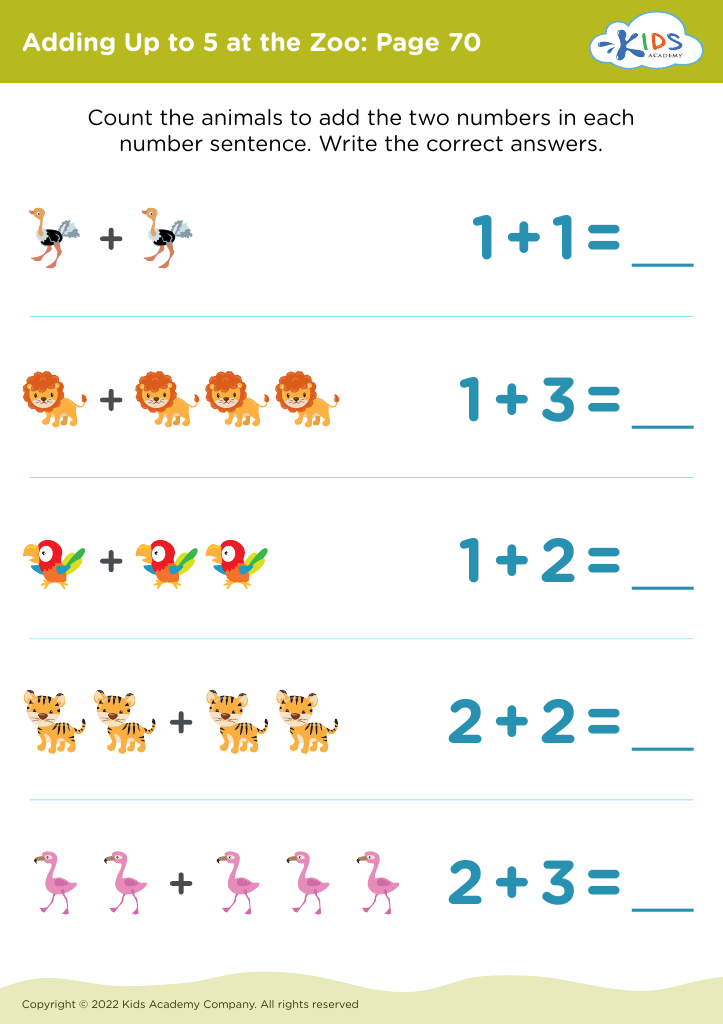
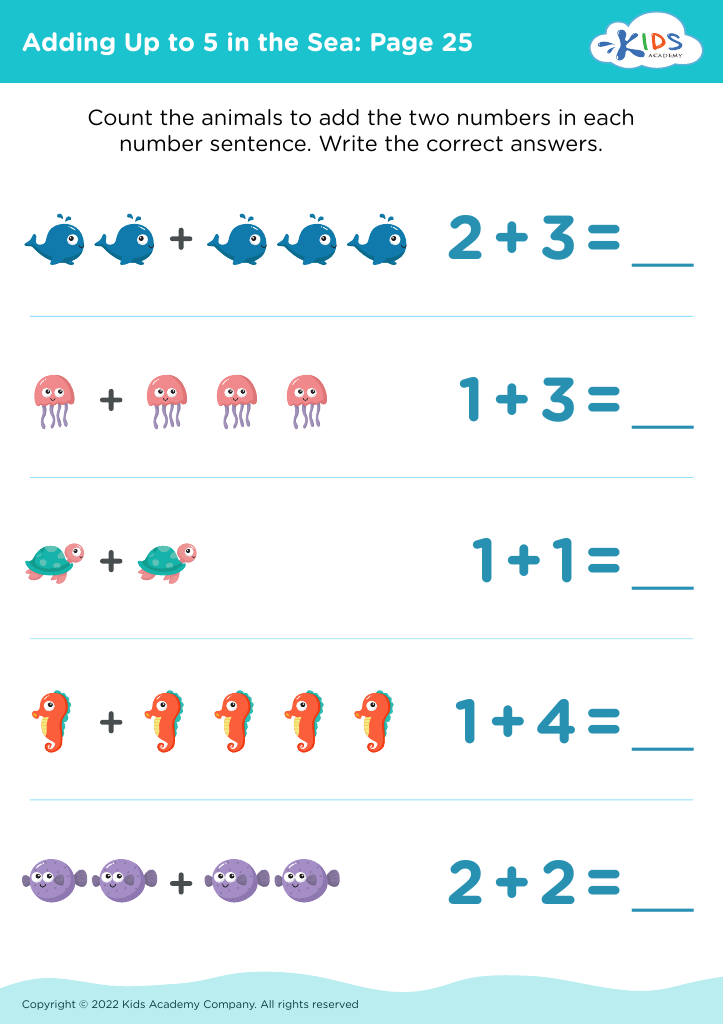
Explore our engaging "Understanding Number Relationships" preschool worksheets designed to cultivate early mathematical skills in young learners. These printable resources help children grasp essential concepts such as comparing, ordering, and recognizing patterns within numbers. Our colorful and interactive activities are tailored to meet preschool educational standards, making learning both fun and effective. With a variety of exercises featuring familiar objects and counting games, children will develop a solid foundation in number relationships while enhancing their cognitive abilities. Perfect for at-home practice or classroom use, these worksheets aim to ignite a love for math in every child. Start your child's mathematical journey today!
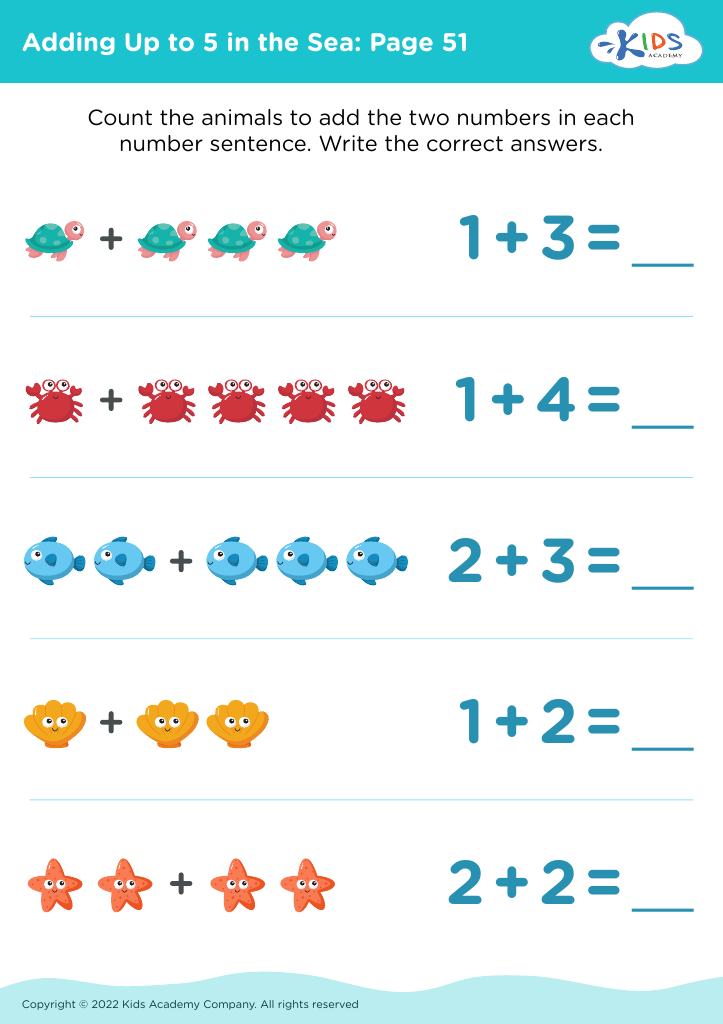







Understanding number relationships in preschool is crucial for young learners for several reasons. First, it lays the foundation for early mathematics skills, helping children grasp concepts such as quantity, comparison, and basic operations like addition and subtraction. By recognizing how numbers relate to one another, children develop essential problem-solving abilities that will serve them in more advanced math topics later on.
Additionally, a strong grasp of number relationships supports cognitive development. It encourages critical thinking as children learn to make connections between numbers and their everyday experiences, such as counting toys, sharing snacks, or understanding age differences. This concept further nurtures their ability to categorize, sequence, and pattern – skills vital not just in math but across various subjects.
For teachers and parents, promoting understanding of number relationships offers opportunities for meaningful engagement and interaction. Through play-based activities, discussions about numbers in daily life, and hands-on learning experiences, they can ignite a child’s curiosity and enjoyment of mathematics. Ultimately, fostering these skills in preschool prepares children for school success, instills confidence in their mathematical ability, and supports their overall development as lifelong learners, thereby underscoring the critical role adults play in early childhood education.